
Marquetry Mahogany Desk
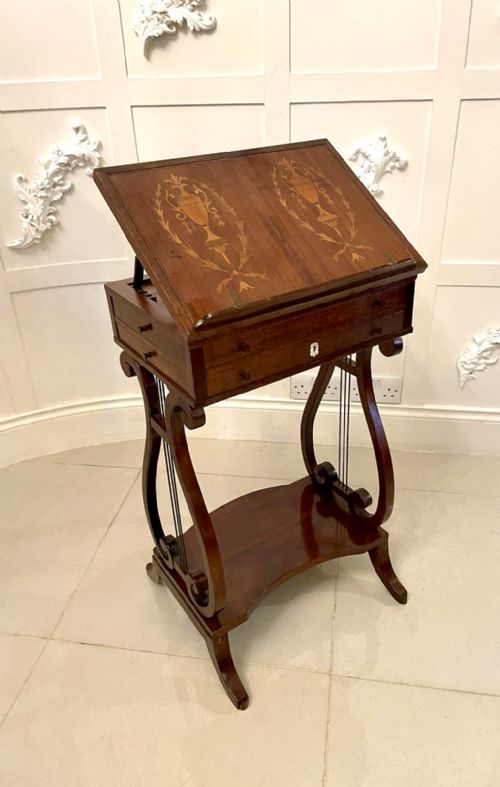
A marquetry mahogany desk brings together rich timber and intricate floral or geometric inlay across periods from the eighteenth century to the Edwardian era.
Marquetry Mahogany Desk
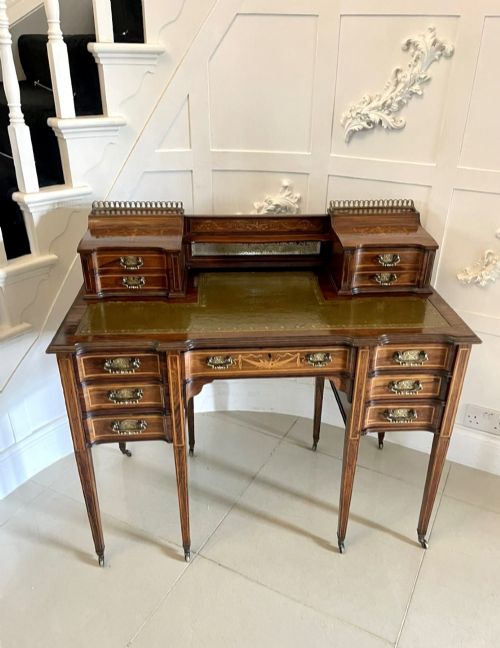
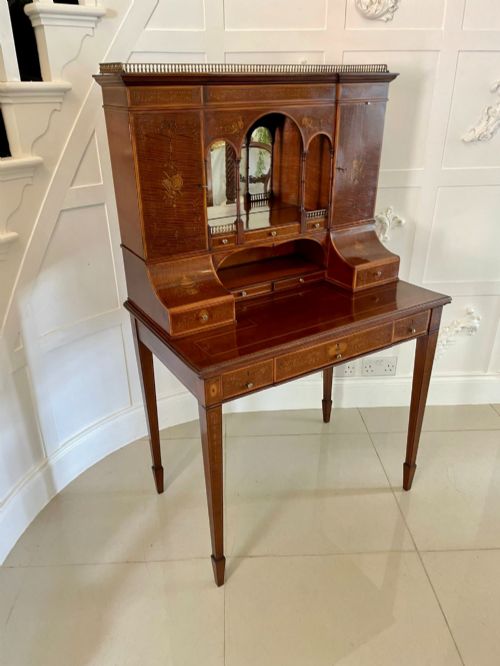
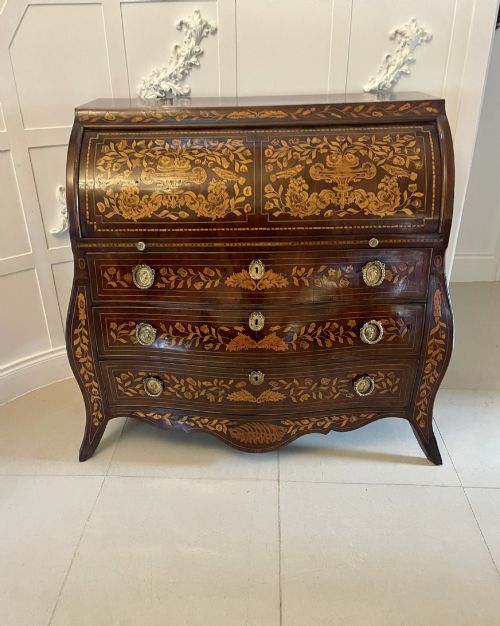
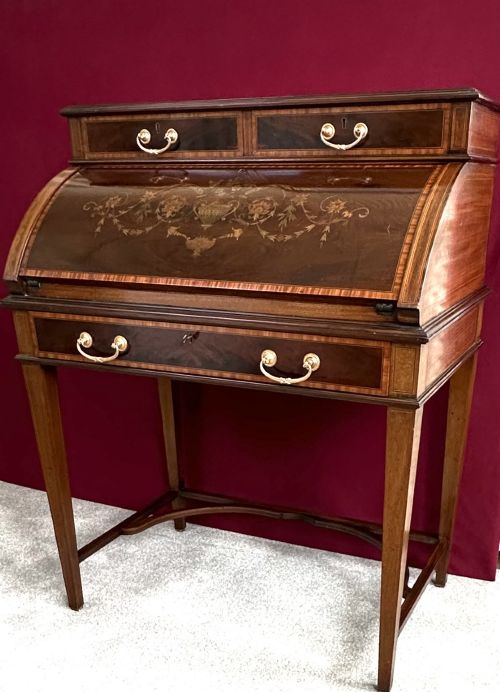
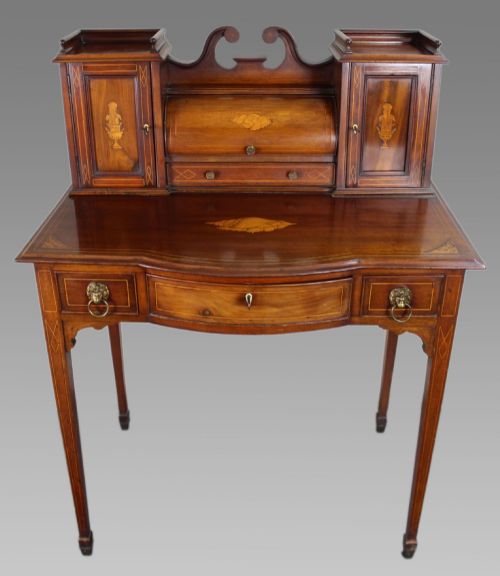
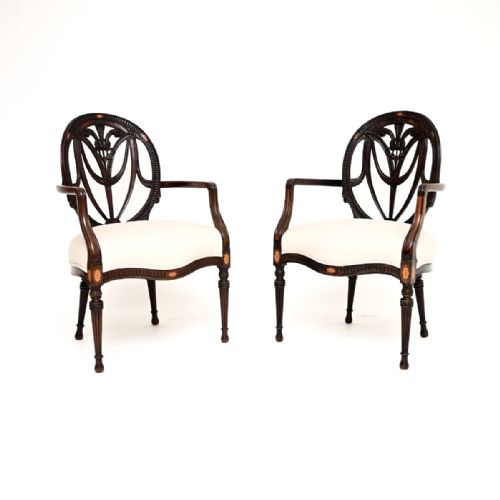
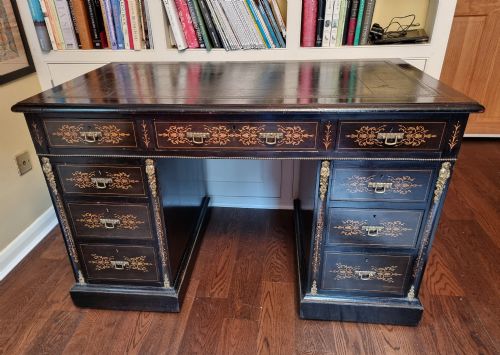
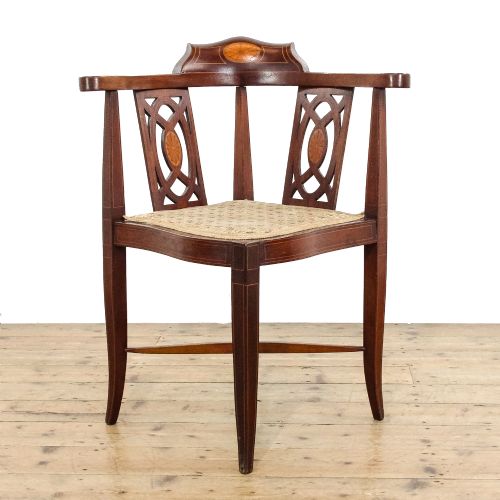
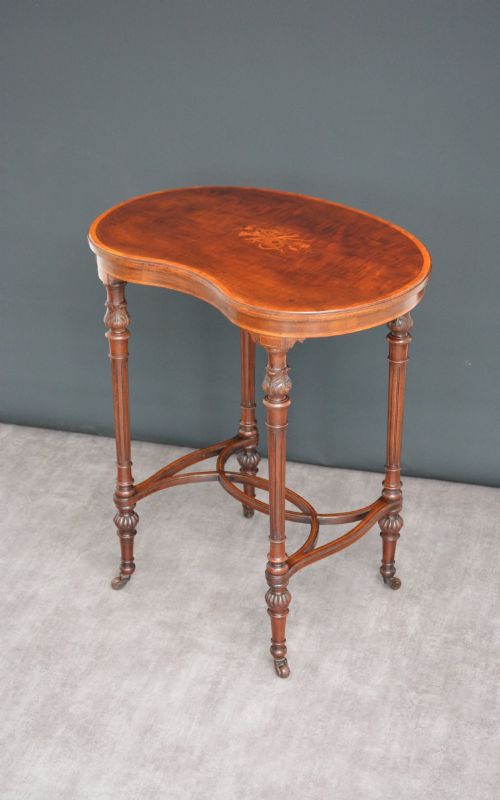
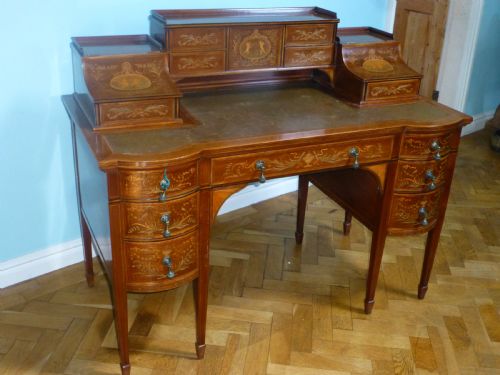
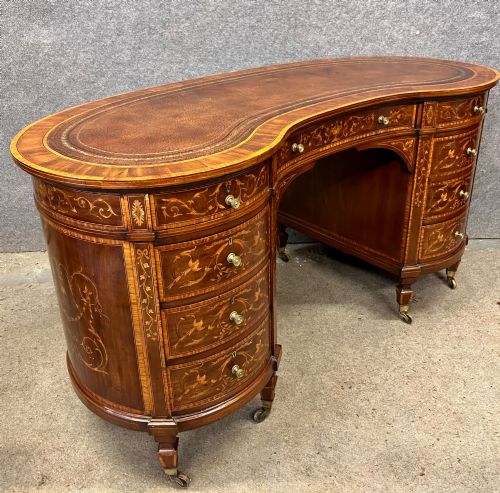
A search for a marquetry mahogany desk reveals writing furniture spanning the Georgian, Victorian, and Edwardian eras, with a strong representation of late nineteenth-century Sheraton Revival pieces. Buyers encounter various formats, from cylinder bureaux and pedestal writing tables to kidney-shaped side tables and elaborate Carlton House desks.
The Edwardian examples often feature lighter proportions and delicate satinwood banding, while Victorian and eighteenth-century specimens tend to display heavier timber and more complex floral marquetry. These writing pieces served domestic and formal studies alike, reflecting the changing interior fashions of their respective periods.
Materials and technique
Cabinetmakers utilised solid mahogany and supportive secondary timbers, veneered the outer surfaces, and applied contrasting woods such as satinwood for detailed inlay work. Marquetry panels were meticulously hand-cut, assembling diverse veneers like boxwood and fruitwoods to form floral sprays, ribbons, and classical urns.
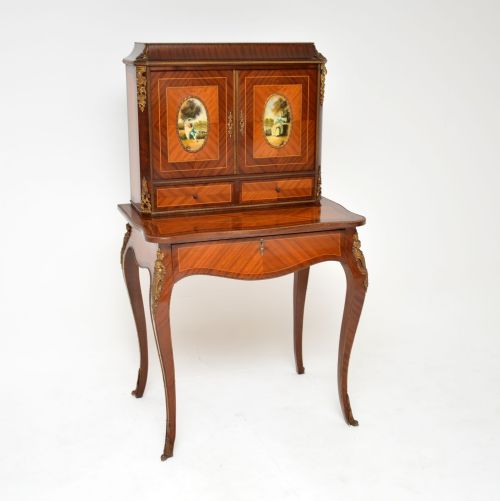
Brass handles, escutcheons, and occasional ormolu mounts finished the construction, whilst specialised writing surfaces incorporated fitted leather inserts or velvet panels. The integration of satinwood inlay alongside the darker mahogany grain created the characteristic high-contrast aesthetic recorded across these listings.
Several desks include hidden compartments designed for keeping secret love letters safe from prying eyes.
Judging the execution
Quality rests primarily in the precision of the marquetry cutter and the depth of the mahogany grain selected for the primary facades. Superior examples exhibit tightly fitted inlay without excessive filler, maintaining sharp contrasts between the contrasting timber species.
Maker attribution elevates certain pieces, with workshops such as Edwards & Roberts and Maple & Co demonstrating exceptional joinery and refined proportions. The crispness of internal drawer construction and the retention of original brass hardware further distinguish workshop standards.
Maple & Co·Edwards & Roberts·Jas Shoolbred & Co
The Marquetry Mahogany Desk Glossary
- Marquetry
- A decorative technique where small pieces of veneer are assembled into pictorial or geometric patterns on a wooden ground.
- Carlton House desk
- A form of writing table featuring a curved superstructure of small drawers and pigeonholes wrapping around the back and sides of the writing surface.
- Cylinder bureau
- A writing desk fitted with a rolling cylindrical wooden shutter that conceals internal drawers and a pull-out writing slide.
- Satinwood
- A pale, durable tropical timber frequently utilised in contrasting stringing and inlay work on dark mahogany furniture.
- Secretaire
- A cabinet or chest incorporating a dedicated drop-front or pull-out writing drawer.
Marquetry Mahogany Desk: Frequently Asked Questions
What is a marquetry mahogany desk?
These items are refined writing tables and bureaux constructed from mahogany and decorated with detailed veneer inlay patterns.
Craftsmen created them for writing and correspondence in formal homes and offices, making them both decorative and functional focal points.
How do I date a desk?
Dating relies on stylistic clues like the lighter satinwood contrasts of Edwardian pieces versus the heavier proportions of Victorian examples.
Construction methods and secondary woods inside the drawers also help verify whether a piece originates from the eighteenth century or later revivals.
Were these desks used for writing?
Most examples served primarily for personal correspondence, household accounts, and letter-writing in private studies or drawing rooms.
Some elaborate forms, such as Carlton House tables, provided extensive pigeonholes and small drawers specifically for organising stationery.
How do I care for inlaid wood?
Maintenance involves keeping the timber away from direct sunlight and fluctuating heat sources to prevent the delicate veneer from lifting.
Applying suitable wax polish occasionally helps preserve the natural sheen of the mahogany and protects the contrasting marquetry.