


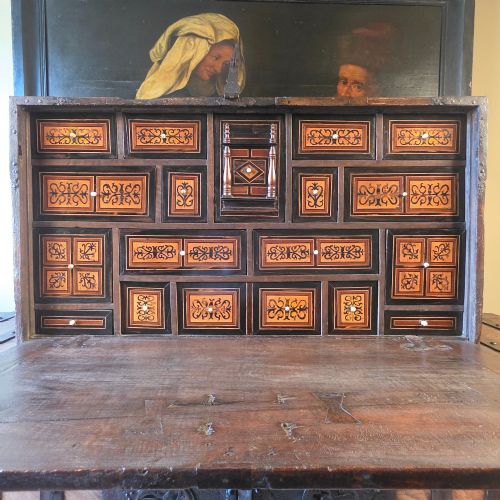
Marquetry Inlaid Writing Desk
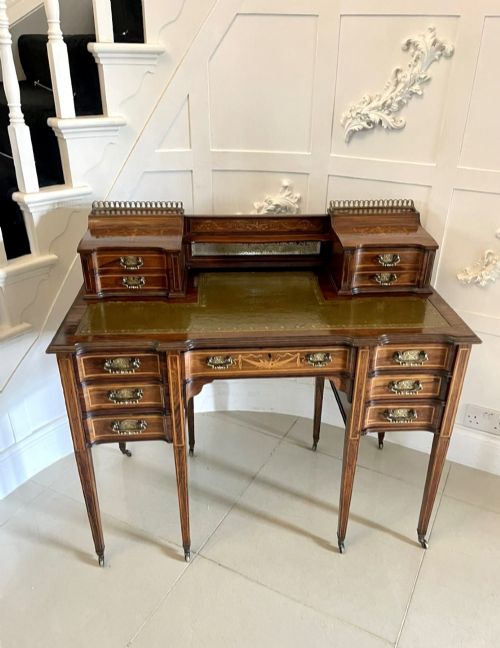
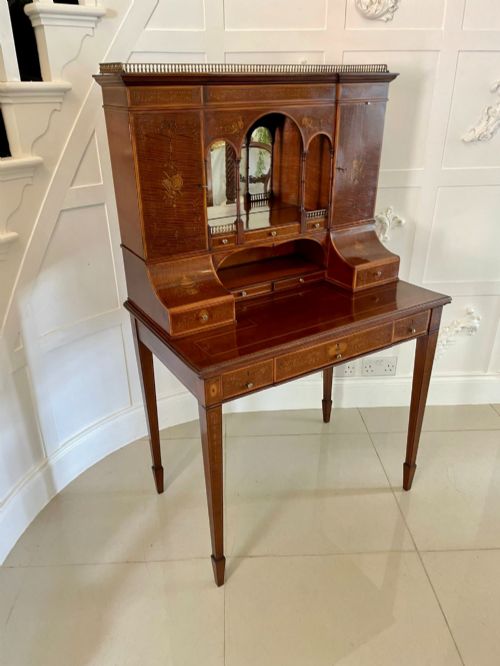
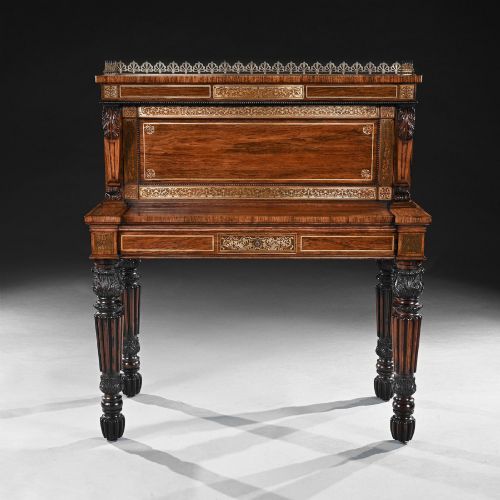
A marquetry inlaid writing desk brings complex floral and geometric wood veneers together with a dedicated surface for correspondence.
Marquetry Inlaid Writing Desk
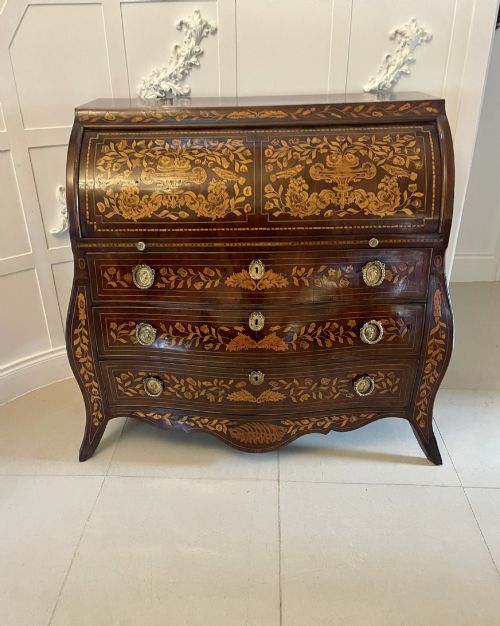
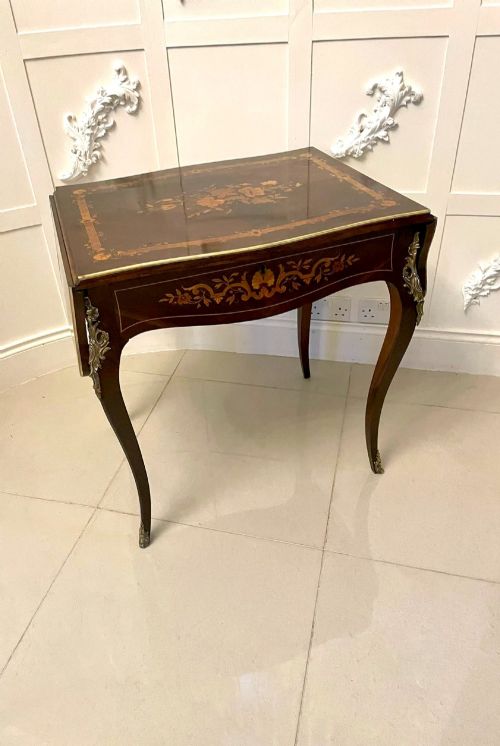
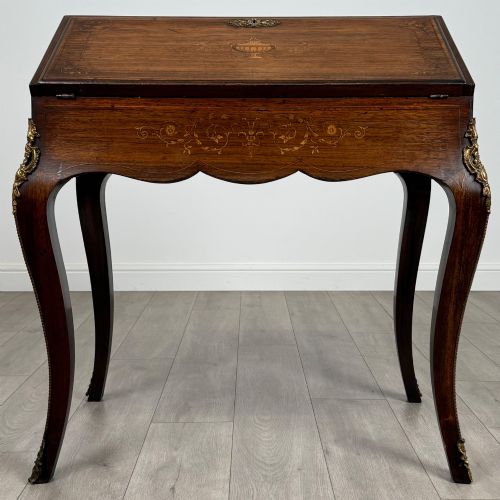
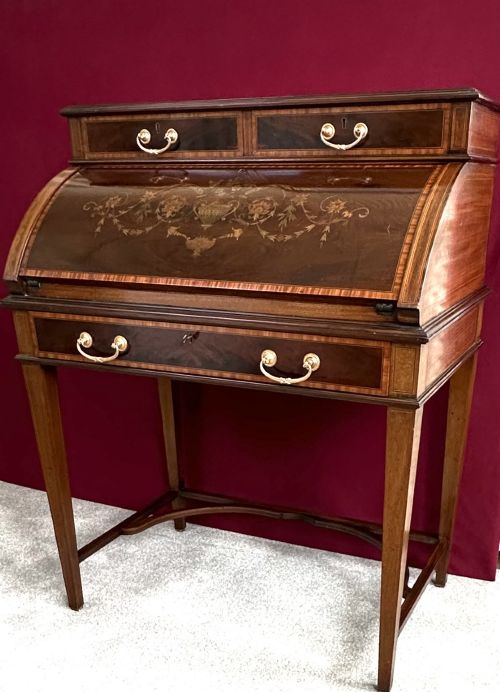
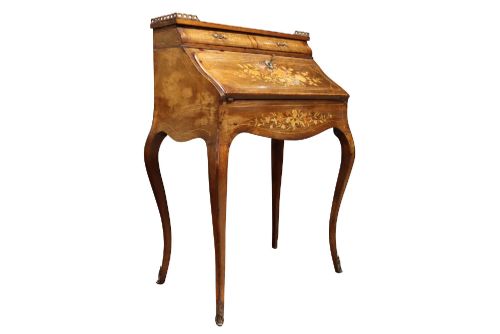
A marquetry inlaid writing desk combines a functional workspace with decorative wood veneers arranged in floral or pictorial patterns. These pieces appear across the 18th century, Victorian, and Edwardian periods, taking forms such as freestanding tables, cylinder bureaux, and fall-front desks.
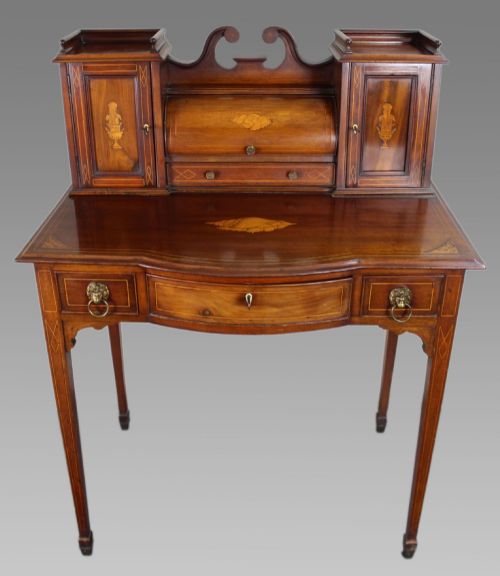
The version most commonly met on this page is the Edwardian or Victorian ladies writing desk in rosewood, satinwood, or mahogany. These examples often incorporate leather writing surfaces alongside internal drawers and pigeonholes.
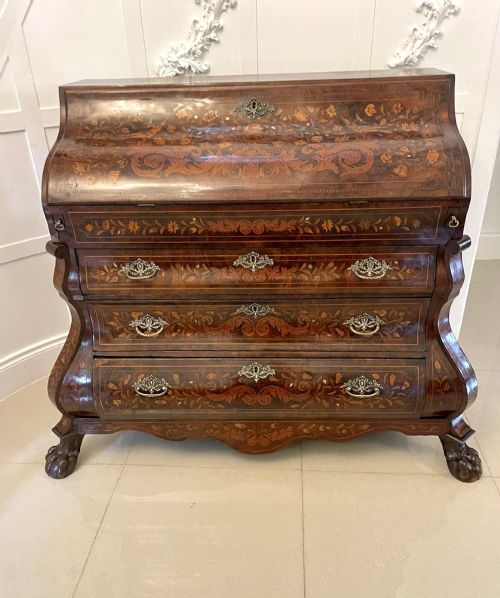
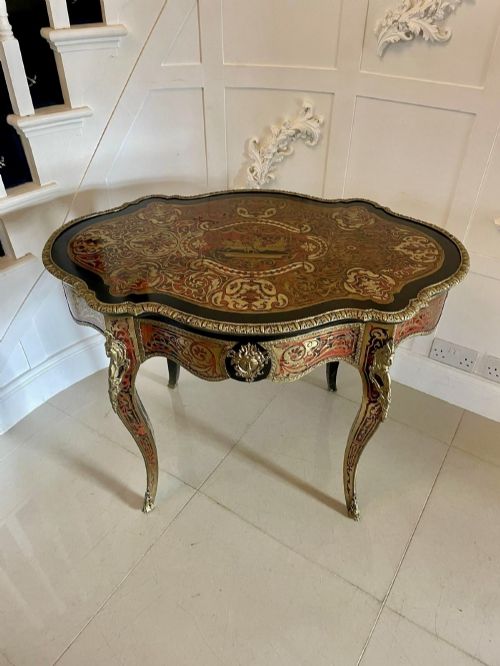
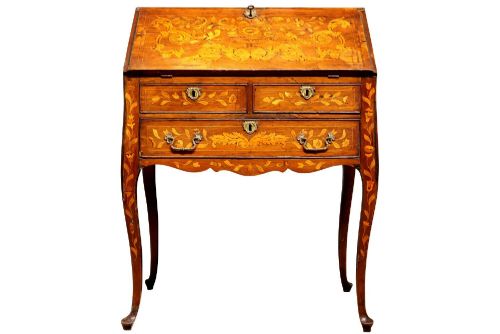
Other variations include French bureau plat desks and Dutch bureau bookcases featuring dense floral marquetry in walnut. Buyers also encounter heavier Victorian and 19th-century interpretations designed for domestic libraries.
Factors that distinguish the finest examples
The sophistication of the veneer work largely determines quality, with superior pieces displaying intricate shading, precise botanical motifs, and seamless integration of multiple exotic woods.
Cabinetmaking execution separates standard production from exceptional output, evident in the smoothness of drawer operations, the stability of freestanding carcases, and the quality of applied ormolu or brass mounts.
Attribution to documented makers such as Edwards and Roberts or Maple and Co often distinguishes workshop-level mastery from anonymous cabinet production.
Listings feature desks from the 18th century through the Edwardian period, utilising rosewood, satinwood, mahogany, and walnut.
Edwards and Roberts·Maple and Co·Gillows Oxford Street Workshop·Maison Krieger
The Marquetry Inlaid Writing Desk Glossary
- Marquetry
- Decorative veneer work where pieces of contrasting wood are assembled to form pictorial patterns and floral designs. This technique defines the visual character of the writing surfaces.
- Bureau plat
- A freestanding writing table fitted with drawers beneath the top, originating in France during the 18th century. These tables lack the superstructure found on traditional secretaires.
- Ormolu
- Gilded bronze used for decorative mounts, handles, and sabots on French and English furniture. It provides metallic contrast against dark rosewood and kingwood veneers.
- Satinwood
- A lustrous, yellow-toned timber utilised extensively during the Sheraton Revival and Edwardian periods for stringing and veneer panels. Its grain catches the light effectively.
- Secretaire
- A desk incorporating a writing flap or drawer that conceals a fitted interior of small drawers and pigeonholes. It frequently forms part of a bookcase or cabinet.
Marquetry Inlaid Writing Desk: Frequently Asked Questions
How do I date a marquetry desk?
Dating relies on combining the timber choices, construction methods, and stylistic influences visible across the piece. For instance, satinwood veneers and neoclassical motifs frequently point toward Edwardian revival periods.
Secondary woods inside drawers and the style of brass hardware also provide reliable chronological markers when compared against documented examples.
How do I care for wood veneers?
Preserving antique veneer requires maintaining stable room humidity and avoiding direct exposure to strong sunlight. Gentle dusting with a dry cloth protects the polished surface without moisture damage.
Applying occasional specialist wax helps nourish older rosewood and mahogany finishes.
What is the difference between marquetry and parquetry?
Marquetry involves cutting and assembling wood veneers into pictorial scenes, floral sprays, or curvilinear patterns. It allows for artistic representation using diverse timber colours.
Parquetry uses geometric shapes like squares, triangles, or diamonds to create repeating symmetrical patterns across the surface.