


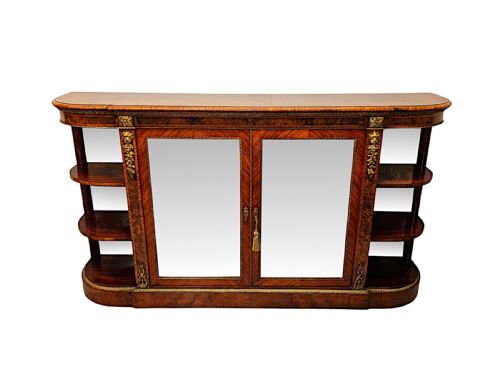
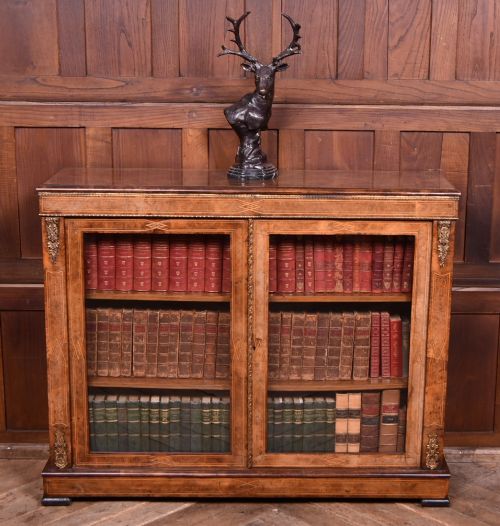
Marquetry Burr Walnut Credenza
A marquetry burr walnut credenza combines rich swirling veneers with intricate floral inlays, serving as a striking focal point for a refined interior.
Marquetry Burr Walnut Credenza
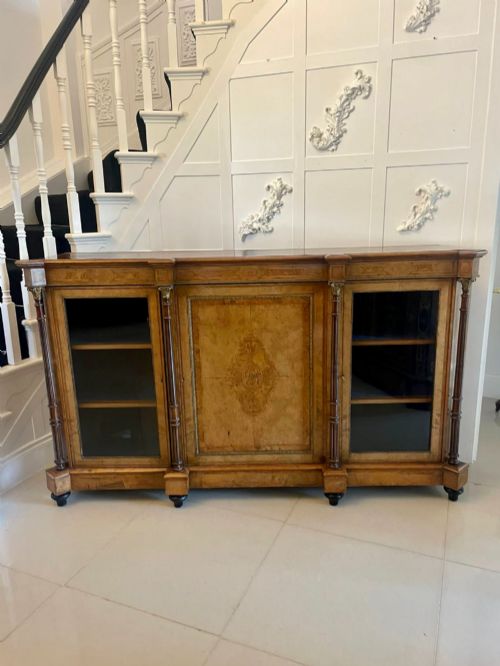
When searching for a marquetry burr walnut credenza, a buyer encounters sophisticated 19th-century low cabinets designed for formal reception rooms. These pieces originate predominantly from the Victorian period, spanning decades from the 1850s through to the end of the century.
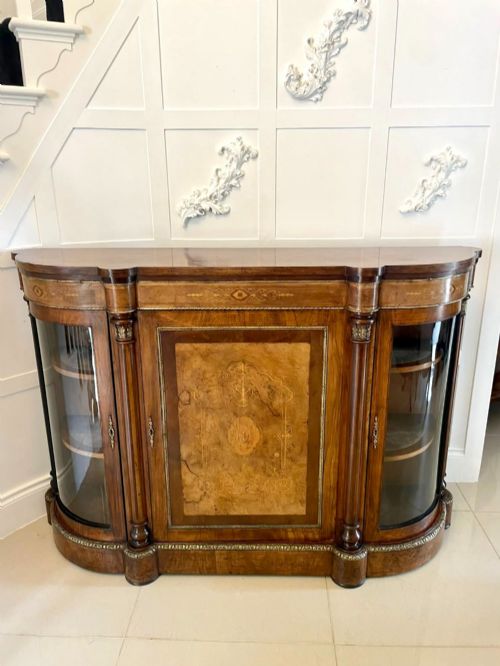
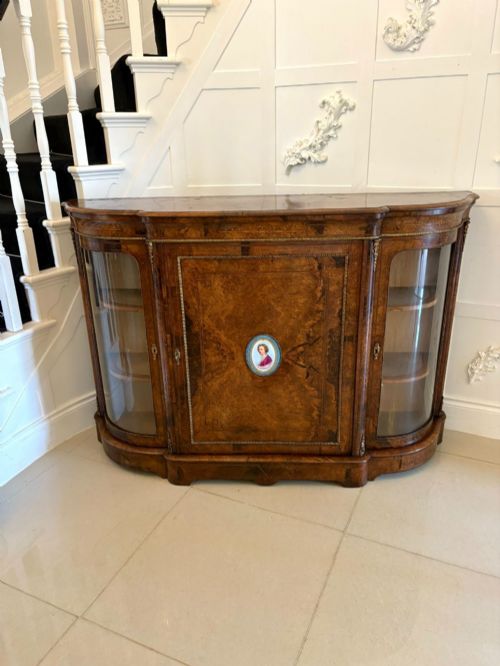
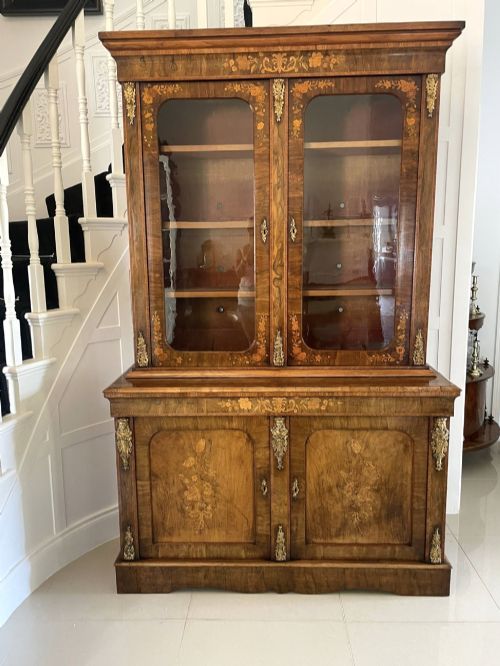
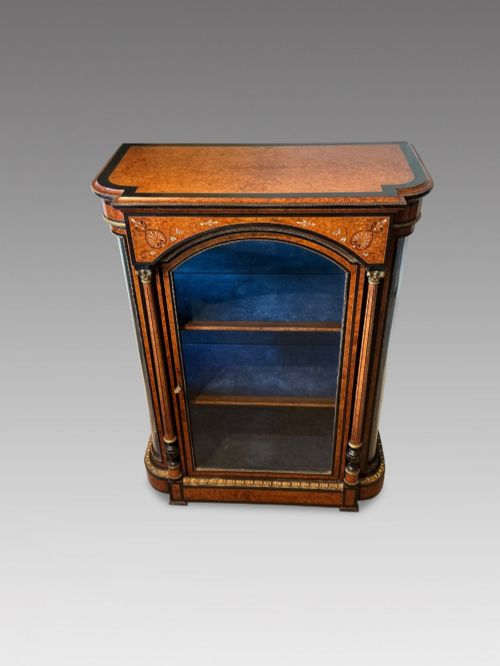
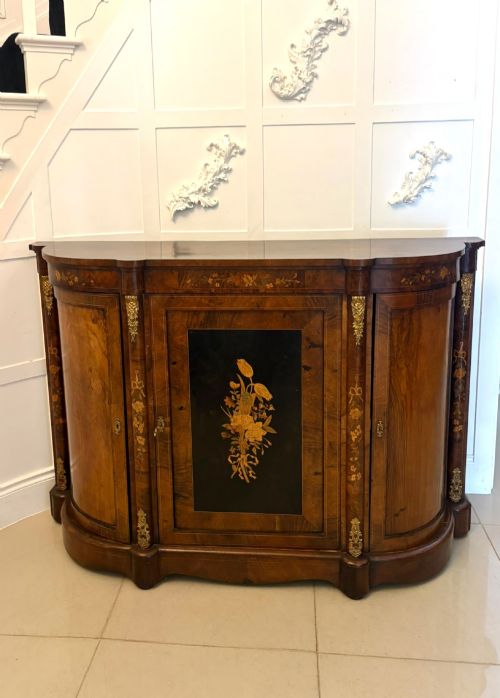
The form typically presents as a central glazed or panelled door flanked by curved side cabinets, though narrow pier cabinets and serpentine-fronted sideboard variations also appear. Most examples rely on substantial walnut carcases adorned with decorative timber veneers and glazed display sections.
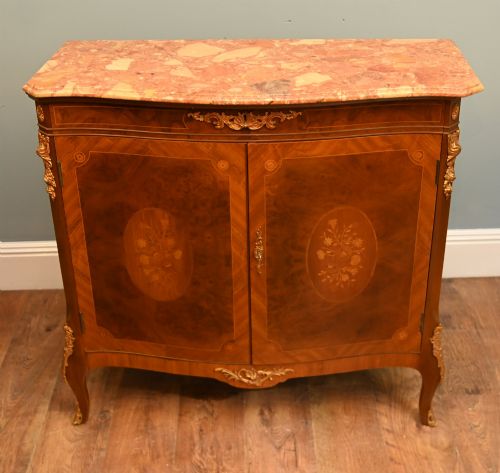
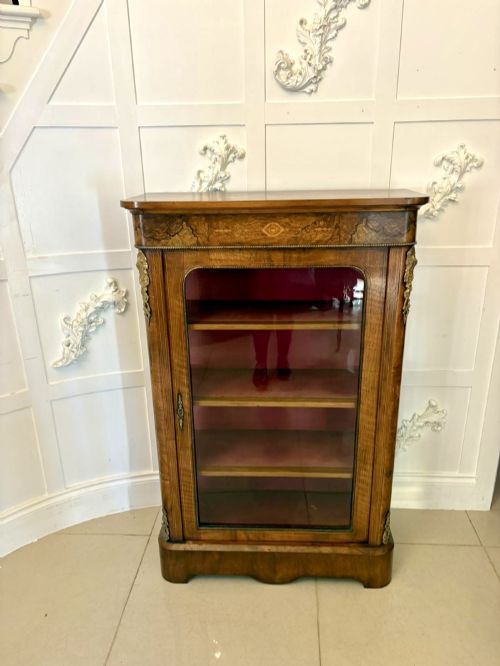
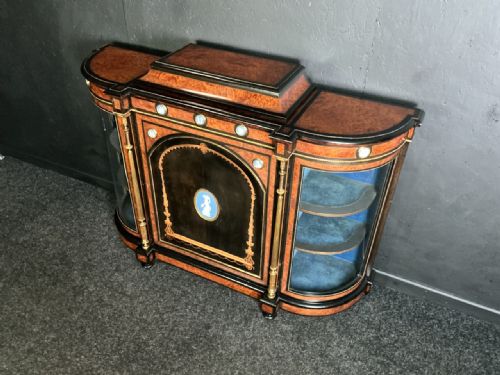
Makers of the era drew on Revival styles and Louis XV influences, occasionally incorporating porcelain plaques or marble tops alongside intricate floral motifs. The selection available ranges from modest single-door pier cabinets to large four-door architectural credenzas.
How They Were Made
Craftsmen applied thin veneers of highly figured burr walnut over solid timber carcases to achieve swirling, symmetrical grain patterns across the main surfaces. This technique allowed cabinetmakers to maximise the visual impact of burls and irregular wood growths.
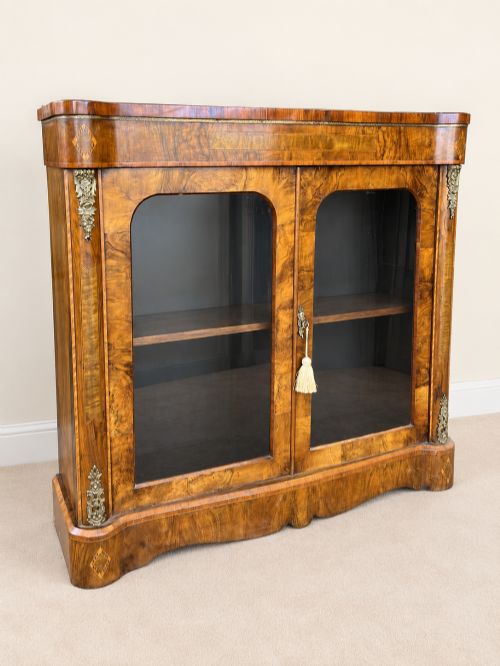
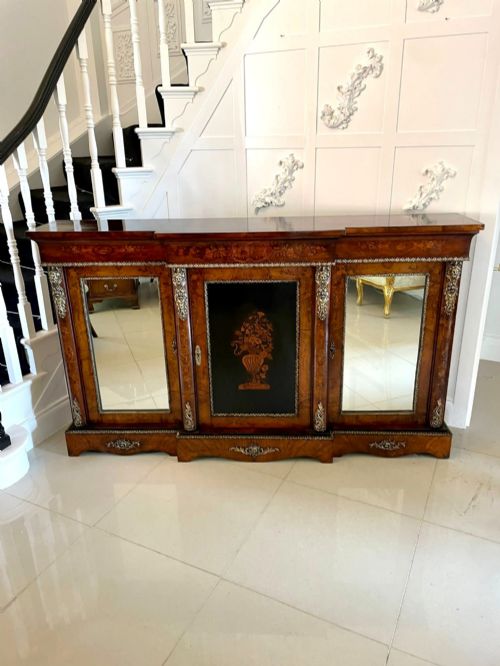
Detailed marquetry panels utilise contrasting timbers such as boxwood, ebony, and rosewood, cut precisely to form floral or geometric inlays. Gilt-bronze ormolu mounts, cast brass trims, and ebonised wood details were then applied to accentuate the architectural lines of the credenza.
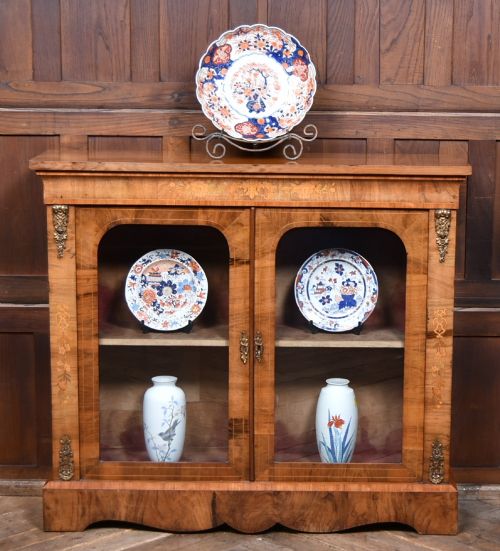
Glass panels fitted to the doors allowed for the display of fine porcelain and glassware, while interiors were often lined with velvet. Ormolu mounts served to protect vulnerable corners and frame the central cabinet doors.
Cabinetmakers utilised boxwood, ebony, and rosewood alongside floral marquetry to create intricate decorative panels on curved serpentine frames.
What Varies in Quality
The hierarchy of quality rests primarily on the intricacy of the marquetry and the choice of veneers used on the primary surfaces. Credenzas displaying dense, multi-coloured floral marquetry combined with highly figured burr walnut sit at the upper end of the scale.
Structural complexity also dictates the tier of the piece, with serpentine-shaped fronts and multi-door configurations demanding advanced joinery skills compared to flat-fronted cabinets. The presence of maker signatures, original ormolu mounts, and integrated porcelain plaques further distinguishes exhibition-standard items from standard production pieces.
Cabinetmakers such as Gillows or Edwards and Roberts produced documented examples where the precision of the brass inlay and the weight of the ormolu mounts elevate the status of the furniture. Simpler pier cabinets with minimal boxwood lines represent a more restrained expression of the same cabinetmaking tradition.
Gillows·Edwards and Roberts
The Marquetry Burr Walnut Credenza Glossary
- Marquetry
- Decorative veneer work where small pieces of different coloured woods are fitted together to create pictorial designs. This technique transformed flat cabinet doors into floral canvases.
- Burr Walnut
- Timber taken from the warted growths on walnut trees, prized for its swirling, chaotic grain patterns. It provides the characteristic rich background for Victorian credenzas.
- Ormolu
- Gilt-bronze mounts applied to furniture edges and feet for decorative and protective purposes. The metal is cast and then treated with a gold finish.
- Pier Cabinet
- A narrow display cabinet designed to fit the wall space between windows. These smaller Victorian pieces share the same walnut and inlay vocabulary as larger credenzas.
- Serpentine
- A curved furniture front that undulates with a convex centre flanked by concave curves. This shape requires advanced woodworking skill to veneer accurately.
Marquetry Burr Walnut Credenza: Frequently Asked Questions
What is a credenza?
A credenza is a low cabinet traditionally used for display and storage in formal reception rooms. Victorian examples often feature glass-fronted side sections and central cupboards.
These pieces sit low against the wall, allowing the top surface to display ornaments, lamps, or decorative collections.
How do I style a credenza?
Living with a credenza involves balancing its decorative presence with functional display space. The top surface suits ceramics, bronzes, or small sculptures, while the glazed cabinets protect books and glassware.
Placement away from direct sunlight preserves the delicate walnut veneers and coloured marquetry inlays over time.
What is the difference between a credenza and a sideboard?
While both provide low storage, a traditional sideboard focuses on dining room utility with drawers and cupboards. A credenza leans towards display, frequently incorporating glass doors and velvet-lined interior shelving.
Victorian makers often blurred these lines, naming larger pieces credenza-sideboards.
How do I identify a Victorian credenza?
Victorian credenzas typically employ burr walnut veneers combined with boxwood and ebony marquetry. The presence of cast ormolu mounts and serpentine shaping points firmly to the mid-to-late nineteenth century.
Interior construction often reveals secondary timbers such as mahogany or pine behind the polished walnut exterior.