
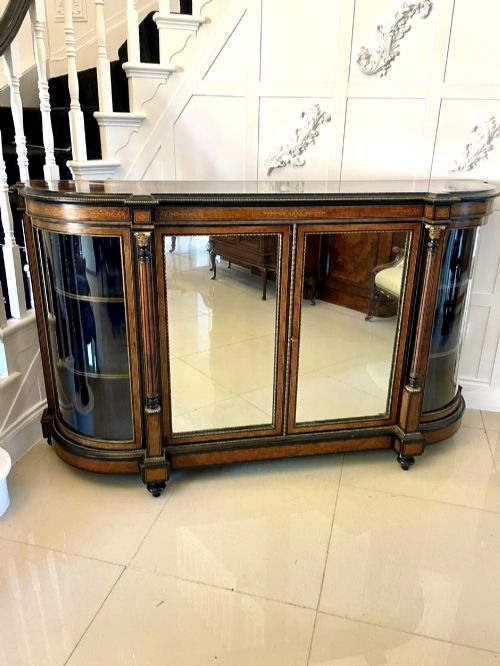
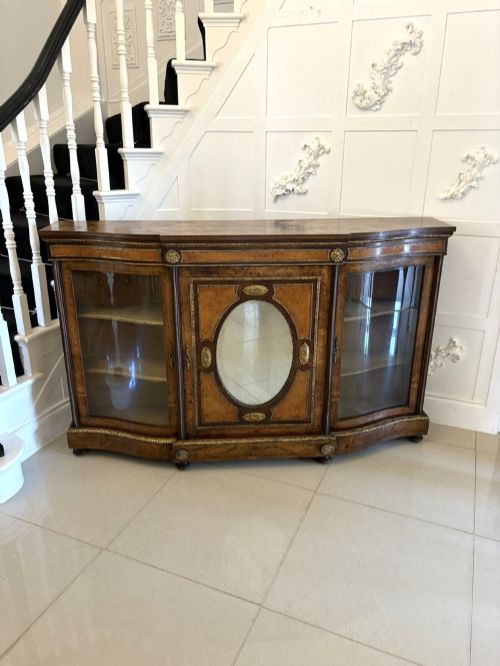
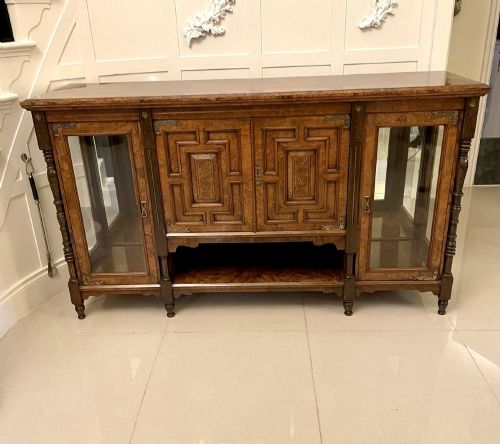
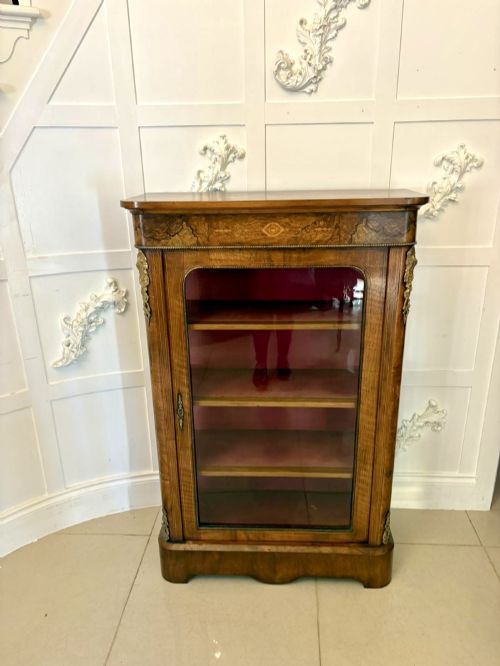



Glass Door Walnut Credenza
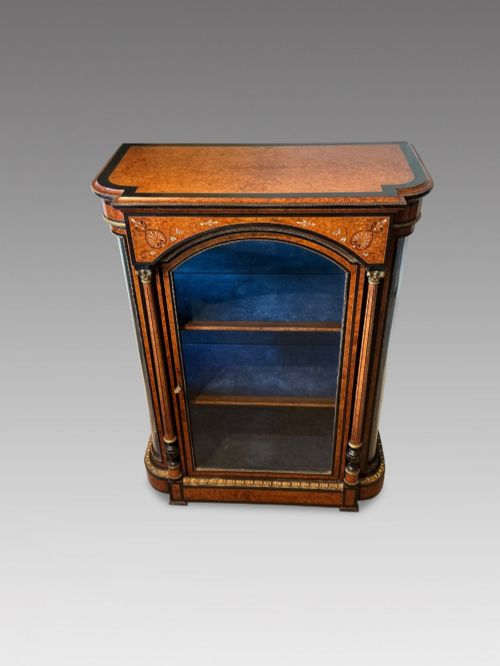
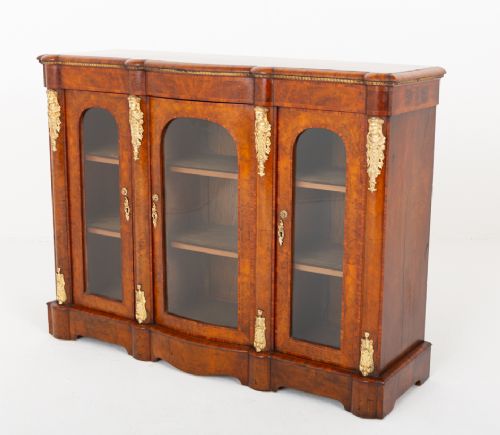
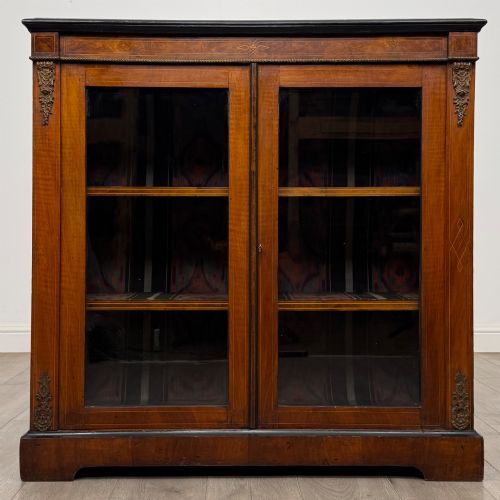
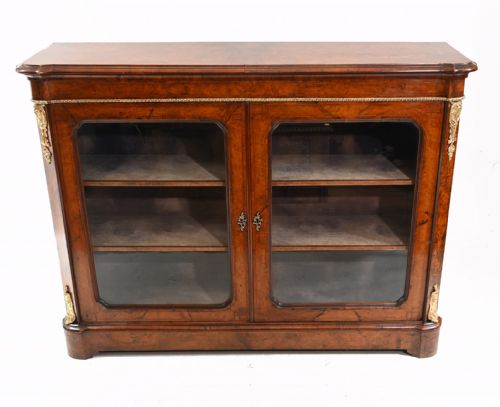
A glass door walnut credenza combines figured timber and glazed display space, offering collectors a practical focal point for period interiors.
Glass Door Walnut Credenza
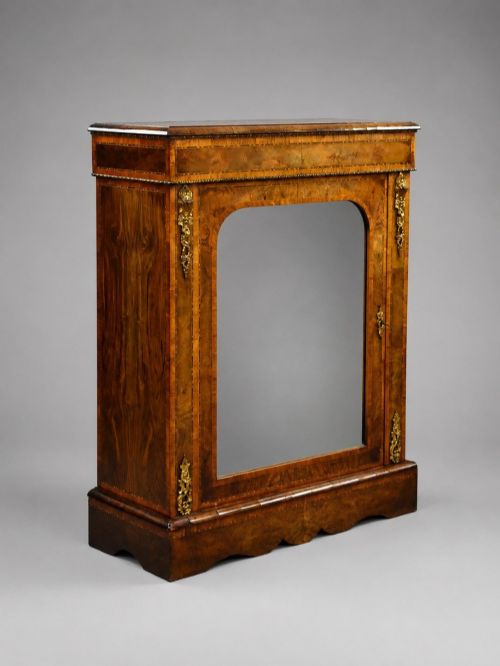
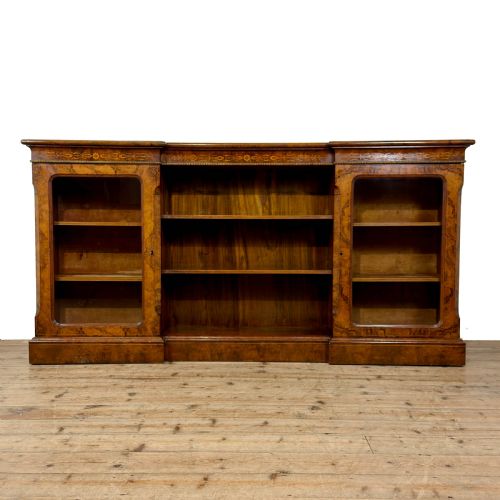
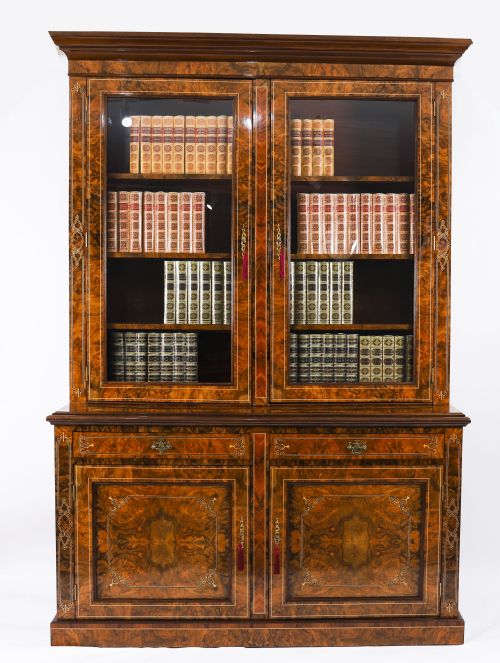
A glass door walnut credenza brings together low cabinetry and glazed display compartments, originating principally from the Victorian and Edwardian eras. Buyers searching for a glass door walnut credenza will most frequently encounter nineteenth-century English forms, ranging from serpentine-fronted credenzas to upright pier cabinets and glazed bookcases.
The selection on this page centres heavily on Victorian craftsmanship, spanning periods from the eighteen-fifties through to the early twentieth century. Alongside traditional credenzas, the inventory includes side cabinets, breakfront bookcases, and mirrored-back display units designed for formal reception rooms.
How they were made
Cabinet makers utilised figured walnut and burr walnut veneers applied to stable carcass timbers, creating rich grain patterns across the front panels and doors. These surfaces often incorporate boxwood inlay, marquetry, and contrasting stringing.
Mounts in cast or gilt ormolu frame the glazed doors and highlight structural corners, while interior shelving typically sits behind clear glass panes. Certain examples integrate marble tops, mirrored backs, and velvet linings to enhance reflection and display.
Several cabinets retain their original velvet-lined interior shelves, ready for displaying tiny Victorian porcelain trinkets.
What varies in quality
Quality rests on the selection of the burr walnut veneer and the precision of the marquetry work across the flat surfaces. Superior examples display symmetrical grain matching and intricate, crisp inlay rather than repetitive stamped patterns.
The weight and finish of the ormolu mounts, the clarity of the glass, and the subtlety of carved serpentine fronts distinguish high-tier workshop output from standard commercial production.
Druce & Co
The Glass Door Walnut Credenza Glossary
- Burr walnut
- A veneer sliced from the growth excrescences of walnut trees, prized for its swirling, highly figured grain patterns. It forms the primary decorative surface on many nineteenth-century display cabinets.
- Ormolu
- Gilded bronze mounts applied to furniture edges and feet for architectural emphasis. It provides a metallic contrast against dark walnut surfaces.
- Marquetry
- Inlays of contrasting wood veneers assembled to form pictorial or geometric designs. Artisans set these delicate patterns directly into the cabinet doors.
- Pier cabinet
- A narrow upright display piece designed to fit the wall space between windows. These units frequently feature single glass doors and velvet-lined interiors.
- Serpentine front
- A furniture profile curving outward in the centre and inward at the sides. This fluid shape demands advanced joinery skills to execute properly in solid walnut.
Glass Door Walnut Credenza: Frequently Asked Questions
What is a glass door walnut credenza?
A glass door walnut credenza is a low, nineteenth-century cabinet featuring glazed central or side compartments intended for displaying porcelain and decorative objects. These pieces combine closed storage with visible shelving behind walnut framing.
Cabinet makers produced them primarily during the Victorian period, utilising figured veneers and marquetry to suit formal drawing rooms and parlours.
How do I date a walnut credenza?
Dating relies on examining the secondary timbers, the style of the marquetry, and structural joinery details. Victorian examples from the mid-nineteenth century frequently display ornate ormolu mounts and serpentine fronts.
Later Edwardian or revival pieces tend to show lighter inlay work and different interior carcase construction, reflecting the shift in interior tastes.
Where should I place a walnut credenza?
These cabinets suit principal reception rooms, dining spaces, or wide hallways where their reflective glass doors and figured wood grain receive adequate natural light. Ensure the floor is level so the doors align properly within their frames.
Keep them away from direct heat sources and strong sunlight to protect the fragile walnut veneers and traditional French polish finishes.
How do I care for antique walnut furniture?
Maintain the finish by dusting regularly with a soft, dry cloth and applying traditional beeswax sparingly to nourish the timber. Avoid modern silicone sprays, which can penetrate old finishes and attract dust.
Control the room humidity to prevent the burr walnut veneers from lifting or cracking over seasonal changes.