




Marquetry Bureau Cabinet
A marquetry bureau cabinet brings together intricate floral veneers and fitted writing compartments from the seventeenth, eighteenth, and nineteenth centuries.
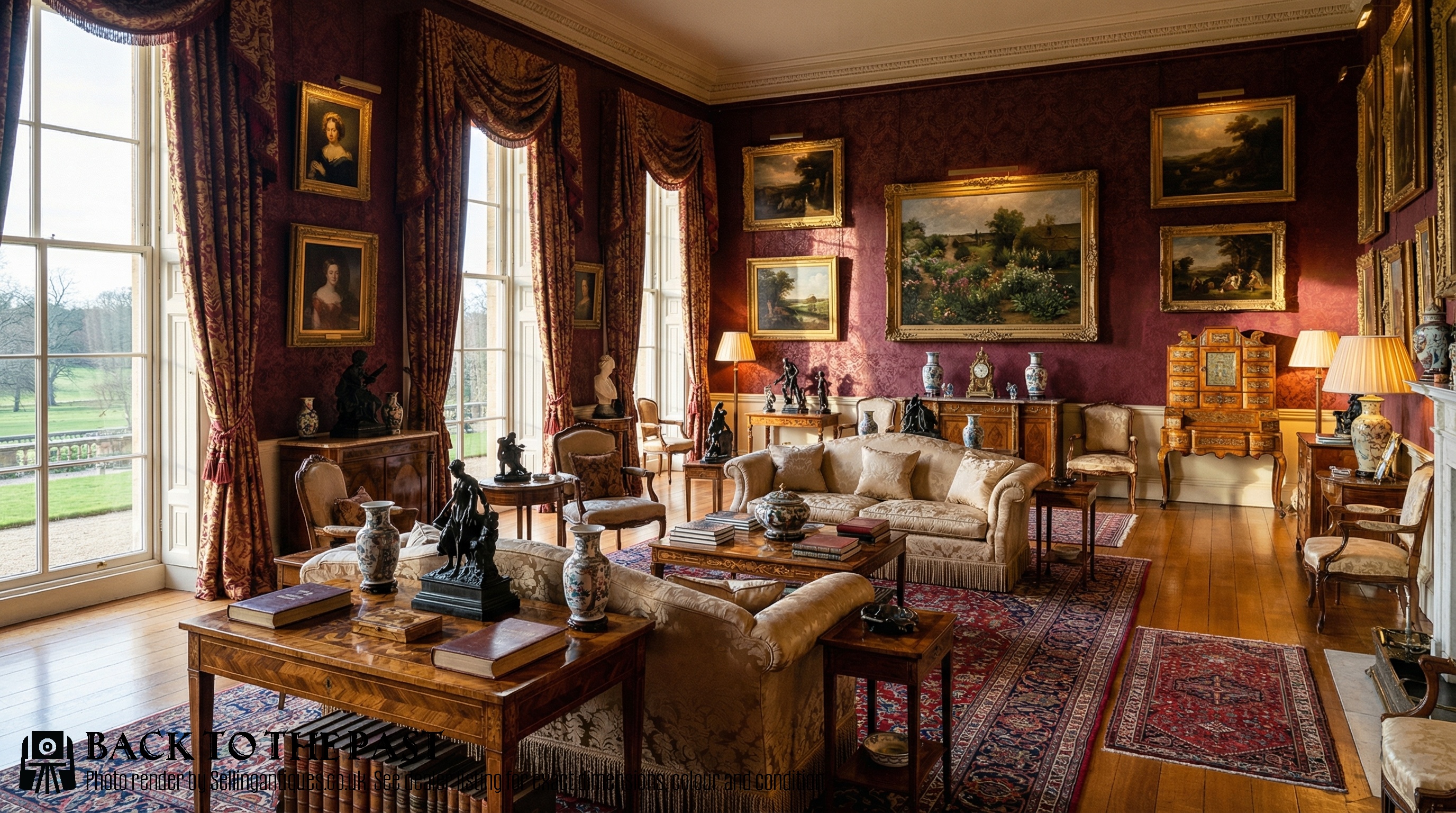
Marquetry Bureau Cabinet
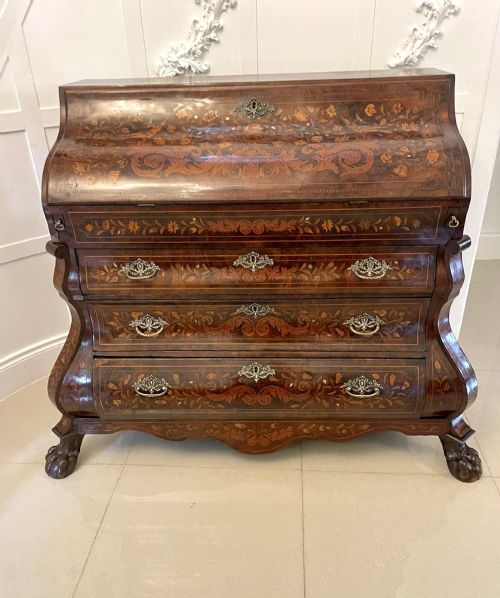
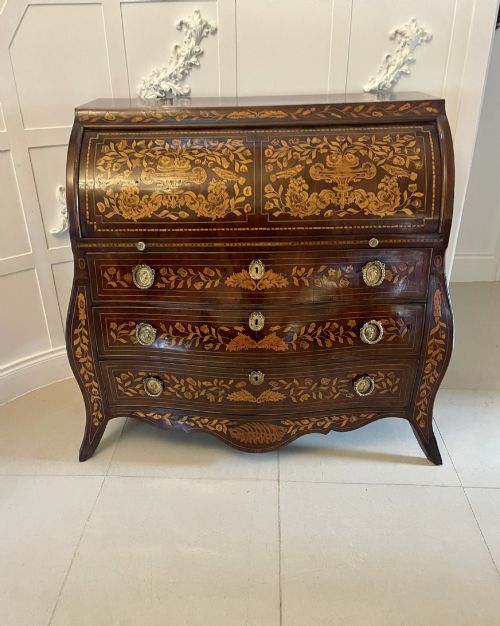
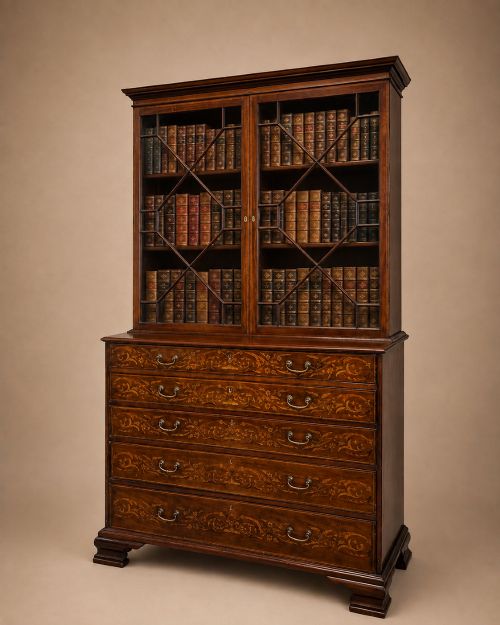
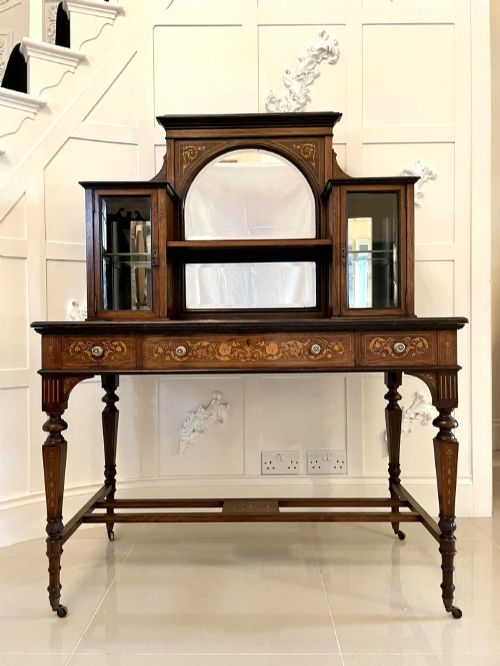
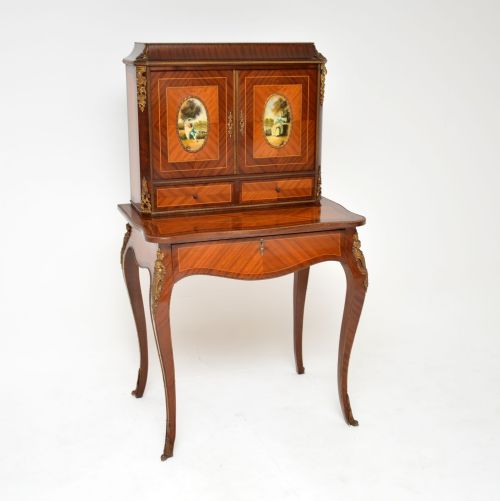
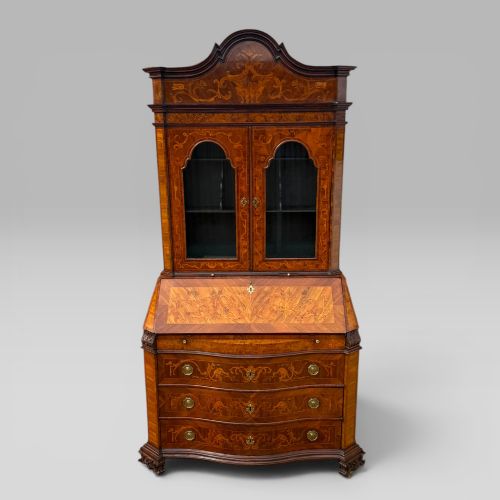
A marquetry bureau cabinet combines a sloped writing flap or drop-front desk with an upper bookcase or display section, decorated with detailed wood veneers. These pieces emerge in styles ranging from Dutch Baroque and Georgian to Louis XV Revival and Victorian.
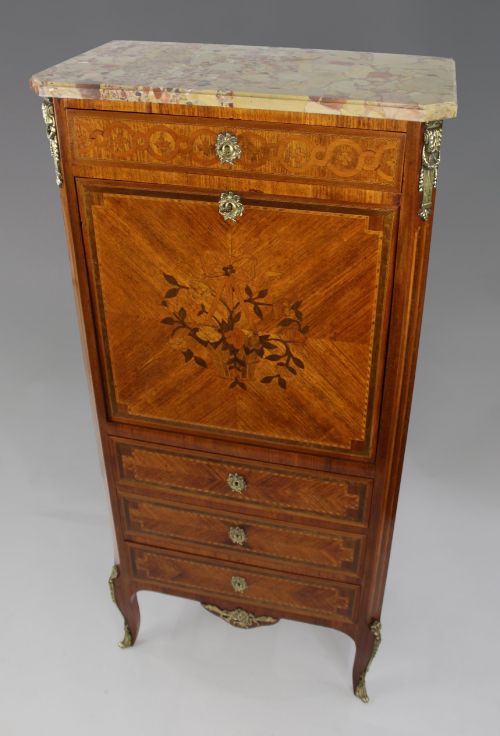
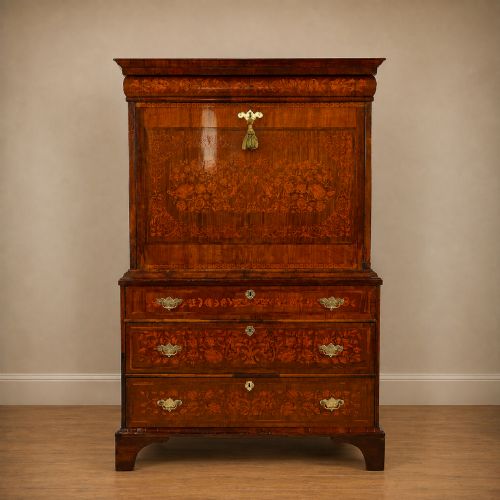
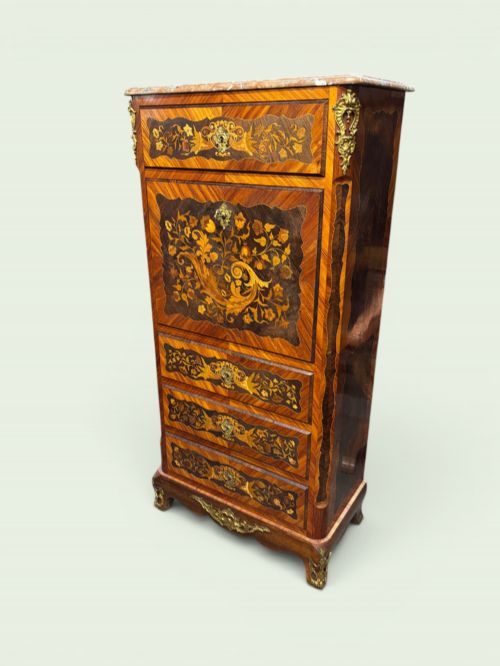
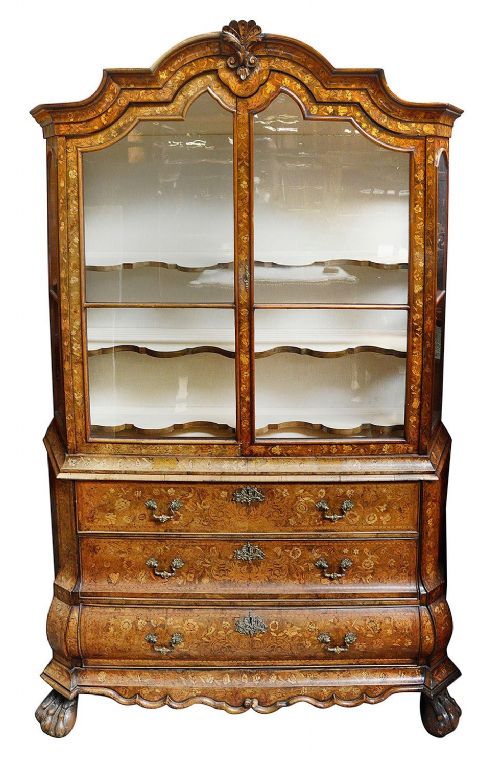
The versions most commonly met on this page include eighteenth-century Dutch walnut bureau bookcases and nineteenth-century French escritoires or secretaire cabinets. Examples span from compact writing desks and bureau de dame forms up to large double-dome cabinets.
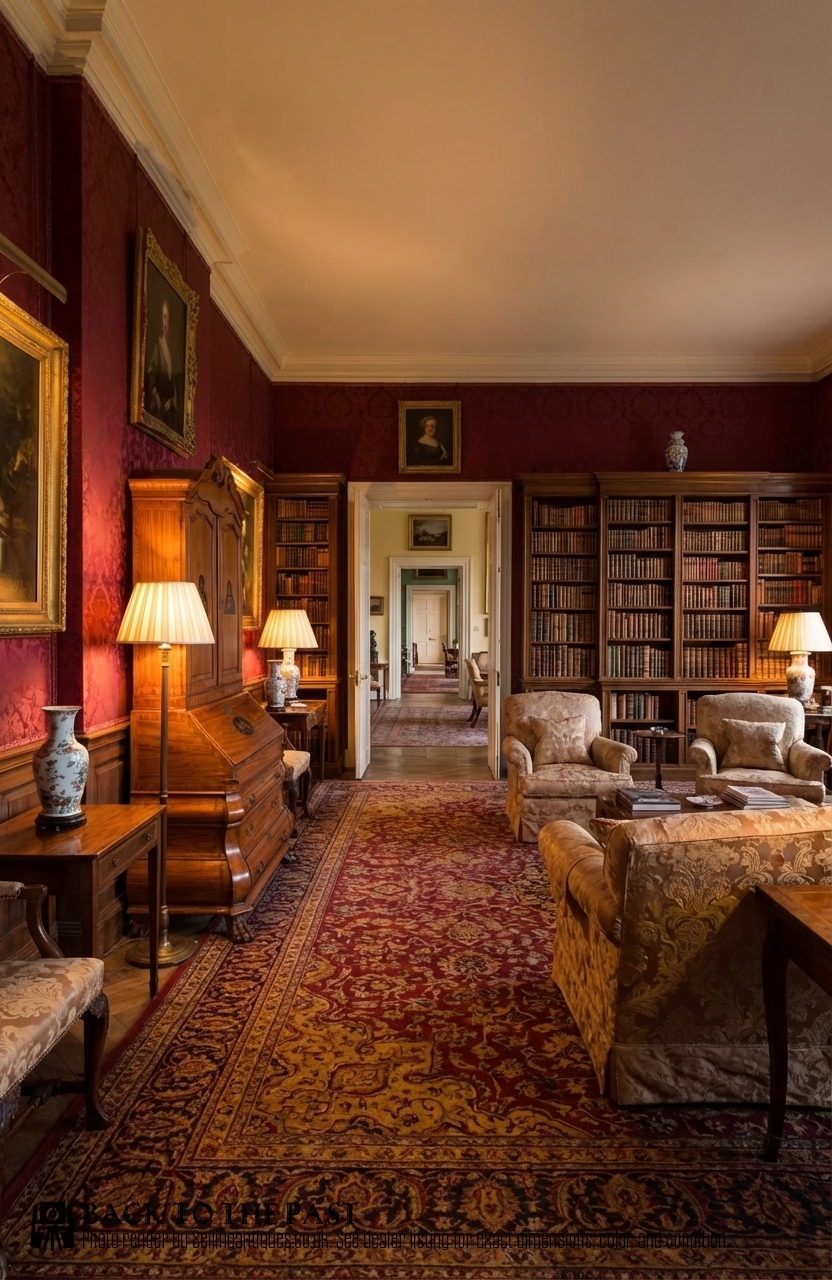
How they were made
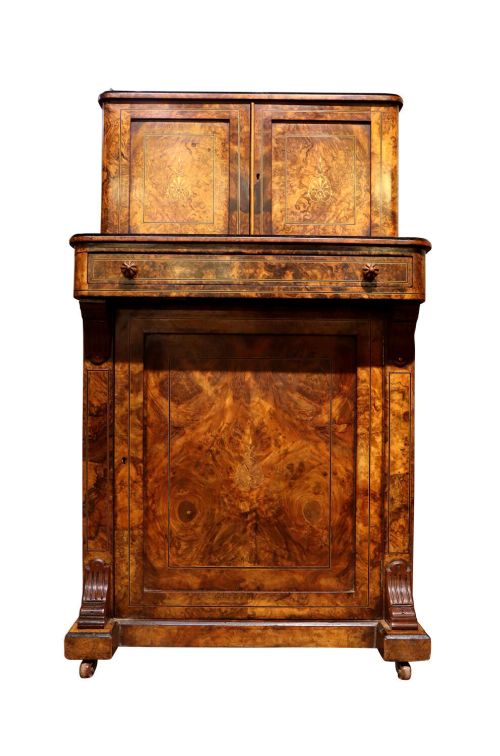
Cabinet makers constructed these pieces using primary timbers such as walnut, mahogany, rosewood, and kingwood, often enhanced by burr walnut or tulipwood veneers. Floral and geometric marquetry patterns were meticulously cut and fitted into the surfaces.
Mounts in ormolu, brass, and gilt bronze, along with glass panels and marble tops, complete the structural and decorative assembly seen across these periods.
Marquetry Bureau Cabinet Retail Price Guide 2026
Typical asking prices for marquetry bureau cabinet among the pieces listed under this phrase on Sellingantiques today, from the lower quarter to the upper quarter. They describe what is for sale here now, not the wider market.
Listings feature walnut, mahogany, rosewood, and satinwood materials across Georgian, Victorian, and eighteenth-century periods.
What varies in quality
The refinement of the marquetry cutting and the choice of timbers define the upper tier of these pieces. Dense floral patterns executed in contrasting exotic woods sit above simpler geometric designs.
Internal drawer configuration and the integration of bronze or ormolu mounts further separate standard execution from superior craftsmanship.
Maison Krieger
The Marquetry Bureau Cabinet Glossary
- Marquetry
- Decorative veneer work arranged in pictorial or floral patterns using various coloured and grained woods. This technique forms the primary visual identity of these cabinets.
- Escritoire
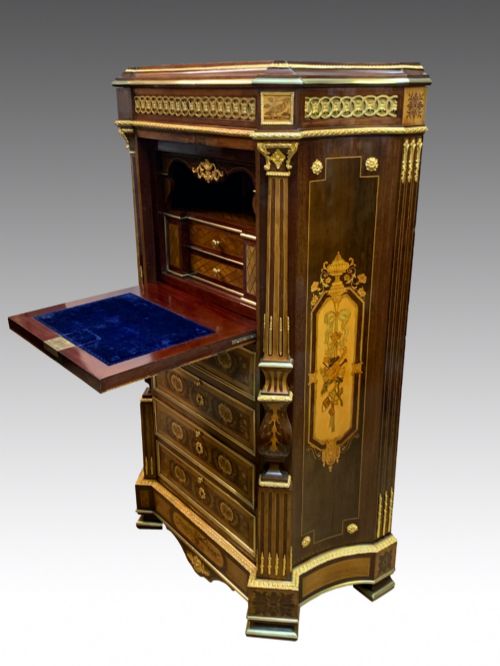
- A writing cabinet with a fall-front flap that conceals small drawers and pigeonholes. It serves as a precursor to the standard bureau.
- Ormolu
- Gilt bronze mounts applied to the angles and feet of French cabinets. These metal elements accent the curved outlines of revival styles.
- Bombe
- A swelling, bulging contour found on the front and sides of certain eighteenth-century Dutch and Baroque furniture. This shape requires advanced woodworking skill to veneer.
- Secrétaire à abattant
- A tall vertical cabinet featuring a drop-front writing surface above lower doors. This form offers concealed compartment storage.
Marquetry Bureau Cabinet: Frequently Asked Questions
What is a marquetry bureau cabinet?
A marquetry bureau cabinet is a dual-purpose piece of furniture featuring a writing desk compartment combined with upper shelving or a bookcase. The exterior surfaces display detailed wood inlay work.
These pieces provide enclosed workspace alongside display or storage capacity for books and papers.
How do I use a bureau cabinet daily?
The writing flap lowers to create a flat surface for correspondence or reading. Internal drawers and small compartments organise stationery and documents.
When not in use, the flap closes to conceal the desk interior and secure the workspace.
Where should I place a bureau cabinet?
These tall cabinets require stable wall placement in rooms with controlled humidity to protect delicate wood veneers and marquetry. Ambient light highlights the varied grain and inlay patterns.
Allow sufficient floor clearance for the drop-front writing flap to open fully.
How do I tell Dutch marquetry from French styles?
Dutch marquetry pieces often feature dense floral and urn motifs executed in walnut with bombe contours. French examples frequently incorporate kingwood, ormolu mounts, and marble tops.
Structural lines and veneer selection point directly to the regional origins of the cabinet.