




Maritime Wall Artwork
Maritime wall artwork captures the enduring drama of the sea through historic oil paintings, watercolours and prints.
Maritime Wall Artwork
Maritime wall artwork encompasses historical depictions of ships, harbours, coastal landscapes and naval engagements executed across various painting and printing mediums. Buyers exploring this category encounter original Victorian oils, Edwardian watercolours and mid-twentieth-century coastal scenes.
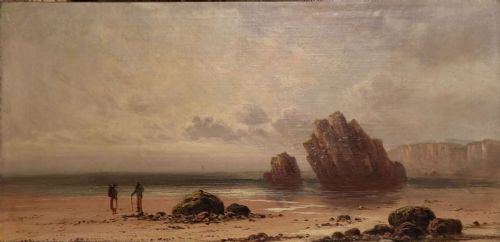
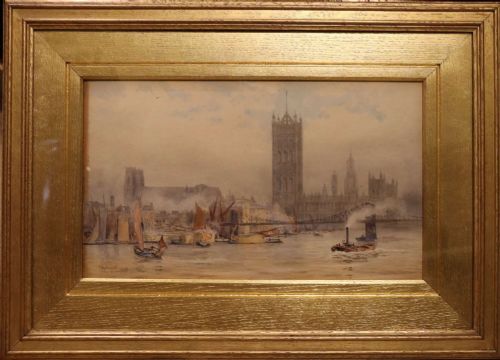
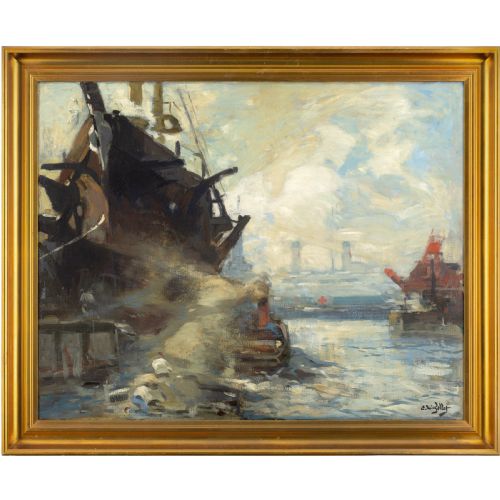
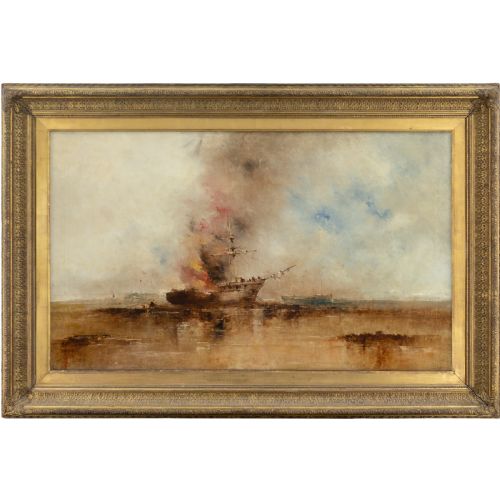
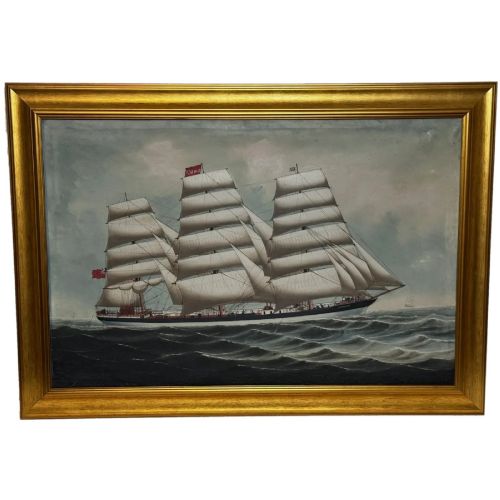
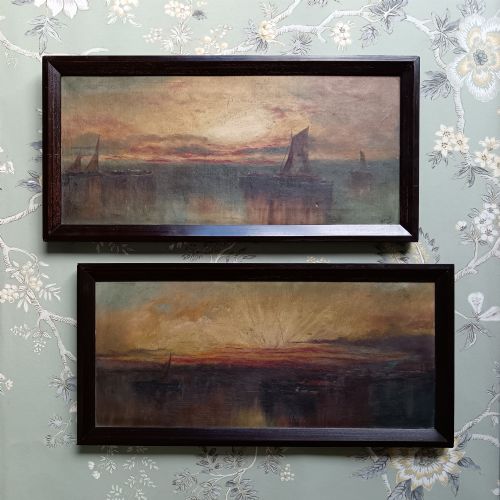
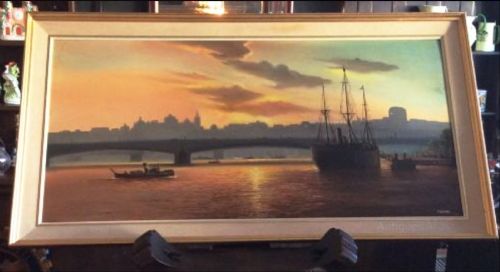
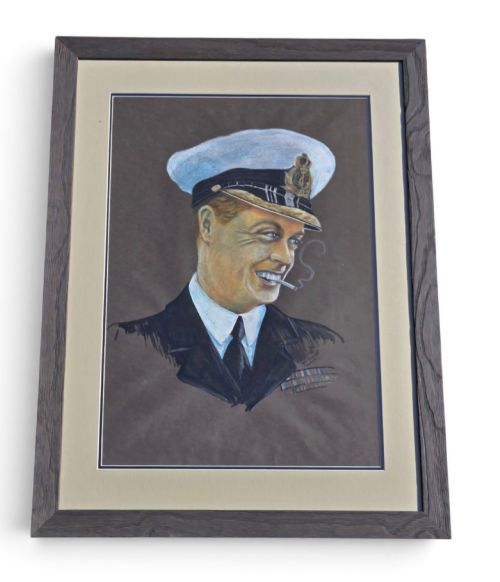
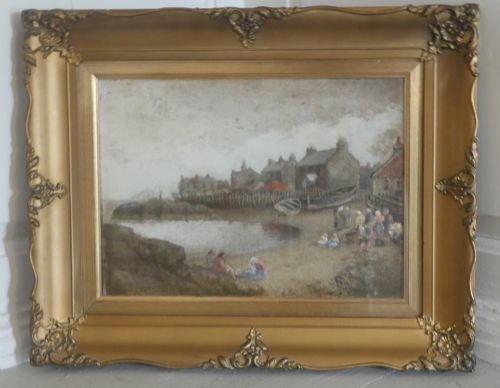
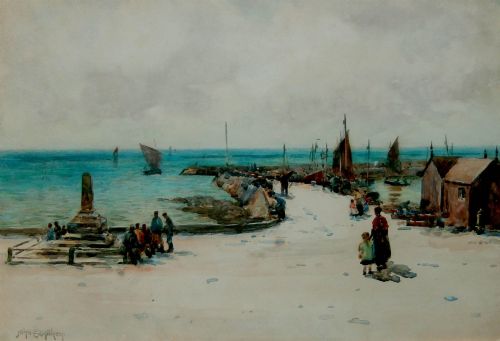
The most prevalent pieces on this page are nineteenth-century and early twentieth-century oil paintings and watercolours depicting British and European coastal views, bustling ports and vessels in open water.
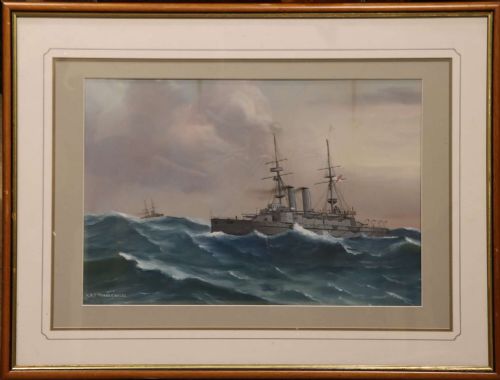
These works range from intimate studies of fishing boats in Cornish harbours to large panoramic canvases of naval battles and merchant ships navigating rough seas.
Materials and construction
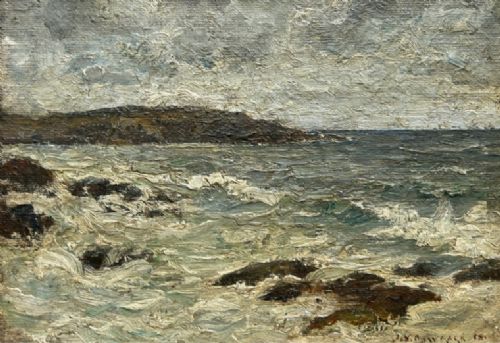
The primary supports recorded in these listings are canvas, wooden panel, paper and board, providing diverse textures for artists working in oil, watercolour, gouache or pastel. Oil pigments on stretched canvas or panel allow for layered impasto and atmospheric rendering of turbulent water and stormy skies.
Watercolours and gouache on paper capture the delicate light of coastal inlets and tranquil estuaries, frequently mounted beneath glass within period frames of wood or gilt wood.
The selection includes depictions of British, European and Asian shipping, ranging from Dutch boats in a gale to Chinese export junk paintings.
Assessing quality and execution
Quality in maritime wall artwork rests upon the artist's command of light, movement and maritime architecture, where accurate rigging and hull construction distinguish competent records from masterly compositions. Finer pieces demonstrate confident brushwork and precise atmospheric perspective in rendering turbulent waves, distant horizons and shifting cloudscapes.
The integration of the original frame, particularly period gilt wood mouldings that complement the palette of the painting, contributes significantly to the integrity and visual impact of the piece.
James Hardy·Kenneth Cozens·James Orrock·Eugène-Louis Gillot·William McAlpine·Reginald Arthur Borstel·B. Nash·John E. Aitken·Eric Tufnell·William Banks Fortescue·John Rose Miles·James Kay·William Broome·Bernard Gribble·William Lionel Wyllie·Bonaventura Peeters·F. Corpuz·Peter Brannan·Francis Moltino·Paul Bret·Bernard Benedict Hemy·Thomas Creswick·Lucy Pratt·Francis Hayman·Willem Bos
The Maritime Wall Artwork Glossary
- Seascape
- A work of art depicting the sea, coastal views or marine subjects. These pieces focus primarily on open water, coastlines and maritime weather.
- Impasto
- Paint applied thickly to a canvas or panel so that it stands out from the surface. This technique imparts tangible texture to foaming waves and billowing sails.
- Gouache
- An opaque watercolour paint consisting of pigment, water and a binding agent such as gum arabic. It dries to a matte finish and provides rich, dense colour.
- Panel
- A rigid flat support for a painting, commonly made of wood. Artists frequently utilised wooden panels for smaller marine oils during the nineteenth century.
- Etching
- A printmaking process where lines are incised into a metal plate with acid before ink is applied and transferred to paper. This technique creates fine, sharp linear detail in graphic maritime works.
Maritime Wall Artwork: Frequently Asked Questions
What subjects do maritime paintings show?
These artworks depict a wide range of nautical subjects, including merchant vessels, naval warships, historic sailing ships and smaller fishing boats at work. Many pieces also capture specific ports, coastal towns, lighthouses and dramatic maritime weather events.
Artists frequently documented working harbours, tranquil estuaries and fierce gales at sea, reflecting Britain's deep historical connection to maritime trade and exploration.
How do I care for antique maritime watercolours?
Watercolours on paper are sensitive to light and require careful placement away from direct sunlight to prevent fading of the pigments. Framing with acid-free mounts and UV-protective glass helps preserve the integrity of the paper over time.
Maintaining stable indoor humidity levels protects both the paper support and the historical frame from warping or moisture damage.
How do I identify a nineteenth-century marine oil painting?
Nineteenth-century oil paintings typically exhibit traditional canvas preparation, organic crackle in the paint surface and materials consistent with the period. Signatures, inscriptions on the reverse, and stretcher construction offer further clues to the date of execution.
Stylistic conventions of the era, such as romanticised depictions of light and detailed rigging on sailing vessels, also point towards a nineteenth-century origin.
Where should I hang a large marine artwork?
Large marine canvases and framed prints work well as focal points in principal reception rooms, studies or hallways with balanced ambient lighting. Ensuring the hanging height aligns with eye level allows viewers to appreciate the fine details of the brushwork and composition.
Pairing the artwork with traditional interior spaces enhances the historic character of pieces depicting nineteenth or early twentieth-century subjects.