
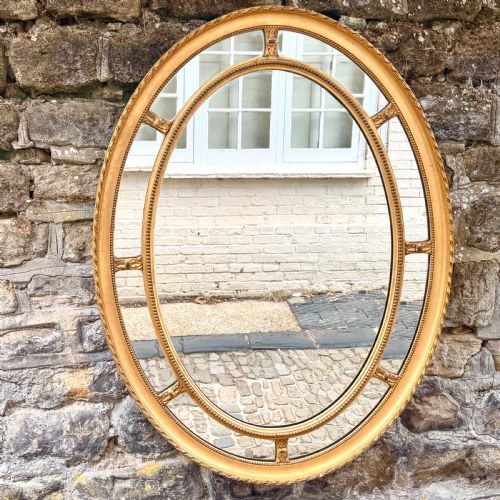


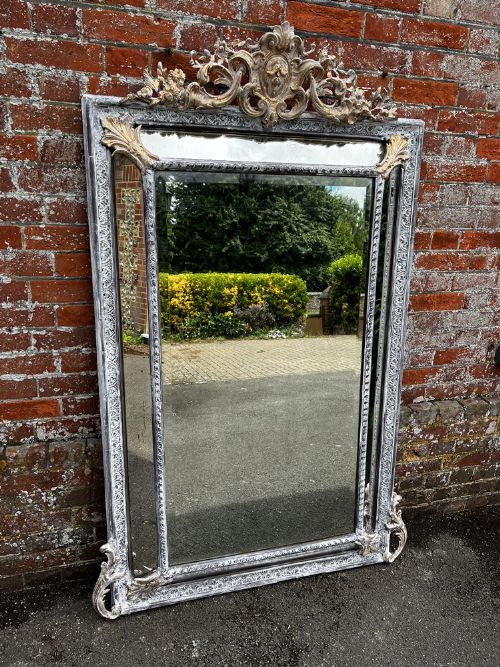


Marginal Frame Mirror
A marginal frame mirror brings layered depth to a room through its segmented glass plates.
Marginal Frame Mirror
A marginal frame mirror consists of a central glass plate surrounded by smaller, angled or border plates held within the main rebate. When searching for a marginal frame mirror, you encounter pieces primarily from the nineteenth century, including Victorian and Edwardian examples.
The forms span large wall mirrors, oval shapes, and cushion mirrors styled after French Chateau, Regency, and Rococo Revival tastes. Italian neoclassical designs also appear frequently among the current selection of wall mirrors.
These pieces function to bounce ambient light across interior spaces while offering intricate visual borders created by the subsidiary glass sections. Most surviving specimens utilise giltwood, gesso, and painted wood frames to secure the complex glazing.
How they were made
Maker's workshops built these frames using timber cores of wood before applying layers of gesso to build up decorative mouldings and relief details. Artisans then applied gold leaf or paint finishes to the gesso surfaces, creating the characteristic giltwood appearance.
The glazing process required cutting individual marginal mirror plates to fit precisely around the central plate, securing each piece with timber slips or pins. Panel construction allowed makers to produce large wall mirrors despite the technical limits of glass production at the time.
Many marginal plates were bevelled entirely by hand using abrasive sand, leaving subtle undulations that catch candlelight.
What varies in quality
Quality rests in the crispness of the gesso carving and the precision with which the marginal plates meet at the mitres. Finer examples display deep relief work and well-balanced proportions between the central glass and the surrounding border panes.
The condition and character of the original mirrored glass plates influence the overall merit of the piece. Hand-silvered plates showing natural age spots hold greater decorative depth than replacement glass.
The Marginal Frame Mirror Glossary
- Marginal plate
- A smaller section of mirror glass fitted around the perimeter of a larger central plate to form a decorative border. These subsidiary panes are often bevelled or edge-cut.
- Gesso
- A mixture of gypsum and binder applied to wood frames to create a smooth surface for gilding or painting. Deep gesso layers allow for intricate mouldings.
- Giltwood
- Timber carved and coated with gold leaf over a prepared ground. It provides the bright finish seen on many nineteenth-century wall mirrors.
- Cushion mirror
- A frame form with a rounded, convex profile that slopes outward from the wall towards the glass. This style often incorporates panelled marginal borders.
- Mitre
- The joint formed where two pieces of moulding meet at an angle, typically forty-five degrees. Clean mitres indicate careful joinery in frame construction.
Marginal Frame Mirror: Frequently Asked Questions
How do I date a marginal frame mirror?
Dating relies on examining the construction methods of the wooden frame, the composition of the gesso, and the style of the mouldings. Victorian and Edwardian examples often display revival motifs such as Adam or Rococo details.
The backing boards, fixing methods, and the nature of the glass silvering also offer reliable clues to the period of manufacture.
Where were marginal frame mirrors placed?
These mirrors typically hung above mantelpieces or on principal drawing-room walls where they could maximise natural light. Their decorative borders served as focal points in formal nineteenth-century reception rooms.
Large wall versions were also positioned between windows to brighten darker corners of period townhouses.
Are all marginal frame mirrors gilt?
While many examples feature giltwood or gilt-gesso finishes, some pieces utilise painted wood or combinations of paint and gilding. Italian and French pieces from the nineteenth century frequently employ painted surfaces alongside gold leaf.
The finish choice usually reflects the prevailing interior style of the period, from Italian neoclassical to French chateau aesthetics.