

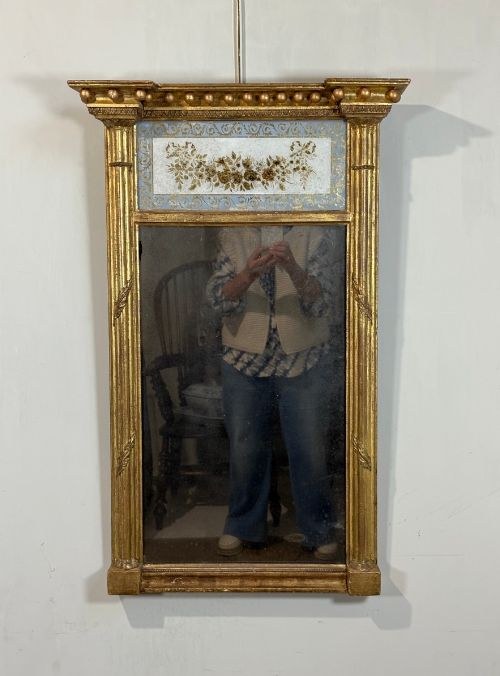
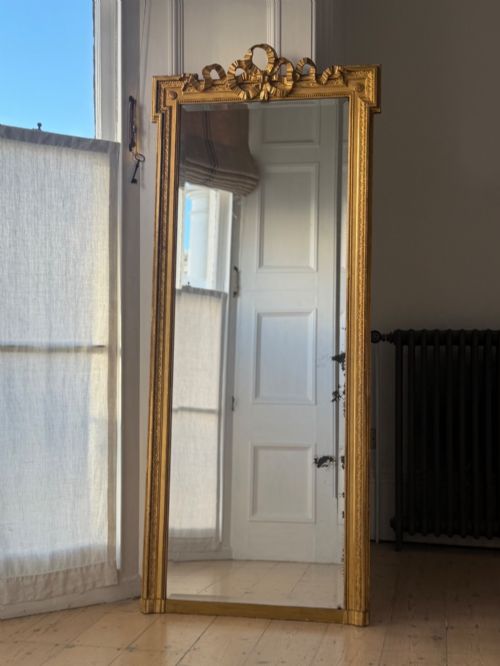
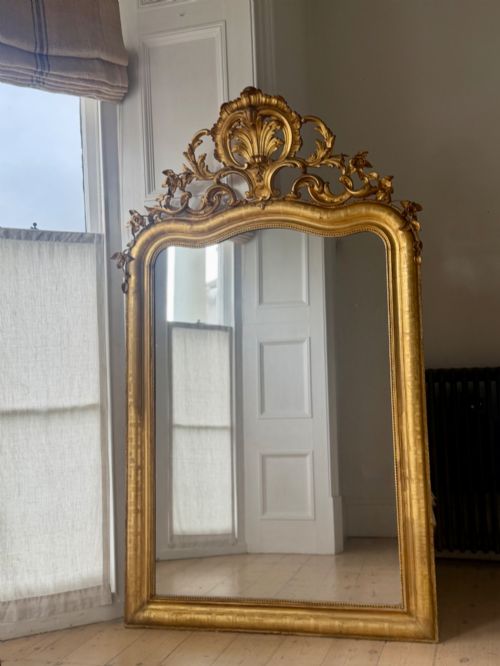
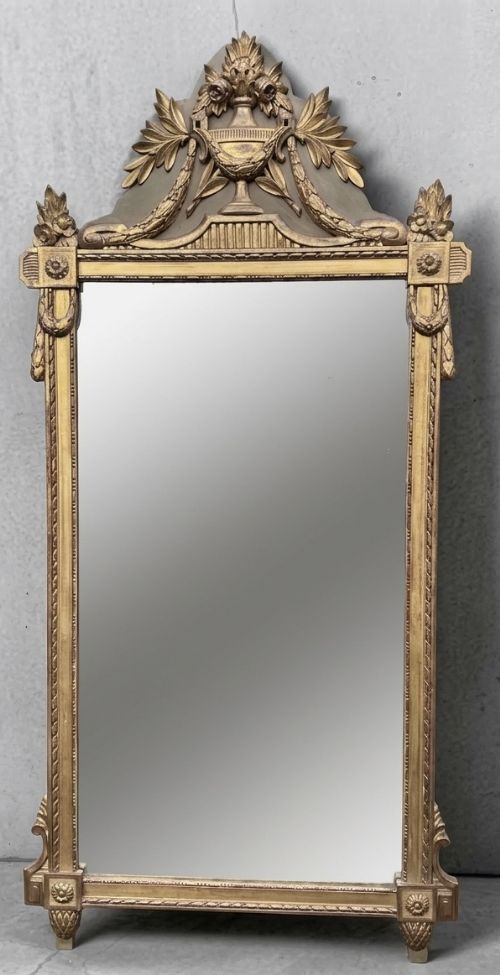
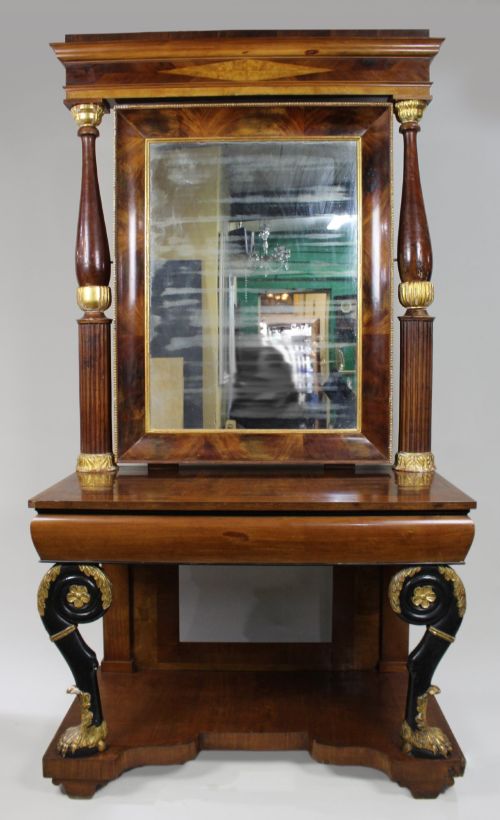
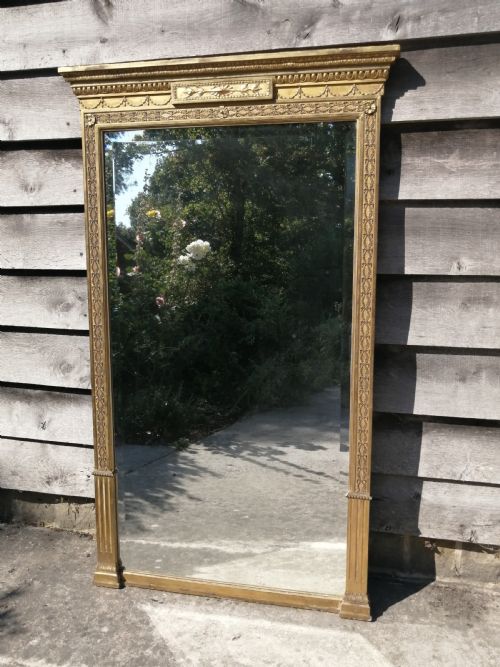
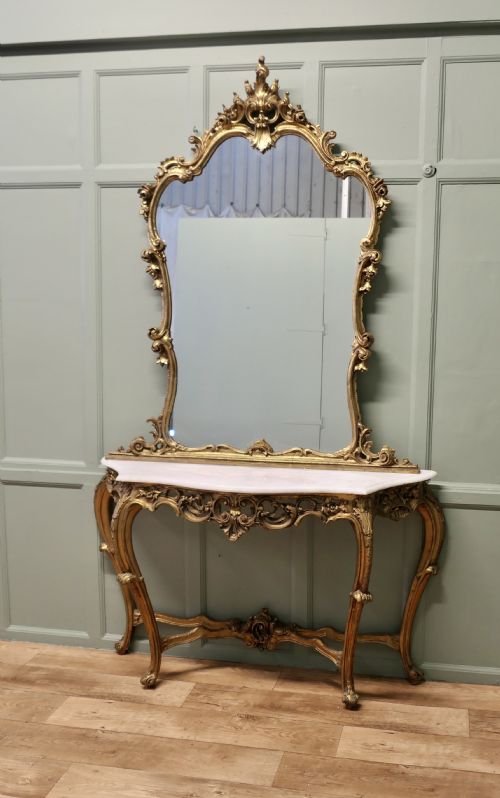
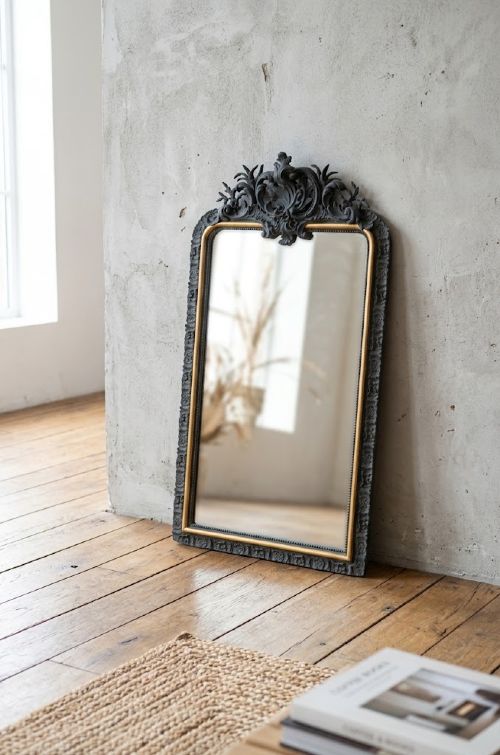
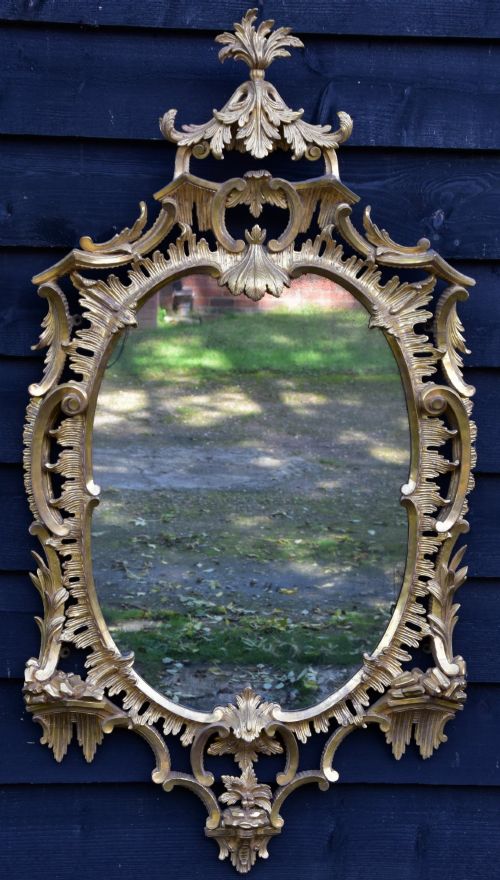
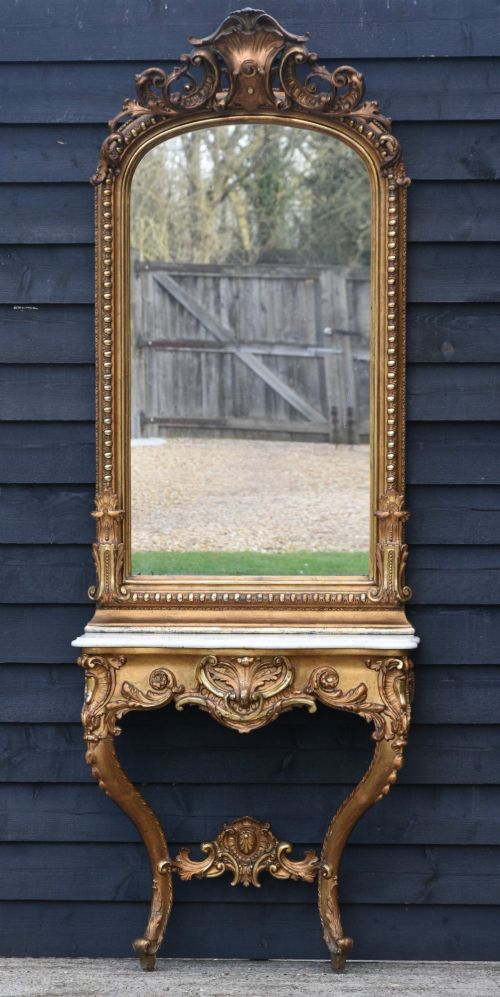
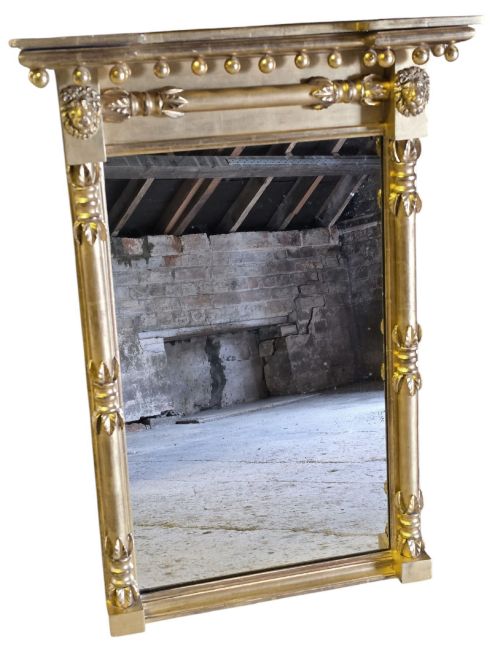
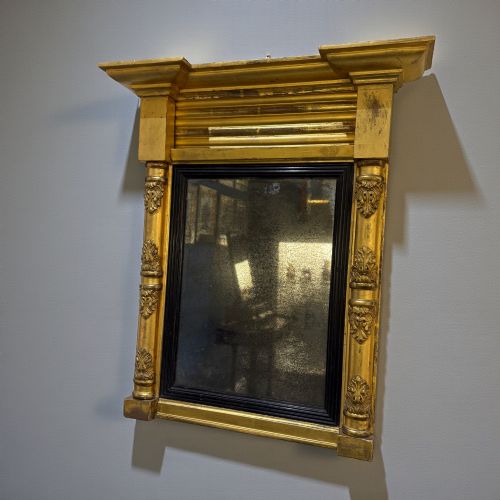
Antique Giltwood Pier Mirror
An antique giltwood pier mirror brings warmth and reflective depth to a reception room, designed specifically to hang on the wall space between two windows.
Antique Giltwood Pier Mirror
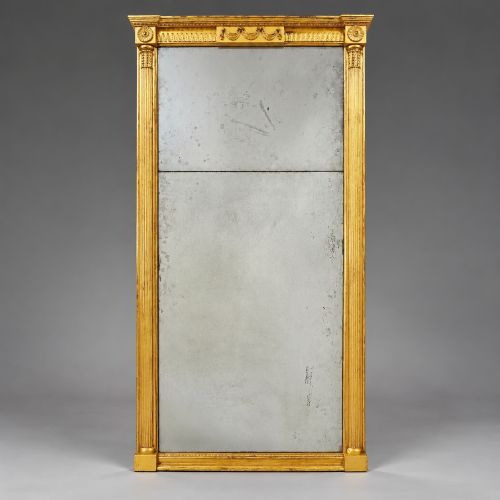
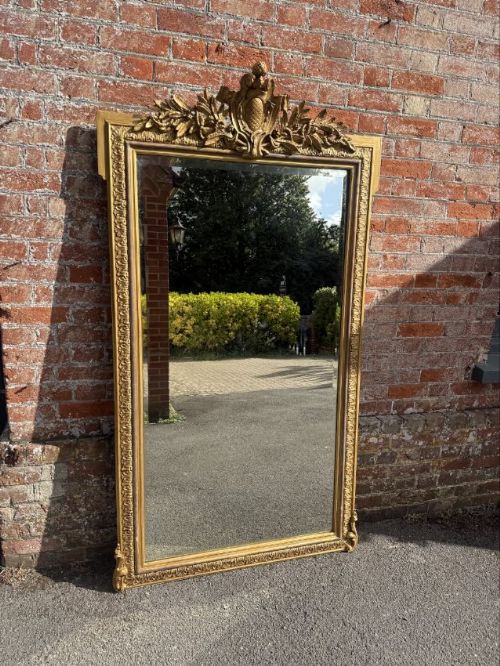
When searching for an antique giltwood pier mirror, you are looking at tall vertical wall glasses made to stand between windows or above console tables. The examples on this page span the 18th century, the Georgian and Regency periods, and later 19th-century interpretations including Rococo Revival, French Chateau, and Louis XVI styles.
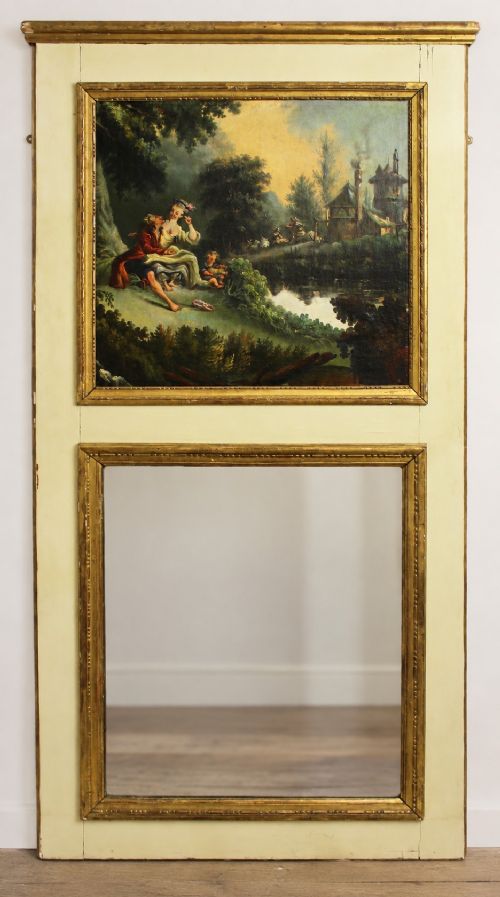
The most common form met here is the 19th-century French or English wall mirror, often incorporating carved wood and gesso frames finished in gold leaf. Certain pieces arrive paired with console tables or feature painted panels and trumeau elements above the glass plate.
Origin varies between English workshops of the Georgian era and continental centres such as France and Italy. These pieces function both as wall mirrors and decorative architectural statements within a room.
Materials and construction
Makers built the structural frames using timber such as mahogany, painted wood, or carved wood, then applied layers of gesso to create crisp relief details. This gesso layer provided a smooth ground for the application of gold leaf or gilt finish.
Mirror plates within these frames included mercury glass and bevelled glass, sometimes preserved as original plates alongside reverse cut plates or verre eglomise panels.
Antique Giltwood Pier Mirror Retail Price Guide 2026
Typical asking prices for giltwood pier mirror among the pieces listed under this phrase on Sellingantiques today, from the lower quarter to the upper quarter. They describe what is for sale here now, not the wider market.
Assessing quality
Quality rests in the crispness of the carved wood and gesso ornamentation, where deep, detailed relief work distinguishes superior framing from simpler mouldings. The retention of original gold leaf and untouched mirror plates further elevates a piece.
Proportion and scale dictate the visual impact, particularly in monumental or very large examples where the balance between the frame width and the height of the glass plate determines the architectural harmony of the mirror.
The Antique Giltwood Pier Mirror Glossary
- Giltwood
- Wood that has been coated with gold leaf or a gold-coloured finish. This surface treatment gives the frame its characteristic metallic sheen and warm yellow tone.
- Pier glass
- A tall mirror designed specifically for the wall space between two windows. It frequently sat above a matching console table.
- Gesso
- A plaster-like mixture applied to wood frames to create a smooth surface for carving and gilding. It allows for sharp, intricate relief decoration.
- Mercury glass
- An early type of mirror glass made by pouring a mercury-tin amalgam between two sheets of glass or onto the back of a single plate. It creates a mottled, dark reflective quality.
- Trumeau mirror
- A decorative wall mirror that incorporates a painted panel or oil painting above the glass plate. These panels often depict pastoral scenes or maritime subjects.
- Verre eglomise
- A cold decoration technique where designs are applied to glass using gold or silver leaf combined with painting. It appears on borders and panels of Regency mirrors.
Antique Giltwood Pier Mirror: Frequently Asked Questions
Where should I hang a pier mirror?
These tall vertical glasses suit spaces between windows or above low furniture like console tables. Their original purpose involved catching and reflecting light in darker areas of a room.
Ensure the wall structure can support the weight, particularly with large 19th-century carved frames, and hang them at eye level to maximise their reflective qualities.
What is the difference between a pier mirror and an overmantel mirror?
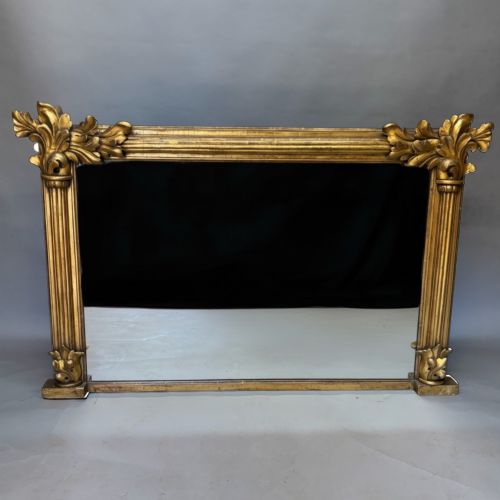
Pier mirrors are narrow and tall, built to fit the wall space between windows. Overmantel mirrors are wider and designed to sit horizontally above a fireplace mantel.
While some 19th-century listings describe pieces serving both functions, traditional pier glasses maintain a vertical rectangular format.
How do I identify mercury glass?
Mercury glass displays a distinctive dark, mottled appearance behind the reflective surface, often with small spots or cloudiness where the backing has aged. It lacks the stark, uniform clarity of modern silvered glass.
This characteristic ageing process appears on 18th-century and 19th-century French and English mirrors.