



Ribbon Bow Gilt Mirror
A ribbon bow gilt mirror brings French and Adam revival elegance to a room through carved wood, giltwood, and gleaming glass.
Ribbon Bow Gilt Mirror
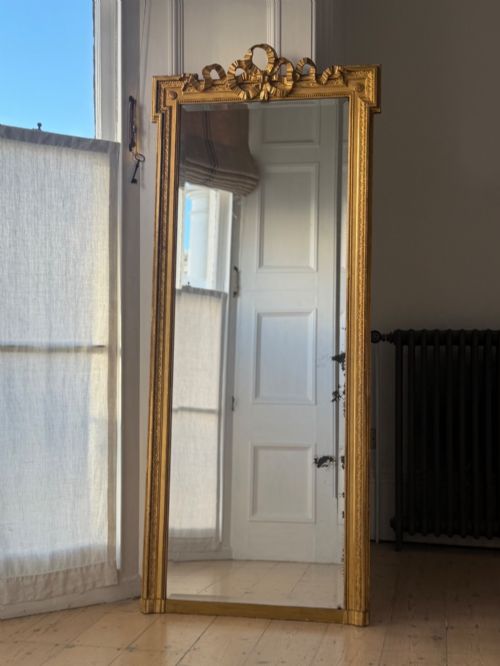
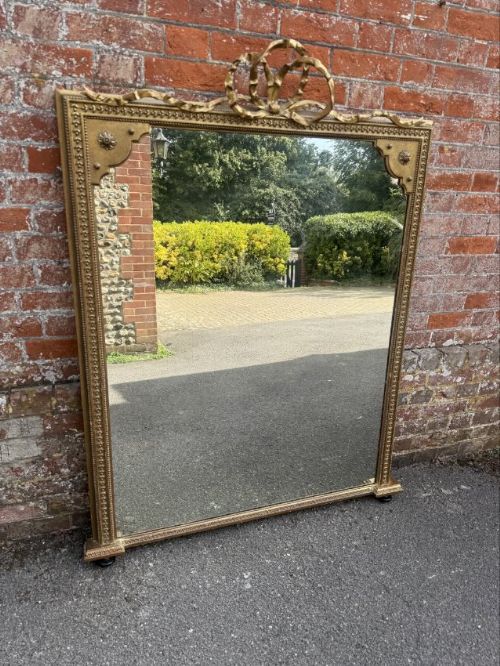
A ribbon bow gilt mirror is a decorative looking glass defined by its ornate cresting and period styling. These pieces originate predominantly from the nineteenth and early twentieth centuries, spanning Victorian, Edwardian, and Regency eras.
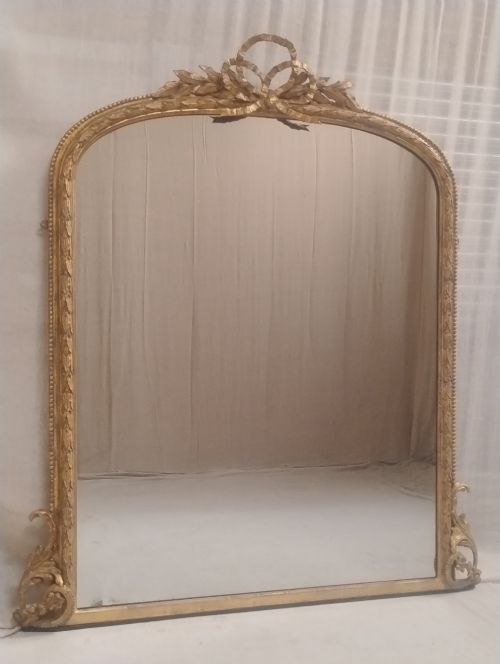
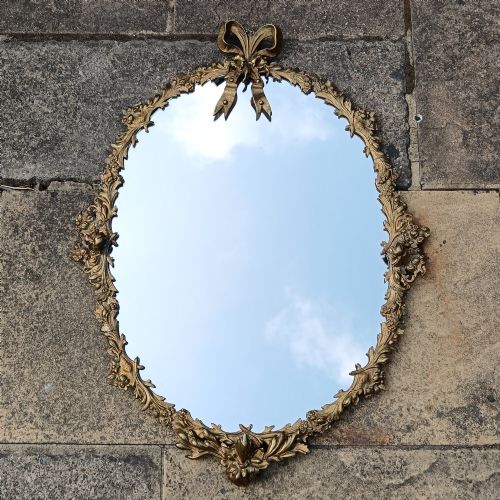
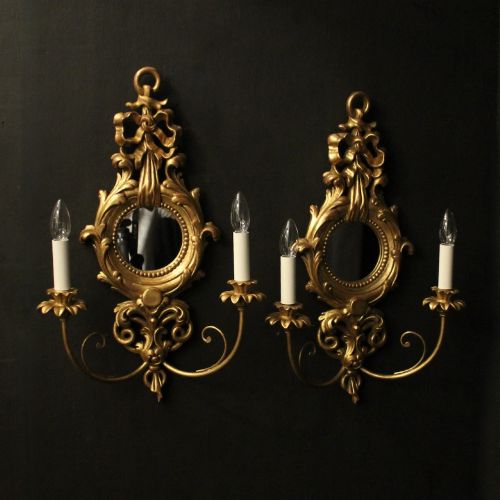
Buyers browsing this selection encounter various forms, from large arched overmantel mirrors to smaller oval wall mirrors and matching pairs of wall lights or girandoles. French Louis XVI revival and Adam style influences dominate the designs, bringing classical symmetry and carved detailing to domestic interiors.
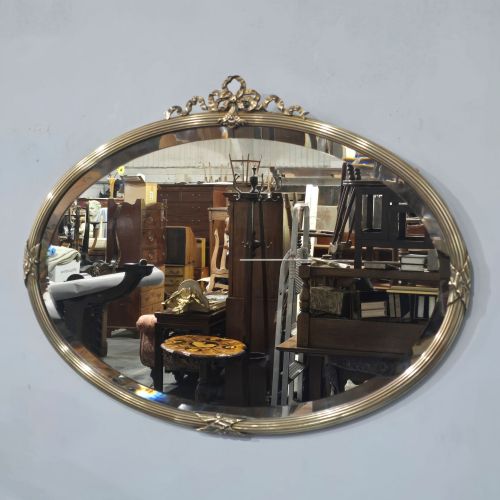
The most common formats on this page are wall-hanging oval mirrors and substantial overmantels designed to anchor a fireplace or room. Giltwood, gesso, gilt bronze, and brass provide the reflective or gilded surfaces that define the aesthetic of these decorative items.
Materials and construction
Craftsmen shaped these mirrors using carved wood and gesso frameworks finished with fine gilt layers. Metal components also appear in the form of cast gilt bronze and brass, particularly on French and Victorian wall lights and oval frames.
Glass is a central element, utilised both as standard mirror plates and bevelled glass set securely within rope twist or moulded frames. The combination of carved wood, applied gesso, and gold leaf or gilt finish created the signature luminous appearance of these antique pieces.
Ribbon Bow Gilt Mirror Retail Price Guide 2026
Typical asking prices for ribbon bow gilt mirror among the pieces listed under this phrase on Sellingantiques today, from the lower quarter to the upper quarter. They describe what is for sale here now, not the wider market.
Materials recorded across the inventory include giltwood, gesso, gilt bronze, brass, and bevelled glass.
Assessing quality and craftsmanship
Quality in a ribbon bow gilt mirror rests on the crispness of the carved wood and the depth of the gilding. Superior examples display sharply defined details in the ribbon and bow motifs rather than soft or moulded resin replacements.
The choice of materials and the integrity of the frame construction distinguish finer pieces from simpler domestic mirrors. Heavier timbers, original bevelled glass plates, and well-executed French or English revival styling set the higher tier apart.
The Ribbon Bow Gilt Mirror Glossary
- Giltwood
- Wood that has been coated with gold leaf or a gilt finish. This technique creates a rich, reflective surface characteristic of formal period mirrors.
- Gesso
- A plaster-like mixture applied to wood frames before gilding. It provides a smooth base for intricate carving and detailing.
- Overmantel mirror
- A large wall mirror specifically designed to hang above a fireplace mantel. These pieces often feature arched tops or horizontal proportions to suit chimney breasts.
- Girandole
- A branched wall sconce or light fixture holding candles or electric bulbs, frequently paired with a mirror. They reflect candlelight and add illumination to a room.
- Bevelled glass
- Glass with edges cut and polished at an angle. This treatment creates a framed prismatic effect around the perimeter of the mirror plate.
Ribbon Bow Gilt Mirror: Frequently Asked Questions
Where should I hang a ribbon bow gilt mirror?
These mirrors suit placement above a drawing room fireplace, in a hallway, or as a focal point in a bedroom. Their decorative crests draw the eye upward.
Matching pairs of wall lights or girandoles work well flanking a larger piece of furniture or an entranceway to balance the wall space.
How do I identify a Louis XVI style mirror?
Louis XVI style mirrors often feature neoclassical symmetry, straight lines, and decorative elements such as ribbons, bows, and floral garlands. French influence is evident in the refined carving and oval or arched formats.
English interpretations, such as Adam style mirrors, share these classical proportions and delicate ornamentation.
What is the difference between an overmantel and a wall mirror?
Overmantel mirrors are traditionally larger and proportioned to sit horizontally or with an arched top above a fireplace opening. They serve as the central visual anchor of a room.
Standard wall mirrors are typically smaller, designed for general hanging on any wall space to bounce light around the interior.
How do I care for a giltwood frame?
Dust the carved wood and gilt surfaces gently with a soft, dry brush to prevent the accumulation of dirt. Avoid chemical cleaners or moisture, which can damage the delicate gesso and gold leaf.
Keep the mirror away from direct sunlight and damp environments to preserve the integrity of the antique materials.