
Marble Top Wall Table
A marble top wall table brings sculptural presence and firm surface utility to an interior through substantial stone and carved timber.
Marble Top Wall Table
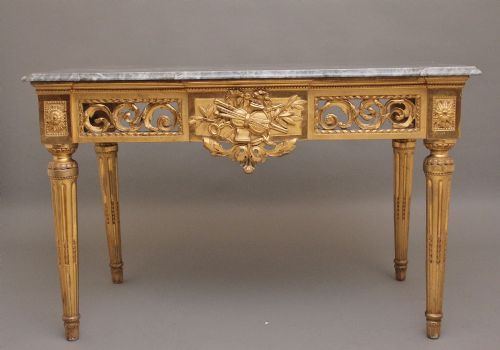
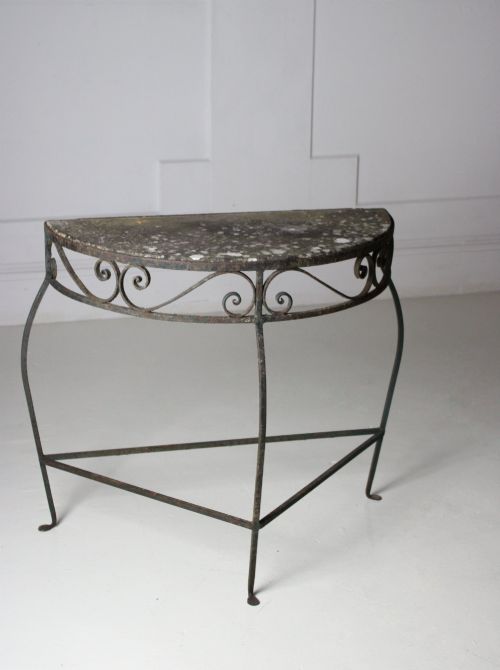
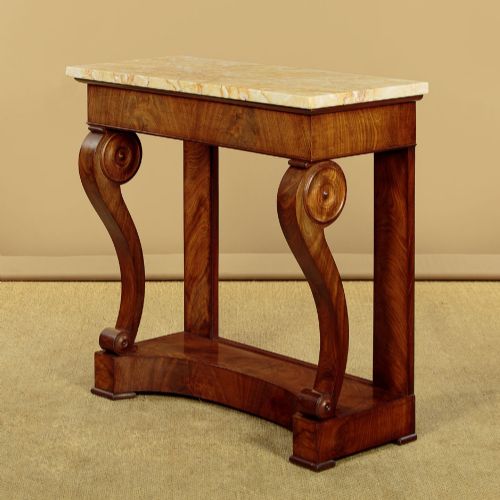
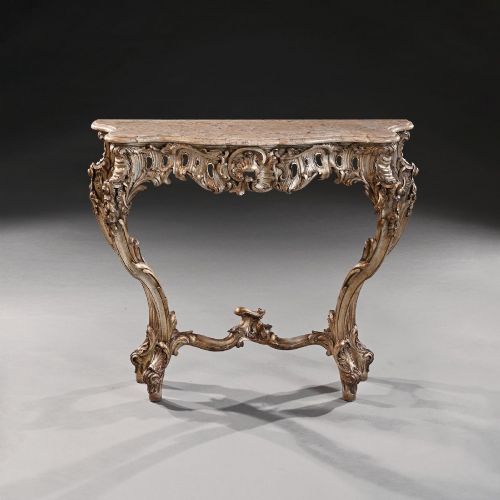
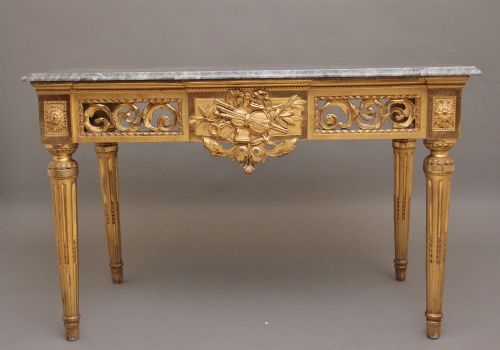
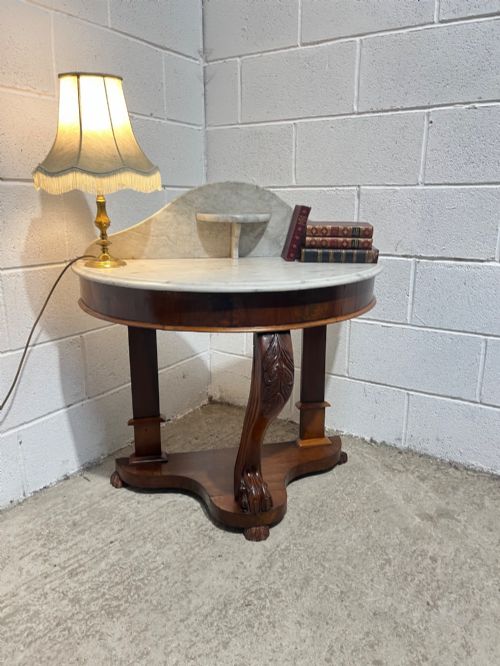
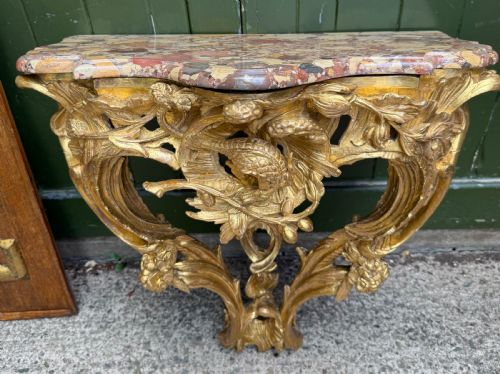
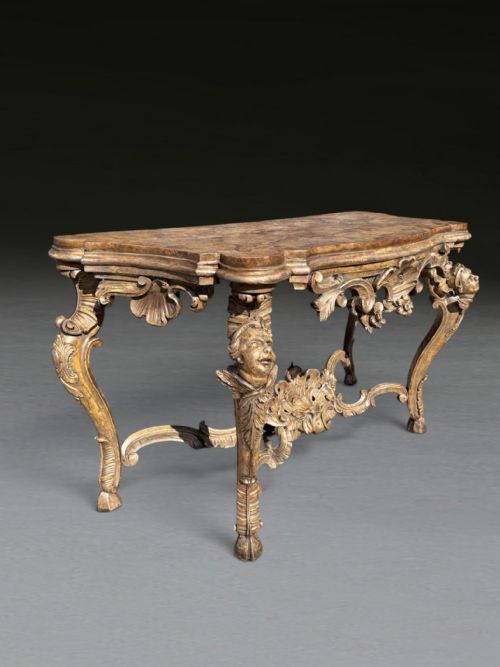
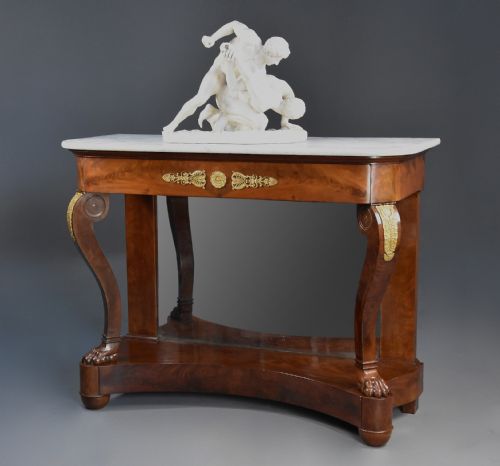
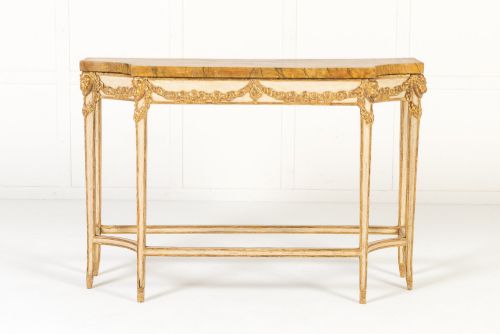
A marble top wall table, often recorded as a console or pier table, sits flush against a wall and frequently relies on wall mounting or front legs for support. These pieces emerge across the eighteenth, nineteenth, and early twentieth centuries in forms ranging from French rococo giltwood to understated mahogany and walnut.
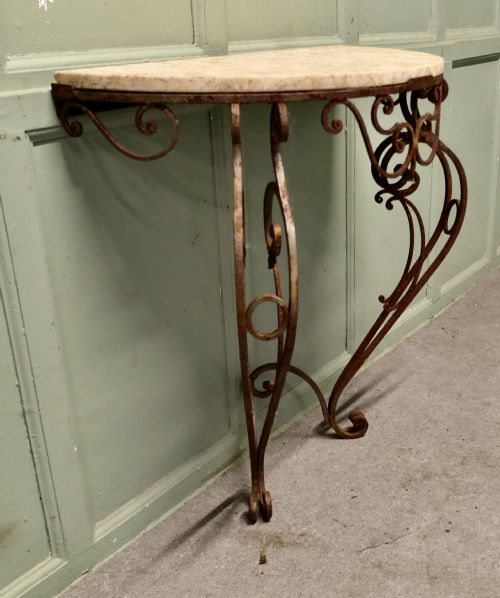
The materials span heavy figured marbles paired with carved timber frames, giltwood, gesso, and occasionally wrought iron or glass. Surviving examples demonstrate a clear preference for decorative architectural placement, serving narrow hallways, drawing rooms, and formal reception spaces.
How they were made
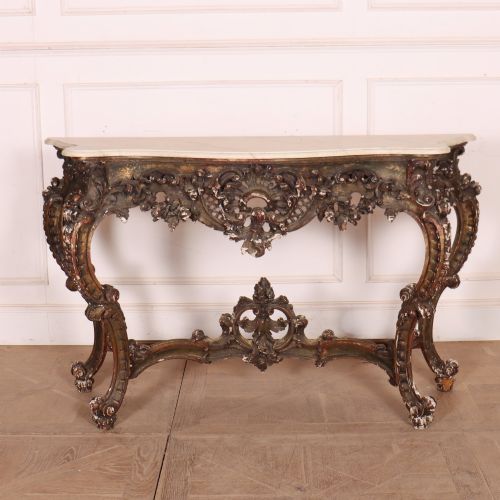
Frames rely principally on solid timbers such as mahogany, walnut, and oak, alongside softwood carcasses heavily prepared with gesso and layered with gold leaf or silver gilt. Carving ranges from deep, exuberant French rococo flourishes to restrained neoclassical lines.
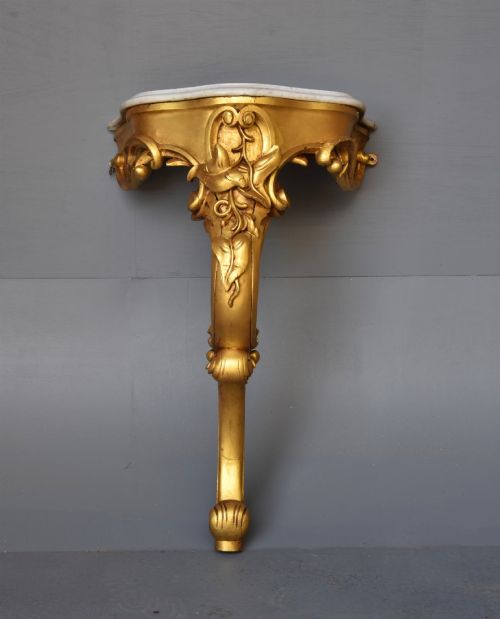
The heavy stone tops utilise imported decorative marbles, cut and polished to fit serpentine, rectangular, or demi-lune profiles. Many earlier pieces require direct wall attachment to secure the weight of the stone slab safely.
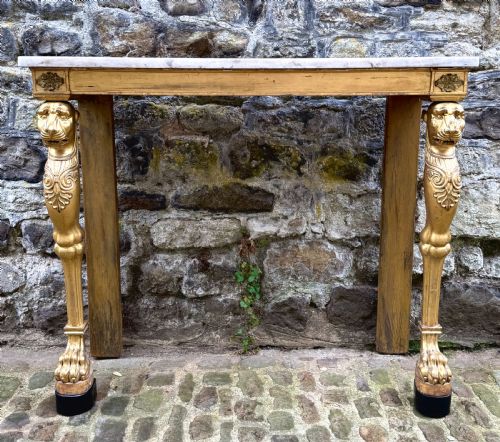
Some nineteenth-century tables arrived with wall brackets shaped as fierce lion paws to anchor the heavy stone.
What varies in quality
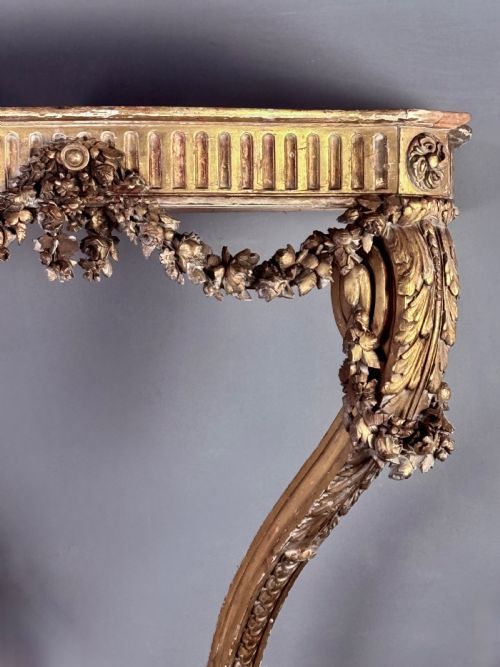
Quality rests in the crispness of the hand carving and the depth of the gilding applied over gesso preparation, where heavy wear reveals the warm red bole beneath. Superior examples display tightly fitted, richly figured marble slabs that integrate harmoniously with the proportions of the wooden base.
Structural integrity also separates standard production from exceptional pieces, particularly in the stability of wall-mounted brackets and the finesse of joinery on serpentine or shaped aprons.
Felix-Alfred Ternisien
The Marble Top Wall Table Glossary
- Console table
- A table designed to be fixed against a wall, traditionally supported by front legs or wall brackets. These pieces often feature decorative aprons that match associated wall mirrors.
- Giltwood
- Timber, commonly lime or pine, coated in gesso and gold leaf to create a brilliant metallic finish. This technique defines many formal eighteenth and nineteenth-century frames.
- Breccia marble
- A composite marble made of angular rock fragments embedded in a fine-grained matrix. It provides highly variegated, colourful surfaces found on elite Italian and French furniture.
- Demi-lune
- A half-moon shape characteristic of tables designed to sit flat against a wall. This silhouette appears frequently in French wall-mounted designs.
Marble Top Wall Table: Frequently Asked Questions
Were these tables fixed to the wall?
Many historical console tables were constructed specifically to be secured directly to the wall for stability. This design choice supported the heavy weight of thick marble slabs without requiring four full legs.
Other variations utilise front legs while still anchoring to the wall to prevent tipping. This structural requirement remains characteristic of formal interior placement.
Where should I place one?
These tables suit narrow hallways, entrance passages, and living rooms where floor space is limited. Their shallow profiles allow them to provide a functional surface without blocking foot traffic.
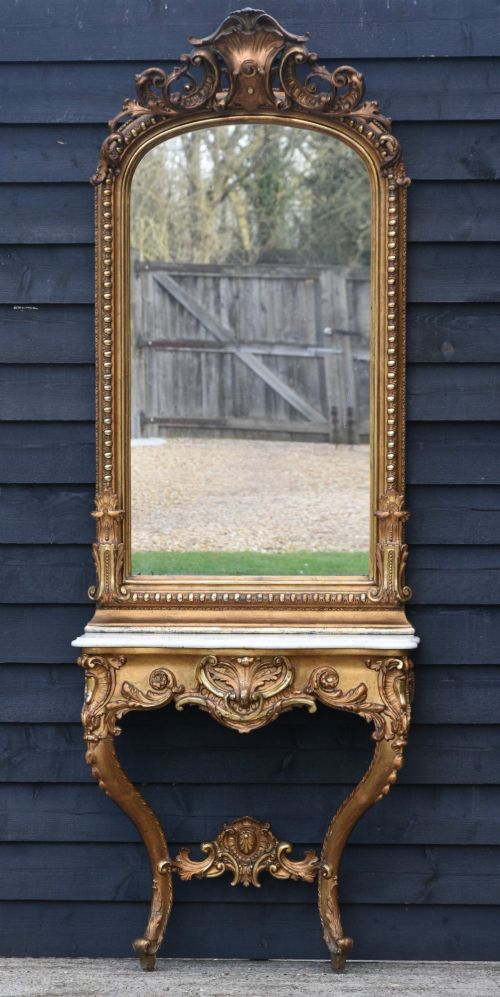
Paring a wall table with a matching mirror creates a traditional focal point above a mantel height or along an open stretch of wall.
How do I identify the period?
Dating relies on stylistic clues such as the transition from ornate eighteenth-century rococo curves to strict nineteenth-century neoclassical symmetry. Materials like gesso, specific gilt techniques, and timber selections also offer clear chronological markers.
Examining the underside of the timber frame and the cut of the marble edge reveals construction methods specific to distinct decades.
How do I clean the marble?
Marble requires gentle maintenance using soft cloths and pH-neutral cleaners to preserve the polished surface. Avoid acidic substances that can etch the stone over time.
Polishing with appropriate stone wax helps protect figured surfaces from moisture rings and daily wear.