

Marble Top Bedside Drawers
Solid marble top bedside drawers combine practical stone surfaces with timber cabinetry, bringing French design and period craftsmanship directly to the bedroom.
Marble Top Bedside Drawers
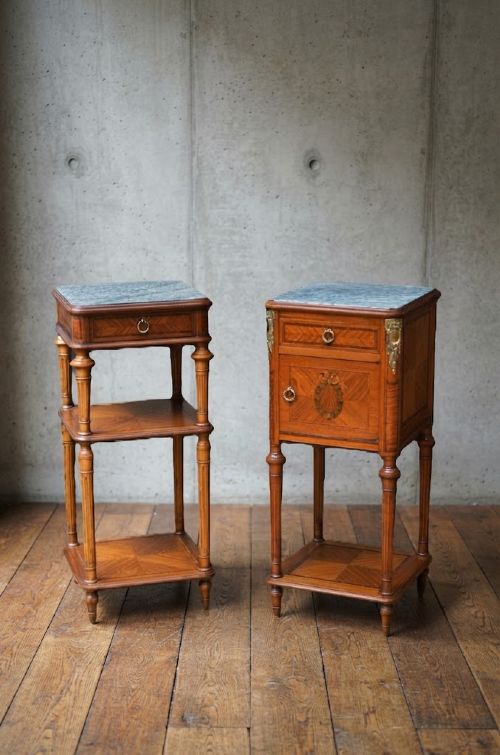
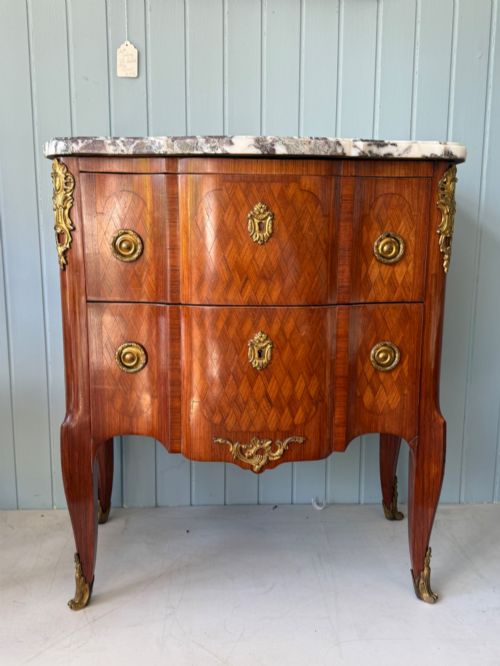
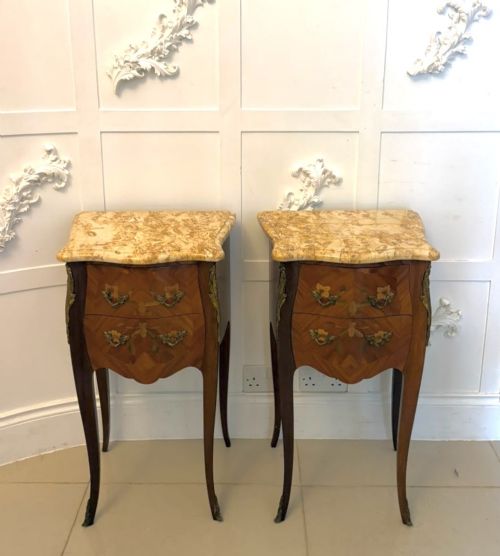
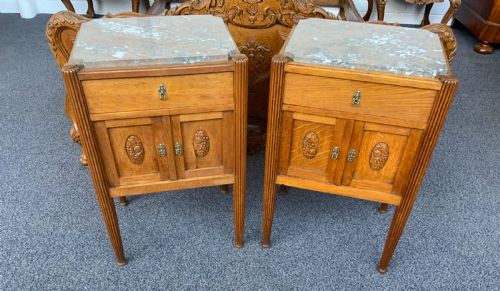
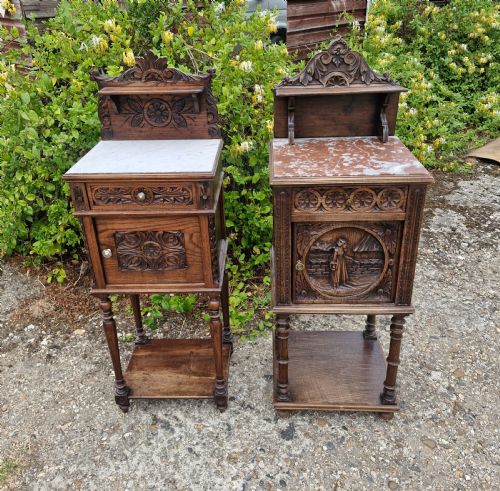
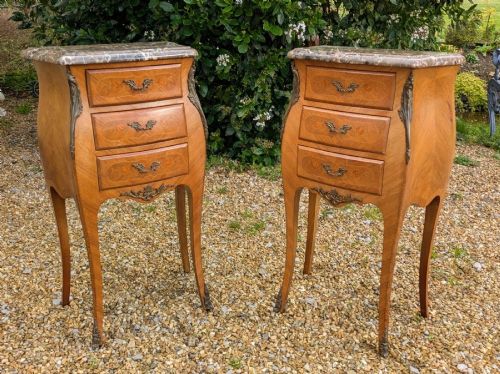
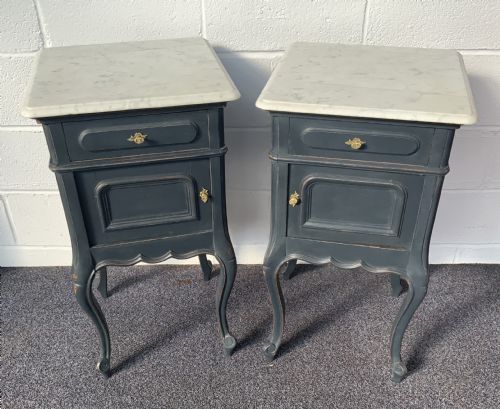
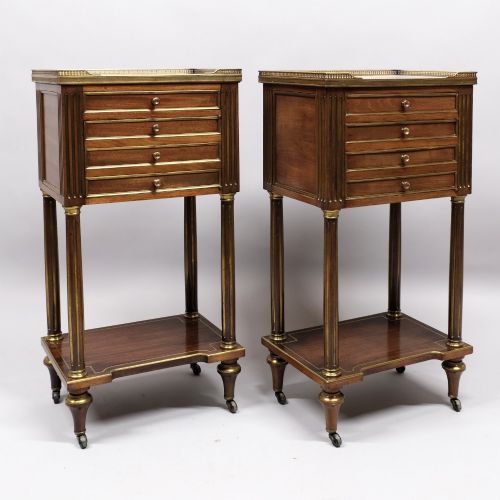
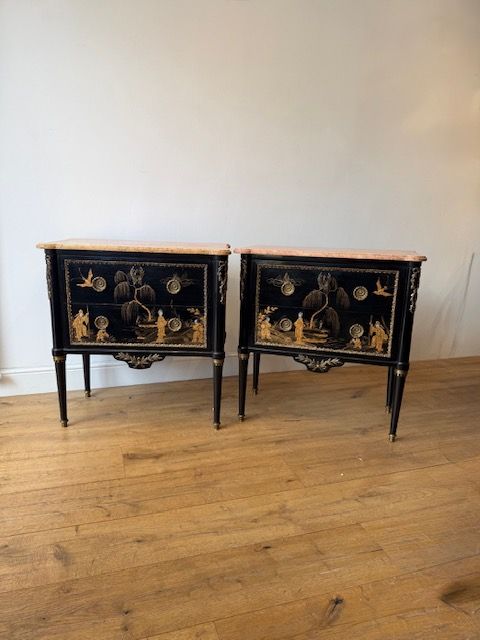
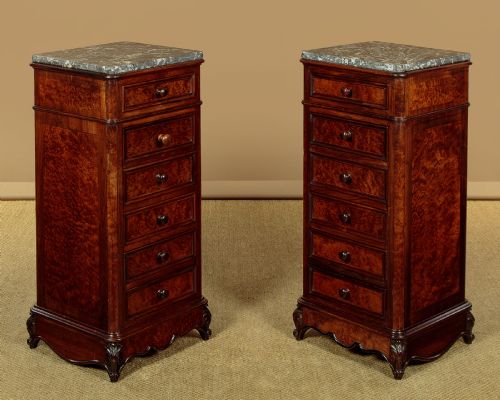
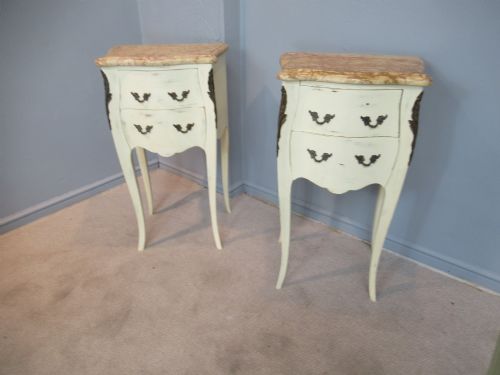
When you search for marble top bedside drawers, you encounter a variety of compact bedside tables, commodes, and cabinets originating primarily from the nineteenth and early twentieth centuries. The selection leans heavily towards French regional and revival designs, including Louis XV and Louis XVI styles alongside Art Deco interpretations.
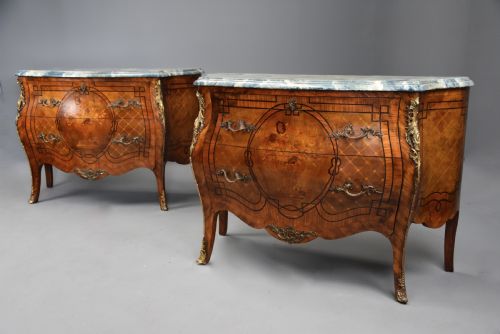
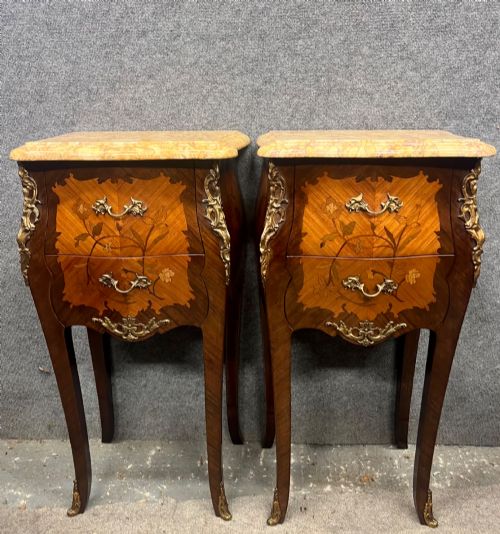
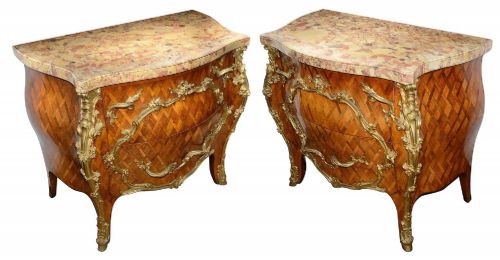
Most pieces appear as matched pairs, though single nightstands and smaller chests also emerge from the period. The forms range from straight-sided walnut and mahogany chests to serpentine and bombe shapes veneered in kingwood or satinwood.
Materials and Construction
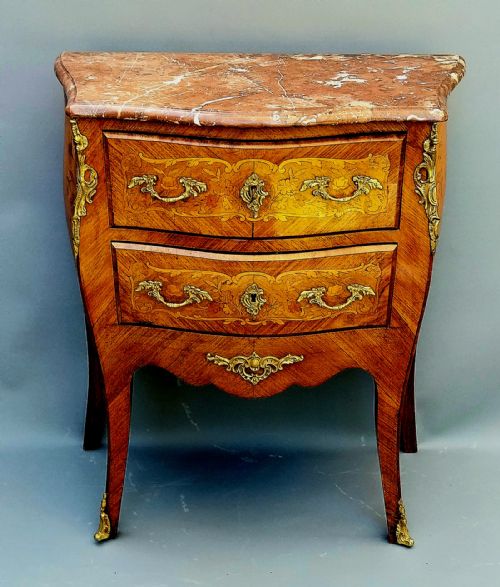
Cabinetmakers constructed these pieces using a foundation of solid woods such as oak, mahogany, and walnut, frequently applying decorative veneers like rosewood, amboyna, and kingwood. Marquetry and parquetry patterns add geometric or floral detail across drawer fronts and sides.
Thick slabs of natural marble form the functional tops, often shaped to follow the serpentine or bombe contours of the wooden carcass below. Ormolu, gilt metal mounts, and brass handles complete the hardware detailing on many French revival examples.
French design dominates the inventory, incorporating Louis XV and Louis XVI revival styles alongside painted finishes.
Evaluating the Pieces
The sophistication of the timber veneers and the precision of the marquetry inlay set the better examples apart from standard production. Cabinetmakers who spent time aligning wood grain and cutting complex parquetry created items with enduring visual depth.
The integration of the stone top to the wooden base dictates much of the refinement. A thick marble slab with matching moulded edges that fits the carcass profile precisely indicates superior workshop execution.
The Marble Top Bedside Drawers Glossary
- Bombe
- A swelling, convex curved shape typical of eighteenth-century French furniture revivals seen in nineteenth and early twentieth-century cabinets.
- Marquetry
- Decorative patterns formed by inserting pieces of contrasting wood veneer into a fitted wood ground.
- Ormolu
- Gilt bronze mounts applied to the corners, feet, and handles of decorative cabinets and commodes.
- Parquetry
- Geometric wood mosaic work used to pattern tabletops and drawer fronts.
- Serpentine
- A line or surface that curves outward and then inward, creating a gentle wave effect.
Marble Top Bedside Drawers: Frequently Asked Questions
Are marble top bedside drawers practical for daily use?
The stone surface provides a durable, heat-resistant table top that easily withstands water glasses and bedside lamps.
Beneath the stone, the wooden drawers offer enclosed storage for personal items while maintaining a compact bedside footprint.
How do I identify a French revival piece?
French revival pieces often display characteristic Louis styles, featuring curved cabriole legs, floral marquetry, and gilt bronze mounts.
Cabinetmakers working in the nineteenth and early twentieth centuries frequently adopted these classical forms for bedside tables and commodes.
What woods were commonly used for these cabinets?
Workshops utilised solid carcasses of oak, walnut, or mahogany as a stable structural foundation for decorative surfaces.
Exotic timbers including kingwood, rosewood, and satinwood appeared as sliced veneers across the drawer fronts and exterior panels.
Do marble tops lift off easily?
Most marble slabs rest freely on top of the wooden carcass, held in place by their own substantial weight.
This loose fit allows the stone to be removed safely when moving or repositioning heavier bedside chests and commodes.