


Rococo Bedside Cabinets
Rococo bedside cabinets bring flowing continental curves and rich timber marquetry into the bedroom.
How they were made
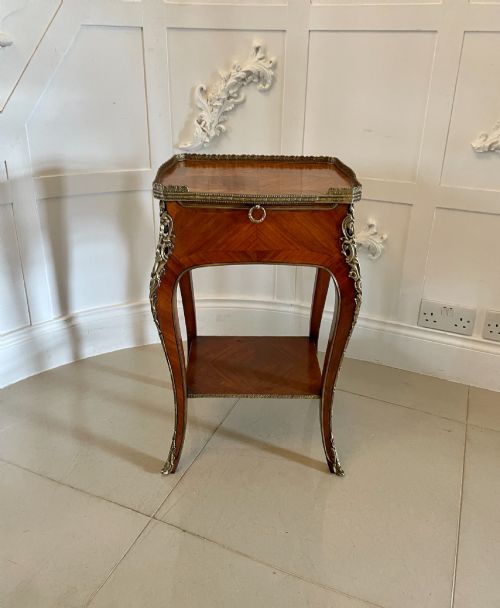
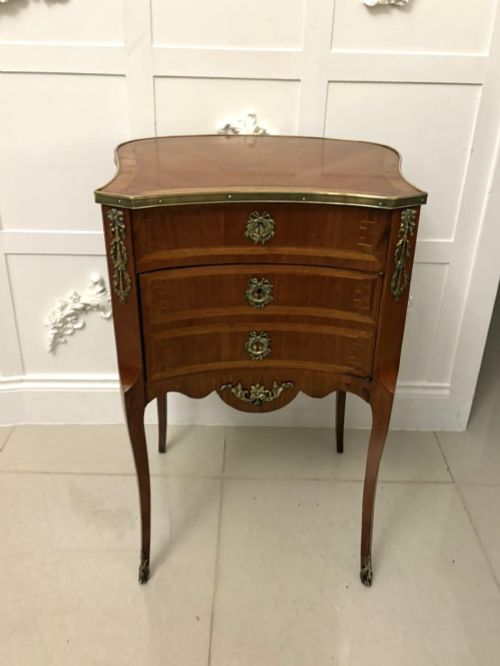
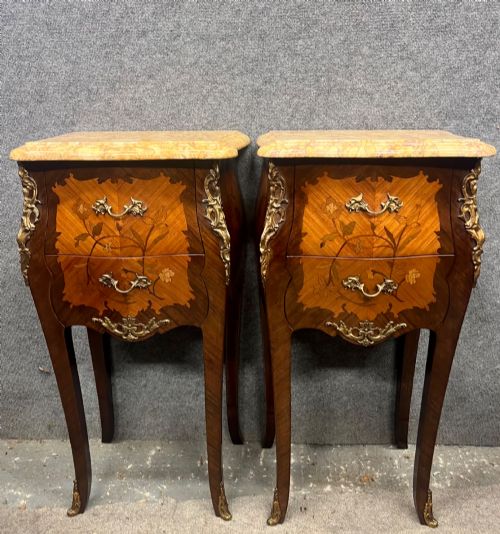
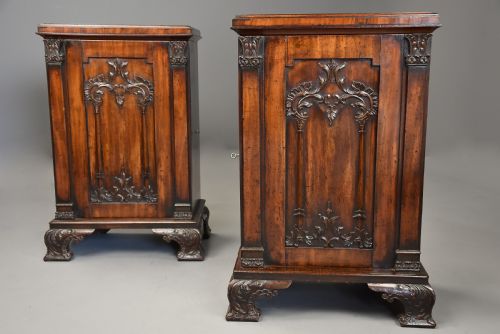
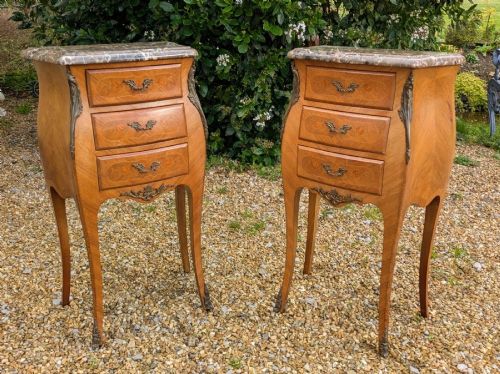
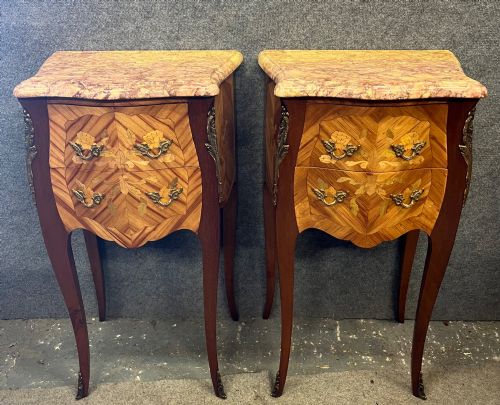
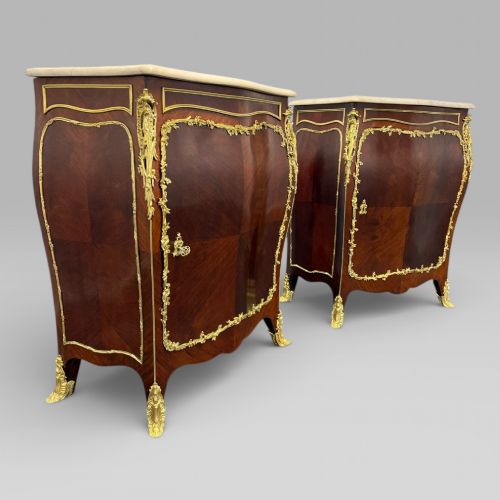
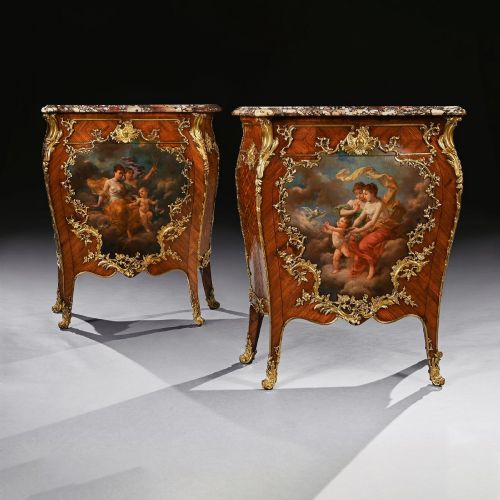
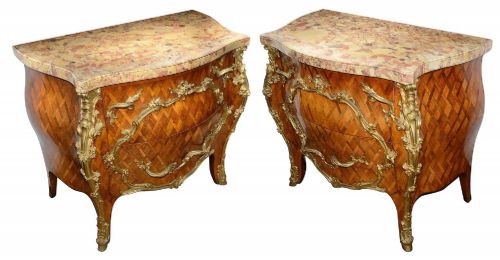
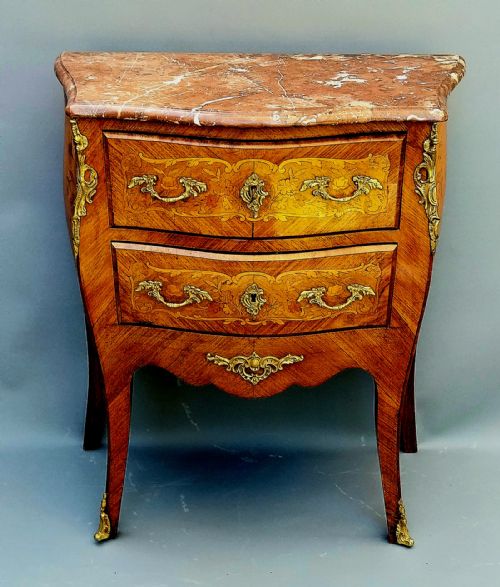
Cabinet-makers utilised dense hardwoods such as walnut, mahogany, and kingwood as foundations for detailed marquetry and floral veneers. Tops were frequently finished with shaped marble slabs, while structural corners received cast or chased ormolu and gilt bronze mounts.
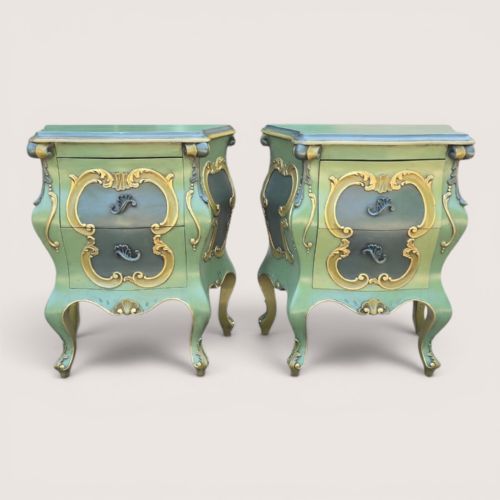
Joinery methods combined traditional frame-and-panel construction with curved bombe shaping, requiring significant skill to align complex wood grains. Surface decoration often incorporated painted wood or vernis martin panels alongside precision brass stringing.
What varies in quality
Quality rests upon the precision of the marquetry and the crispness of the cast metal mounts rather than mere ornamentation. Finer examples display seamless veneer matching across curved drawer fronts and heavy, well-defined ormolu detailing.
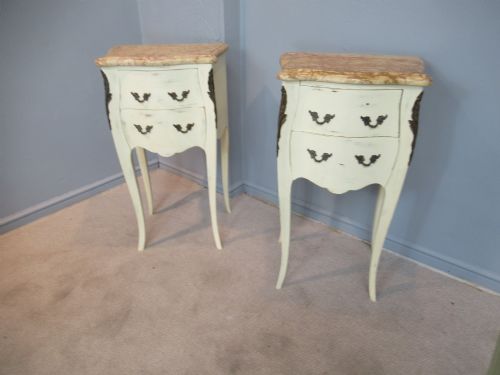
Internal construction also marks the grade of a piece, distinguishing mass-produced twentieth-century interpretations from meticulously assembled nineteenth-century cabinets made with solid secondary timbers.
Rococo Bedside Cabinets Retail Price Guide 2026
Typical asking prices for rococo bedside cabinets among the pieces listed under this phrase on Sellingantiques today, from the lower quarter to the upper quarter. They describe what is for sale here now, not the wider market.
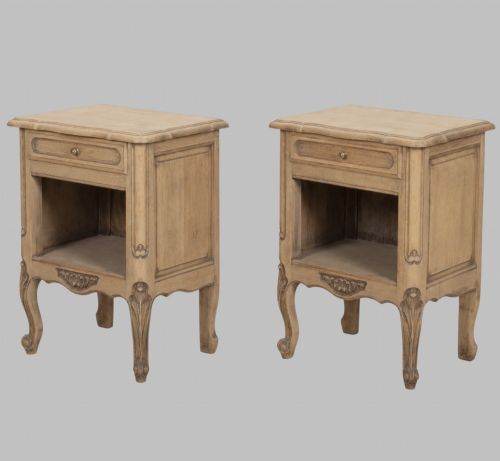
Listings feature rococo bedside cabinets spanning the nineteenth and early twentieth centuries, executed in walnut, kingwood, and marble.
E. Kahn
The Rococo Bedside Cabinets Glossary
- Ormolu
- Gilt bronze mounts applied to furniture. This technique involves coating cast bronze with a layer of finely ground gold amalgam.
- Marquetry
- Decorative patterns formed by fitting together thin slices of veneer. Craftsmen use various tinted woods to create elaborate floral or geometric designs.
- Bombe
- A bulging or swelling shape characteristic of mid-eighteenth-century furniture. The sides and front curve outward in convex contours.
- Vernis Martin
- A type of simulated Japanese lacquer developed in France. It provides a glossy, translucent finish often adorned with painted scenes.
- Serpentine
- A line or surface that curves outward and then inward in a continuous wave. This profile adds fluidity and movement to cabinet fronts.
Rococo Bedside Cabinets: Frequently Asked Questions
Are rococo bedside cabinets usually sold as pairs?
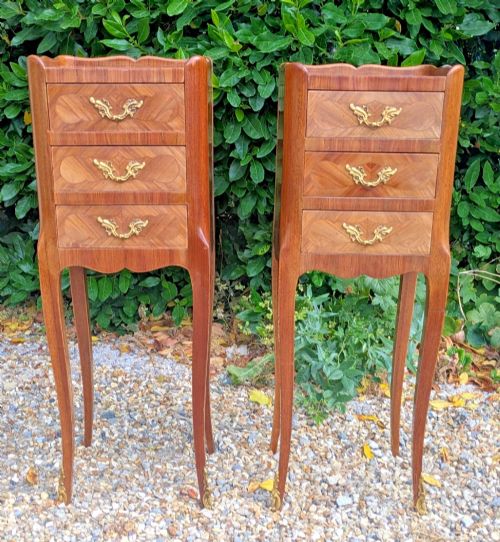
Many surviving examples appear as matched pairs, particularly those produced during the nineteenth and early twentieth-century revival periods.
Single cabinets do surface, but symmetrical pairs remain highly sought after for balanced bedside placement.
What woods were used for these cabinets?
Craftsmen predominantly worked with exotic and domestic timbers including kingwood, walnut, mahogany, and rosewood.
These woods were chosen both for their structural stability and their suitability for intricate marquetry inlay.
How do I identify the period of a cabinet?
Dating relies on examining construction methods, secondary wood types, and the style of the metal mounts.
Revival pieces from the nineteenth and twentieth centuries often emulate eighteenth-century models while retaining distinct later assembly traits.
Why do many cabinets feature marble tops?
Marble provided a durable, heat-resistant surface suitable for bedside lamps and night-time accessories.
White and veined marble slabs were cut to follow the specific serpentine or bombe contours of the cabinet base.