
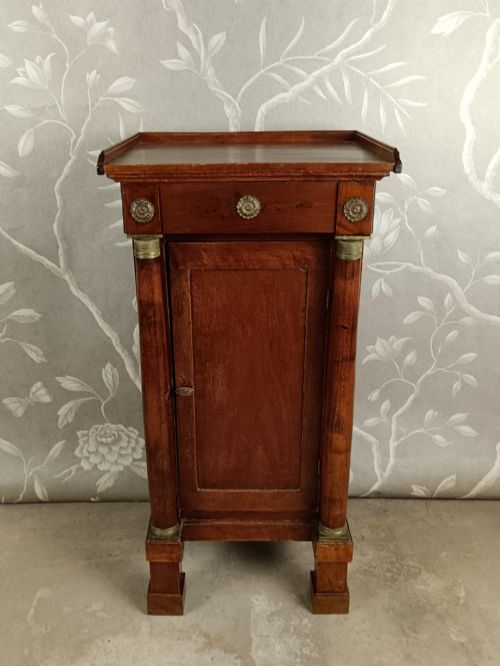


Italian Bedside Tables
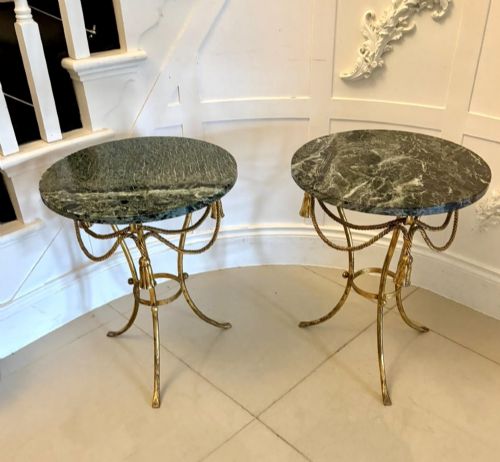
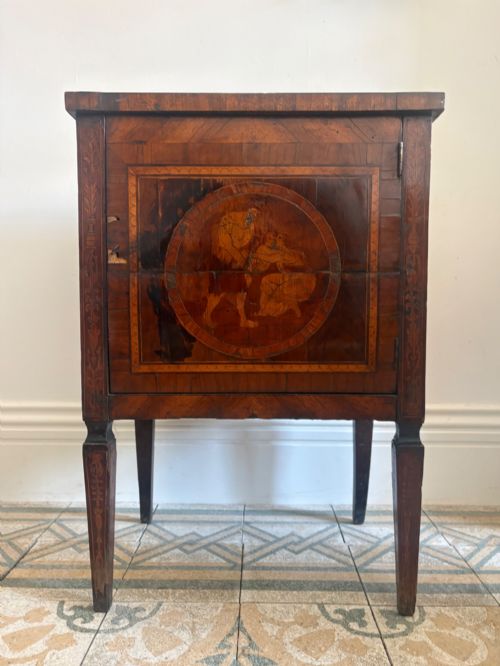
These Italian bedside tables combine rich walnut and marble, bringing distinctive continental character to the bedroom.
Italian Bedside Tables
When you search for Italian bedside tables, you encounter an array of forms ranging from eighteenth-century walnut commodino pieces to art deco drum-shaped cabinets. The selection spans distinct eras including the nineteenth century and the 1920s, showcasing both compact bedside cupboards and serpentine chests.
You are most likely to meet walnut and burr walnut examples paired with marble tops, often appearing as matched pairs. These pieces frequently draw upon traditional regional aesthetics such as Italian Rococo, Neoclassical, and Empire styles.
The objects serve practical storage beside a bed while acting as sculptural elements through carved details and inlaid marquetry. Alongside conventional bedside chests, the inventory embraces side tables and small cabinets that adapt readily to contemporary bedroom layouts.
Construction and Materials
Cabinetmakers utilised timber frameworks primarily in walnut, burr walnut, and kingwood, often enriching surfaces with intricate inlaid marquetry. Structural integrity relied on traditional joinery suited to domestic furniture of various periods.
Marble and onyx frequently form the upper surfaces, providing durable and decorative tops that contrast with the warm tones of the underlying wood. Gilt metal, brass mounts, and giltwood embellishments add further textural variety to the designs.
Listings feature Italian bedside tables spanning the eighteenth century through to the mid-twentieth century, utilising walnut, marble, and brass.
Evaluating Quality
The distinction between standard examples and exceptional pieces rests upon the precision of the cabinetwork and the richness of the timber selection. Superior items display harmonious proportions, particularly in serpentine and bombe forms where curve and line must balance completely.
Materials dictate much of the distinction, with finely figured burr walnut veneers and substantial marble tops commanding greater regard. The finesse of applied brass mounts and the execution of inlaid marquetry reveal the artisan's original skill.
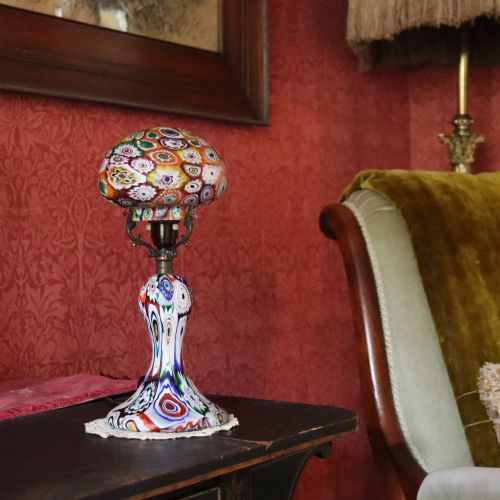
Fratelli Toso·Angelo Brotto·Esperia
The Italian Bedside Tables Glossary
- Commodino
- A small bedside commode or cabinet. These diminutive pieces usually feature a cupboard door or drawers beneath a flat top.
- Marquetry
- Decorative veneer work forming patterns or pictures. Craftsmen cut different coloured woods to fit together within the surface grain.
- Serpentine
- A gently undulating front edge found on chests and cabinets. This curved outline requires exact carpentry to maintain structural alignment.
- Bombe
- A swollen or bulging out bombé shape characteristic of continental case furniture. The outward curve demands advanced shaping techniques from the maker.
- Giltwood
- Wood that has been coated with gold leaf or gold paint. This technique highlights carved architectural motifs and decorative mounts.
Italian Bedside Tables: Frequently Asked Questions
How do I date an antique Italian bedside table?
Dating relies upon examining the underlying timber, construction methods, and stylistic cues present in the piece. Eighteenth-century models often display hand-cut joinery and dense walnut, whereas later interpretations adopt streamlined art deco geometries.
Hardware and marble thickness also offer clues to the era of manufacture. Comparing the decorative vocabulary to established historical periods helps confirm the likely decade.
Are Italian bedside tables usually sold in pairs?
Many examples on the market survive as matched pairs, particularly those intended for twin beds or grander bedroom schemes. Single cabinets also appear frequently, originating from smaller suites or dispersed sets.
Pairs often command higher interest from collectors seeking symmetry in interior decoration. Examining the interior construction helps verify whether a pair was manufactured together.
How do I care for marble-topped bedside tables?
Marble surfaces benefit from regular dusting with a soft cloth and prompt wiping of any liquid spills. Acidic substances like citrus juice can etch the stone and should be kept away from the top.
Applying a specialist neutral stone sealer provides additional protection against daily wear. Avoid harsh chemical cleaners that can dull the polished finish.
What styles are most common in Italian bedside furniture?
Walnut pieces reflecting Neoclassical and Rococo Revival tastes appear regularly across the inventory. Art deco designs from the 1930s introduce simpler cylindrical and drum-shaped forms in polished wood.
Earlier eighteenth-century influences persist through curved fronts and marquetry details. Each style reflects the prevailing aesthetic preferences of its specific decade of production.