
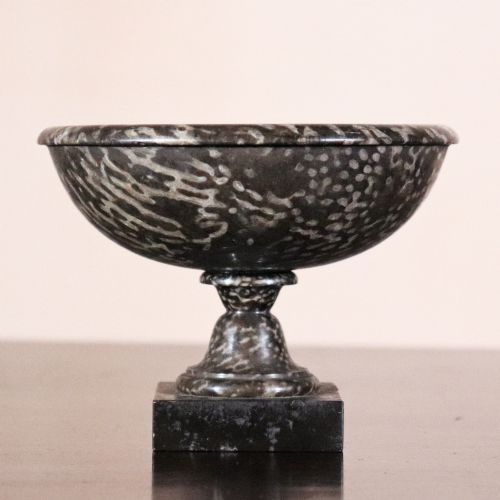


Marble Pedestal Bowl
A marble pedestal bowl brings classical weight and grand classical design into a room, serving as a striking focal point on a table or mantelpiece.
Marble Pedestal Bowl
A marble pedestal bowl sits on a raised base, drawing heavily on classical antiquity and the Grand Tour tradition. These decorative vessels appear frequently in forms such as tazzas and ornamental urns.
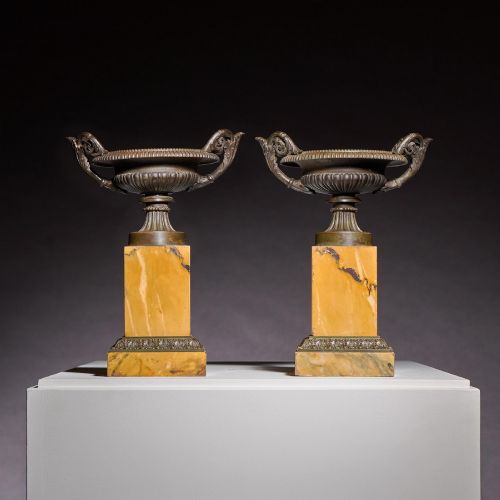
The pieces seen on this page span from the eighteenth century to the art deco period, with nineteenth-century examples dominating the selection. French and Italian origins predominate, often reflecting neoclassical and empire tastes.
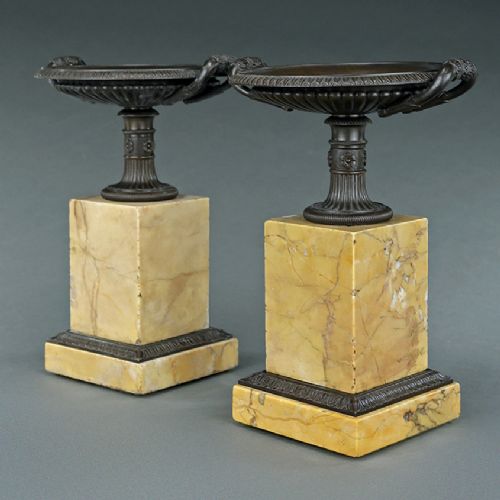
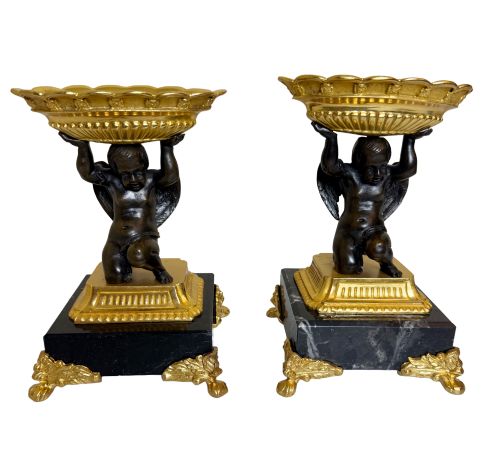
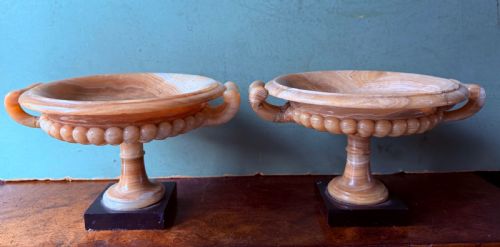
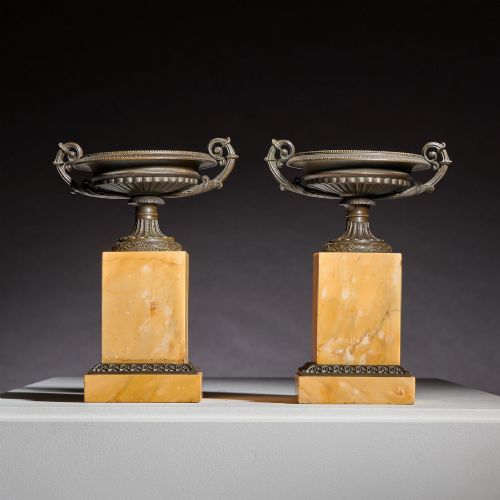
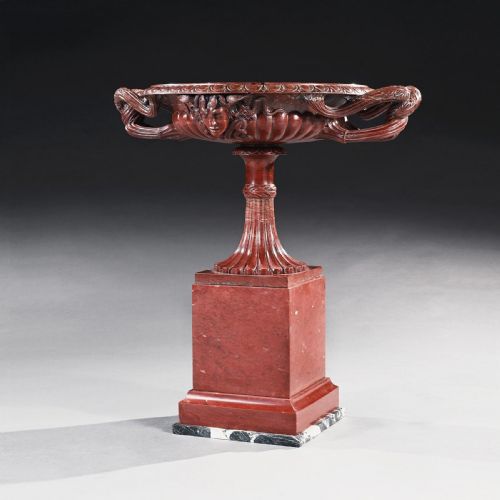
Makers utilised distinct regional stones, producing bowls in black marble, sienna marble, rosso antico, and alabastro egiziano. Many examples combine these mineral bodies with bronze, ormolu, and gilt bronze mounts.
How they were made
Craftsmen shaped dense stones on lathes or carved them by hand to achieve the shallow basin and supporting stem of each tazza. Selected marbles were chosen for their striking natural figure and colour variations.
Foundries cast bronze and ormolu mounts to secure the stone bowls, adding classical figures, leaf motifs, and pedestal bases. Metal components were often gilded or patinated to contrast with the polished marble.
Travellers returning from nineteenth-century Italy packed heavy stone tazzas into their luggage, risking their carriage springs for a slice of antiquity.
What varies in quality
Quality rests in the choice and rarity of the marble used, with richly figured stones and uniform mineral specimens commanding greater presence. The precision of the turning and the crispness of any applied bronze or ormolu mounts define the overall standard.
Proportion and balance dictate the visual success of the piece, particularly where heavy stone meets slender metal stems or stepped bases. The integration of antique models and sculptural details distinguishes ambitious workshop pieces from simpler items.
Benedetto Boschetti·Ferdinand Preiss·Davidson
The Marble Pedestal Bowl Glossary
- Tazza
- A shallow bowl on a pedestal, often used for display in classical interiors. This form derives from ancient drinking vessels.
- Grand Tour
- A cultural journey undertaken by wealthy Europeans in the eighteenth and nineteenth centuries to collect antiquities and souvenirs. These trips inspired many of the carved marble and bronze objects found today.
- Ormolu
- Gilded bronze used for decorative mounts on furniture and decorative objects. The technique involves applying a gold amalgam to a bronze base.
- Rosso Antico
- A deep red antique marble prized by sculptors for its rich colour and fine grain. Italian workshops utilised this stone extensively for classical revivals.
- Sienna Marble
- A yellow ornamental marble featuring dark veins and mottling, quarried in Italy. It appears frequently in nineteenth-century decorative arts.
Marble Pedestal Bowl: Frequently Asked Questions
What is a marble pedestal bowl used for?
These pieces served primarily as ornamental objects on tables, consoles, and mantelpieces during the nineteenth century. Their shallow basin design was intended for visual display rather than practical utility.
Today, they function as decorative centerpieces in traditional and eclectic interiors. Collectors place them where light catches the polished stone surface.
How do I identify a Grand Tour marble tazza?
Grand Tour pieces typically feature classical motifs, high-grade Italian marbles, and sometimes bronze or ormolu mounts. They were acquired by travellers visiting Rome and Florence during the nineteenth century.
Look for labels, inscriptions, or characteristic regional stones such as rosso antico or sienna. The workmanship usually reflects antique sculptural precedents.
What materials are used in these bowls?
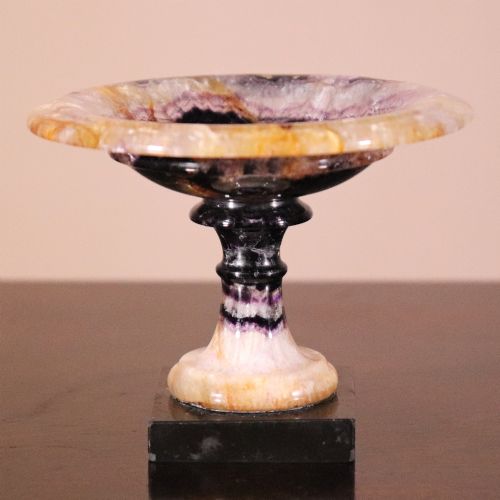
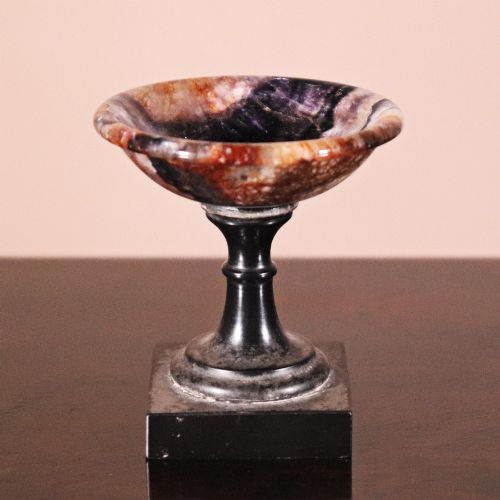
The listings show a heavy use of natural decorative stones, including black marble, sienna marble, rosso antico, and alabastro egiziano. Some examples incorporate blue john or malachite.
Foundry metals such as bronze, gilt bronze, and ormolu frequently complement the stone bodies. Pressed glass also appears in related nineteenth-century production.
How do I care for antique marble?
Dust the stone regularly with a soft, dry cloth to prevent grit accumulation on polished surfaces. Avoid using acidic cleaners, vinegar, or harsh abrasives that can etch the marble.
Keep bronze and ormolu mounts dry and untouched by metal polishes to preserve their original patination. Place the pedestal bowl on a stable surface away from heavy vibrations.