
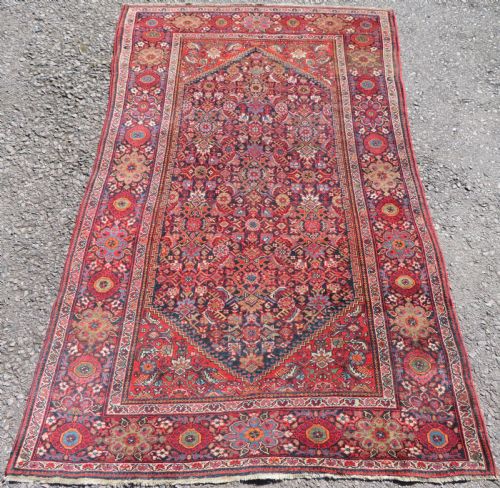


Malayer Wool Carpet
A malayer wool carpet brings durable village craftsmanship and traditional Persian pattern into a home.
Malayer Wool Carpet
A malayer wool carpet originates from West Persia and spans several decades from the late nineteenth century into the twentieth century. These textiles appear primarily as rugs, area rugs, or long hallway runners suited to domestic spaces.
The selections on this page demonstrate distinct regional designs including the Herati pattern, boteh motifs, and lattice layouts. Village weavers produced these floor coverings with robust wool foundations intended for daily use.
Materials and construction
Weavers constructed these pieces utilising wool pile combined with cotton foundations to ensure structural stability. Natural dyeing methods yielded the soft colour palettes and cream or ivory grounds observed across the surviving examples.
Hand-knotted techniques allowed artisans to execute intricate village designs such as shield motifs, birds, and figurative elements. The resulting floor coverings combine pliable structures with enduring fibre density.
Among the traditional village designs, certain pieces feature unexpected woven lions keeping watch over the field.
Distinguishing quality variations
Knot density and precision of pattern execution separate finer examples from standard village production. Tightly packed pile and crisp delineation of motifs indicate superior handiwork by the weaver.
The integrity of the cotton and wool materials dictates longevity, while balanced colour distribution enhances visual harmony. Examples featuring unusual pictorial elements like lions or specific regional designs often demonstrate greater creative ambition.
The Malayer Wool Carpet Glossary
- Boteh
- A traditional Persian motif resembling a almond or pear shape, often interpreted as a stylised leaf or cypress tree. This design appears frequently in various configurations across village carpets.
- Herati
- A repeating ornamental pattern composed of a central rosette enclosed by a rectangle of leaves and flanked by fish-like motifs. It forms a balanced overall field design in Persian weaving.
- Kelleh
- A large format rectangular carpet, typically longer than it is wide, used traditionally in grand domestic interior spaces. These proportions distinguish them from square room-size carpets.
- Runner
- A long, narrow carpet format designed specifically for corridors, hallways, and staircases. Their elongated proportions accommodate restricted architectural spaces.
Malayer Wool Carpet: Frequently Asked Questions
Where were malayer wool carpets made?
These carpets originate from the town of Malayer and surrounding villages in West Persia. Local artisans produced them within domestic and community workshops.
The regional tradition combined diverse tribal influences from neighbouring groups such as the Afshar, resulting in distinctive village aesthetics.
How do I care for an antique malayer carpet?
Regular gentle vacuuming without a rotating brush roll helps remove embedded dust from the wool pile. Professional specialist cleaning ensures the natural dyes and fibres remain protected over time.
Positioning the carpet away from direct sunlight prevents fading of the soft colour palette.
What designs appear on these carpets?
Common decorative motifs include the Herati pattern, all-over lattice arrangements, and repeated boteh designs. Some pieces incorporate pictorial elements such as birds, butterflies, or lions.
Shield designs reminiscent of Afshar tribal styles also occur within the village output.
How do I date a malayer carpet?
Dating relies on stylistic indicators, structural analysis of the wool and cotton foundation, and dye analysis. Pieces seen here span from the eighteen-eighties through to the nineteen-thirties.
Examining wear patterns and structural characteristics provides further context regarding the period of production.