


Red Cream Oriental Rug
A red cream oriental rug brings warmth and traditional pattern to a room through centuries-old weaving traditions.
Red Cream Oriental Rug
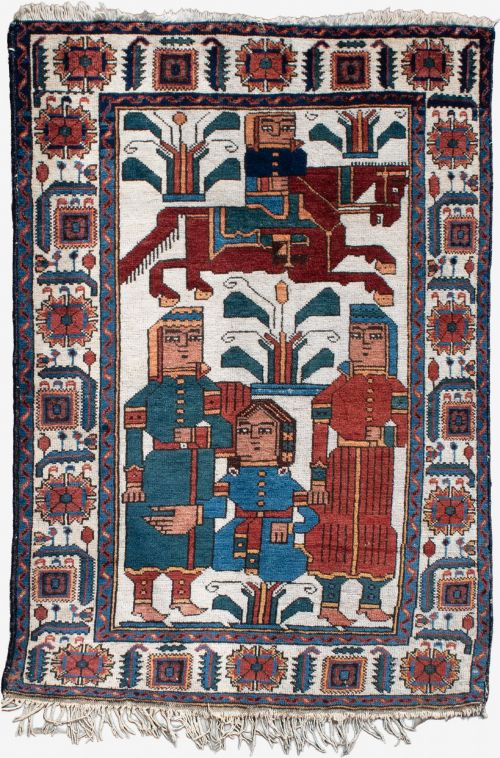
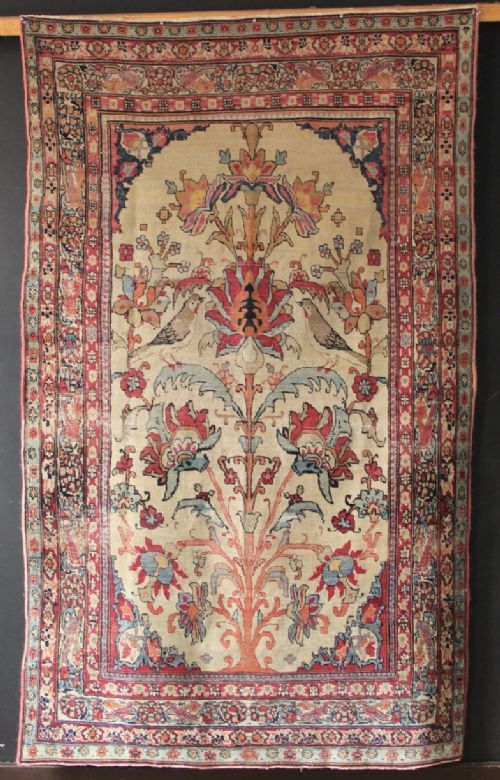
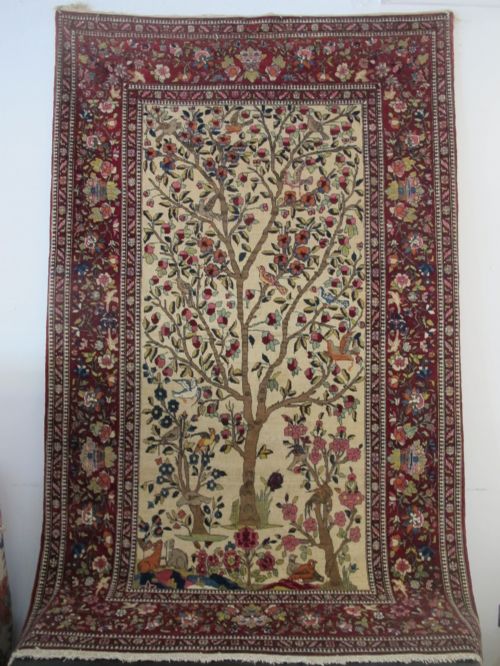
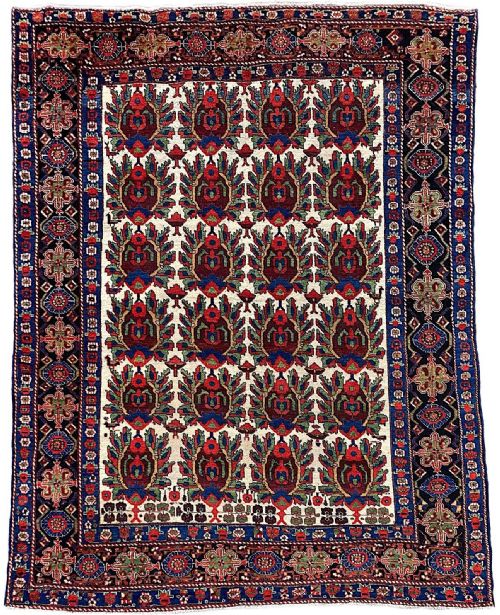
A red cream oriental rug encompasses hand-knotted and woven floor coverings originating from Persia, Turkey, Central Asia, and the Caucasus. These pieces span production periods from the early nineteenth century through the early twentieth century, showing distinct regional knotting techniques and dye palettes. Buyers seeking a red cream oriental rug encounter geometric village formats, intricate city carpets, and specialised prayer designs.
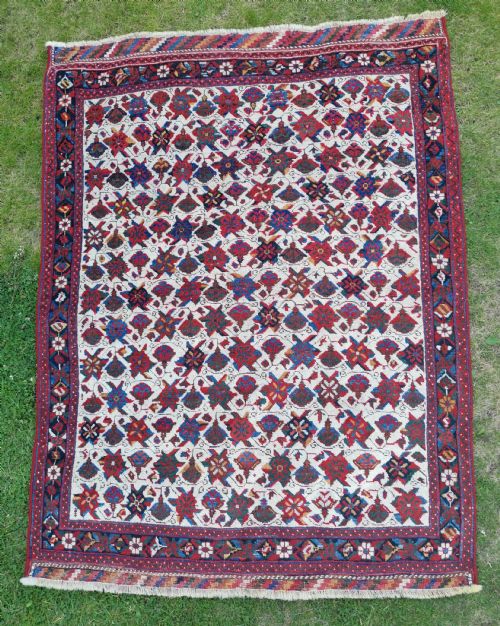
The selections on this page concentrate heavily on Persian and Anatolian styles, including Heriz, Kirman, Tabriz, and Afshar pieces. Formats range from small mats and narrow runners to large room-size carpets suitable for anchoring traditional interiors. The enduring appeal lies in the contrast between rich madder reds and softer ivory or cream ground fields.
How they were made
Weavers constructed these textiles primarily using wool, hand-spun wool, and cotton foundations, occasionally incorporating silk or linen for specific pile details or foundation warps. Natural dyestuffs produced the characteristic red and cream tones, derived from sources such as madder root for reds and un-dyed wool or plant extracts for lighter grounds. Individual piles were knotted tightly by hand onto cotton or wool warp and weft threads, creating durable structures designed to withstand generations of daily use.
Village and tribal workshops employed symmetrical or asymmetrical knots on upright vertical looms, resulting in varying pile densities across different origins. Finishing techniques involved securing the selvages with overcasting and securing the ends with knotted fringes or flatwoven kelim borders to prevent fraying.
The listings span nineteenth and twentieth-century production periods, incorporating wool, cotton, silk, and linen materials across Persian, Anatolian, and Caucasian traditions.
What varies in quality
Quality in these textiles depends heavily on the fineness of the knot count and the precision of the drafted design, which dictates whether intricate curved floral motifs or bold geometric medallions appear crisp and well-defined. Superior examples utilise tightly spun wool with high natural lanolin content, yielding a resilient, lustrous pile that ages gracefully under foot traffic.
The depth and complexity of the colour palette also distinguish finer rugs, particularly where complex abrash creates subtle tonal shifts within the red fields and cream borders. Structural integrity, including even pile wear and intact original borders, separates standard utilitarian pieces from exceptional collector examples.
Ahmadi Isfahan·Ziegler
The Red Cream Oriental Rug Glossary
- Abrash
- Natural variations in colour shading across the field of a rug, caused by distinct batches of dyed yarn or changes in wool supplies during weaving.
- Warp
- The vertical foundation threads stretched lengthwise on the loom, onto which the rows of knots are tied and through which the horizontal wefts pass.
- Weft
- The horizontal threads passed back and forth between warp threads to bind the rows of knots securely in place.
- Suzani
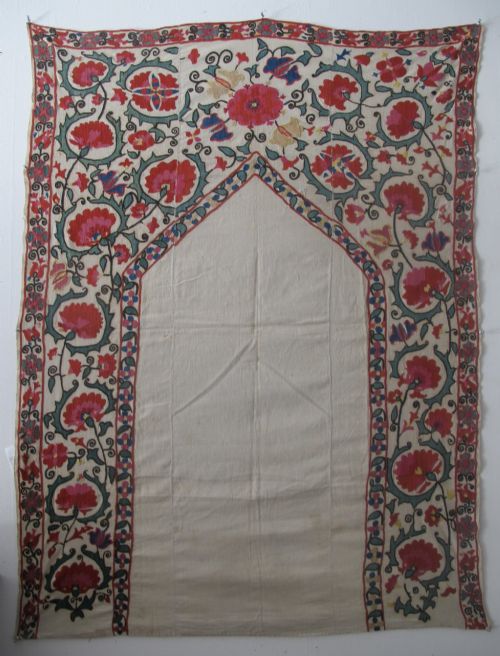
- Large, decorative embroidered textile panels originating from Central Asia, often featuring bold floral and sunburst motifs executed in silk thread on a cotton or linen ground.
- Prayer rug
- A specialised rug format featuring a central mihrab or architectural arch design, traditionally oriented towards Mecca during daily prayers.
Red Cream Oriental Rug: Frequently Asked Questions
How do I identify a Heriz carpet?
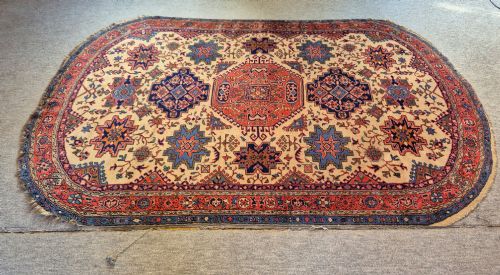
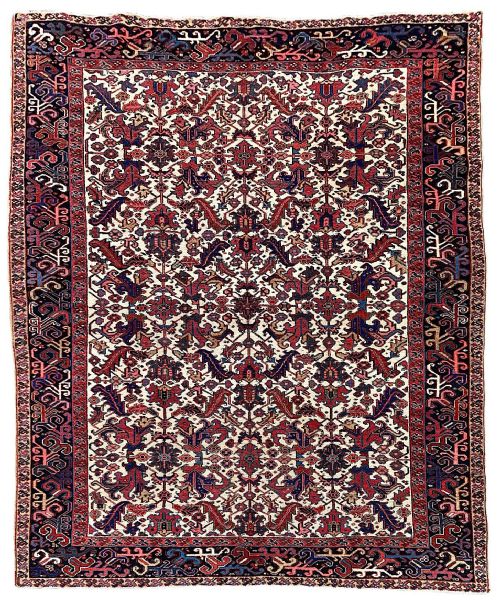
Heriz carpets from northwest Persia are recognised by their bold, large-scale geometric medallions and robust structural foundations containing cotton warps. They often feature strong red fields anchored by prominent corner spandrels in contrasting cream or navy tones.
These carpets were built for heavy domestic use in provincial areas, resulting in a heavier, more rigid handle compared to finer city-woven counterparts from Tabriz or Kashan.
What is a Baluch prayer rug?
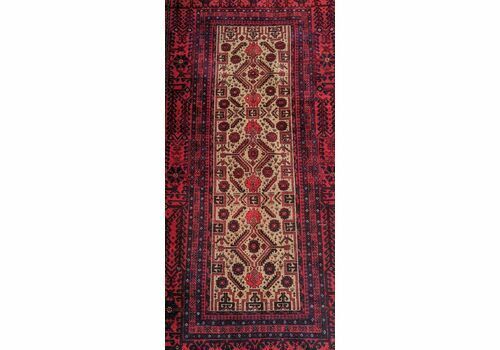
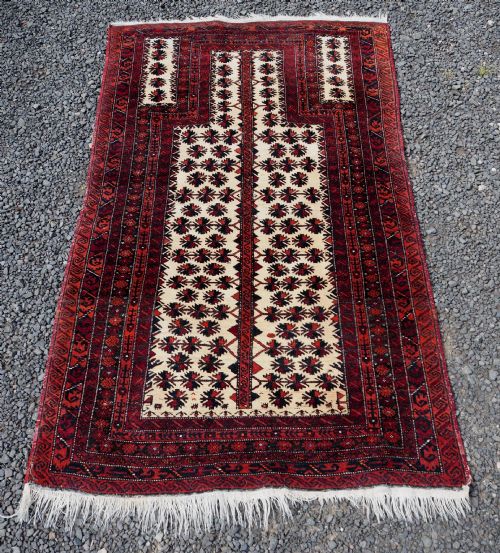
Baluchi prayer rugs are smaller nomadic or village pieces produced by Baluch tribes inhabiting regions across Persia and Central Asia. They typically feature a distinct prayer arch or mihrab design woven in deep wool piles with dark red and dark blue tones contrasted against ivory highlights.
These rugs reflect portable weaving traditions, frequently incorporating geometric symbols and camel hair details within the borders.
How should I care for an antique rug?
Maintain antique rugs through regular gentle vacuuming without a rotating beater brush to protect the aged wool pile and foundation threads. Professional specialist cleaning should be undertaken periodically to remove embedded grit without damaging natural dyes.
Positioning the rug out of direct strong sunlight prevents fading of the madder reds and cream grounds over extended periods.
What distinguishes a Kirman Lavar rug?
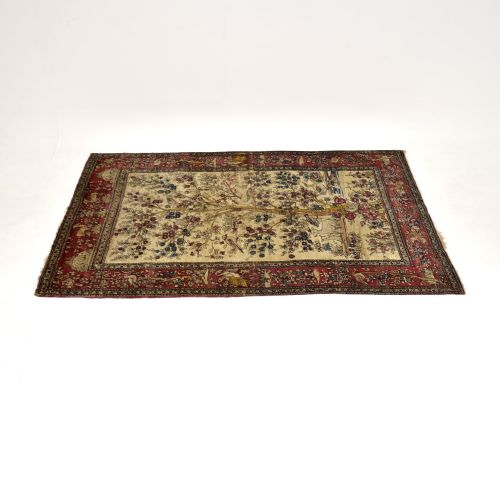
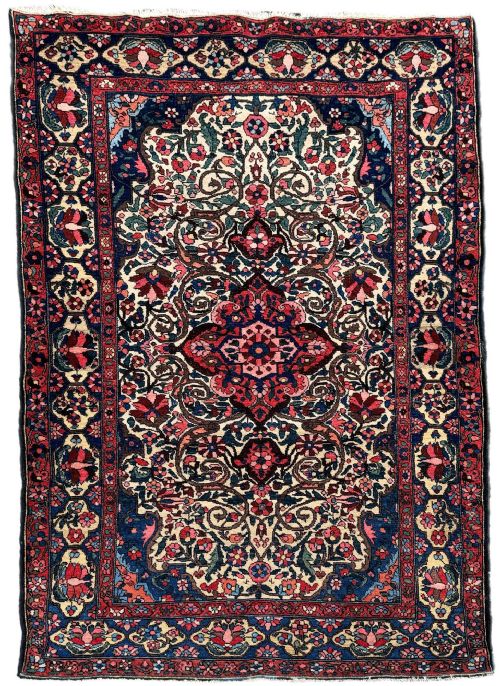
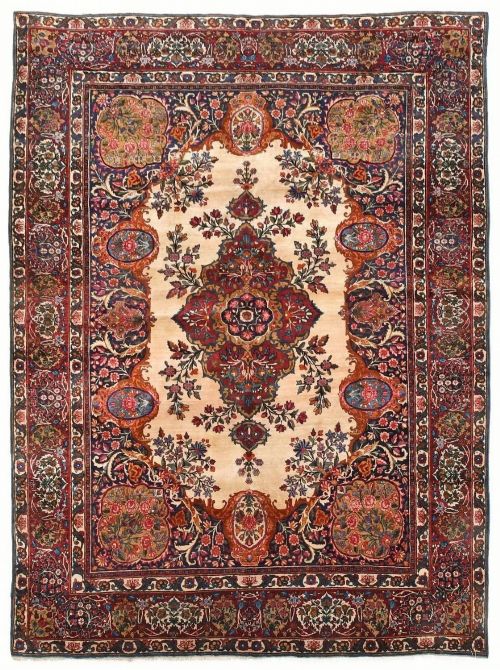
Kirman Lavar rugs originate from south-central Persia and are noted for their refined weave, lower pile, and intricate floral vase or medallion compositions. They frequently employ a delicate colour palette where soft creams and muted reds dominate the pictorial field.
The exceptional fineness of the knotting allows for highly detailed rendering of floral sprays and classical Persian garden motifs.