


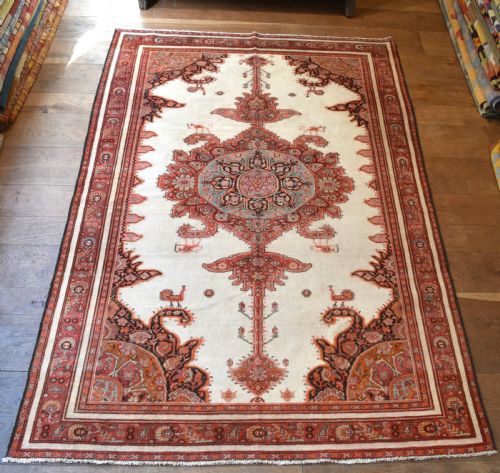
Cream Malayer Carpet
These cream malayer carpet pieces are Persian village and tribal rugs woven in wool and cotton during the late nineteenth and early twentieth centuries.
Cream Malayer Carpet
When searching for a cream malayer carpet, a buyer examines Persian village and tribal rugs originating from the Malayer region. The pieces listed span the decades around nineteen hundred, including examples from eighteen ninety and nineteen ten.
Most items on this page take the form of traditional Persian rugs, area rugs, and runner rugs. Designs recorded in the titles include ivory grounds with butterflies, mother and child boteh motifs, and lions.
Buyers encounter traditional Persian styles defined by village workshops and nomadic weavers. These floor coverings display soft colour palettes alongside distinctive cream and ivory grounds.
How these rugs were made
Weavers constructed these floor coverings using wool pile knotted onto cotton foundations. This combination of materials provides the structure necessary for village and tribal rug production.
The construction relies on traditional Persian techniques developed across the Malayer district. Artisans incorporated vegetable and natural dyes to achieve soft colour palettes on ivory and cream grounds.
Current listings span the years from eighteen ninety to nineteen ten, using wool and cotton across runner and rug formats.
What varies in quality
The refinement of the weave and the complexity of the pictorial elements separate standard production from superior examples. Pieces incorporating narrative subjects such as lions or butterflies demonstrate advanced artistic execution by the weaver.
The handling of the cream and ivory ground fields influences the visual balance of the composition. Finer wool selection and tighter knotting contribute to the overall durability and tactile appeal of the rug.
The Cream Malayer Carpet Glossary
- Malayer
- A rug-producing region in western Persia known for village carpets that combine Kurdish, Sarouk, and Hamadan design influences. These pieces often feature muted palettes and distinctive medallion or all-over patterns.
- Boteh
- An ancient Persian motif resembling a almond, pear, or cypress tree symbol. It appears frequently in village weaving, sometimes arranged in mother and child groupings.
- Runner
- A long, narrow carpet format designed for hallways, corridors, or alongside beds. These pieces require specific proportions to fit linear domestic spaces.
- Pile
- The upright yarn loops or cut ends that form the soft surface of a rug. In these Persian examples, the pile consists of spun wool secured to a cotton foundation.
Cream Malayer Carpet: Frequently Asked Questions
What is a malayer carpet?
A malayer carpet is a woven textile originating from the Malayer district in western Persia. These pieces combine various regional design traditions.
Production typically dates from the late nineteenth and early twentieth centuries, featuring wool pile on cotton foundations.
How do I date these rugs?
Dating relies on stylistic markers, material analysis, and structural characteristics recorded in nineteenth and early twentieth-century examples. Pieces from this inventory centre around eighteen ninety to nineteen ten.
Village rugs from this era display specific colour combinations and motifs typical of specific decade production periods.
Where were these rugs made?
These textiles were produced in the Malayer region situated between Hamadan and Sultanabad in Persia. Village and tribal weavers executed the designs in local workshops.
Production utilised locally sourced wool and cotton materials standard to western Persian carpet weaving.
What motifs appear on them?
Common decorative elements include ivory ground fields, mother and child boteh designs, and figurative subjects like lions. Butterflies also feature in specific regional designs.
These patterns reflect the cultural traditions and artistic vocabulary of Persian village weavers.