
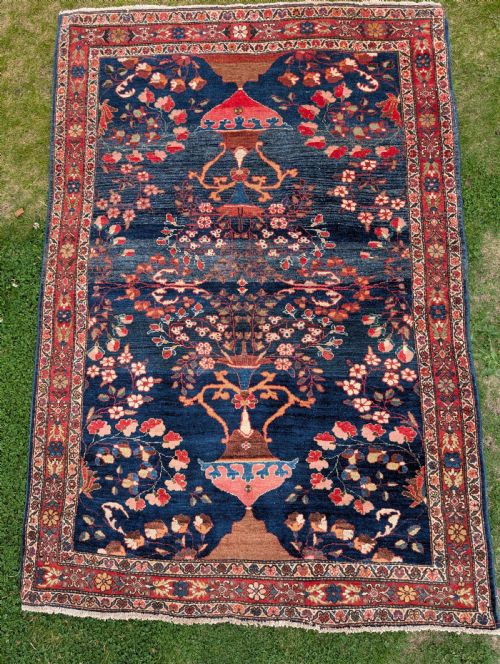


Persian Vase Rug
A persian vase rug brings centuries of woven artistry into a room, offering rich floral motifs and structured symmetry.
Persian Vase Rug
When you search for a persian vase rug, you encounter hand-knotted textiles originating predominantly from regional workshops and tribal traditions in Persia. The examples on this page span from the early decades of the twentieth century, specifically drawing from periods around 1910, 1920, and 1930.
The dominant forms include roomsize carpets, area rugs, and specialised prayer formats. These pieces showcase traditional Persian designs, including floral vase patterns, alongside regional variations such as Kashan, Kirman, Afshar, Malayer, and Isfahan styles.
Buyers are most likely to meet wool pile foundations, occasionally accompanied by silk constructions or cotton foundations. The overarching characteristic is the integration of classical vase motifs flanked by floral arrangements, birds, or animals.
How They Were Made
The construction of these textiles relies on natural materials recorded in the listings, predominantly wool, cotton, and silk. Artisans knotted these fibres by hand onto foundational warps and wefts to create durable floor coverings.
Weaving techniques varied by region, from the fine urban workshops producing Kashan and Isfahan carpets to tribal weavers crafting Afshar and Malayer pieces. These methods determine the density of the pile and the structural integrity of each rug.
Certain antique tribal rugs sneak unexpected peacocks and wandering animals right out of the vase alongside the traditional flowers.
What Varies in Quality
The distinction between tiers of these textiles rests upon material selection and knot density. Finer silk or densely packed wool piles demonstrate greater precision in executing complex floral vase designs.
Regional execution also influences the character of the piece. Urban workshops in centres like Kashan or Kirman yield refined symmetry, whereas tribal pieces from Afshar or Malayer traditions display expressive local interpretations.
The Persian Vase Rug Glossary
- Pile
- The surface of the rug formed by the vertical cut ends of the knotted yarn. This layer absorbs foot traffic and displays the woven design.
- Warp
- The longitudinal threads stretched tightly on the loom before weaving begins. The fringe of a rug typically consists of the extended warp threads.
- Weft
- The horizontal threads passed across the warp threads between rows of knots to secure them in place. These determine the structural firmness of the textile.
- Prayer rug
- A small format rug featuring a mihrab or arch design indicating the direction of prayer. These pieces were often used for personal devotion.
- Tribal rug
- A textile woven by nomadic or village groups rather than urban workshops. These pieces employ geometric motifs and regional colour palettes.
Persian Vase Rug: Frequently Asked Questions
What is a persian vase rug?
A persian vase rug is a hand-knotted textile featuring a central motif of a vase filled with flowers, often surrounded by elaborate garden or floral designs. These pieces originate from Persian weaving traditions.
The listings show examples produced during the early twentieth century, spanning decades from 1910 to 1930.
How do I identify regional rug styles?
Regional styles appear through distinct design elements, colour choices, and weaving structures. For instance, Kashan and Isfahan pieces display refined urban floral patterns, while Afshar and Malayer rugs show tribal characteristics.
Examining the materials, such as wool, cotton, or silk, helps connect the textile to its historical origin.
Where were these carpets used?
These carpets served practical and decorative functions in homes, ranging from large roomsize floor coverings to smaller area rugs. Prayer formats were utilised for personal ritual spaces.
Their durable wool and silk construction allowed them to withstand daily use in living areas.
How should I care for antique rugs?
Antique rugs require gentle maintenance to preserve their natural wool, cotton, and silk fibres. Regular light vacuuming without a rotating brush prevents dust accumulation within the pile.
Professional cleaning tailored to antique textiles ensures the structural longevity of the weave.