
Mahogany Vanity Box
Mahogany vanity boxes and dressing mirrors offer fitted interiors and folding compartments that kept personal items secure through the Georgian and Victorian eras.
Mahogany Vanity Box
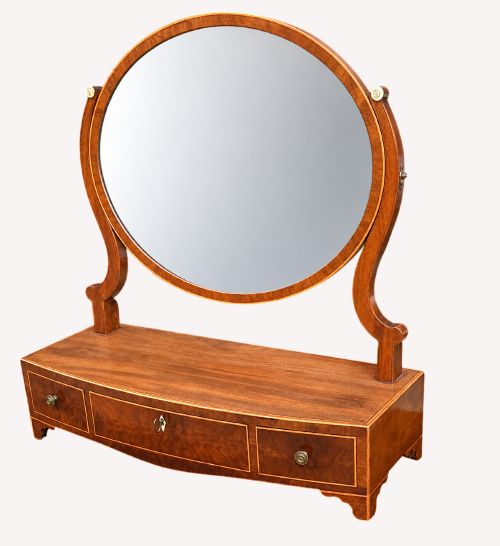
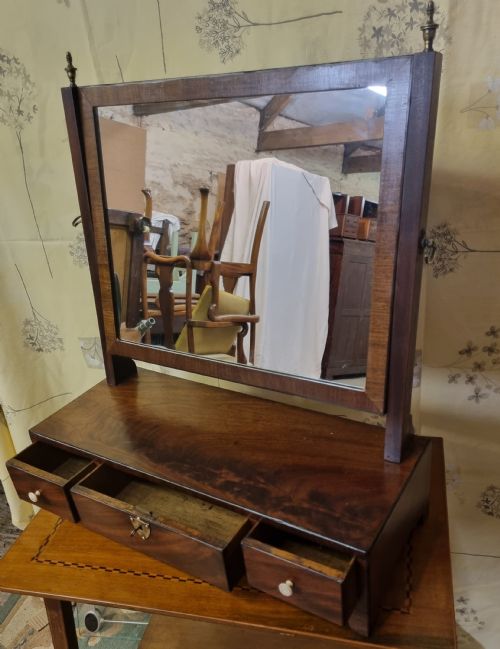
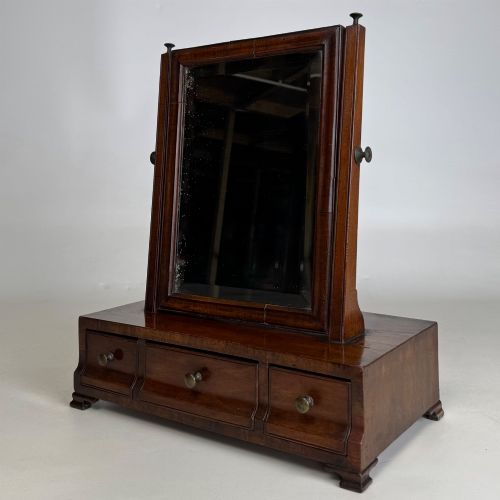
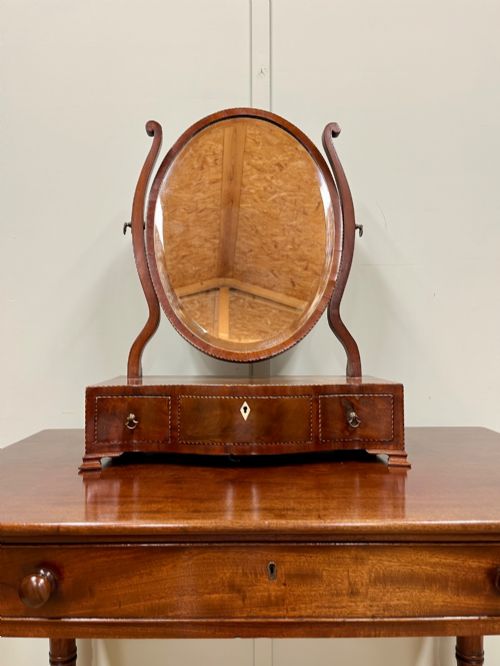
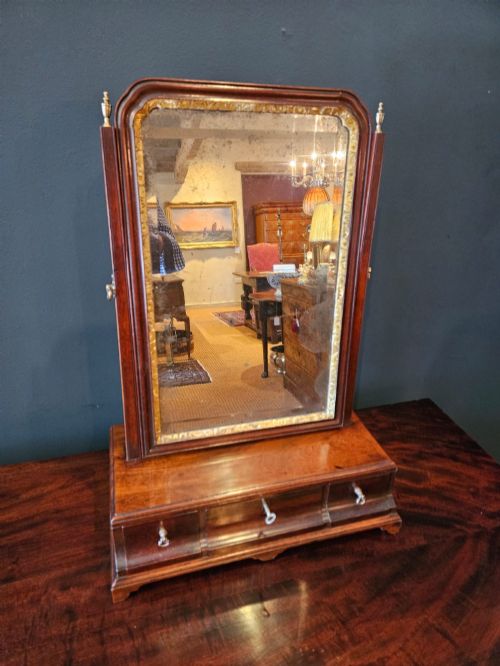
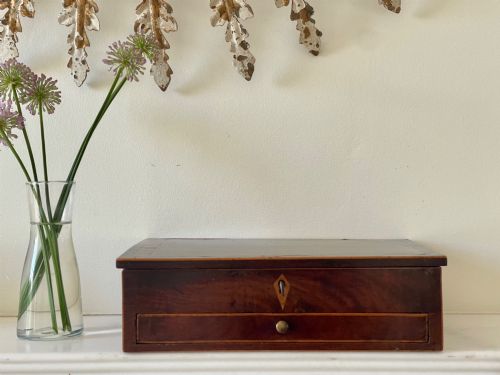
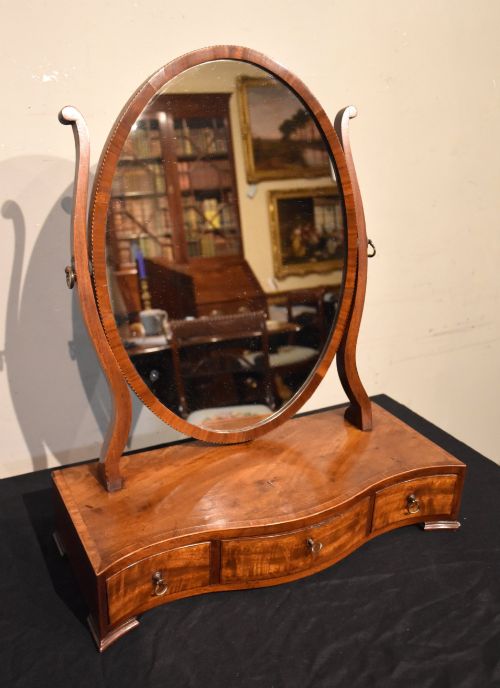
A mahogany vanity box encompasses portable dressing cases, fitted jewellery boxes, and tabletop swing mirrors spanning the Georgian, Regency, and Victorian periods. Buyers seeking a mahogany vanity box typically encounter compact table mirrors with drawer bases or fitted compartments designed for personal grooming and storage.
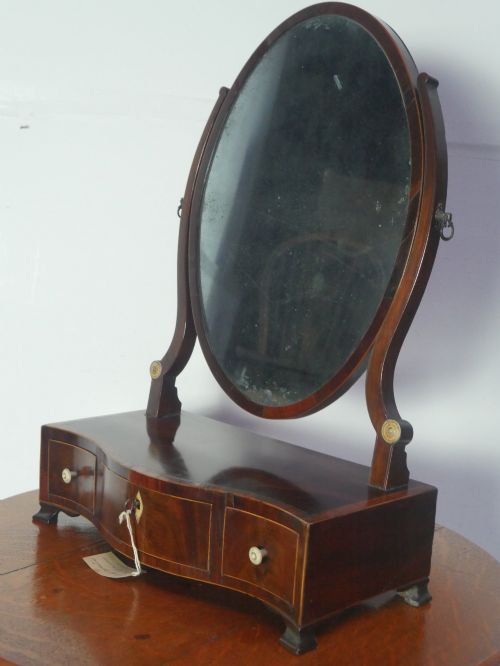
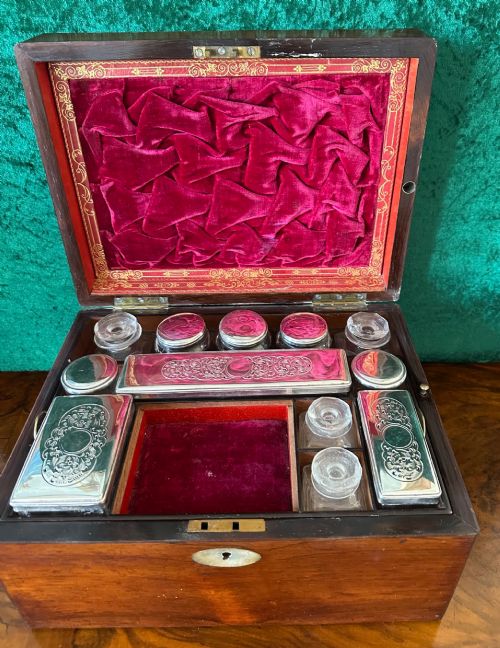
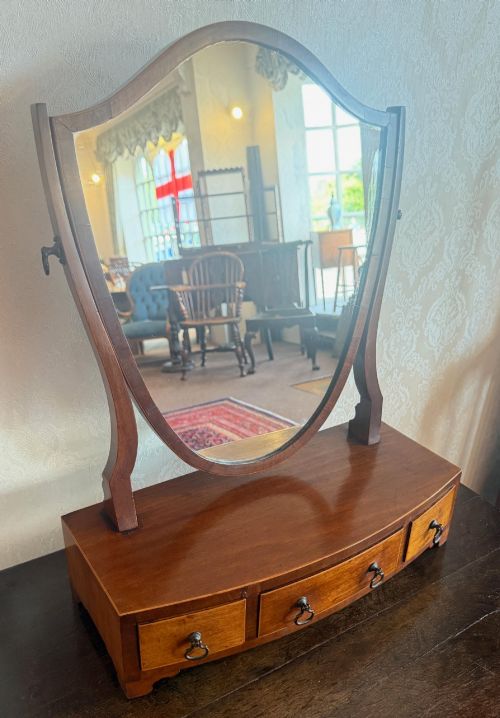
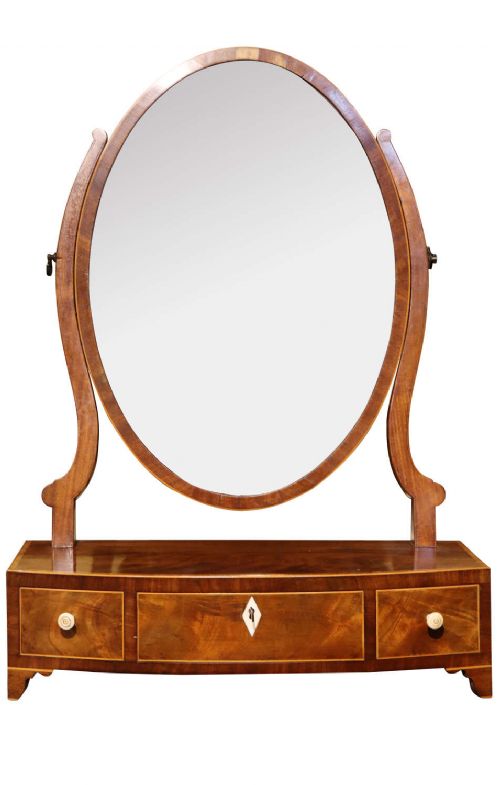
The selection ranges from small 18th-century toilet mirrors with shield or oval plates to larger Victorian gentleman's vanity boxes and combination sewing storage pieces. Many examples incorporate small drawers beneath the glass or folding lids that reveal partitioned interior trays.
Materials and construction
Cabinetmakers built these pieces primarily using solid mahogany and flame mahogany veneers, often enhanced with crossbanding, boxwood inlay, or parcel-gilt details. Structural integrity relied on precise dovetail joints in the small drawers and sturdy pivot mounts for the swing mirrors.
Interiors frequently combine glass mirror plates, velvet linings, and bone or glass fittings alongside brass handles, hinges, and occasional campaign-style bound edges. Walnut and maple also appear in specific crossbanded sections of the more elaborate fitted boxes.
The listings span the Georgian, Regency, and Victorian periods, utilising mahogany, brass, glass, bone, velvet, and walnut.
Judging the standard of execution
Quality reveals itself in the selection of timber figures, such as flame mahogany or burr walnut veneers, and the crispness of any inlaid boxwood lines. Superior examples display meticulous hand-dovetailed drawer construction and well-balanced proportions in the mirror frames.
The integration of original brass hardware, clean mirror glass, and intact velvet or fitted internal compartments distinguishes finer pieces. Lesser versions show simpler joinery, replaced mirror plates, or mismatched interior fittings from later repairs.
Maple and Co.
The Mahogany Vanity Box Glossary
- Toilet mirror
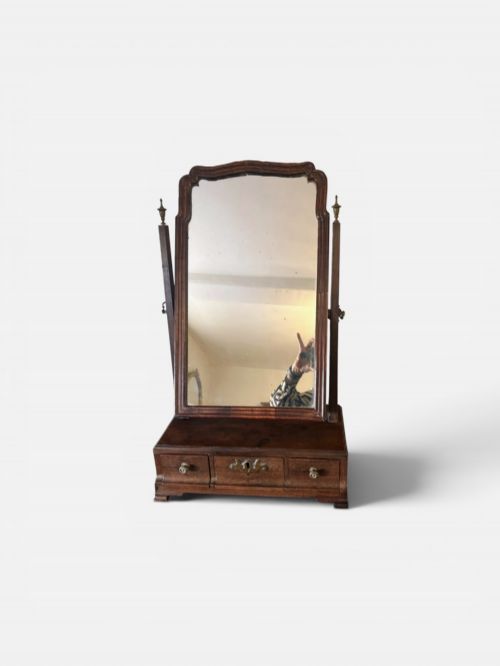
- A small tabletop dressing mirror designed to sit on a chest of drawers or dressing table. These units usually feature a pivoting glass plate set within an upright frame atop a small box base.
- Crossbanding
- A decorative border technique where strips of veneer are laid across the grain of the primary wood. This method frames the drawer fronts and lids of better-quality boxes.
- Shield shaped
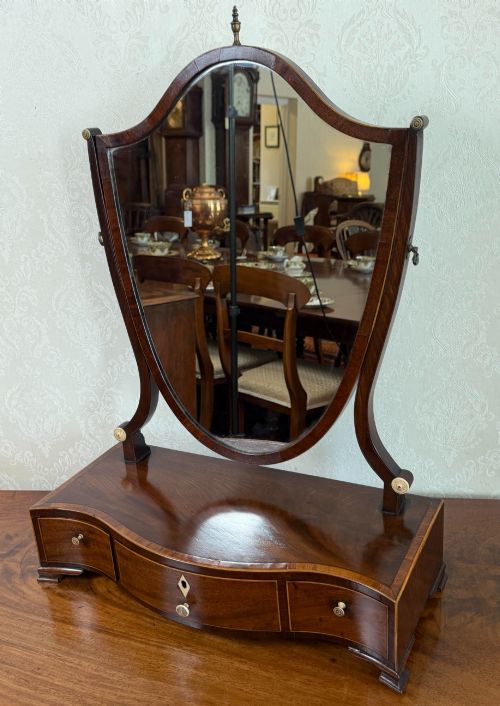
- A mirror plate cut into the outline of a heraldic shield. This popular 18th-century profile is found on many Georgian dressing mirrors.
- Serpentine front
- A furniture front curving outward at the centre and inward at the sides. This fluid outline appears on the drawer bases of finer Georgian toilet mirrors.
- Parcel-gilt
- Partially gilded woodwork where gold leaf highlights specific carved details or mouldings. It provides contrast against the dark surface of the mahogany.
Mahogany Vanity Box: Frequently Asked Questions
What is a mahogany vanity box?
A mahogany vanity box is a portable or tabletop container designed for grooming items, jewellery, and personal documents. These pieces often include folding lids, internal compartments, and small drawers.
Many examples also integrate adjustable swing mirrors into their construction. They span periods from the 18th century through the Victorian era.
How do I date a dressing mirror?
Dating relies on the overall silhouette, wood choice, and construction details of the base. Georgian pieces often feature oval or shield-shaped glass plates above serpentine or bowfront drawer sections.
Victorian versions tend to be heavier with rectangular frames and more robust box constructions. The type of mirror glass and screw fixings also offer clues to the period.
Were these boxes used by men or women?
Both gentlemen and ladies used these portable containers for daily grooming and storage. Gentleman's vanity boxes typically housed shaving gear, razors, and bottles.
Boxes intended for ladies focused more on jewellery, sewing implements, and small cosmetic jars. Many interiors were lined with velvet or silk to protect delicate possessions.
Where should I place a table mirror?
Table mirrors sit comfortably on top of chests of drawers, sideboards, or dedicated dressing tables. Their compact footprint makes them practical for adding reflective light and surface storage to a bedroom.
Ensure the surface is stable enough to support the pivoting frame without rocking. Keep them out of direct sunlight to protect the mahogany finish and internal velvet linings.