
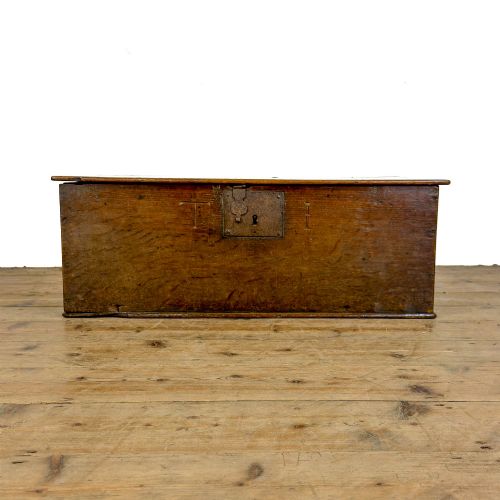
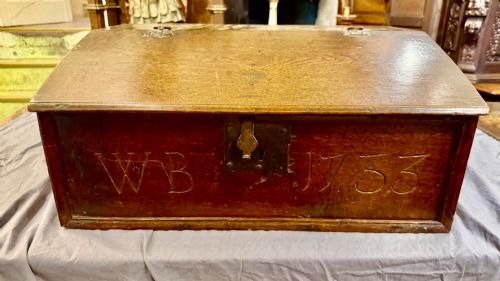
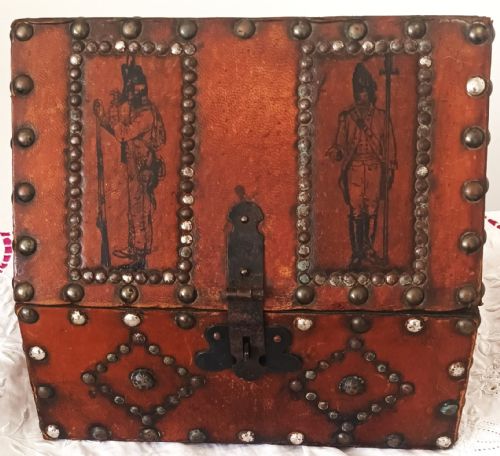



Georgian Document Box
A georgian document box organises your papers with the weight and honesty of centuries past.

Georgian Document Box
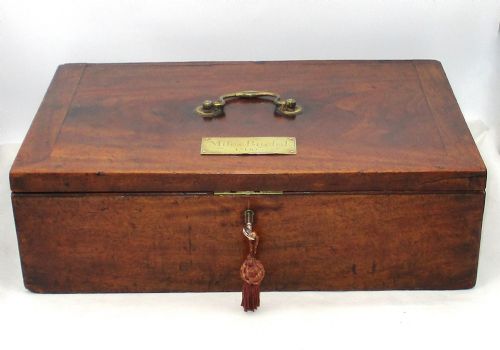
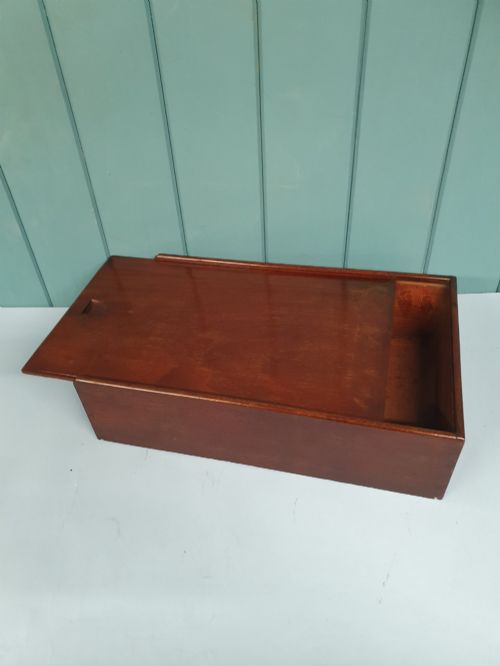
When you search for a georgian document box, you encounter containers built to safeguard deeds, letters, and valuables during periods when security meant solid timber and heavy locks. These pieces bridge domestic utility and travel, appearing frequently as sliding lid containers, deed storage chests, and fitted writing slopes.
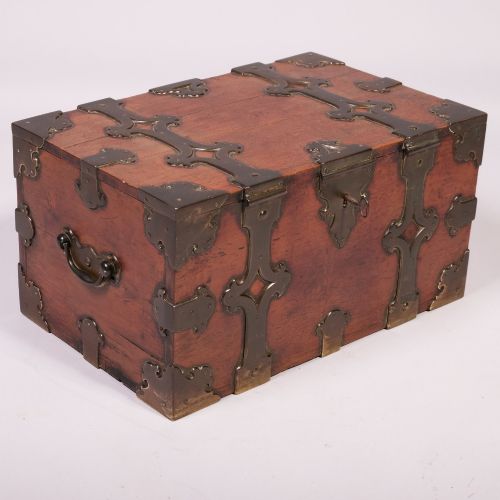
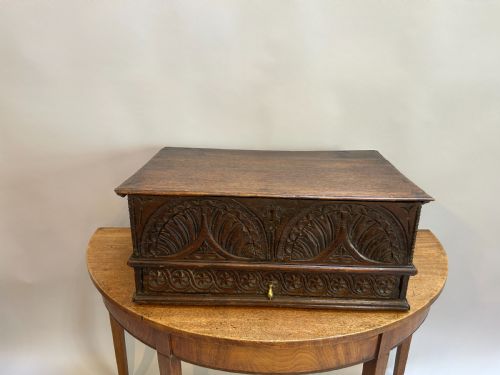
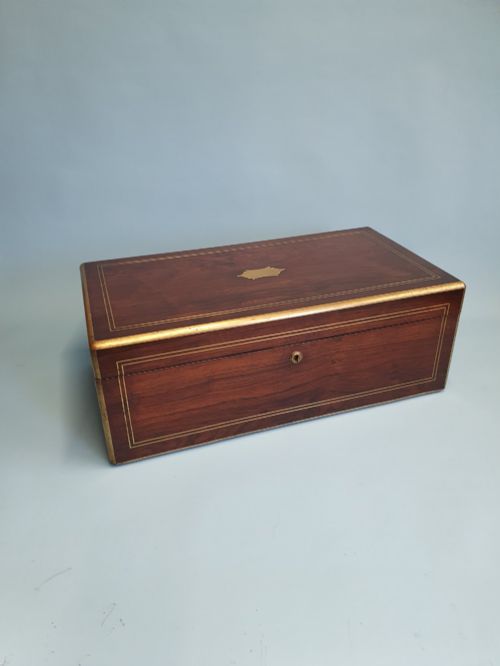
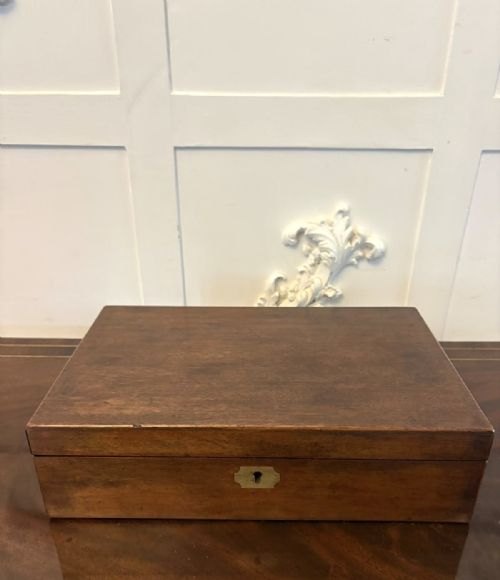
The selections available here span from robust oak Bible boxes of the seventeenth and eighteenth centuries to refined mahogany, rosewood, and walnut specimens from the Georgian and Regency eras. You will also meet brass-bound campaign cases and leather-bound caskets designed for mobility.
Most examples hail from British workshops, though Anglo-Chinese colonial camphor caskets and Irish walnut boxes occasionally surface. Their primary function remains unchanged: storing paperwork securely while offering a handsome surface or profile for a desk or table.
Materials and construction
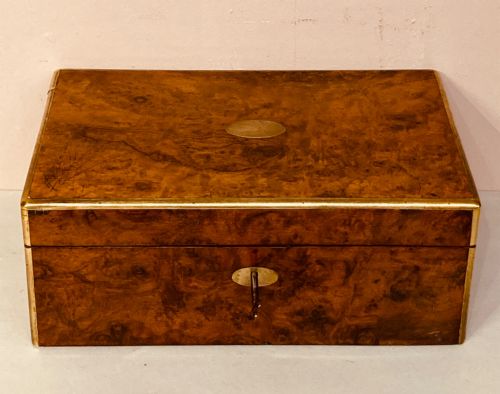
Cabinet makers relied heavily on dense hardwoods such as mahogany, oak, and walnut, frequently selecting figured veneers and burr grains for decorative impact. Elm and camphor also appear, chosen for toughness or aromatic qualities in travel trunks.
Metal reinforcement defines many surviving pieces, with brass corners, straps, and flush carrying handles protecting edges during transport. Linings often incorporate tooled leather, velvet, and secret compartments concealed behind dummy drawers or sliding panels.
The inventory spans the seventeenth, eighteenth, and nineteenth centuries, encompassing Georgian, Regency, and Victorian periods.
Quality variations
The distinction between ordinary utility boxes and superior examples rests on timber selection and interior complexity. Plain oak Bible boxes rely on simple pegged joinery and hand-carved surfaces, whereas top-tier Regency rosewood boxes display meticulous brass inlay, complex locking mechanisms, and finely fitted stationery partitions.
Originality of surface and hardware dictates lasting worth. Boxes retaining their functional locks, key escutcheons, secret drawer mechanisms, and uncompromised timber patination sit at the apex of the range, while later alterations or replaced mounts diminish the integrity of the piece.
Austin·Chapple & Sons
The Georgian Document Box Glossary
- Writing slope
- A box with a hinged, slanted lid that folds down to form a writing surface, typically opening to reveal inkwell recesses and pen trays.
- Campaign case
- A portable chest or box built for travel, featuring recessed brass handles and reinforced corners to withstand military journeys.
- Secret compartment
- A hidden drawer or concealed space accessed by removing a false panel or pressing a hidden spring.
- Bible box
- A small, sloped-lid wooden chest originally constructed to hold household Bibles and important family documents.
- Escutcheon
- A protective plate surrounding a keyhole, commonly cast in brass on quality boxes.
Georgian Document Box: Frequently Asked Questions
What is a georgian document box?
A georgian document box is a secure wooden or leather-covered container designed to store letters, deeds, and personal papers in the eighteenth and nineteenth centuries.
These pieces range from simple oak desk boxes to elaborate brass-bound rosewood writing slopes fitted with secret drawers.
How do you tell periods apart?
Earlier pieces from the seventeenth and eighteenth centuries generally utilise solid oak with hand-carved details or simple pegged construction.
Later Regency and nineteenth-century examples favour exotic timbers like rosewood and satinwood, often decorated with brass inlay and sophisticated locking mechanisms.
How were writing slopes used?
Writing slopes served as portable desks for correspondence, unfolding to provide an angled writing surface lined with leather or velvet.
Internal compartments held inkwells, sanders, nibs, and stationery, keeping writing materials organised at home or on military campaigns.
How do I care for my box?
Keep wooden boxes away from direct sunlight and dramatic temperature fluctuations to prevent timber from splitting or warping.
Feed dry wood with a quality wax polish sparingly, and avoid using liquid cleaners on antique leather linings.