

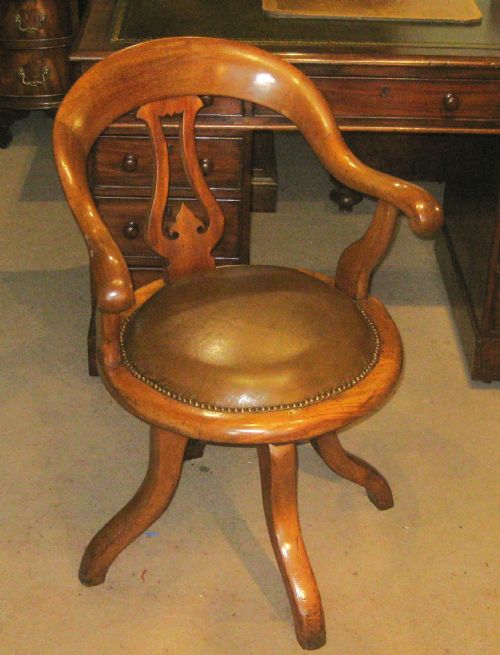
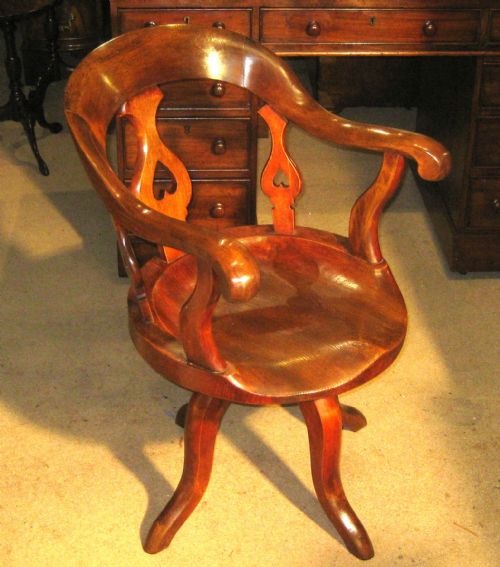
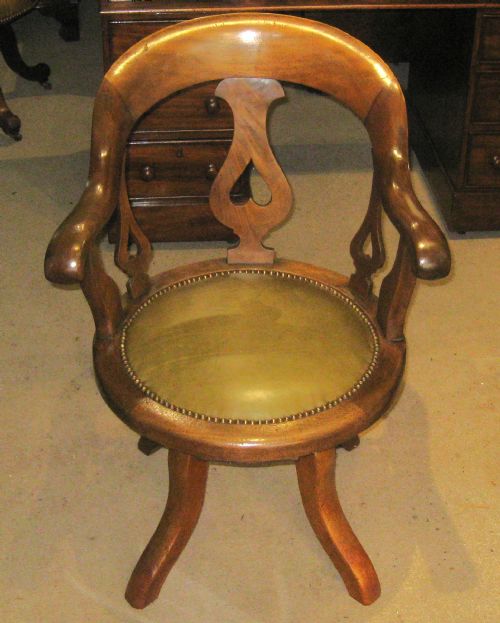
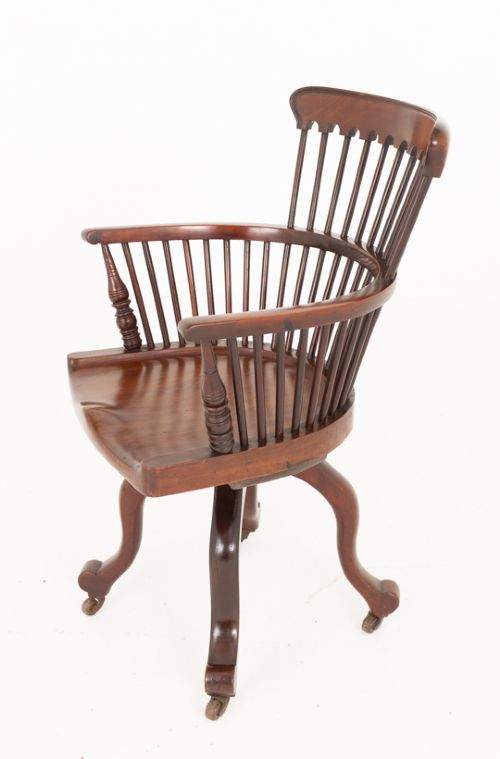
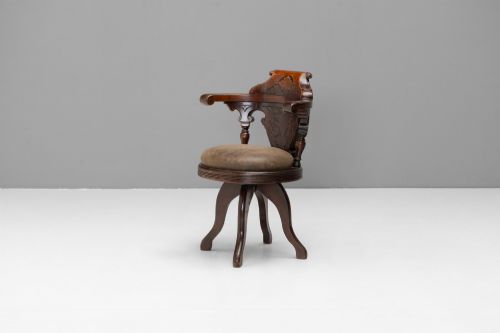


Mahogany Swivel Chair
Mahogany swivel chair designs bring together nineteenth-century revolving desk seating and adjustable music stools built for working and playing in comfort.

Mahogany Swivel Chair
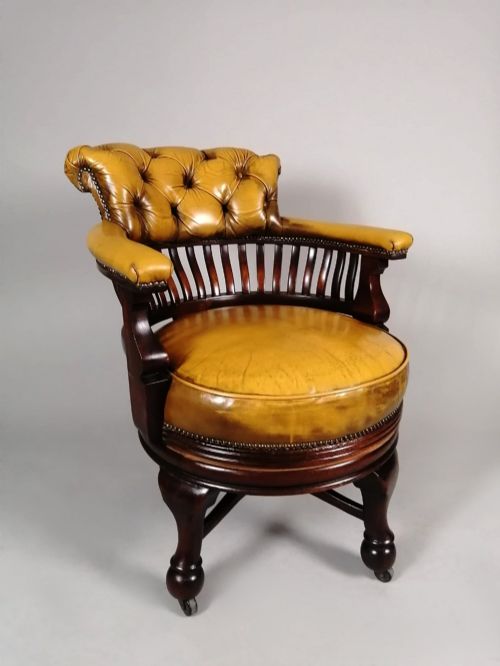
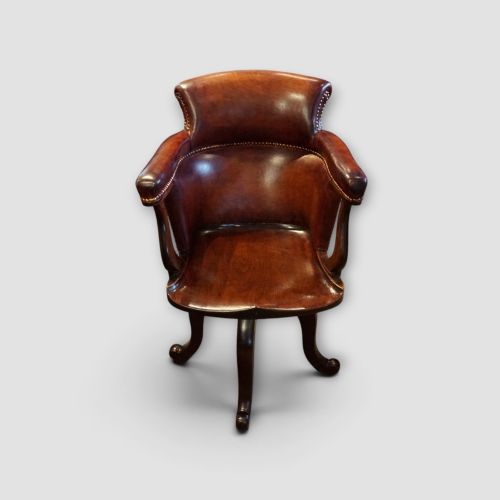
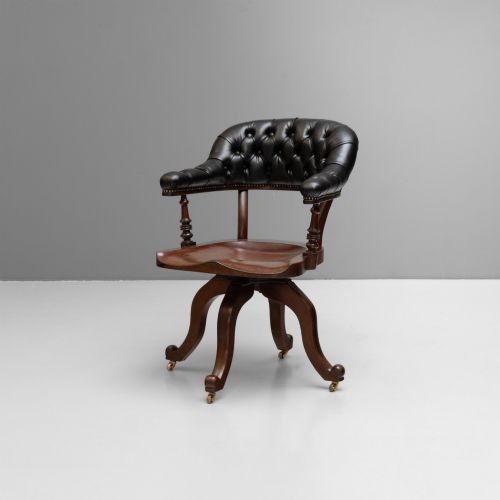
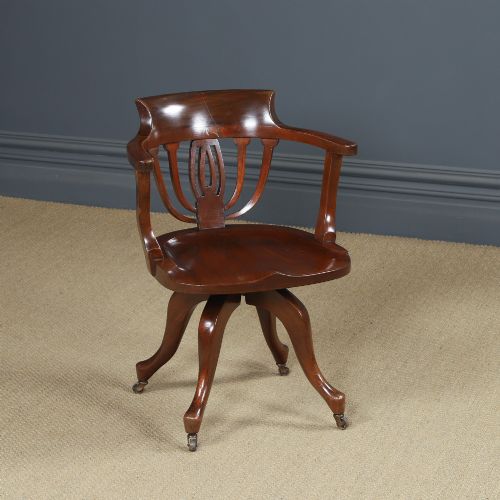
A mahogany swivel chair is primarily found in Victorian and Edwardian office forms, alongside piano stools and music chairs designed with revolving mechanisms. Buyers encounter desk chairs upholstered in leather as well as adjustable music stools dating from the nineteenth and early twentieth centuries.
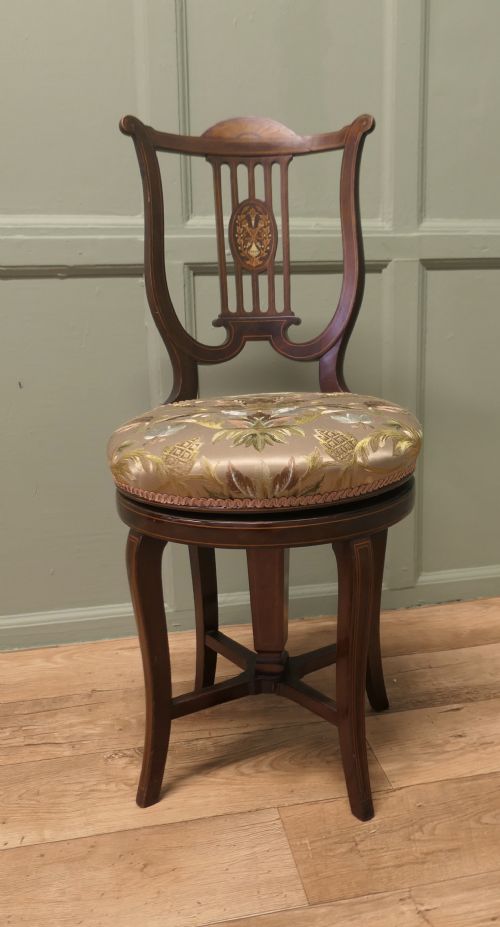
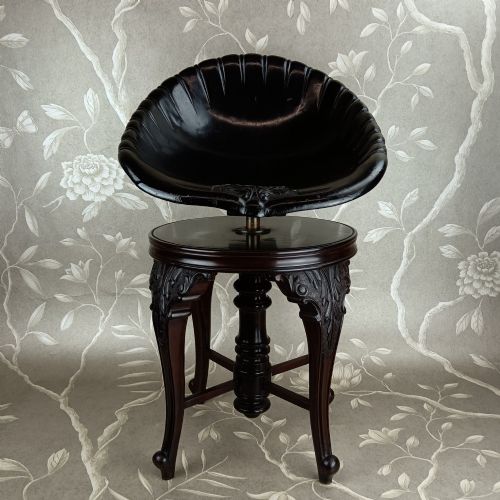
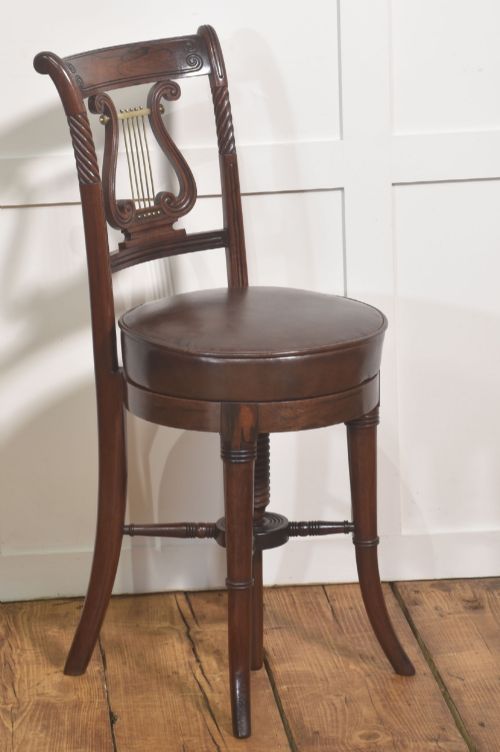
The selection ranges from solid mahogany office armchairs to adjustable piano stools and revolving harpist music chairs. These seating options reflect the domestic and professional interior requirements of the Victorian, Edwardian, and Regency periods.
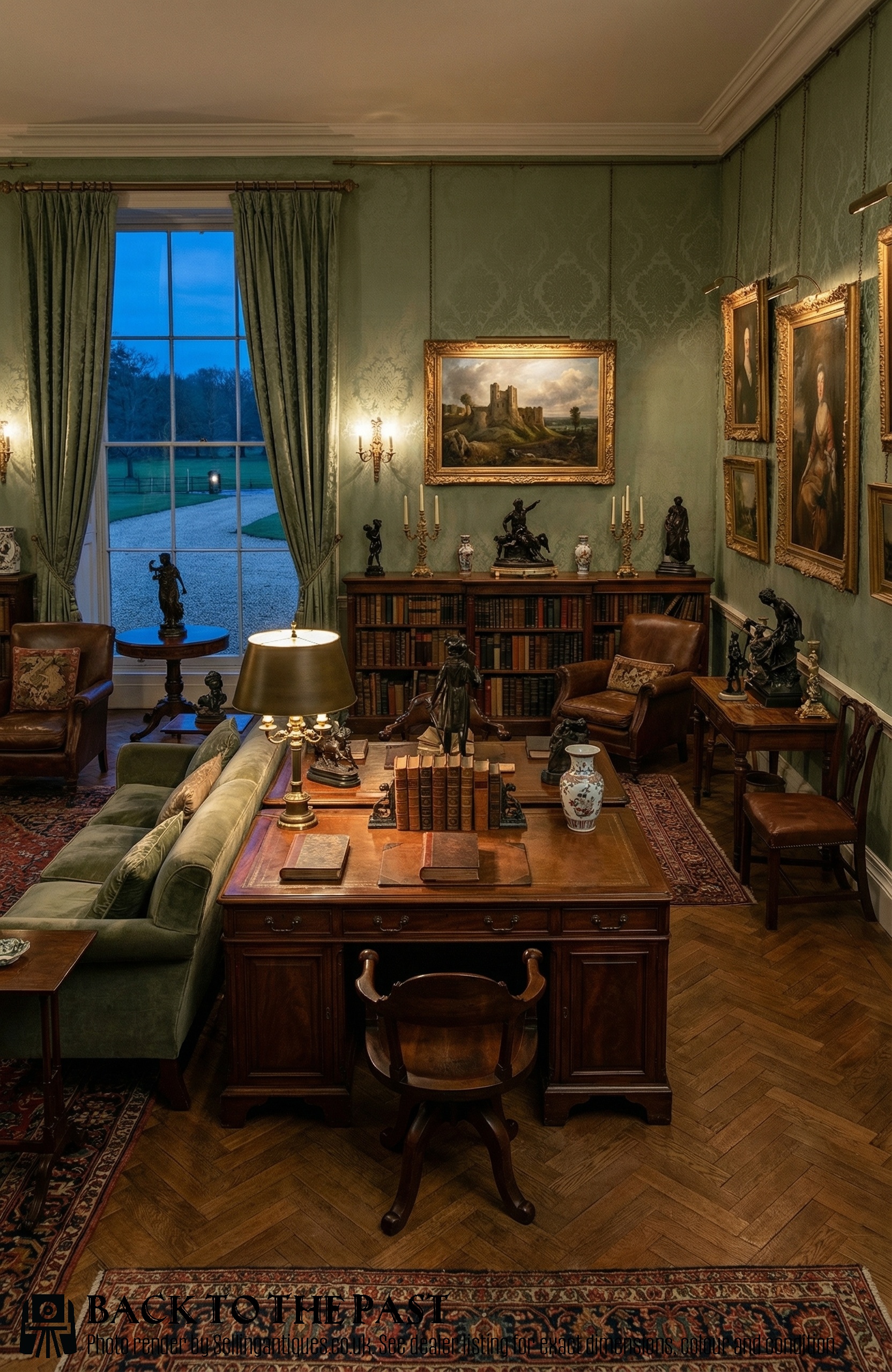
Materials and construction
Makers utilised solid and golden mahogany paired with brass fittings, iron mechanisms, and cast iron components to achieve a sturdy revolving action. Leather, velvet, and fabric upholstery provided cushioned seating surfaces for desk chairs and music stools.
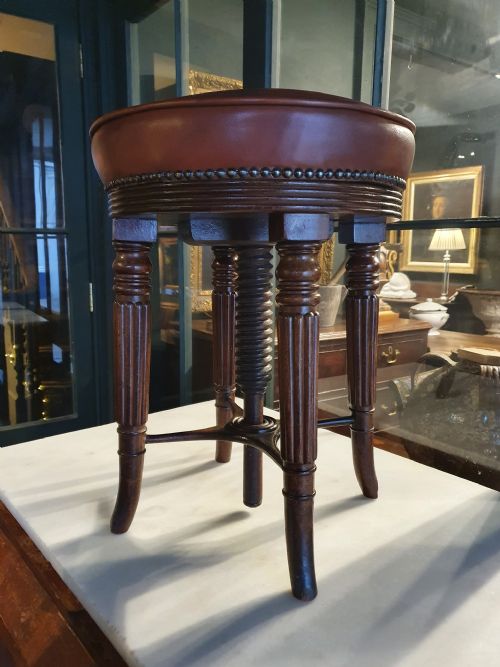
Adjustable screw mechanisms and swivel joints allowed heights and angles to alter according to the user. Cabinetmakers combined timber framing with upholstered pads secured by brass tacks or studs.
Mahogany Swivel Chair Retail Price Guide 2026
Typical asking prices for mahogany swivel chair among the pieces listed under this phrase on Sellingantiques today, from the lower quarter to the upper quarter. They describe what is for sale here now, not the wider market.
Listings feature mahogany swivel chairs spanning the Victorian, Edwardian, and Regency periods, incorporating leather, brass, and cast iron elements.
Distinctions in quality
Quality rests upon the structural integrity of the revolving mechanism and the richness of the mahogany timber. Golden and solid mahogany variants with robust cast iron or brass inner spindles demonstrate superior craftsmanship compared to later or simpler iterations.
The refinement of the carving, such as lyre backs or inlaid details, separates standard office seating from bespoke workshop output. Original leather upholstery and well-maintained adjustment screws further distinguish higher grade examples.

Jennens And Bettridge·Gillows·James Shoolbred·WM Heywood Chair Co
The Mahogany Swivel Chair Glossary
- Revolving
- A seating function allowing the top portion of the chair to turn full circle upon a central spindle. This movement relied on iron or brass working parts concealed beneath the seat.
- Rise and fall
- An adjustment system enabling the seat height to increase or decrease by turning the stool top on a threaded screw. This was common in piano and music seating.
- Golden mahogany
- A lighter, highly figured variant of mahogany timber favoured by Victorian cabinetmakers for its warm tone. It was frequently utilised for desk chairs and display furniture.
- Papier-mâché
- A moulded composite material used alongside wood for decorative music stool bases and Victorian fancy goods. It offered a smooth dark surface suitable for painting or inlay.
- Lyre back
- A chair backrest shaped in the form of a classical stringed musical instrument. This motif appeared on music chairs and specialised seating.
Mahogany Swivel Chair: Frequently Asked Questions
What is a mahogany swivel chair?
A mahogany swivel chair is a nineteenth or early twentieth-century seat featuring a revolving mechanism housed beneath a timber frame. These pieces were built primarily for offices, studies, and music rooms.
They combine mahogany timber structures with leather upholstery or adjustable screw stools. The design allowed workers and musicians to turn and adjust height without standing.
How do I date a mahogany swivel chair?
Dating relies upon examining the timber characteristics, hardware types, and prevailing styles across the Victorian and Edwardian eras. Earlier pieces often feature solid mahogany and heavy iron or brass underframes.
Later Edwardian and 1920s examples show lighter construction methods and different upholstery treatments. Makers marks and patented swivel mechanisms also help narrow down the decade of production.
Were these chairs used at desks?
Many mahogany swivel chairs served as office and desk chairs for professionals and executives. The revolving action made it easy to reach different parts of a partner desk.
Other variants were built specifically as piano stools or music chairs rather than office furniture. These music variants prioritised height adjustment over armrests and back support.
How do I care for the leather?
Leather upholstery on antique desk chairs requires gentle cleaning and conditioning to prevent drying out. Maintaining the hide preserves the historic character of the piece.
Avoid harsh chemical cleaners and keep the timber away from direct heat sources. Regular dusting protects both the mahogany surfaces and the revolving mechanism.