
Mahogany Standing Display Unit
A mahogany standing display unit brings architectural timber and glass together to hold books and objects in any room.
Mahogany Standing Display Unit
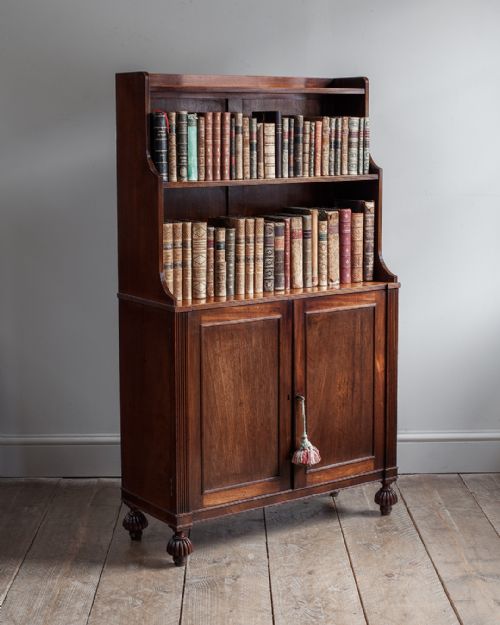
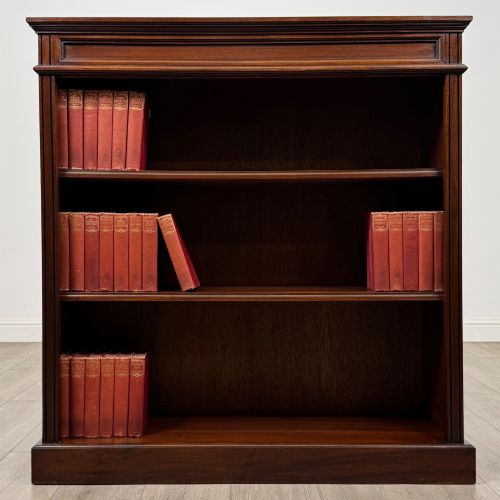
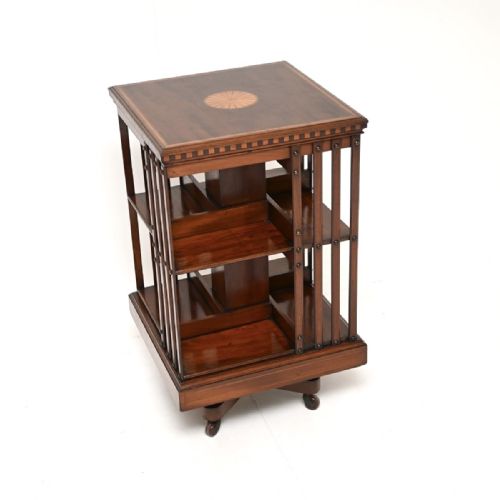
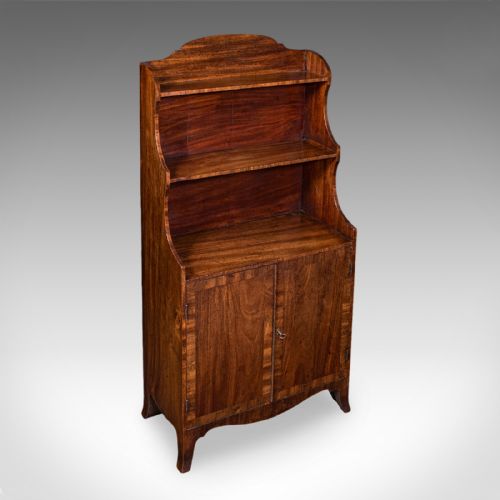
A mahogany standing display unit encompasses open bookcases, multi-tiered étagères, corner cupboards, and whatnots designed to sit directly on the floor. Pieces span from the George III and Regency periods through the Victorian era and into Edwardian and later 20th-century revivals.
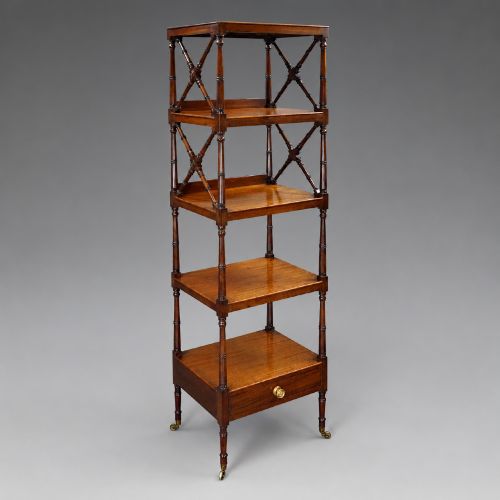
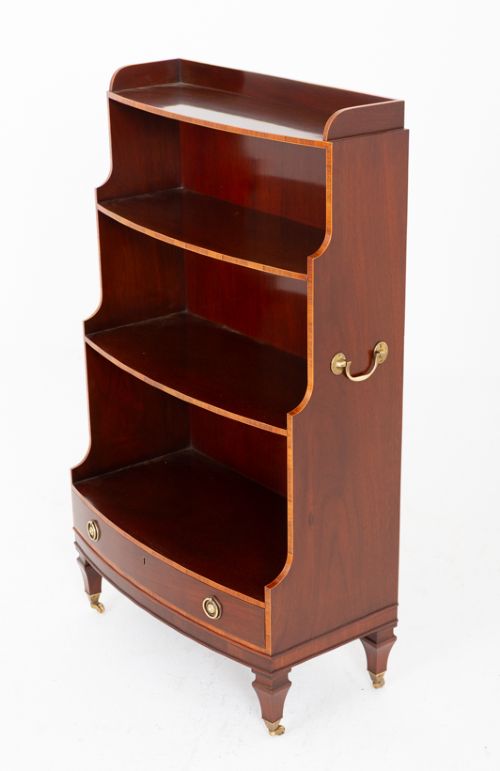
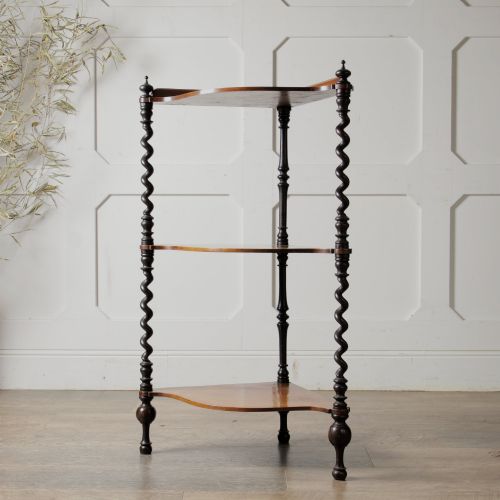
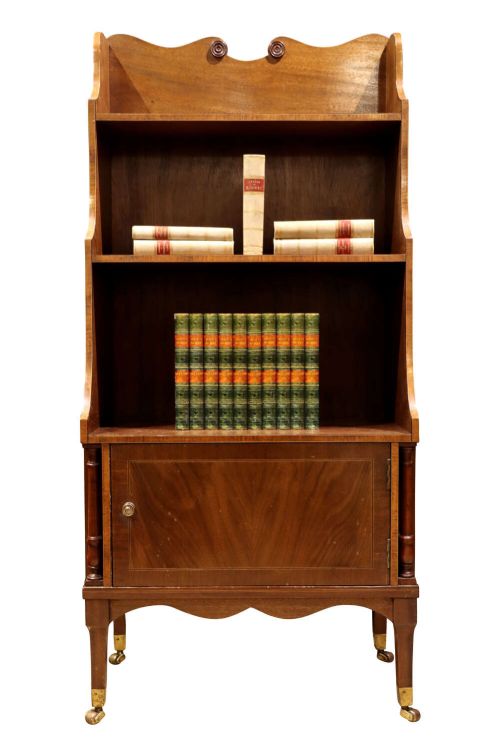
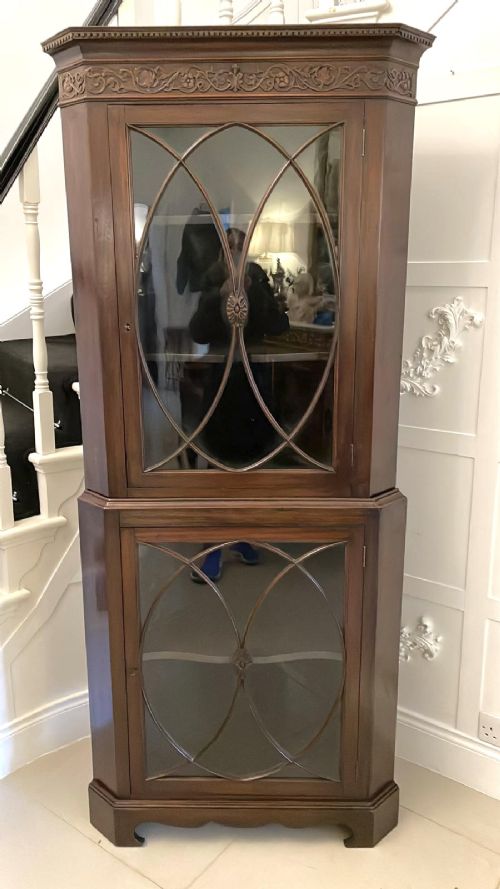
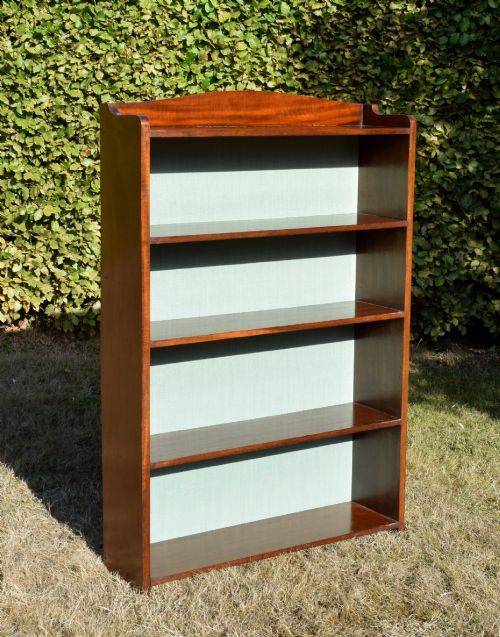
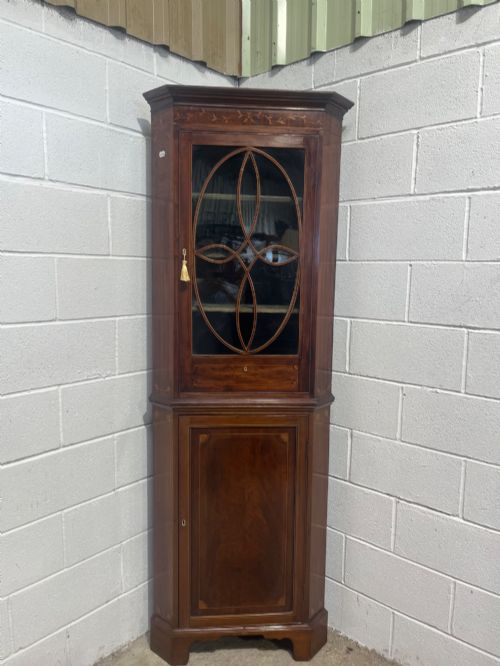
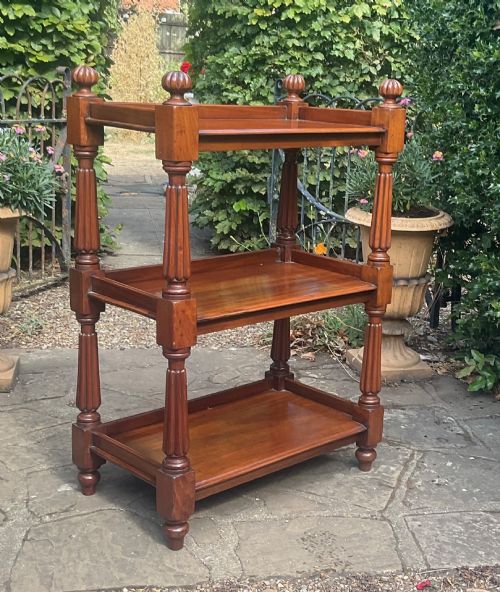
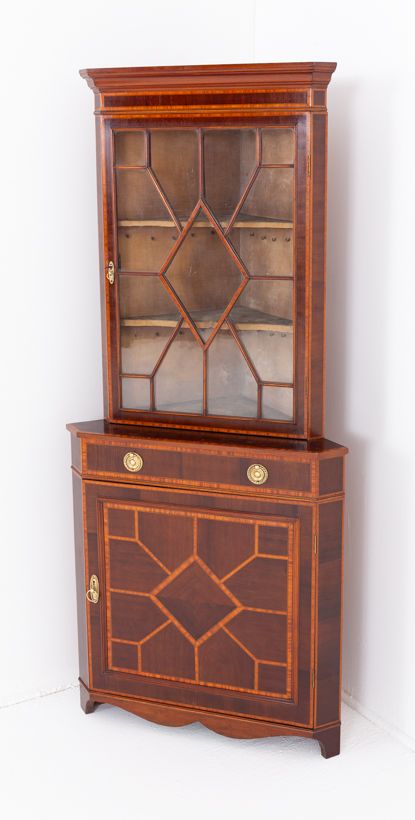
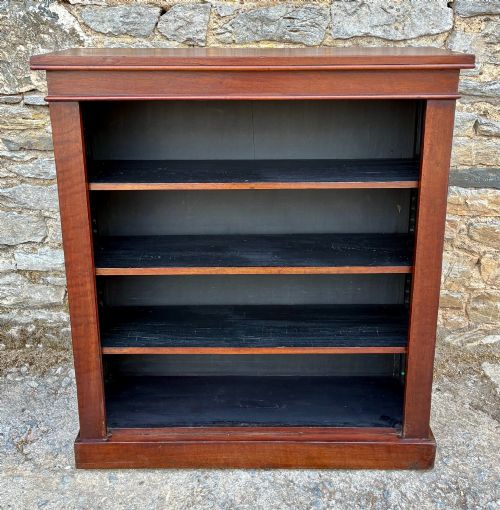
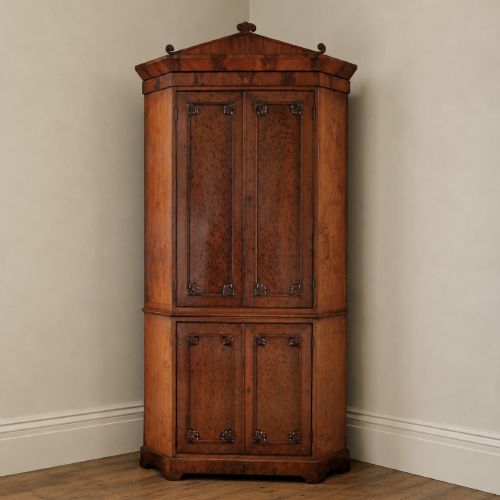
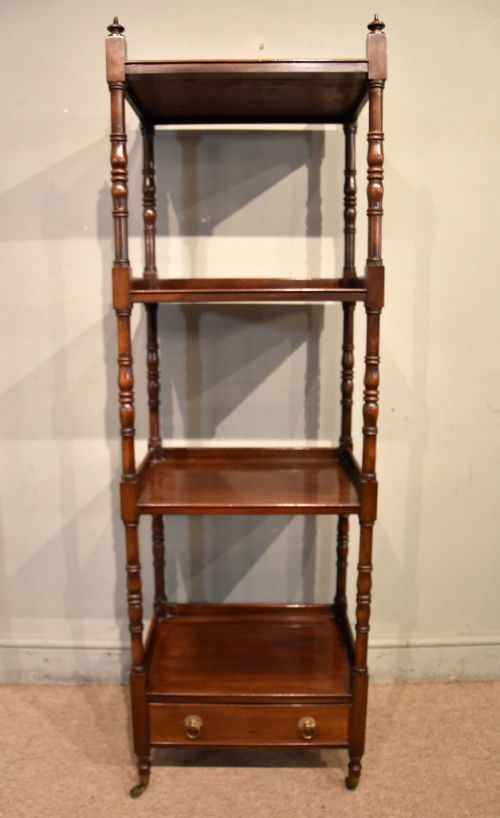
Open bookcases and waterfall shelving units provide accessible display space, while corner cabinets and cupboards utilise neglected room angles with glazed or panelled doors. Whatnots and étagères offer tiered platforms supported by turned columns or barley twist uprights.
The selections on this page draw from English cabinet-making traditions, favouring rich timber surfaces and vertical proportions that frame collections of books and ceramics effectively.
How they were made
Cabinet makers built these standing units primarily using solid mahogany and flame mahogany veneers over secondary timbers such as softwood. Satinwood inlay frequently provides contrasting geometric or floral border decoration on late 19th-century and Edwardian pieces.
Functional hardware includes brass castors for mobility on floor-standing étagères and brass keys operating fitted locks on corner cupboards. Glazed doors feature astragal frames, while open shelves often graduate in depth from top to bottom on waterfall designs.
Listings feature standing display units spanning Georgian, Regency, Victorian, and Edwardian periods, constructed in mahogany, satinwood, and glass.
What varies in quality
Quality rests in the selection of timber figures, such as dense Cuban mahogany or striking flame grains, matched carefully across panels and drawer fronts. Refined execution shows in crisp inlay work, precise dovetail joinery, and well-proportioned architectural cornices.
Subtle details separate standard production from superior cabinet-making, including turned barley twist supports, original brass castors, and finely glazed astragal doors that maintain structural integrity over generations of use.
Edwards & Roberts
The Mahogany Standing Display Unit Glossary
- Waterfall bookcase
- A tiered open shelving unit where each successive shelf steps back from the one below, creating a cascading profile. These frequently date from the Regency and Victorian periods.
- Étagère
- A French-derived open display piece with several tiers supported by columns, intended for small decorative objects. Mid-19th-century examples often incorporate a single drawer.
- Astragal
- A moulding profile used to divide glass panes within a cabinet door into smaller geometric sections. It creates a lighter visual grid on corner cupboards.
- Flame mahogany
- A highly figured veneer cut from the fork of the mahogany tree where branches join the trunk. This produces a distinctive flickering flame pattern prized in cabinet-making.
Mahogany Standing Display Unit: Frequently Asked Questions
What is a whatnot used for?
A whatnot serves as a multi-tiered display stand for books, ornaments, and small treasured possessions. Its vertical tiers allow collectors to exhibit various items without occupying excessive floor space.
Historically placed in parlours and drawing rooms, these pieces keep decorative objects organised and visible from multiple angles within a room.
Where should I place a corner cabinet?
A corner cabinet fits neatly into empty room angles, turning neglected junctions into functional storage. These units work effectively in dining rooms for display china or in studies for specialised book collections.
Because they project outwards from the corner, they utilise perimeter space while leaving the central floor area open and uncluttered.
How do I care for mahogany furniture?
Maintenance involves dusting with a soft cloth and avoiding placement near direct heat sources or strong sunlight. Timber finishes respond best to stable indoor humidity and occasional application of traditional wax polish.
Keeping brass hardware clean and ensuring weight is distributed evenly across shelves protects the structural integrity of older display units.
How do I distinguish Regency from Victorian pieces?
Regency pieces often display restrained classical proportions, clean lines, and architectural restraint influenced by Greek and Roman revivals. Timbers tend to show rich natural grain without heavy ornamentation.
Victorian furniture frequently embraces more exuberant carving, turned elements like barley twists, and darker finishes alongside complex inlaid borders and glazed cabinetry.