
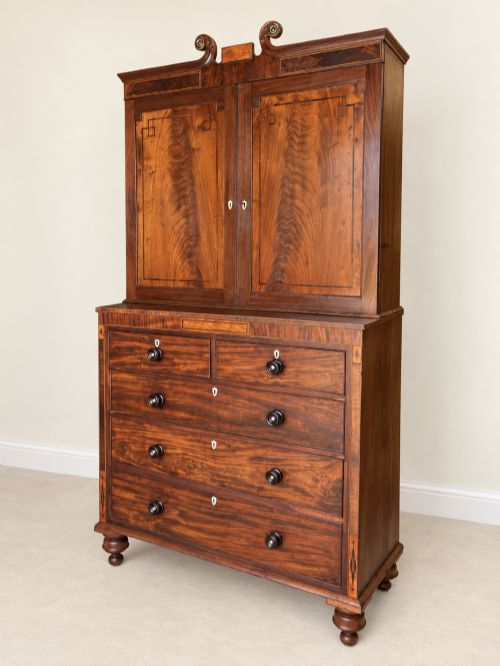
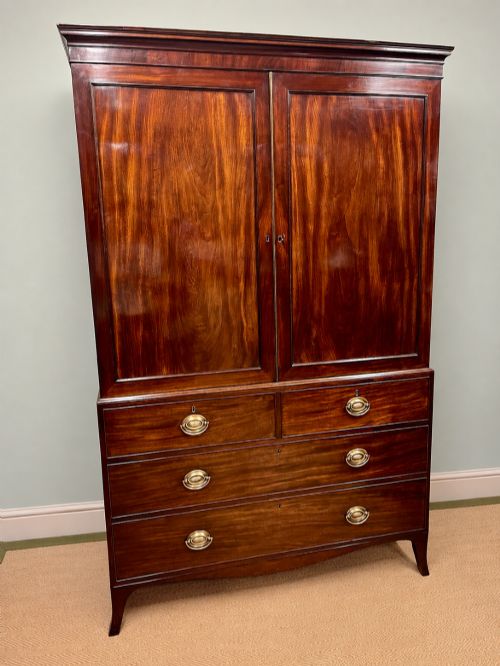
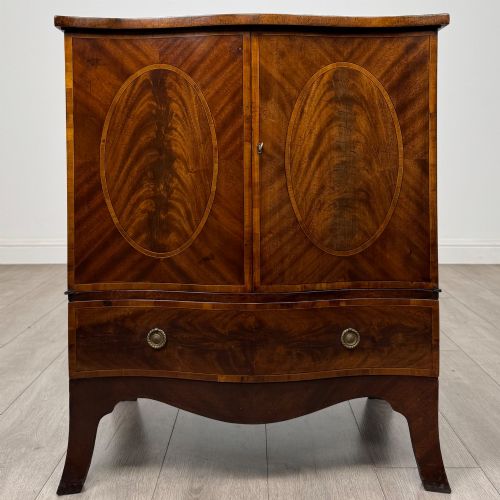

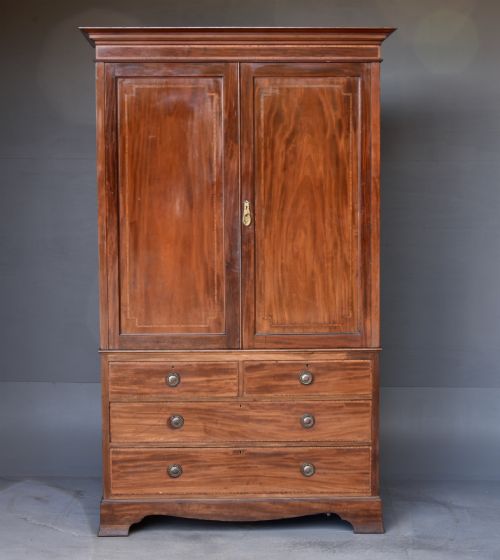
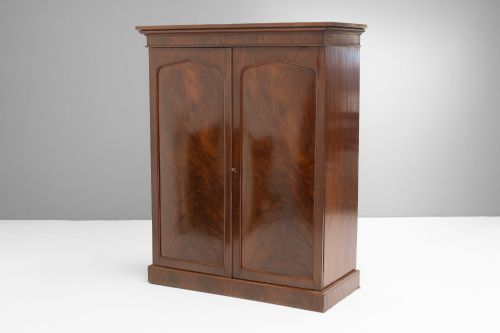
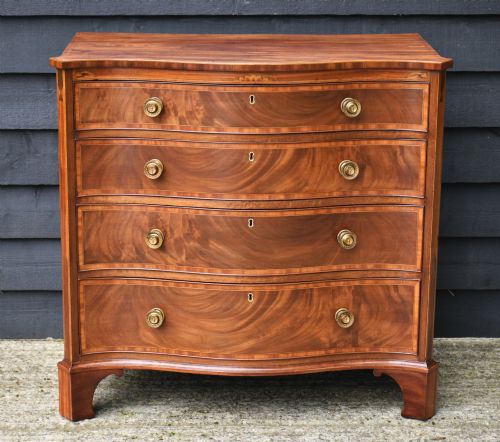
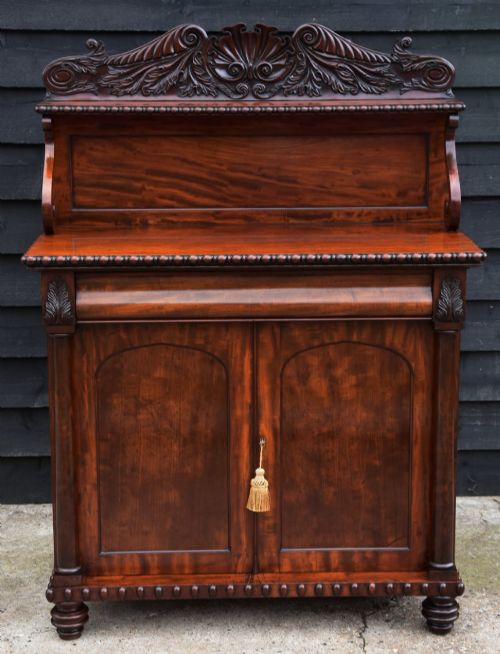
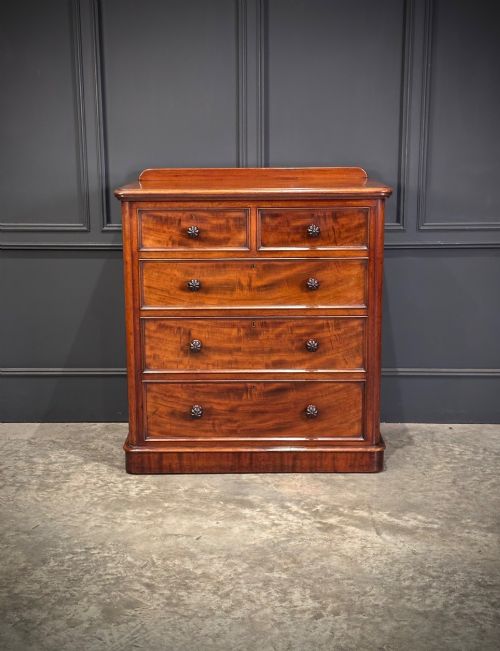
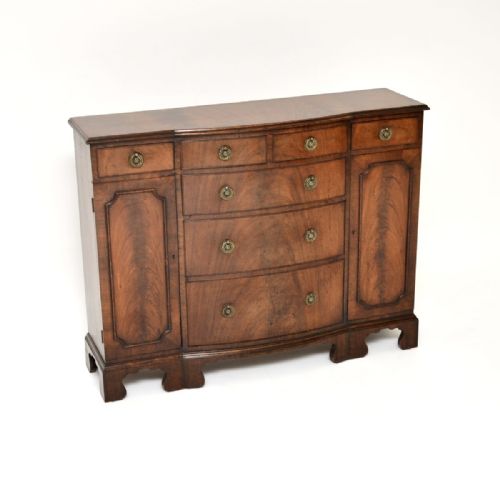
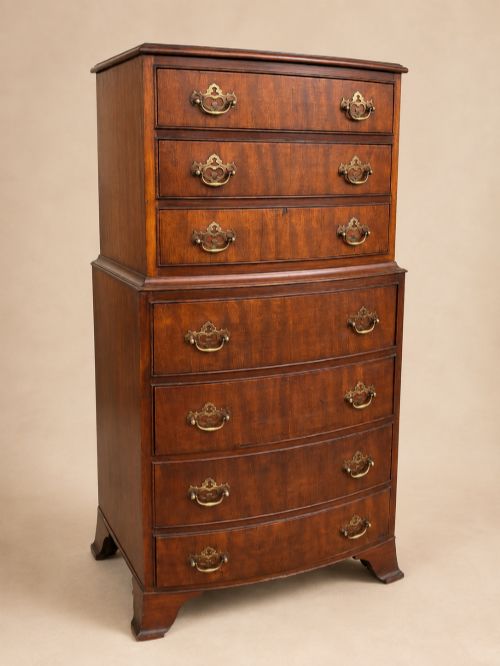
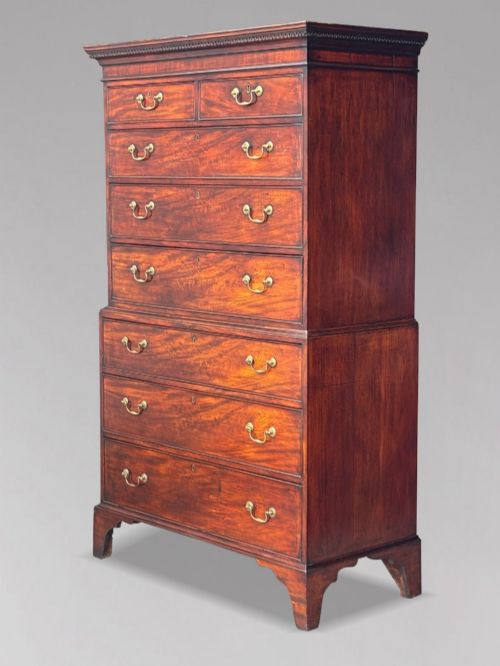
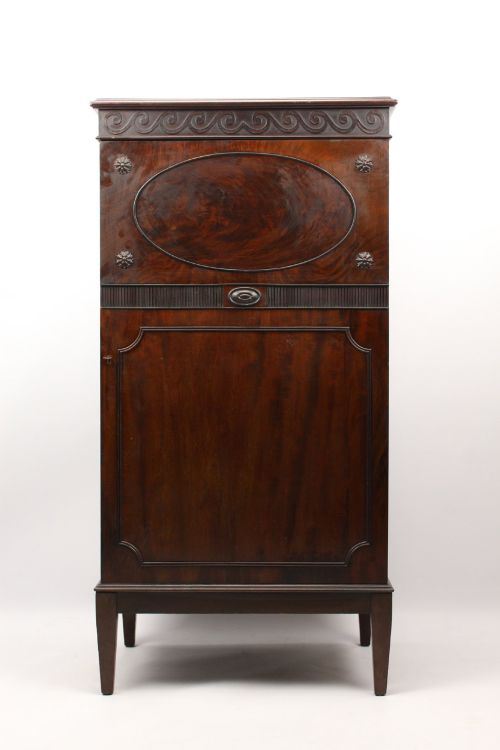
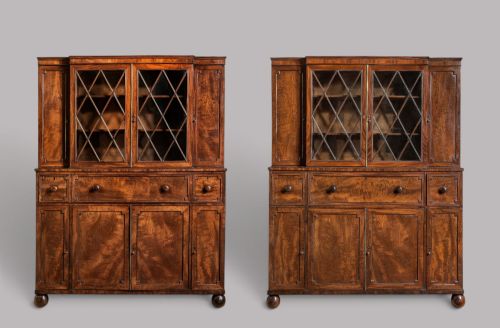
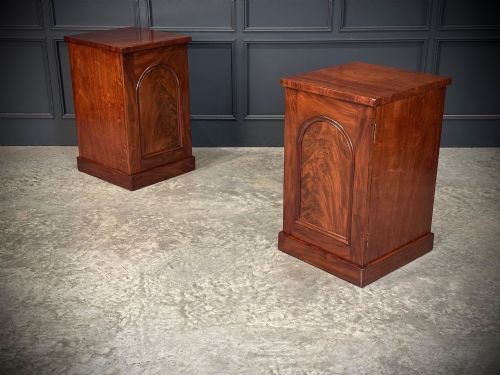
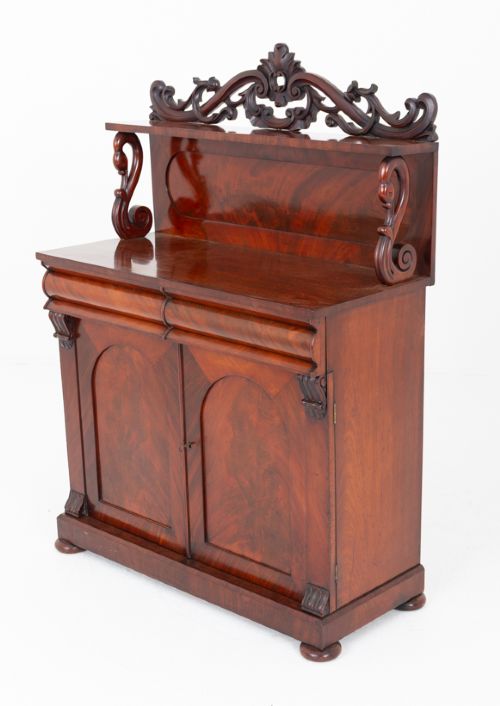
Flame Mahogany Storage Cabinet
A flame mahogany storage cabinet brings intense swirling timber figures into a room while organising your belongings behind panelled doors.
Flame Mahogany Storage Cabinet
When you search for a flame mahogany storage cabinet, you encounter sturdy pieces designed to hold linen, books, and household items. The selections span periods from the Georgian and Regency eras through the Victorian and Edwardian decades, encompassing sideboards, linen presses, chests, and bookcases.
The version you meet most frequently on this page is a nineteenth-century piece utilising rich mahogany timber. These items range from bedside cabinets and chiffoniers to tall gentleman's wardrobes and breakfront cupboards.
Originating in eras that valued both utility and dramatic wood grain, these storage items serve practical purposes while displaying rich brown and reddish tones. Each form reflects the cabinet-making standards of its specific decade, from William IV side cabinets to Edwardian cupboards.
Construction and materials
Cabinet makers utilised solid mahogany alongside flame mahogany veneer to achieve striking visual depth on exterior surfaces. This technique involved applying thin slices of highly figured wood over stable secondary timbers to create symmetrical flame patterns.
Secondary materials such as brass fittings, glass panels, satinwood stringing, and ebony details accented the primary mahogany structure. Construction relied on traditional joinery methods, ensuring that large pieces like linen presses and bookcases remained structurally sound over centuries.
Some nineteenth-century bedside cabinets spent their early mornings hiding chamber pots before retiring to gentleman's quarters.
Judging the work
The standard of a cabinet depends heavily on the selection and matching of the veneer figures across the front doors and drawer faces. Master craftsmen arranged the swirling grain patterns symmetrically to create a harmonious visual impact.
Attention to detail in secondary elements, such as brass hardware, fine inlay work, and interior timber choice, separates standard utility furniture from exceptional examples. The crispness of carved mouldings and the smoothness of drawer operations further indicate superior workshop execution.
maples & co·Denby & Spinks·Gillows
The Flame Mahogany Storage Cabinet Glossary
- Flame mahogany veneer
- A thin slice of wood cut from the fork of a mahogany tree where the branch meets the trunk, producing a distinctive fire-like swirling pattern. This veneer was prized for high-status furniture fronts.
- Linen press
- A tall storage piece featuring upper sliding trays or shelves enclosed by doors, positioned above a base of multiple drawers. Originally designed to store freshly laundered household linen flat.
- Chiffonier
- A low sideboard or cabinet developed during the Regency and Victorian periods, typically featuring enclosed storage below and sometimes a shelf above. It functions well for serving or general storage in a dining or living space.
- Serpentine
- A furniture front or surface curved in a wave-like shape, presenting a convex centre flanked by concave sides. This challenging profile requires precise woodworking skills.
- Breakfront
- A large cabinet or bookcase whose central section projects forward from the flanking outer sections. This architectural arrangement creates depth and shadow across the facade.
Flame Mahogany Storage Cabinet: Frequently Asked Questions
What is flame mahogany?
Flame mahogany is a highly figured wood veneer sourced from specific sections of the mahogany tree, notably where branches join the trunk. The resulting grain creates a dramatic, flickering pattern resembling flames across the cabinet doors.
Cabinet makers used this veneer selectively on the most prominent surfaces of high-end furniture to catch the light and display rich natural colours.
How were linen presses used?
Linen presses were designed to store household linens, sheets, and garments flat within sliding trays housed behind the upper doors. The lower chest of drawers accommodated smaller items and clothing.
Over time, many of these presses have been adapted inside to serve as modern wardrobes with hanging rails while retaining their traditional exterior appearance.
How do I identify a Regency cabinet?
Regency cabinets often display classical architectural influences, incorporating brass inlay, restrained reeding, and dark mahogany surfaces. The proportions tend to be neat and balanced, reflecting early nineteenth-century design tastes.
Look for quality brass hardware and structural joinery that matches the manufacturing techniques of the period between eighteen-ten and eighteen-thirty.
Where should I place a side cabinet?
A side cabinet fits well in a dining room, hallway, or living space where you need surface display area combined with concealed storage. Their shallow depth allows them to sit comfortably against walls without dominating the room.
Ensure the piece is placed away from direct heat sources and strong sunlight to protect the polished mahogany veneer and timber structure.