
Tiered Library Bookshelf
A tiered library bookshelf holds volumes within reach while rotating or stacking tiers to fit compact spaces.
Tiered Library Bookshelf
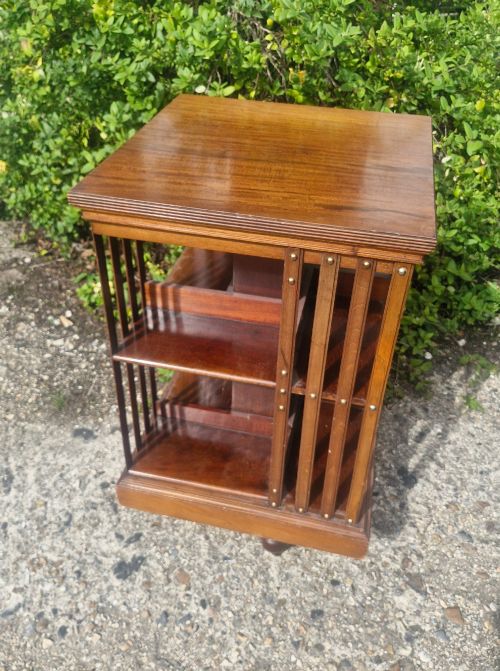
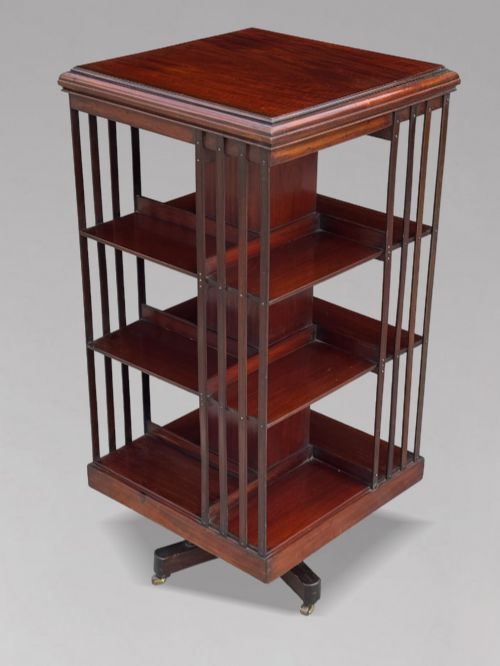
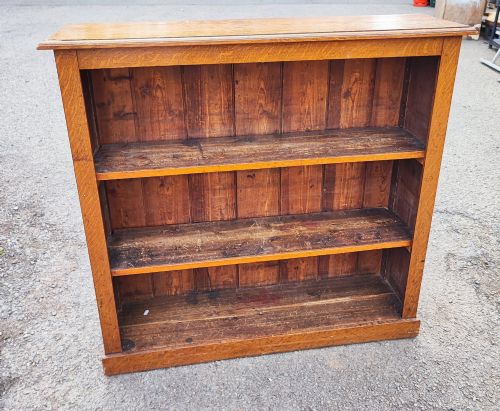
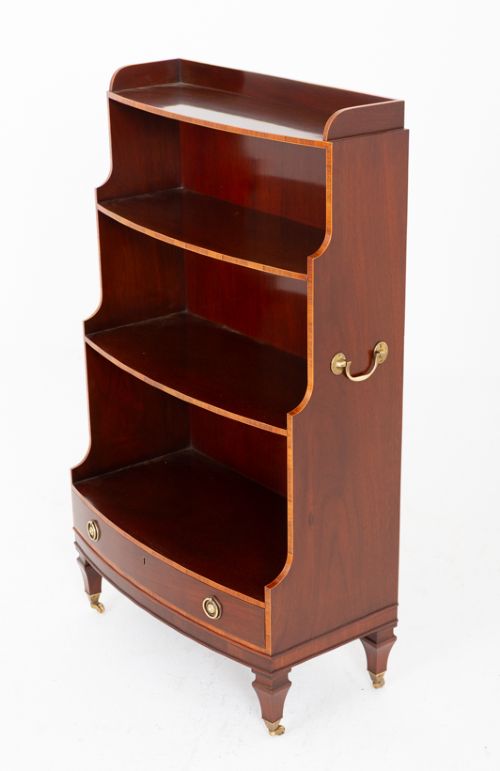
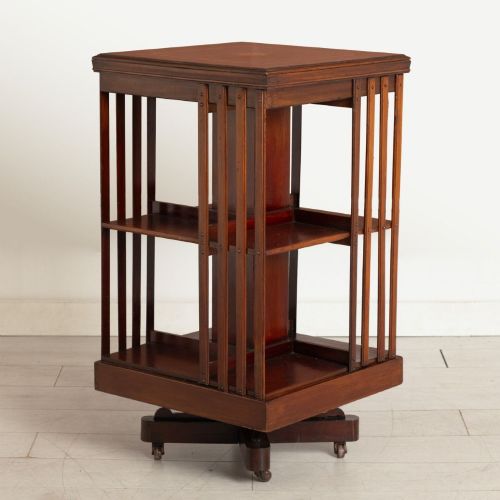
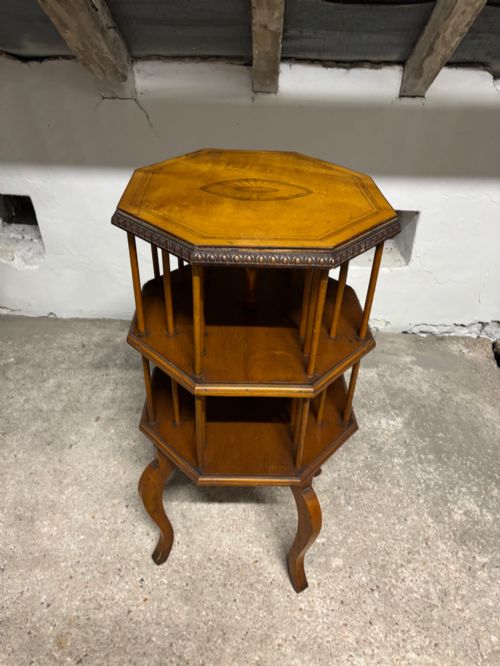
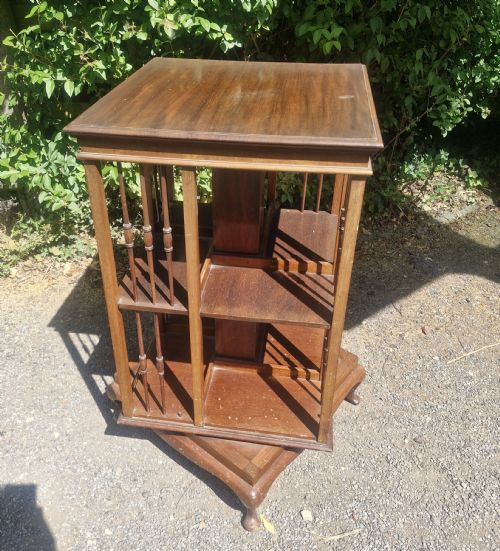
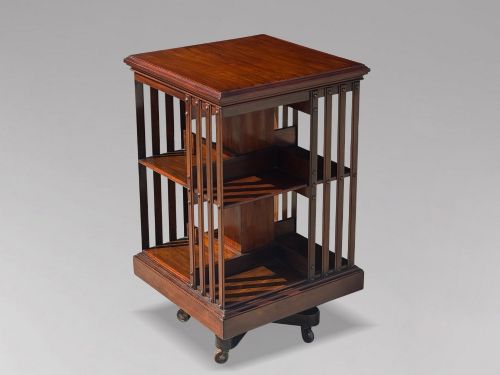
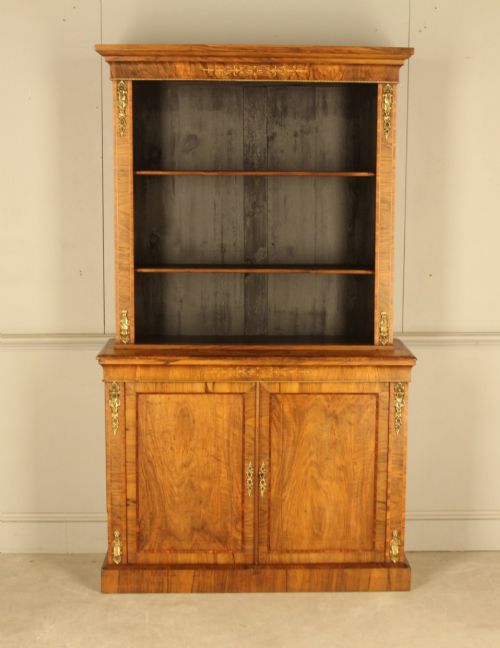
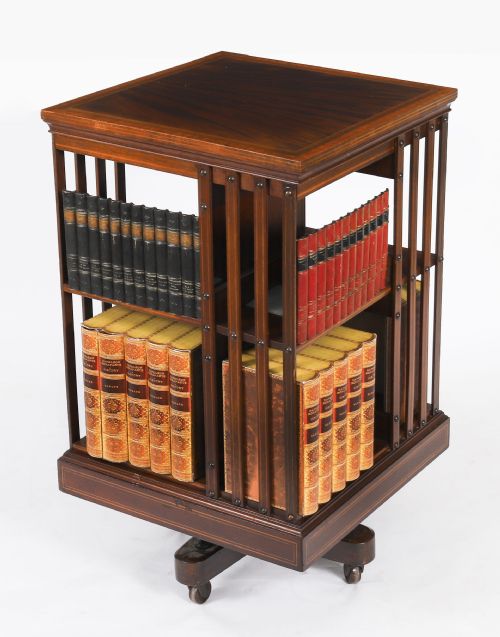
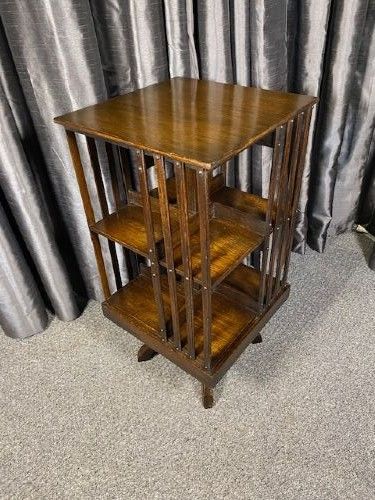
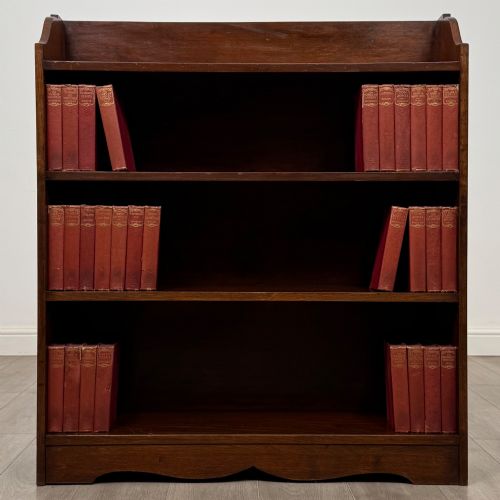
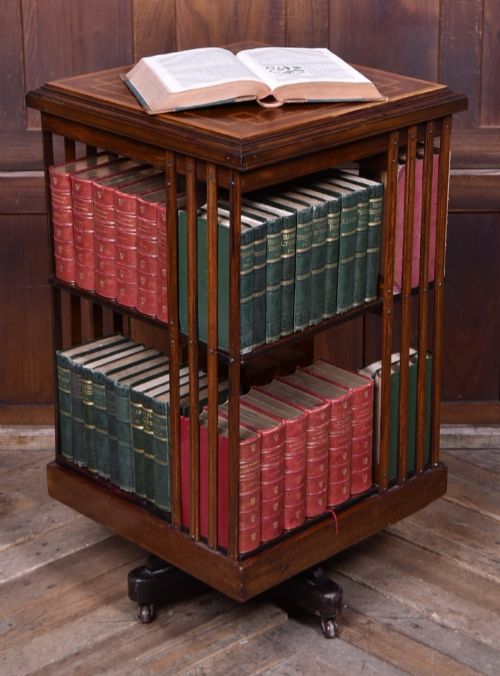
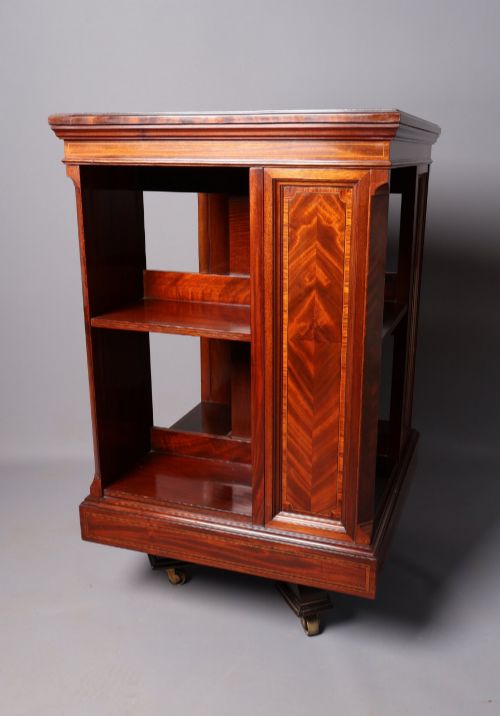
A tiered library bookshelf gathers books across multiple levels, appearing on this page as revolving bookcases, open bookcases, waterfall bookcases, and whatnots. These pieces span periods from the Georgian and Regency eras through the Victorian, Edwardian, and early twentieth century. Buyers seeking this form will most frequently encounter Edwardian and nineteenth century mahogany revolving bookcases alongside multi-tiered open shelves.
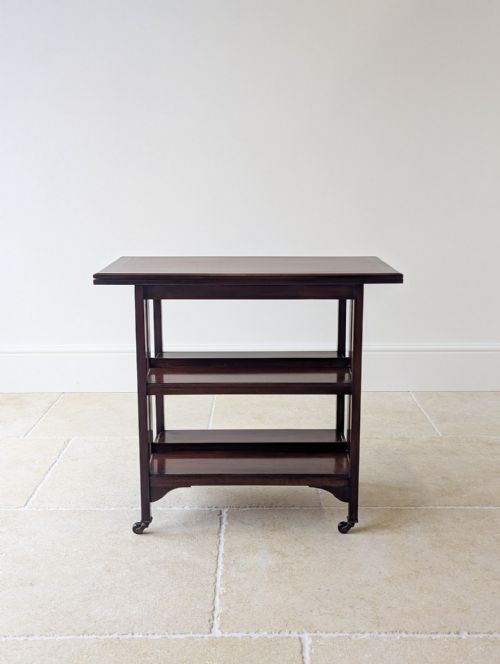
Forms range from low revolving designs resting on castors to tall open waterfall configurations and multi-tier whatnots. Makers utilised solid timber and fine veneers to construct practical furniture intended for studies, libraries, and drawing rooms. The selection includes occasional tables with bookshelf bases and games tables alongside dedicated book storage.
Proportions vary from petite four-shelf units to large revolving models designed to hold substantial volumes. Originating as functional items for scholars and readers, these pieces combine utility with decorative timber grains suited to period interiors.
Materials and construction methods
Cabinet makers constructed these pieces primarily using mahogany, rosewood, oak, satinwood, walnut, and yew wood. Workshops applied decorative techniques such as crossbanding, boxwood stringing, and flame mahogany veneers to enhance the visible grain of the timber. Brass and cast iron components, including castors and gilt mounts, provided mobility and structural accent.
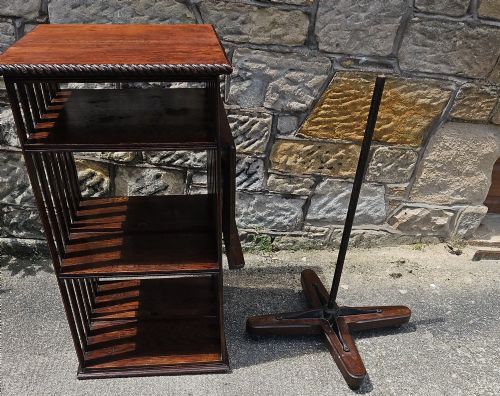
Revolving mechanisms relied on internal wooden or metal pivots that allowed the multi-tiered tiers to turn smoothly. Open bookcases and waterfall models employed stepped graduated shelves secured to vertical panels or upright galleries.
Listings feature mahogany, rosewood, oak, satinwood, and yew wood across Edwardian, Victorian, Regency, and Georgian periods.
Distinctions in manufacture and finish
Quality rests upon the selection of timber figures, such as flame mahogany or satinwood crossbanding, and the precision of inlaid stringing. Superior examples exhibit smooth operation in revolving mechanisms and secure joints across multiple tiers.
Refined pieces incorporate secondary details like brass castors, gilt mounts, and well-executed gallery rails. The handling of the wood finish and the crispness of edge mouldings separate standard utility pieces from finer cabinet work.
Waring and Gillows
The Tiered Library Bookshelf Glossary
- Revolving bookcase
- A low, multi-tiered bookcase built upon a concealed rotating base. This design allows users to access volumes from all sides while seated.
- Waterfall bookcase
- A set of open bookshelves where each upper shelf is set back from the one below, creating a stepped profile resembling cascading water.
- Whatnot
- A piece of freestanding furniture composed of multiple open shelves supported by slender pillars, utilised for displaying books and ornaments.
- Crossbanding
- A decorative border of veneer laid with the grain running perpendicular to the main panel. This technique frames the primary timber surface.
- Stringing
- Thin inlaid lines of contrasting wood, such as boxwood, embedded into the surface of furniture to create geometric outlines.
Tiered Library Bookshelf: Frequently Asked Questions
How do revolving bookcases work?
Revolving bookcases sit upon an internal pivot mechanism concealed beneath the bottom tier. This allows the entire tiered structure to turn freely in either direction.
Readers can access different compartments of books from a single seated position without moving the heavy timber frame.
Where were these pieces used?
These pieces served in domestic libraries, studies, and drawing rooms for storing everyday reading material. Revolving versions suited corners or beside armchairs where floor space was limited.
Open shelves and whatnots held both books and decorative objects in principal rooms of the house.
How do I identify Edwardian examples?
Edwardian pieces frequently combine mahogany or satinwood with inlaid stringing and crossbanded borders. They date from the period around nineteen hundred and often feature revolving tiers on castors.
Construction during this era balances lighter proportions with traditional cabinet-making methods.