





Mahogany Stackable Side Tables
Mahogany stackable side tables offer practical tiered surfaces, and you will find many Edwardian and Victorian examples here.
Mahogany Stackable Side Tables
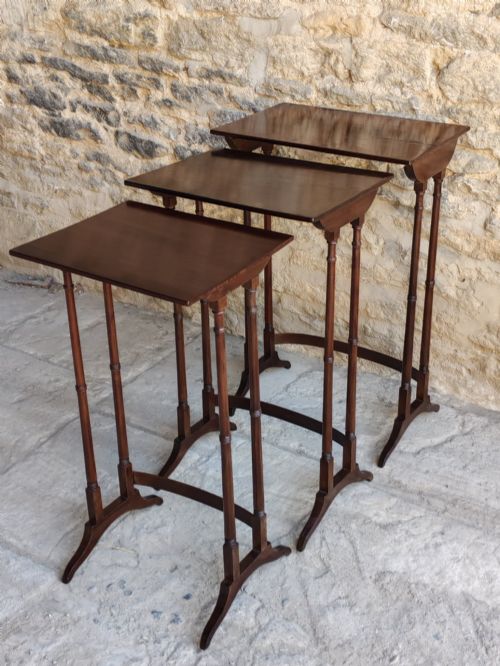
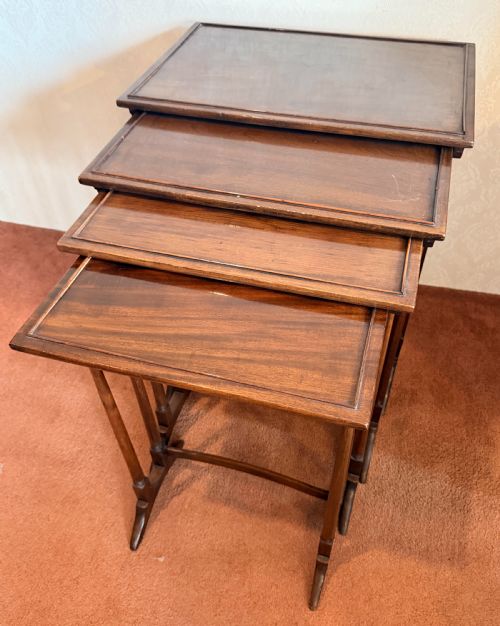
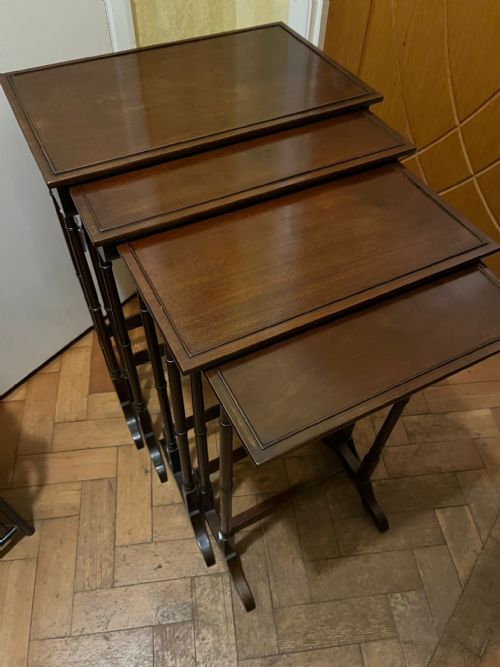
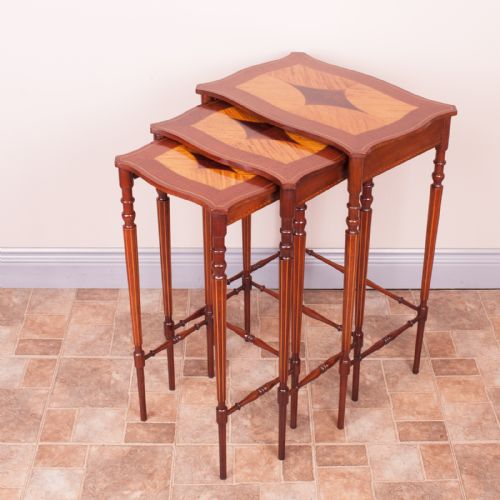
When you search for mahogany stackable side tables, you are looking at nests of tables designed to slide neatly beneath one another when not in use. These versatile items appear in various forms, including rectangular sets of three or four and occasional quartetto pieces.
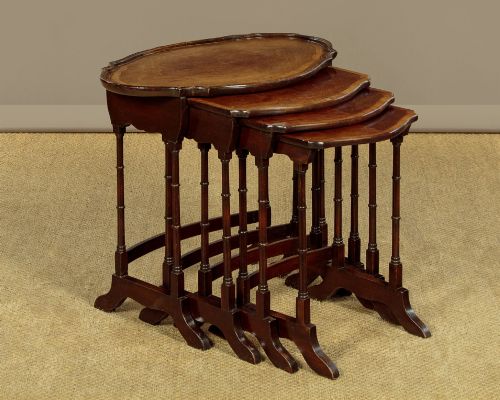
The selections span several periods, with Edwardian and Victorian pieces appearing frequently alongside Georgian style items and 19th Century designs. You will also encounter oval top coffee tables and inlaid versions among the available forms.
How they were made
Cabinet makers utilised solid mahogany and mahogany veneers to construct the frames and tabletops for these nesting sets. The structural timber provides durability while maintaining a refined profile across the descending sizes.
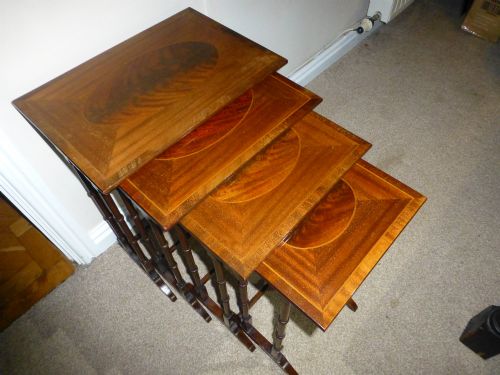
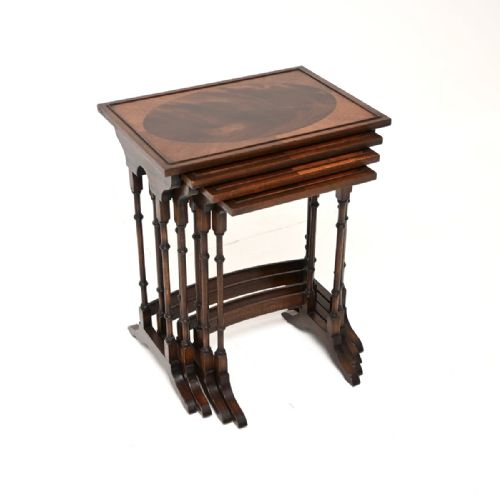
Many examples incorporate decorative details such as satinwood inlay, boxwood stringing, ebony, and marquetry. These contrasting woods highlight the borders and surfaces of the tables, particularly on Edwardian and late Victorian pieces.
Listings feature mahogany stackable side tables spanning the Georgian, Victorian, and Edwardian periods, alongside 19th-century examples.
What varies in quality
The standard of construction and timber selection determines the distinction between ordinary and superior nests. Heavier solid mahogany framing and precise joinery distinguish the sturdier sets from lighter alternatives.
The fineness of the inlaid details and the matching of veneer grains across the table tops indicate the level of craftsmanship involved. Superior examples display crisp marquetry and clean lines when stacked together.
The Mahogany Stackable Side Tables Glossary
- Quartetto
- A set of four tables designed to nest together. This term frequently appears in Edwardian and nineteenth-century descriptions.
- Inlay
- Contrasting pieces of wood fitted into the surface of a larger piece to form a design. Satinwood and boxwood are common inlay materials on these tables.
- Veneer
- A thin layer of finer wood applied to a base timber to improve appearance. Burr walnut and mahogany veneers feature on several tops.
- Marquetry
- Elaborate decorative patterns formed from fitted pieces of veneer. This technique enhances the visual appeal of tabletop surfaces.
Mahogany Stackable Side Tables: Frequently Asked Questions
How were nesting tables used?
These tables served primarily as occasional surfaces for tea, writing, or small objects in drawing rooms and parlours.
Their tiered design allowed owners to pull out extra surfaces as guests arrived without taking up permanent floor space.
How do I identify an Edwardian set?
Edwardian nests often feature delicate satinwood or boxwood inlay and slender legs typical of the early twentieth century.
They frequently come in sets of four, known as quartetto tables, dating around nineteen hundred.
Are these tables sturdy?
Mahogany provides a robust frame, though stability varies depending on the thickness of the timber and the tightness of the joints.
Sets from the Victorian and Edwardian periods generally offer solid construction designed for everyday use.
What is a quartetto nest?
A quartetto nest consists of four descending tables that slide one beneath the other into a single footprint.
This format became particularly popular during the nineteenth and early twentieth centuries.