



Mahogany Side Table Set
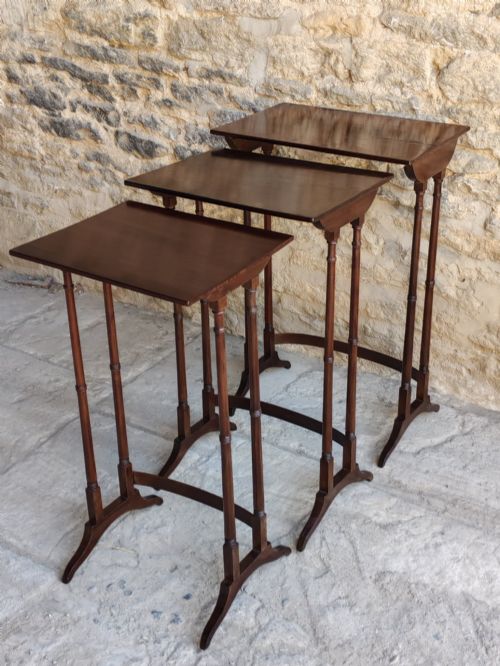
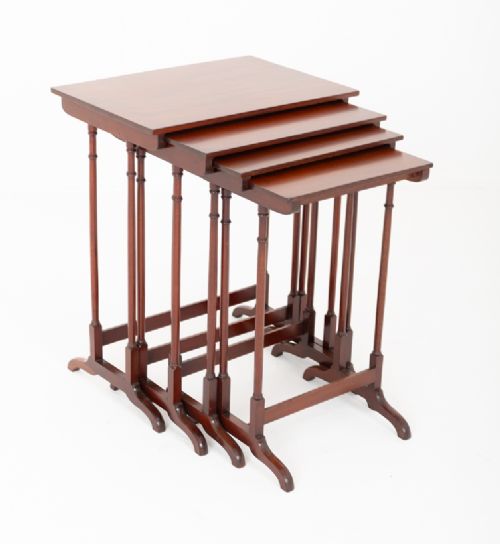
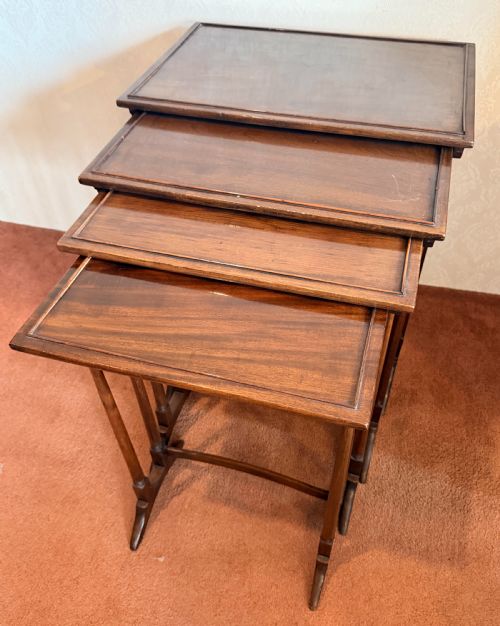
Mahogany side table set pieces are principally nesting tables and multi-piece groupings crafted for flexible placement.
Mahogany Side Table Set
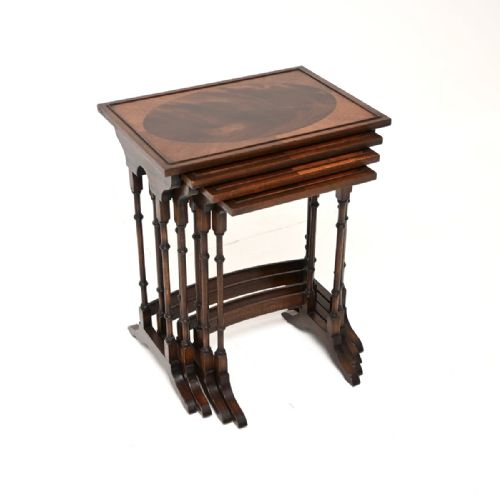
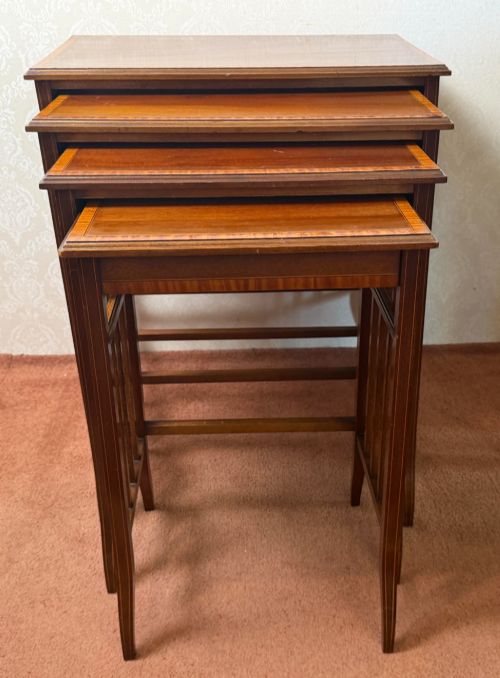
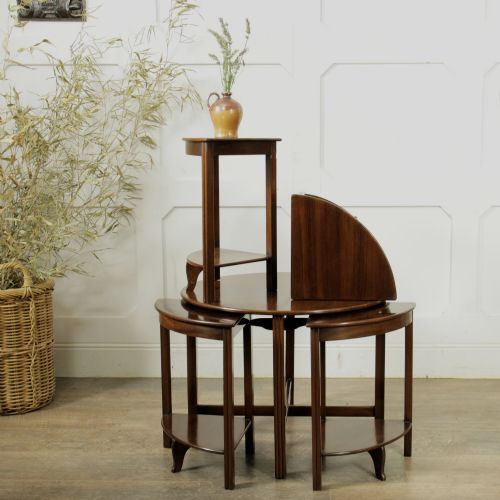
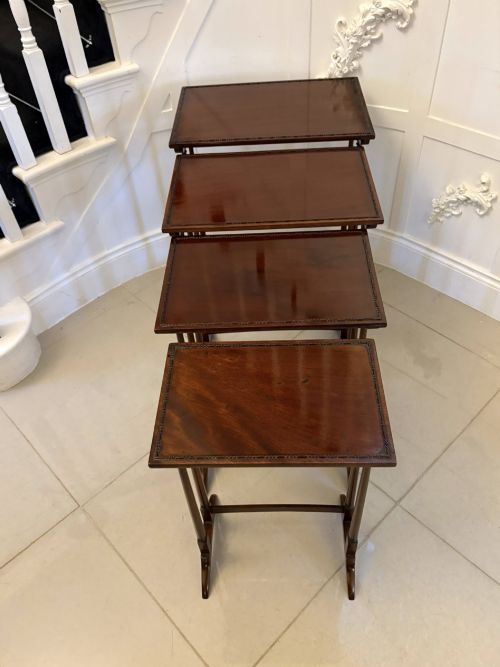
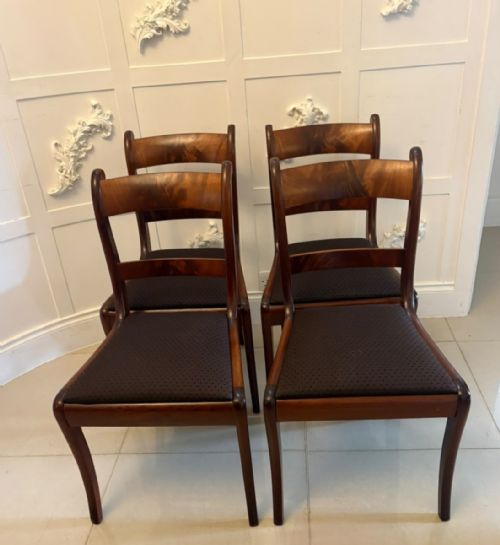
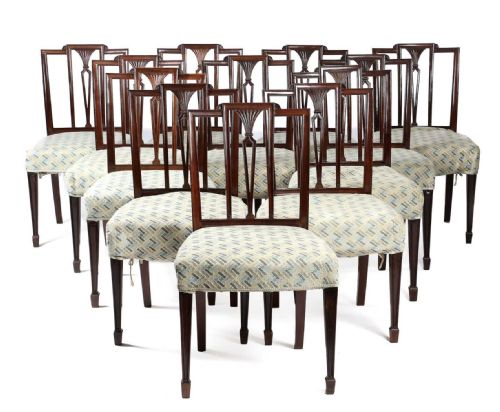
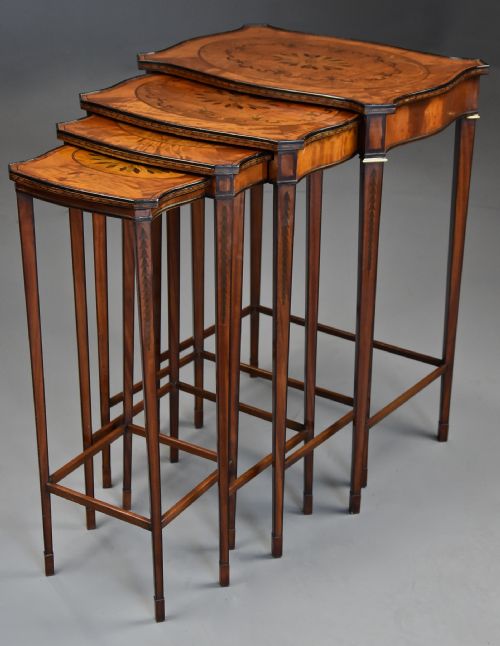
When you search for a mahogany side table set, you encounter nested arrangements designed to stack beneath one another, alongside matched groups of occasional and dining seating. The predominant form on this page is the quartetto nest, comprising sets of three, four, or five gradating tables that slide together to save space.
The historical span extends from the eighteenth century through Georgian, Regency, and Victorian eras into Edwardian and later revivals. Makers utilised dense tropical hardwoods, often incorporating finer secondary timbers for contrast within these domestic layouts.
How they were made
Constructed primarily from solid mahogany and mahogany veneers, these pieces rely on stability provided by the dense timber grain. Workshops incorporated contrasting woods such as satinwood, boxwood, and amboyna for stringing, cross-banding, and decorative inlay work.
Structural elements frequently include fine square tapered legs, sabre legs, or turned supports, occasionally accented with brass fittings, leather inserts, or textile surfaces.
Some Edwardian tables hide clever pull-out leaves and baize surfaces, ready for unexpected games of cards.
What varies in quality
The refinement of the cabinetmaking dictates the standing of each set, particularly in the precision of the graduated framing and the tightness of the joints when stacked. Superior examples display carefully chosen timber figures and crisp, meticulously executed inlay rather than plain surfaces.
Proportion and the restraint of the decorative elements separate standard production from exceptional pieces, with finer specimens exhibiting balanced cross-banding and well-proportioned leg profiles.
Elkington and Co·James Shoolbred
The Mahogany Side Table Set Glossary
- Quartetto
- A set of four nesting tables designed to stack sequentially. This nineteenth and early twentieth-century term originates from musical groupings of four.
- Satinwood
- A pale, durable exotic timber utilised extensively for contrasting inlay and cross-banding on mahogany furniture. Its bright grain provides visual definition to table borders.
- Cross-banding
- A decorative border technique where veneer strips are laid across the grain of the primary timber. This frames the top surface of tables with contrasting directional lines.
- Stringing
- Thin inlaid lines of contrasting light or dark wood set into grooves on table legs and borders. It defines the geometric outlines of Edwardian and Georgian revival pieces.
- Sabre leg
- A concave, outwardly curving leg shape commonly found on Regency dining chairs and tables. The profile mimics the sweep of a cavalry sword.
Mahogany Side Table Set: Frequently Asked Questions
How do you use a nest of tables?
These sets function by allowing smaller tables to slide entirely beneath the largest primary surface when floor space is required. Individual tables are then pulled out independently to hold drinks, lamps, or books.
Historically, they served versatile roles in reception rooms as tea or occasional surfaces, adapting quickly to the needs of household guests.
What is a quartetto table set?
A quartetto set consists of four graduating tables built so each smaller piece slides neatly under the next. This format gained immense popularity during the Edwardian period for compact drawing rooms.
They combine decorative inlaid satinwood tops with functional stacking capabilities, maintaining a minimal footprint against a wall.
How can I tell Edwardian from Georgian pieces?
Edwardian items often feature lighter construction, extensive satinwood stringing, and machine-cut veneers alongside revival styles. Georgian pieces rely on heavier solid timbers, hand-cut joinery, and restrained classical proportions.
Examining the underside, secondary woods, and the crispness of the inlay helps clarify the manufacturing era.
Where should I place these tables at home?
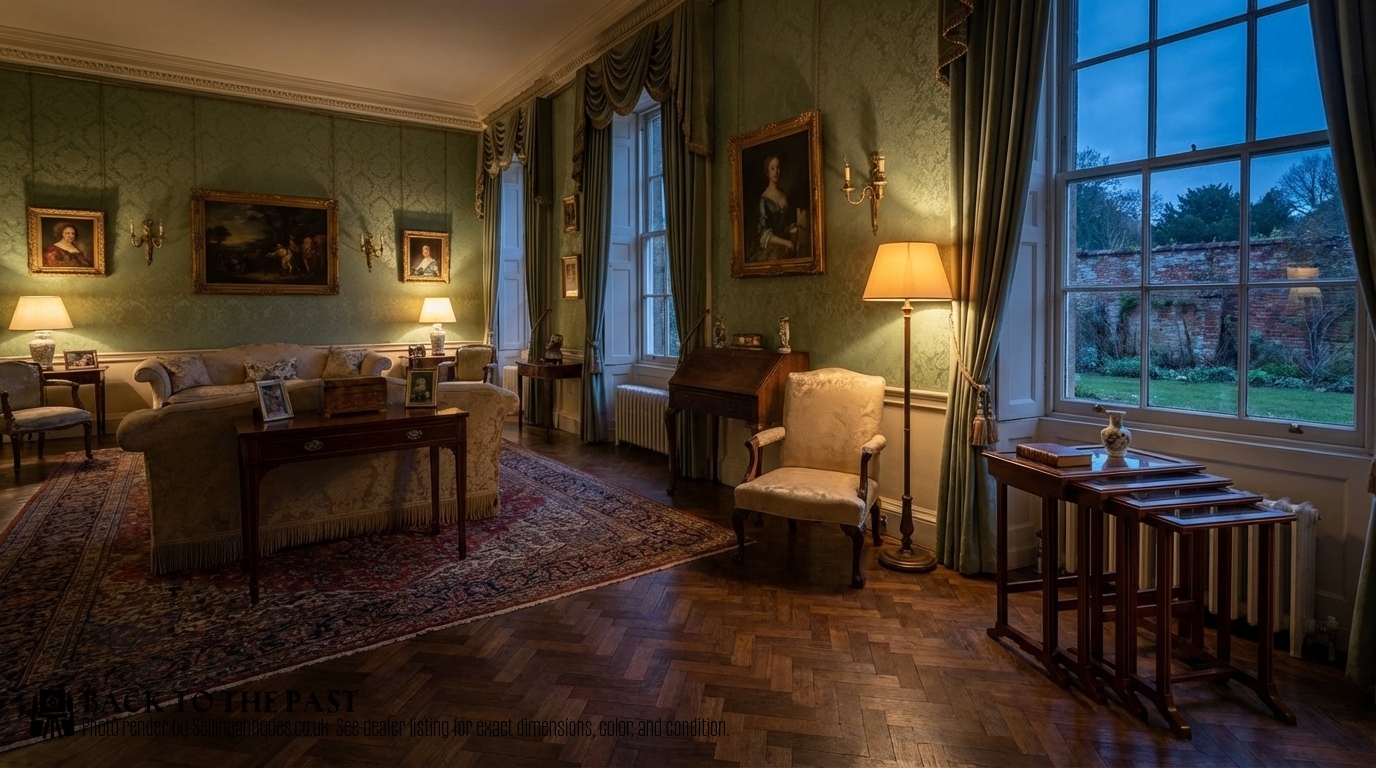
Nesting sets sit comfortably beside sofas, armchairs, or in corners as lamp tables where surface area is occasionally needed. Their compact stacked form suits smaller rooms without dominating the interior layout.
Keeping them away from direct heat sources preserves the mahogany polish and prevents timber movement.