


Mahogany Salon Settee
A mahogany salon settee brings formal Victorian and Edwardian reception rooms into focus with rich timber frames and plush upholstery.
Mahogany Salon Settee
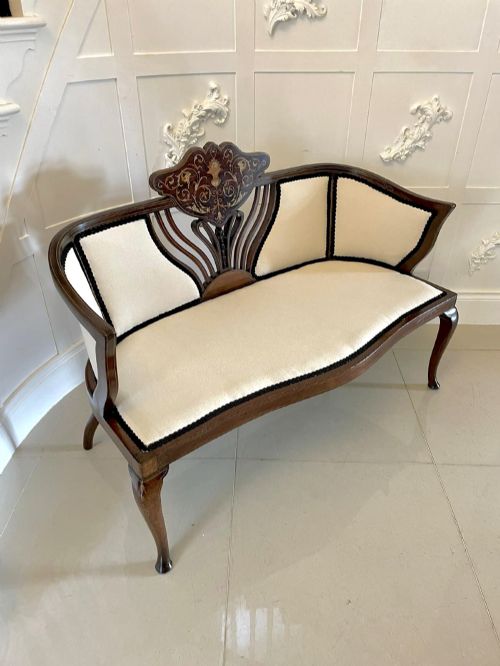
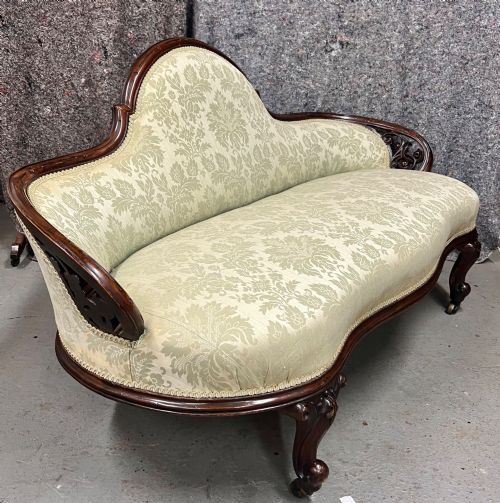
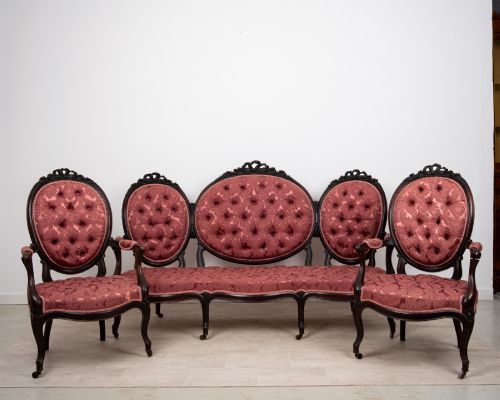
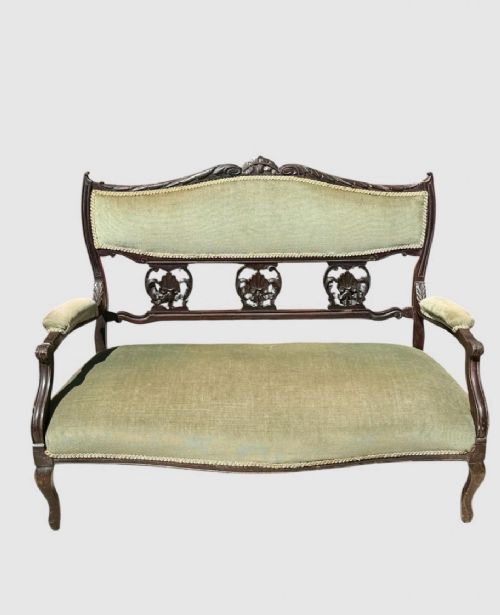
When you search for a mahogany salon settee, you are looking at formal two-seater seating designed for late nineteenth and early twentieth-century drawing rooms and reception spaces. The pieces you encounter on this page span the Victorian and Edwardian eras, often appearing as standalone settees or as part of larger parlour and salon suites.
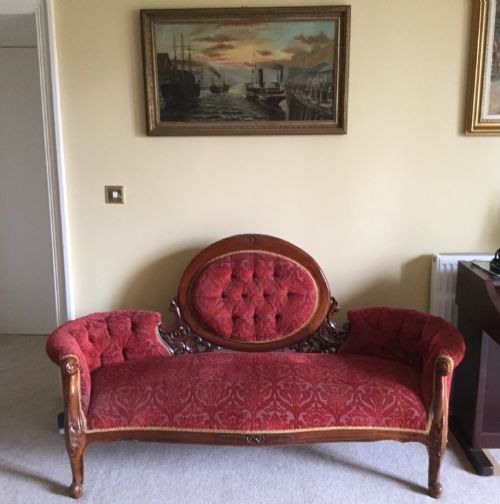
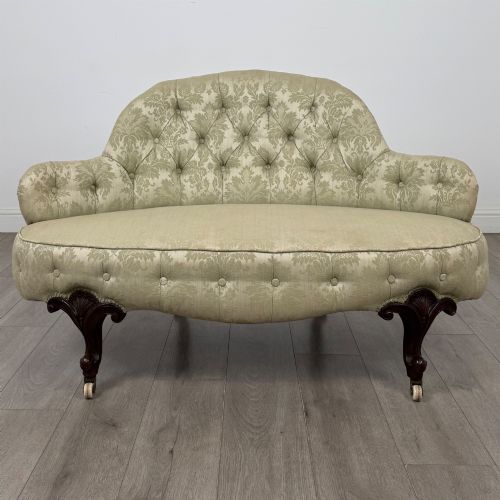
The silhouettes range from double-ended sofas and carved Victorian frames to lighter Edwardian inlaid designs and French Empire revival pieces. These items served as social seating for entertaining guests, placing emphasis on polished show-wood frames and decorative upholstered backs.
Materials and Construction
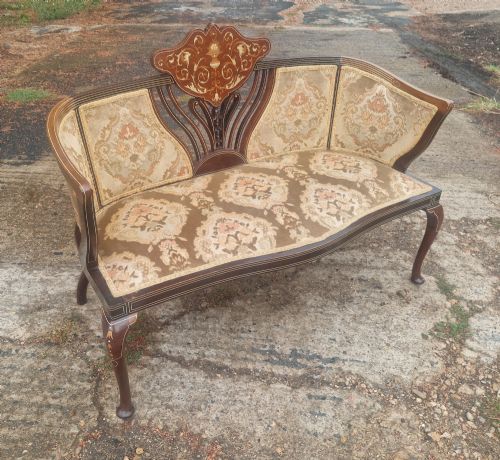
Cabinet makers built these frames primarily from solid mahogany, frequently embellishing the polished timber with contrasting boxwood and satinwood inlay, bone details, or brass mounts. Structural carving appears across Victorian Rococo revival and Chippendale style examples, showing detailed hand-chiselled ornamentation on the crest rails and cabriole legs.
Upholstery techniques combined sprung seat bases with traditional stuff-over construction, deep buttoning, or modern replacement fabrics such as velvet, damask, and deep pile brocade. Frames were constructed to showcase the grain of the mahogany while supporting complex sprung or padded interiors.
Mahogany Salon Settee Retail Price Guide 2026
Typical asking prices for mahogany salon settee among the pieces listed under this phrase on Sellingantiques today, from the lower quarter to the upper quarter. They describe what is for sale here now, not the wider market.
Listings feature mahogany frames combined with satinwood inlay, brass mounts, and upholstery in velvet, damask, and brocade.
Distinction in Craftsmanship
Quality in a mahogany salon settee rests on the crispness of the timber carving and the precision of the contrasting marquetry or string inlay. Pieces displaying fine boxwood and satinwood inlay alongside substantial mahogany framing occupy the upper tier of execution.
The integrity of the structural joinery and the retention of original maker signatures or stamps elevate certain examples above standard production pieces. Refined proportions and harmonious decorative details separate bespoke parlour seating from mass-produced items.
C. Hindley & Sons·Morison & Co·Lamb of Manchester
The Mahogany Salon Settee Glossary
- Mahogany
- A durable tropical hardwood prized for its deep reddish-brown colour and stable grain, utilised extensively for nineteenth-century frame construction.
- Inlay
- A decorative technique where contrasting woods like satinwood and boxwood are fitted flush into recesses within the mahogany surface.
- Salon Suite
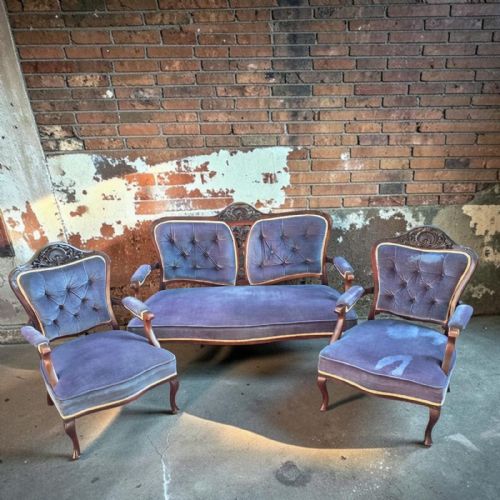
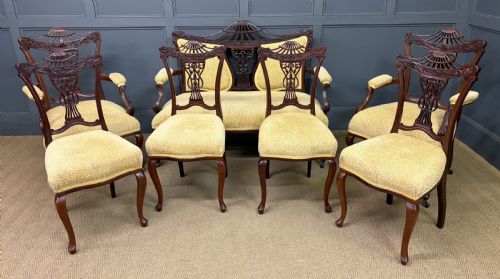
- A matched grouping of seating comprising a settee alongside armchairs and side chairs designed for formal entertaining.
- Double Ended Sofa
- A couch featuring matching scroll arms or raised ends at both sides, allowing a user to recline from either direction.
- Marquetry
- Elaborate veneer patterns assembled from various tinted woods to create pictorial or geometric designs on the show-wood.
Mahogany Salon Settee: Frequently Asked Questions
Where were salon settees placed?
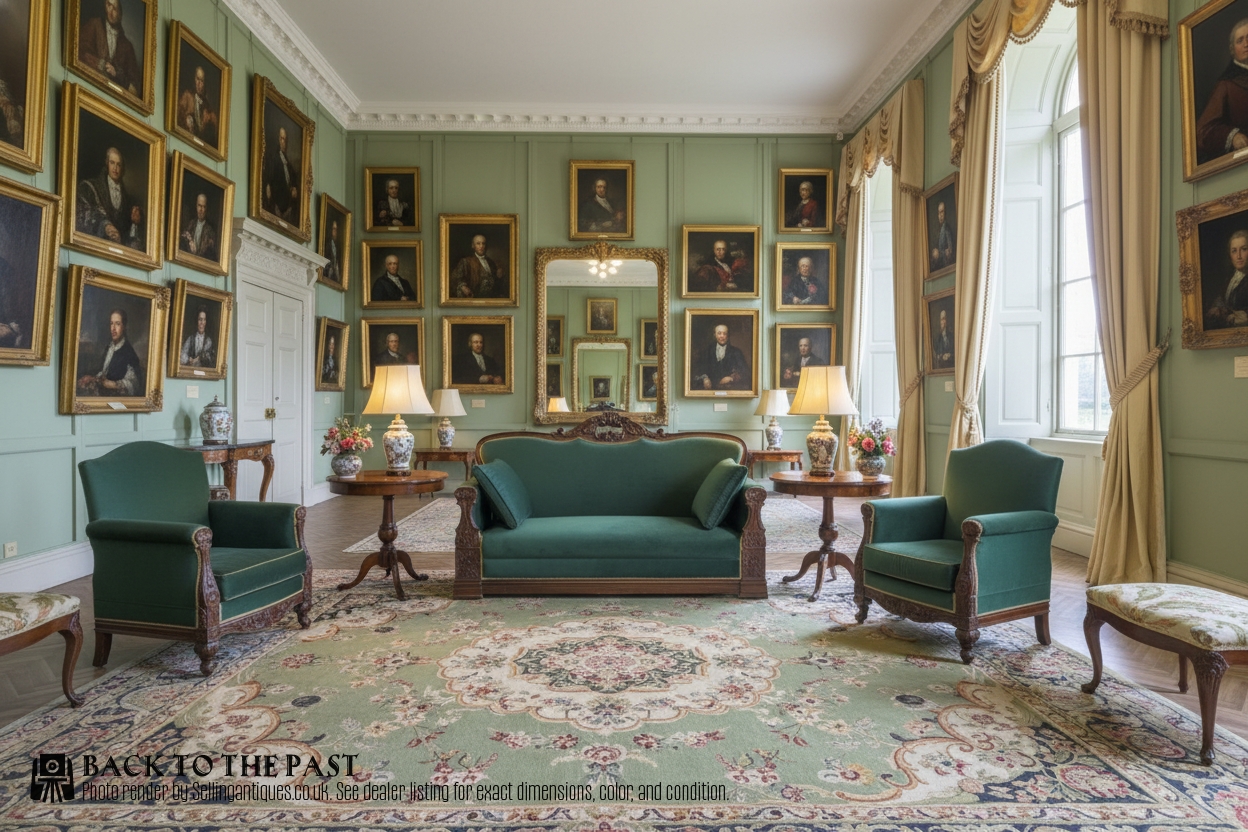
These settees were positioned in formal drawing rooms, parlours, and reception spaces to accommodate guests during social calls and afternoon gatherings.
Their decorative show-wood frames and upholstered backs meant they often stood against walls or served to divide large entertaining rooms.
How do I identify an Edwardian settee?
Edwardian examples generally exhibit lighter proportions, symmetrical satinwood or boxwood string inlay, and restrained neoclassical influences compared to heavier Victorian counterparts.
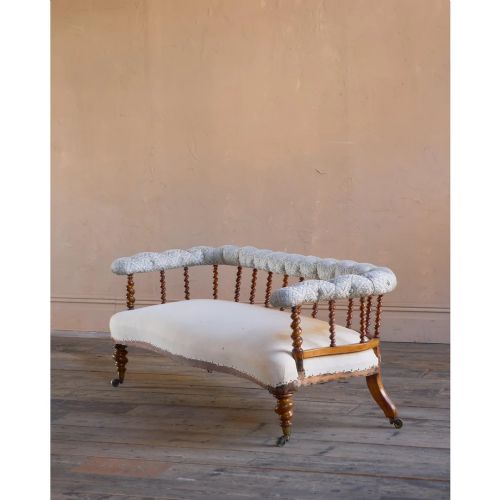
They frequently appear as spindle-back designs or inlaid window seats dating from around nineteen hundred.
What is a salon suite?
A salon suite consists of a matching settee accompanied by armchairs and parlour chairs created in a uniform style and timber.
These coordinated groupings allowed nineteenth-century households to furnish a complete reception room with identical decorative motifs.
Can I use these settees daily?
Many of these pieces retain traditional sprung bases or have undergone re-upholstery to support contemporary domestic use.
Care should be taken to respect the antique timber frames and delicate inlaid details during everyday seating.