
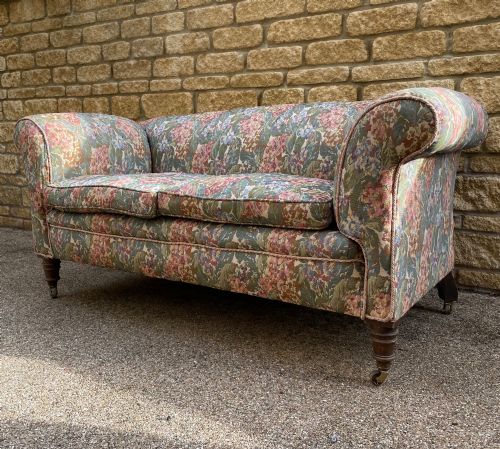
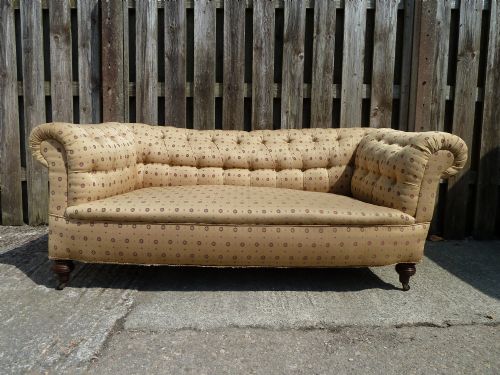
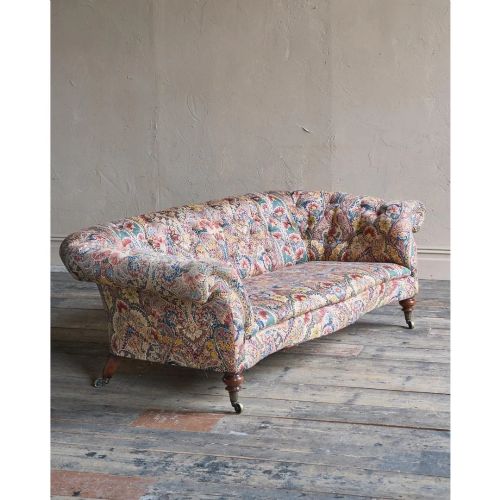
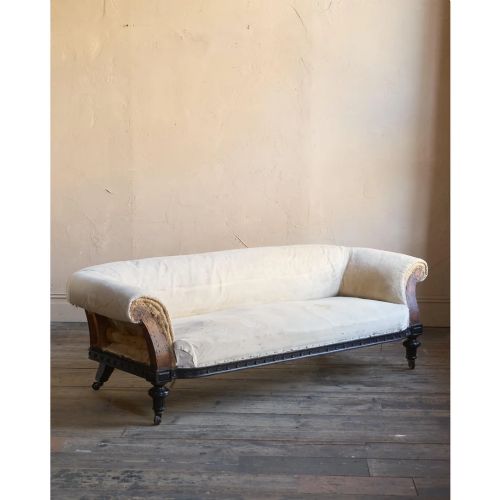



Victorian Scroll Arm Settee
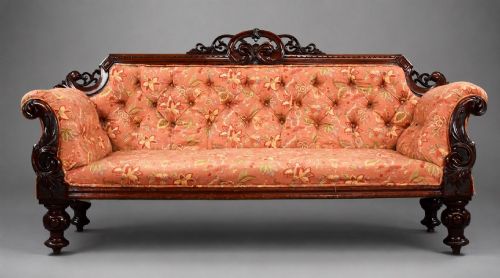
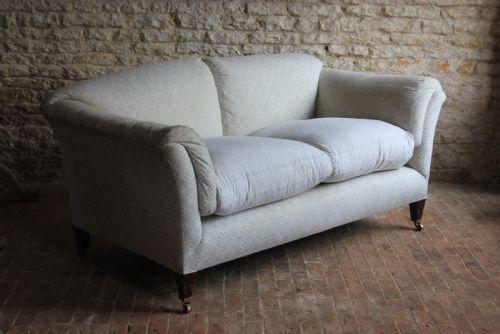
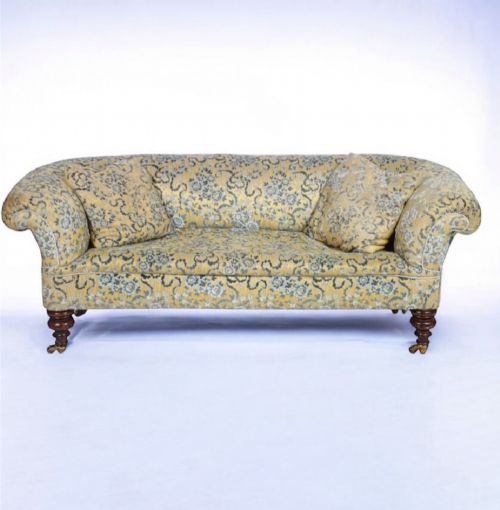
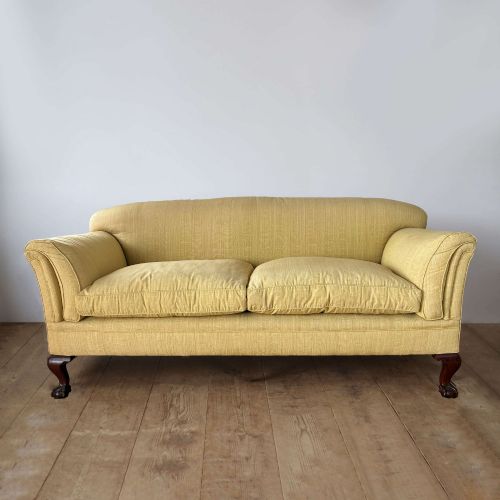
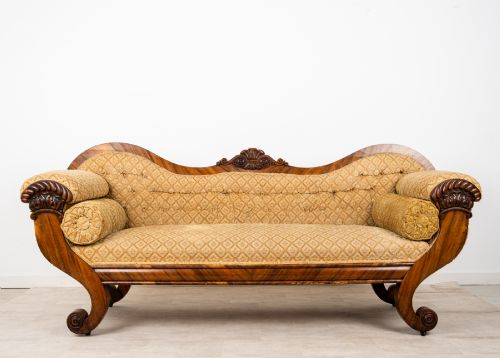
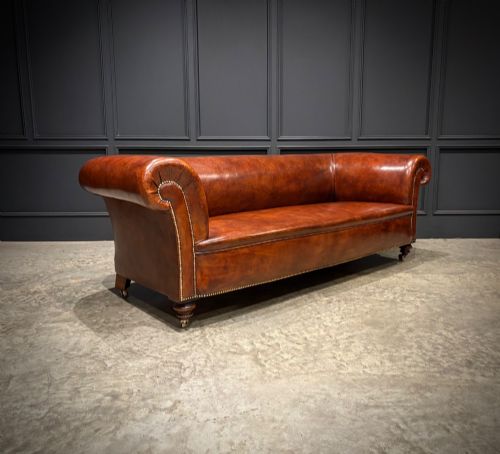
A victorian scroll arm settee brings substantial nineteenth-century seating and distinct architectural curves into a room.
Victorian Scroll Arm Settee
The victorian scroll arm settee category covers nineteenth-century upholstered seating defined by sweeping armrests and deep frames. Pieces on this page span the Victorian era, early Victorian period, and specific decades from eighteen-forty to eighteen-ninety.
Makers and workshops produced these settees in various forms, including traditional sofas, drop arm designs, salon settees, and deep-seated Chesterfield sofas. Styles range from English Country House and Regency influences to Aesthetic Movement and Continental Neo-Classical expressions.
How they were made
Carpenters and cabinet makers constructed the exposed frames primarily using solid timbers such as mahogany, walnut, rosewood, ebony, and ebonised wood. Turned wooden legs frequently supported the heavy internal structures.
Upholsterers then finished the frames using traditional padding materials and covered them in leather, velvet, woven textiles, and various upholstery fabrics, securing details with brass elements.
Victorian Scroll Arm Settee Retail Price Guide 2026
Typical asking prices for victorian scroll arm settee among the pieces listed under this phrase on Sellingantiques today, from the lower quarter to the upper quarter. They describe what is for sale here now, not the wider market.
Some nineteenth-century settees include drop arms designed for afternoon naps.
What varies in quality
The degree of hand-carved detail on the wooden scroll ends and frame mouldings separates standard production from superior examples. Timbers selected for the visible legs and show-wood frames also indicate the original maker's intended tier of manufacture.
The integrity of the internal stuffing and the precision of the upholstery work determine the longevity and seating comfort of each individual settee.
Howard and Sons
The Victorian Scroll Arm Settee Glossary
- Scroll arm
- An armrest curved outward into a tight or sweeping spiral shape. This defining feature provides both physical support and distinct nineteenth-century silhouette proportions.
- Chesterfield
- A deeply buttoned upholstered sofa featuring arms and back of the same height. This form remains a staple of nineteenth-century seating design.
- Drop arm
- A mechanical or hinged armrest that lowers to transform the settee into a daybed. These mechanisms require careful inspection for original functionality.
- Ebonised
- Wood stained or painted black to imitate ebony. Cabinet makers used this finish extensively during the nineteenth century for formal salon furniture.
Victorian Scroll Arm Settee: Frequently Asked Questions
How do I date a settee?
Dating relies on timber selection, leg turnings, and upholstery styles recorded across the nineteenth century. Cabinet work from eighteen-forty often displays different frame proportions compared to later Victorian output.
Examining the construction beneath the upholstery reveals assembly methods specific to early or late Victorian workshop practices.
What is a country house sofa?
Country house sofas denote large, deep-seated nineteenth-century seating designed for relaxed drawing room comfort. These pieces prioritise generous proportions and padded scroll arms over formal rigidity.
Their relaxed styling reflects generational use in large British estates rather than rigid Victorian parlour formality.
Are these settees comfortable?
Nineteenth-century settees were built with sprung frames and horsehair or wool stuffing designed for sustained lounging. The depth of the seat and the height of the scroll arms dictate the specific seating posture.
Original spring suspensions offer a different resilience compared to modern foam interiors.
Where should I place a settee?
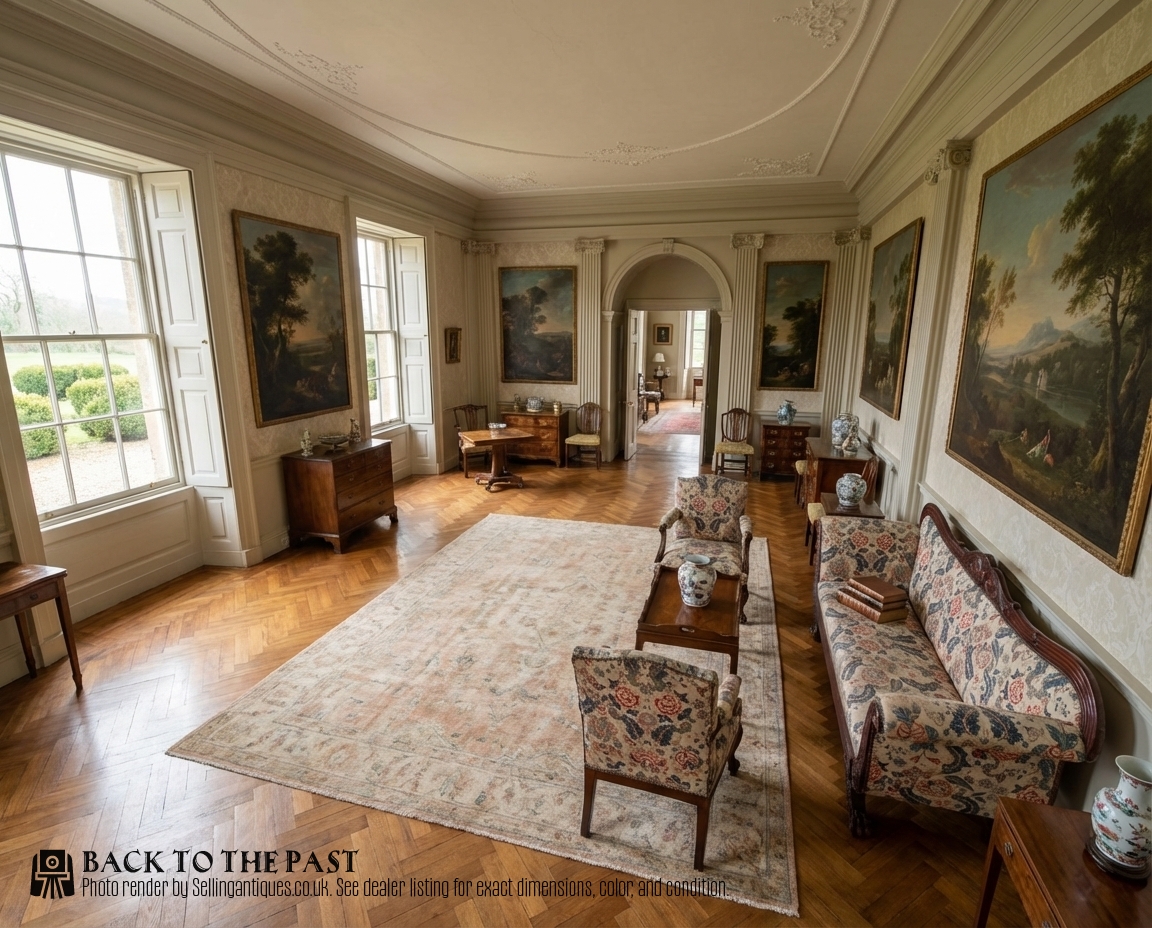
These settees suit large living spaces, studies, or bedrooms where their carved mahogany or walnut frames can be viewed from multiple angles. The decorative scroll ends look best when positioned away from walls.
Pairing them with period armchairs creates a cohesive nineteenth-century seating arrangement.