


Mahogany Record Storage
Mahogany record storage units bring timeless timber and practical organisation into the music room, housing sheet scores and vinyl neatly.

Mahogany Record Storage
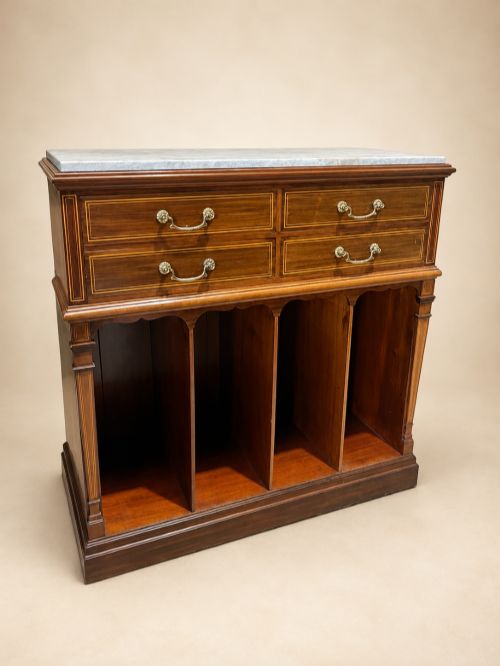
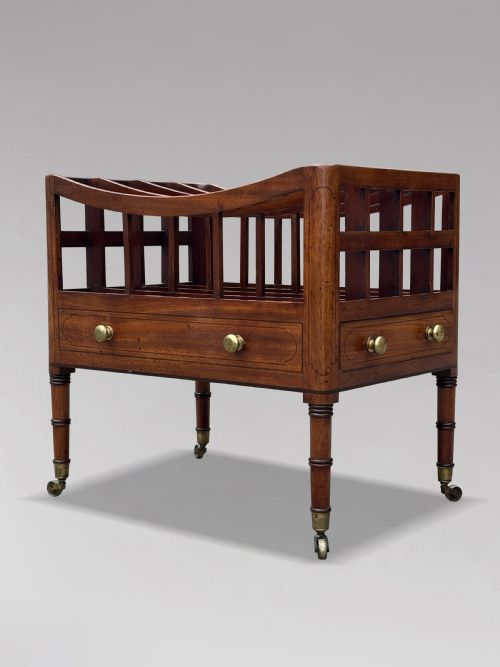
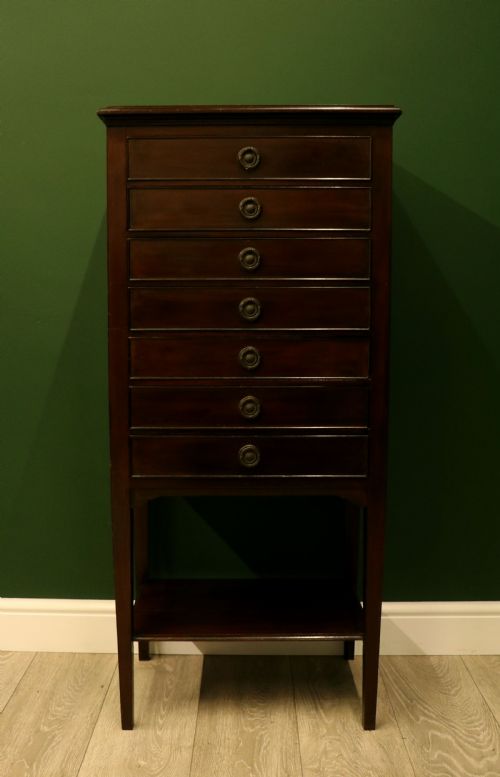
When you search for mahogany record storage, you find dedicated pieces built to organise sheet music, scores, and records. These items range from George III canterburys to Edwardian music cabinets and later 1930s record cabinets.
The version you are most likely to meet on this page is the Edwardian music cabinet, typically constructed in mahogany with internal shelving for sorting paper and media. Alongside these, 19th-century canterburys and cuban mahogany pieces appear frequently in the listings.
Forms vary from open canterburys with slatted partitions to enclosed cabinets featuring glass doors or drop-front drawers. Each design reflects the domestic musical habits of its period, from Georgian parlours to twentieth-century living rooms.
How they were made
Cabinet makers relied heavily on solid mahogany and rich cuban mahogany veneers, occasionally selecting satinwood for contrasting details. Selected pieces incorporate boxwood inlay and boxwood stringing to define drawers, panels, and borders.
Structural hardware typically involves brass handles, hinges, and castors, which provide functional movement and visual contrast against the dark timber. Glass panels appear on cabinet doors to showcase the contents while keeping dust at bay.
These cabinets stored parlour sheet music long before anyone ever worried about gatefold sleeves or inner ring wear on vinyl.
What varies in quality
The refinement of the timber and the precision of the cabinetwork dictate the standard of each piece. Finely figured cuban mahogany and crisp boxwood inlay distinguish superior items from plain production examples.
Construction methods also set pieces apart, seen in the joinery of internal shelving and the quality of brass furniture. Original fittings and uncompromised timber surfaces elevate the standing of a cabinet or canterbury.
The Mahogany Record Storage Glossary
- Canterbury
- A low, open-framed stand fitted with vertical partitions for holding sheet music, folios, or periodicals. Originating in the late 18th century, these pieces often sit on short legs with castors.
- Music cabinet
- An enclosed piece of furniture designed specifically to store sheet music and scores, usually featuring multiple shallow drawers or internal shelves. Edwardian examples are particularly common.
- Cuban mahogany
- A dense, highly figured hardwood sourced from the Caribbean and prized for its rich grain and deep colour. Cabinet makers used this premium timber extensively during the 18th and 19th centuries.
- Boxwood inlay
- A decorative technique using small, pale boxwood pieces set flush into the darker mahogany surface. This method creates geometric borders, stringing, and floral motifs.
- George III period
- The era spanning from 1760 to 1820, characterised by elegant proportions and classical restraint in British furniture design. Pieces from this time often display exceptional craftsmanship.
Mahogany Record Storage: Frequently Asked Questions
What is a canterbury used for?
A canterbury serves as a tidy receptacle for sheet music, folios, and magazines, keeping scores organised and close to the piano.
The partitioned sections allow users to sort papers vertically, preventing them from curling or stacking haphazardly.
How do I date an Edwardian music cabinet?
Edwardian music cabinets date from the period between 1901 and 1910, typically displaying lighter proportions than their Victorian predecessors.
They frequently feature satinwood or boxwood inlay on mahogany, reflecting the revivalist tastes popular at the turn of the twentieth century.
Are music cabinets suitable for vinyl records?
Music cabinets originally built for sheet music and Edwardian scores often accommodate modern vinyl records within their internal compartments.
Buyers should check the internal dimensions and shelf heights of each specific cabinet to ensure 12-inch LP records fit comfortably.
What distinguishes cuban mahogany?
Cuban mahogany is a denser and more richly figured hardwood than standard varieties, featuring deep tones and prominent grain patterns.
Cabinet makers favoured it for high-end furniture throughout the 18th and 19th centuries due to its stability and luxurious appearance.