
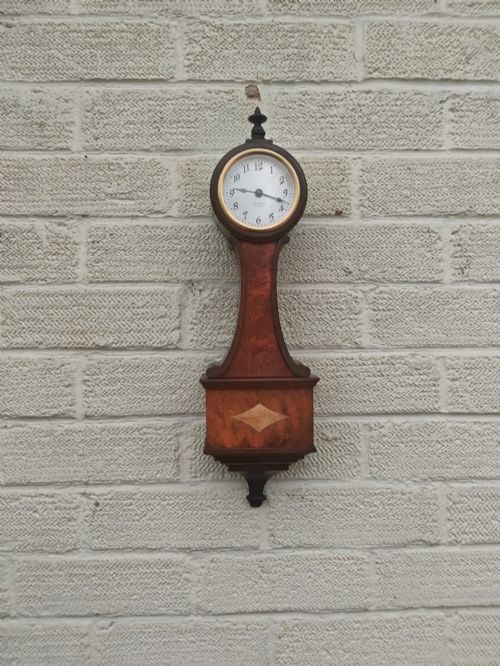
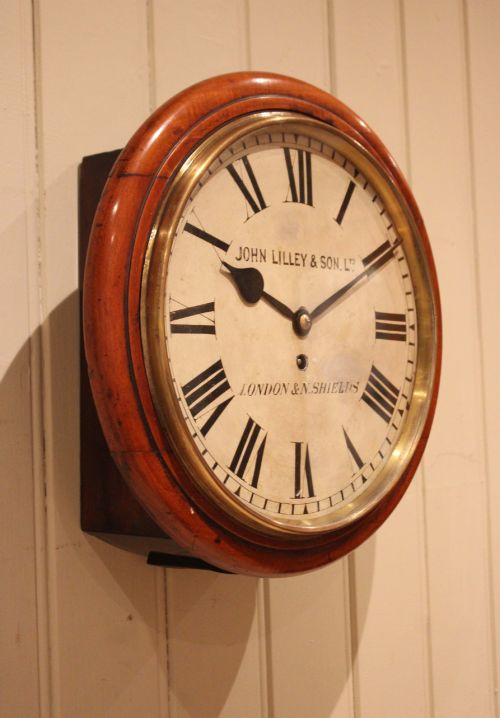
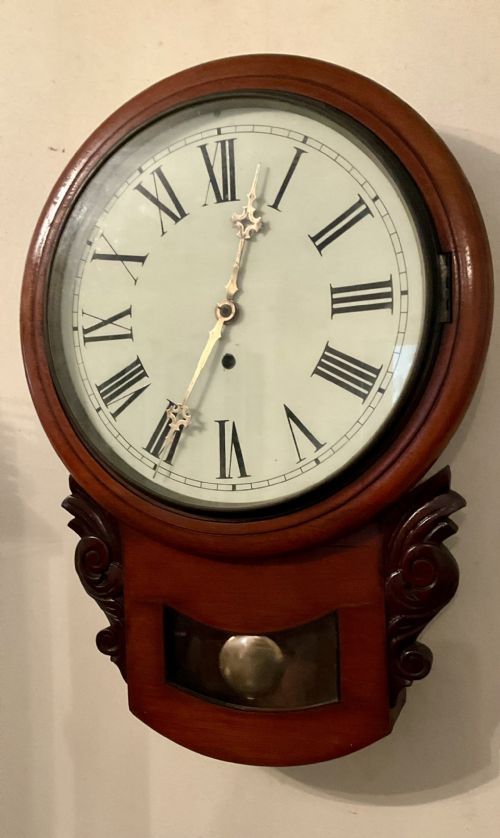
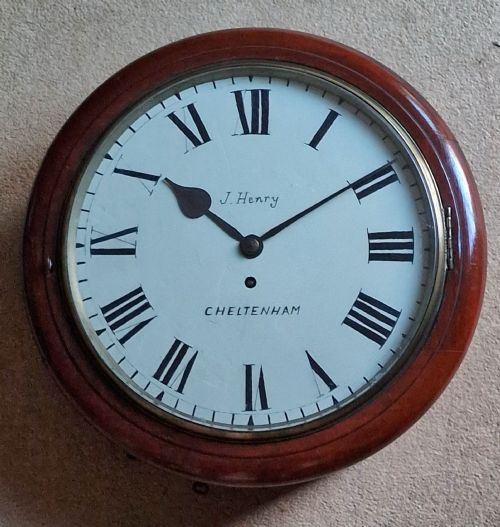


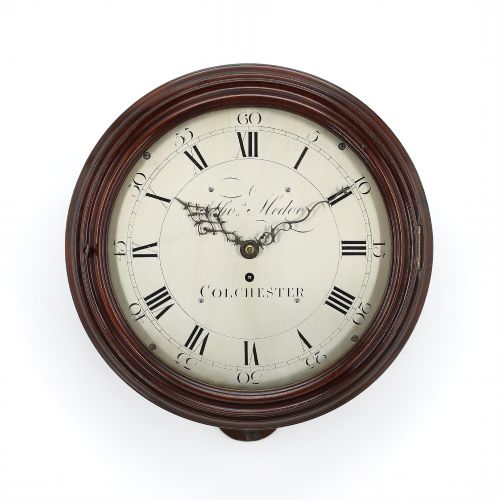
Mahogany Pendulum Wall Clock
A mahogany pendulum wall clock brings steady mechanical rhythm and rich timber grain to a room, offering both reliable timekeeping and period presence.
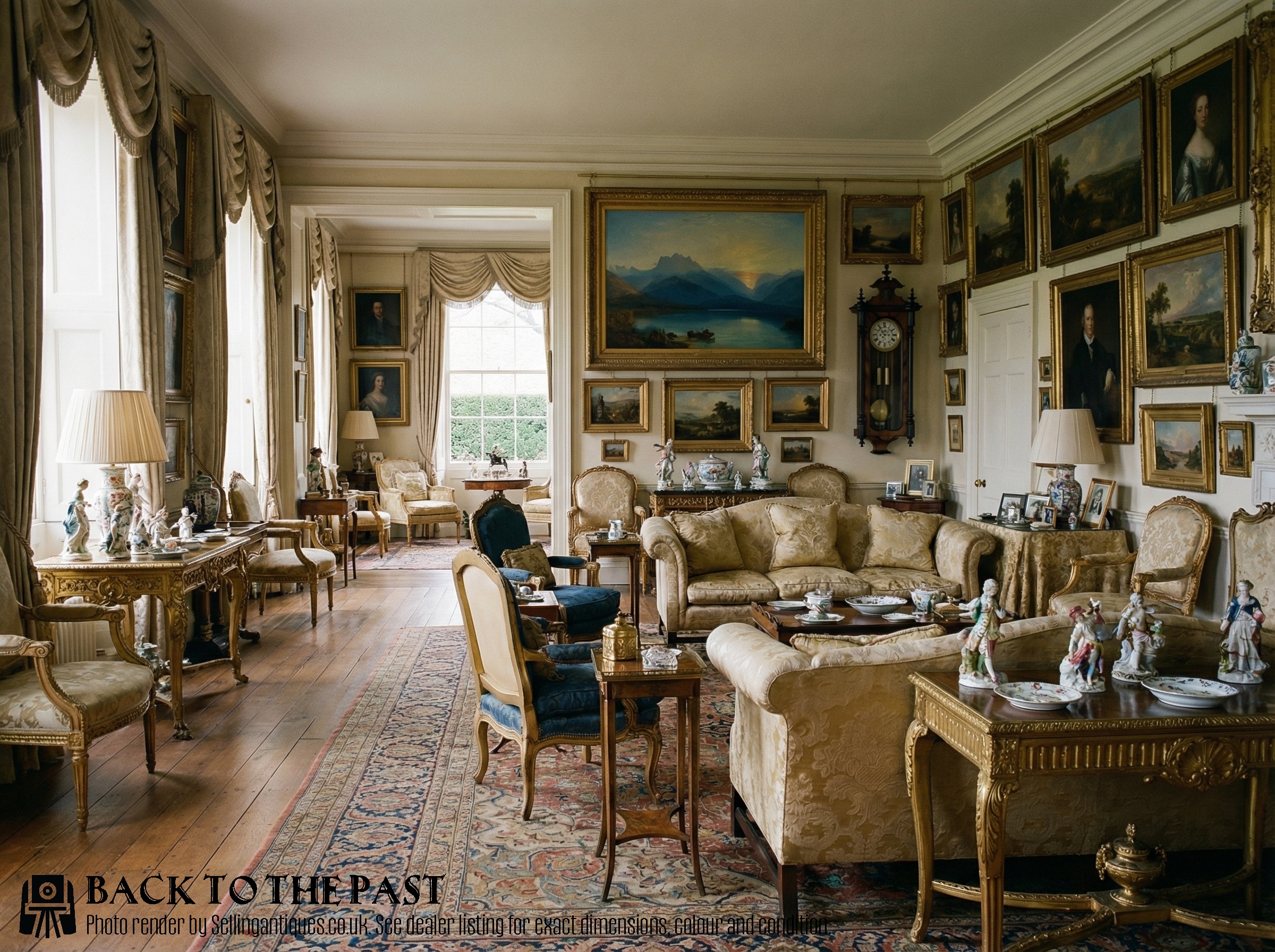
Mahogany Pendulum Wall Clock
A mahogany pendulum wall clock is a timekeeper housed in a wooden case designed to hang securely from a vertical surface. The selection spans periods from the Georgian and Regency eras through the Victorian epoch into the early twentieth century.
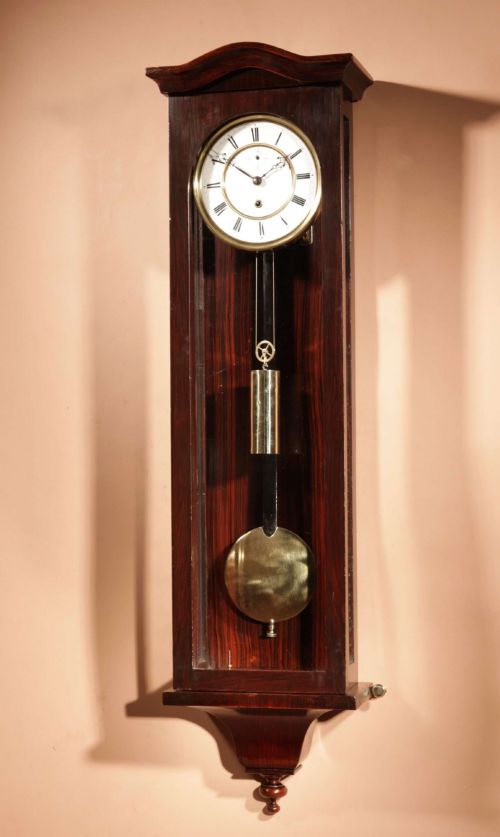
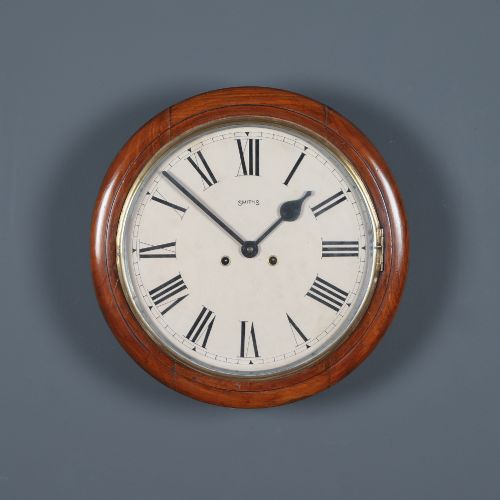
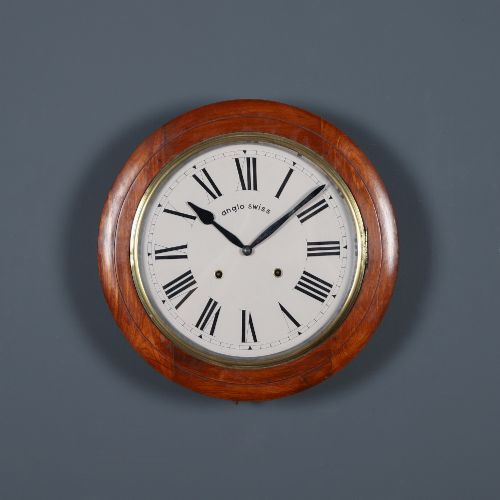
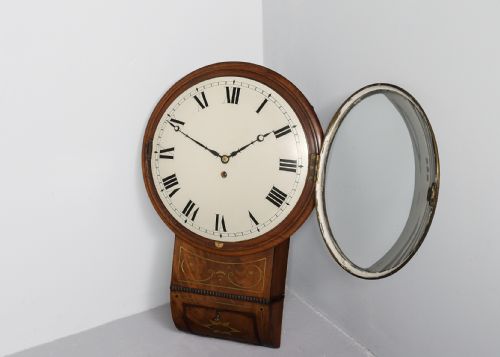
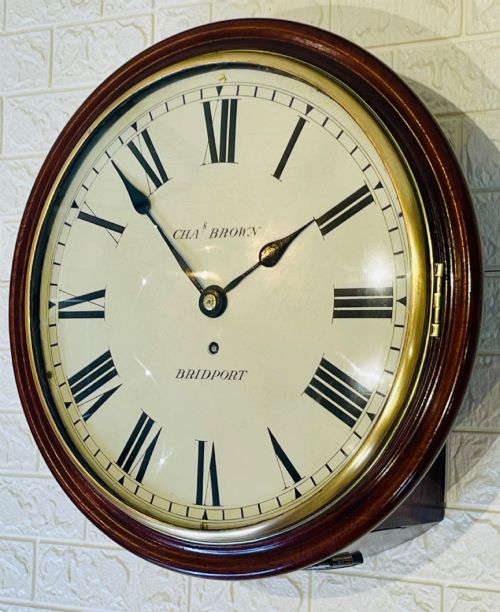
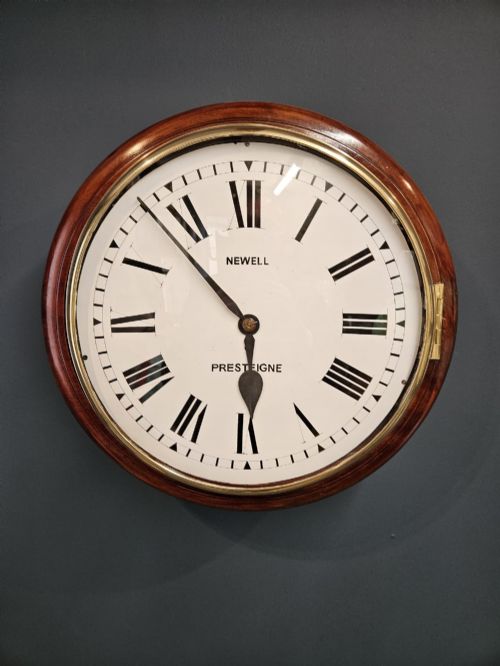
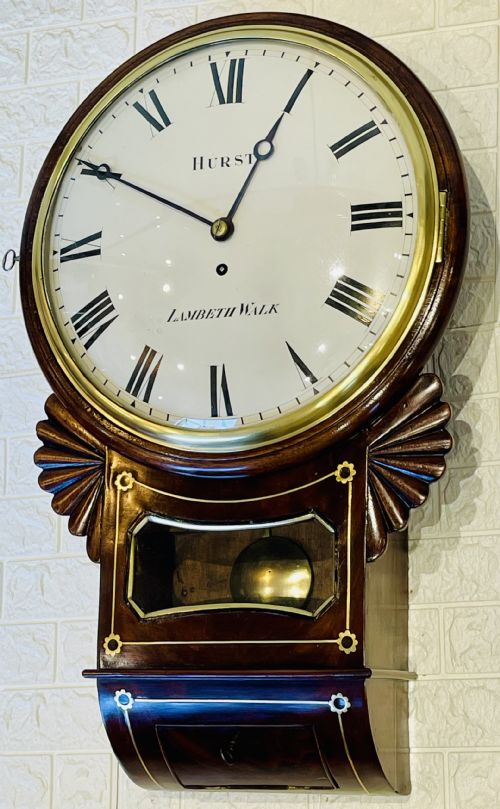
Most pieces seen here adopt round dial formats, including fusee wall clocks, drop dial variants, and railway station or school house designs. Cases commonly feature rich mahogany grain, sometimes paired with brass inlay or mother of pearl details.
Origins range across traditional British workshops, provincial makers, and railway companies, alongside occasional American and continental regulator examples.
What varies in quality
The standard of timber selection and the crispness of brass inlay or carved case details set finer examples apart from utilitarian station clocks. Hand-painted dial execution and the complexity of the movement, such as double fusee or striking mechanisms, dictate the hierarchy.
Originality of components and the preservation of the mahogany case finish heavily influence the standing of any piece within the range.
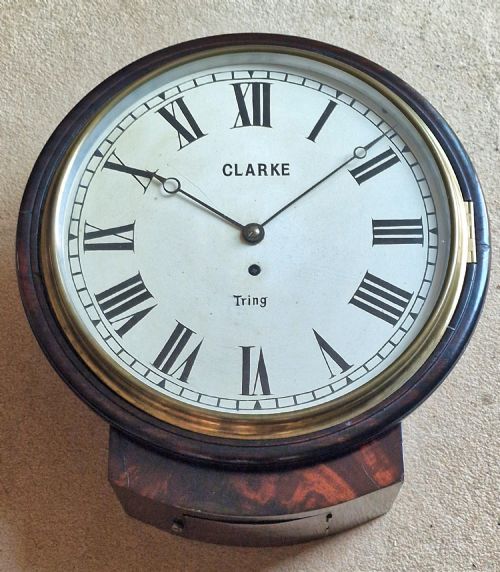
Several clocks bear the precise names of provincial towns and railway stations where stationmasters once checked their pocket watches against the wall.
J Henry Cheltenham·George Clarke Tring·Joseph Bird of Stroud·Thomas Hedge of Colchester·Joseph Mansfield
The Mahogany Pendulum Wall Clock Glossary
- Fusee
- A conical pulley connected to the mainspring by a cord or chain, designed to equalise the torque as the spring unwinds. This mechanism ensures consistent power delivery to the movement.
- Drop dial
- A clock design featuring a circular dial mounted above an extended wooden box that houses the swinging pendulum. This form became a staple of British offices and railways.
- Dial
- The face of the clock displaying the numerals and minutes. Materials range from painted metal and enamel to solid wood.
- Regulator
- A precision pendulum clock designed for high accuracy. They often feature extended cases and clear glass panels to observe the movement.
- Convex dial
- A clock face that curves outward toward the viewer. This shape helped reduce glare from surrounding windows.
Mahogany Pendulum Wall Clock: Frequently Asked Questions
How do I wind a fusee wall clock?
Open the side or front glass door to access the winding square on the dial. Use the appropriate key to turn the mechanism gently until resistance is met.
Take care not to overwind the clock, as this can strain the internal spring or chain.
Where should I hang a wall clock?
Select an interior wall that remains free from excessive vibrations and damp conditions. Ensure the wall structure can support the weight of the mahogany case.
Hang the clock at a comfortable eye level so the dial and pendulum can be easily viewed and adjusted.
How do I tell a Georgian clock from a Victorian one?
Georgian and Regency pieces often display cleaner architectural lines, subtle brass inlay, and sometimes wooden dials. Victorian examples frequently introduce bolder drop dial proportions and standard painted metal faces.
Maker signatures and regional styles recorded on the dial often provide further clues to the exact manufacturing era.
Why does the clock lose time?
Pendulum clocks rely on being hung perfectly plumb against the flat surface of a wall. Even a slight tilt can cause the beat to become uneven and affect accuracy.
Adjust the regulating nut beneath the pendulum bob up or down to correct the speed once the clock hangs level.