
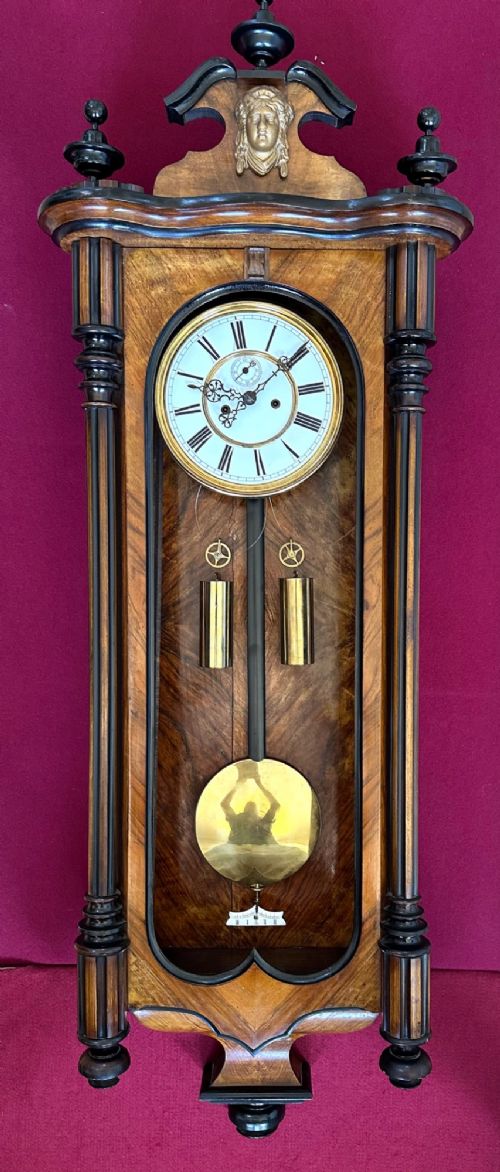
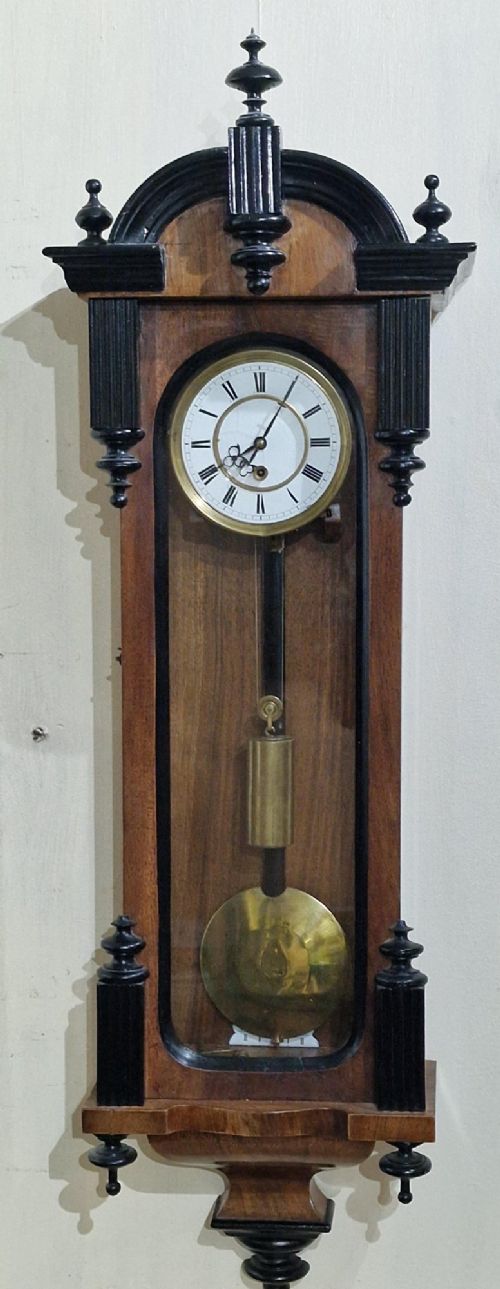
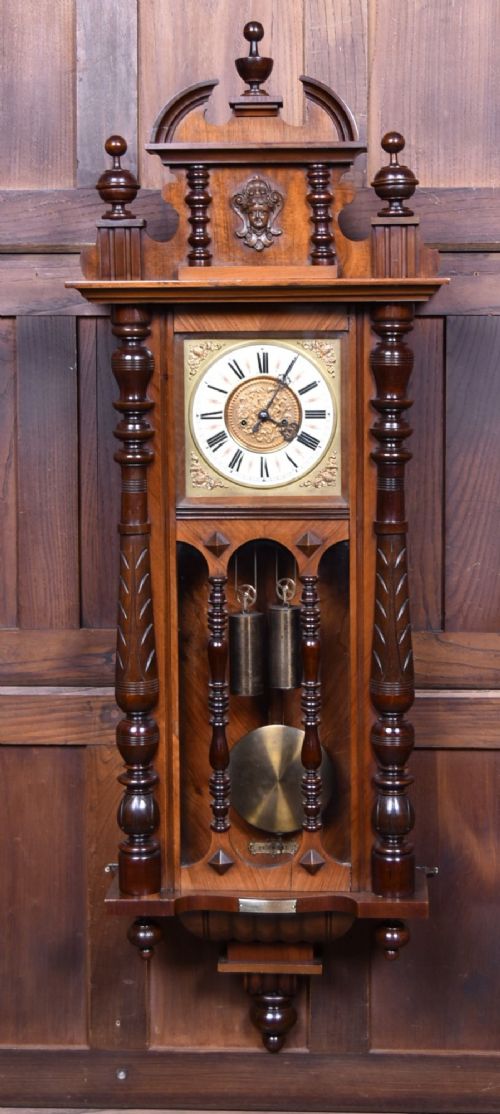
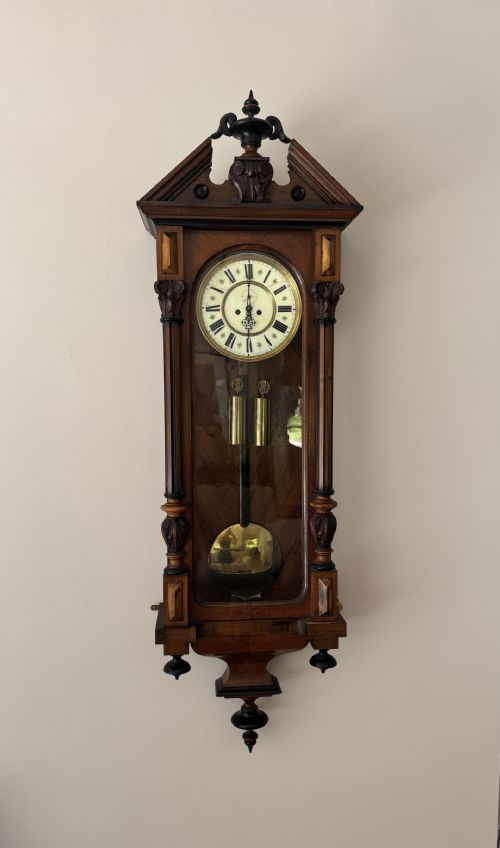






Walnut Vienna Wall Clock
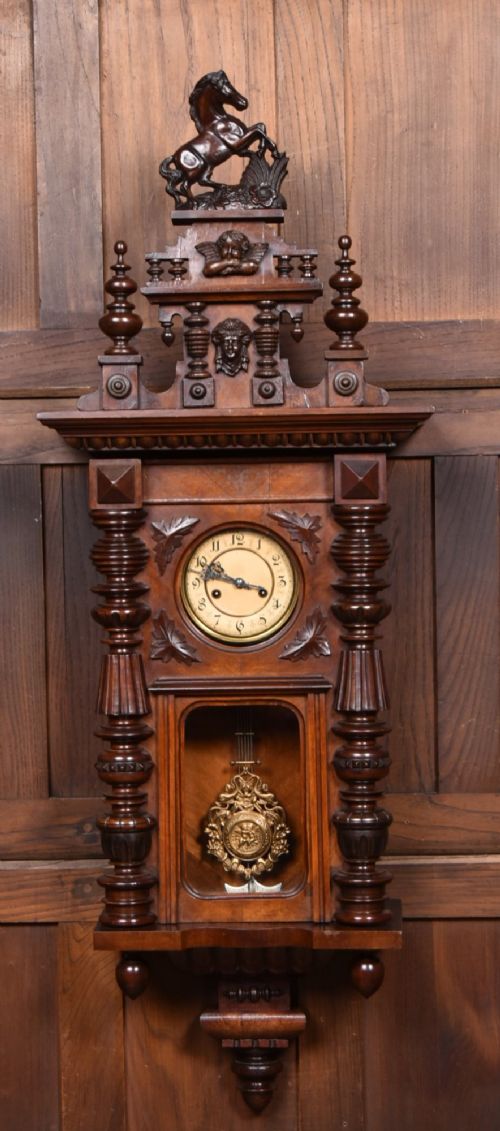
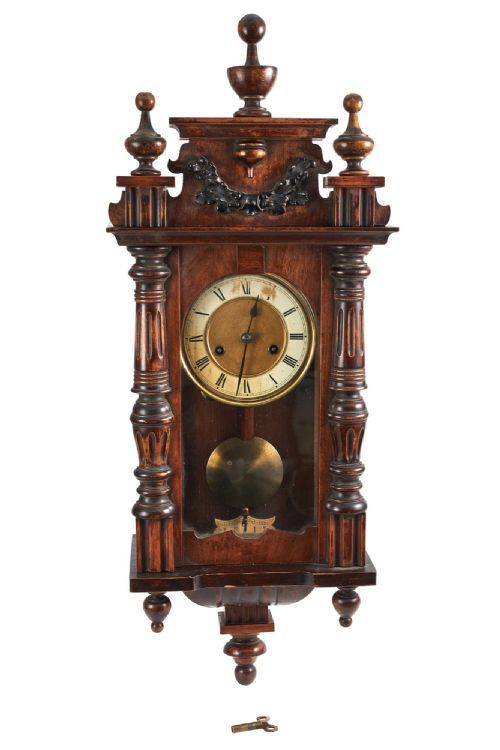
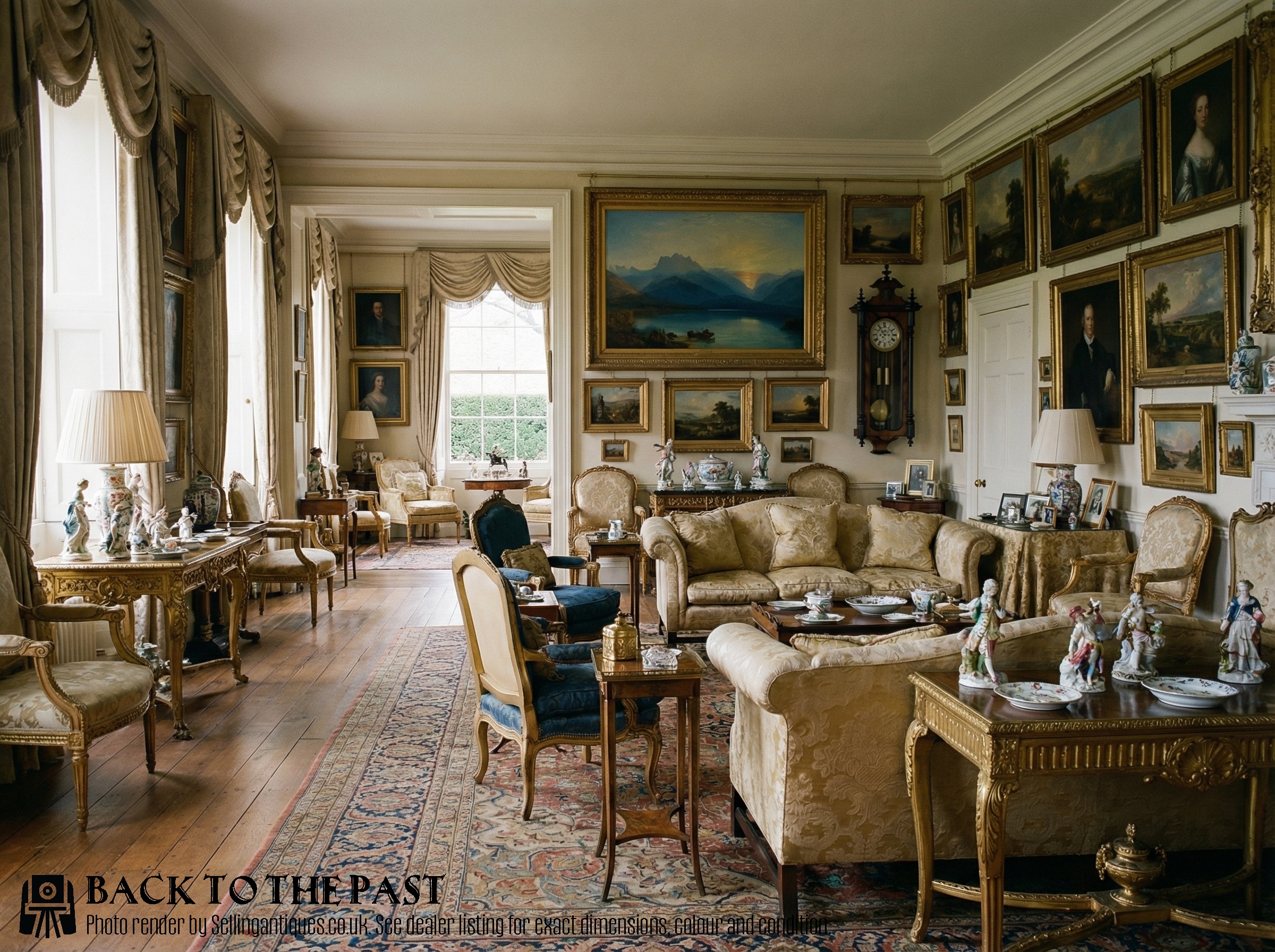
A walnut vienna wall clock brings mechanical precision and rich timber cases together, offering a stately focal point for a room.
Walnut Vienna Wall Clock
A walnut vienna wall clock is a precision timepiece housed in a tall wooden case, typically featuring a glazed door that displays the swinging pendulum. Most examples found here originate from the Victorian era and the later decades of the nineteenth century, reflecting Austrian and German clockmaking traditions.
The styles span straightforward timepieces to elaborate Vienna regulators with double or triple weights. Buyers encounter both spring-driven movements and weight-driven mechanisms designed to run for eight days, a month, or strike on the hour.
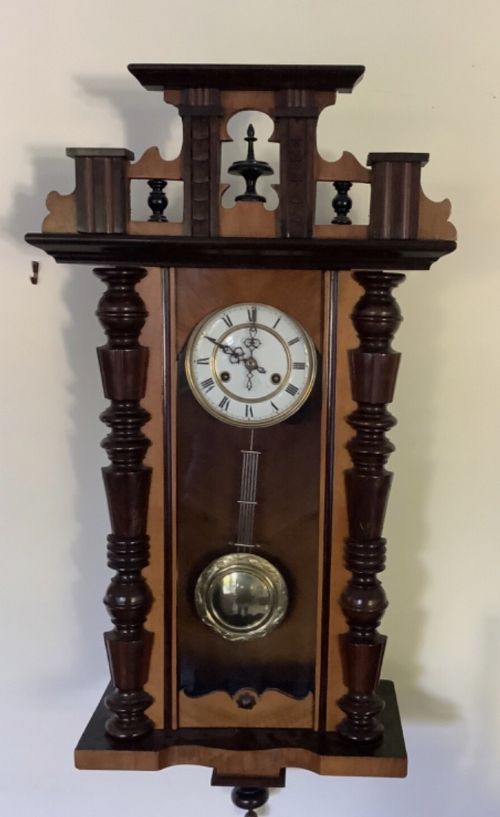
Cases range from restrained architectural designs to heavily carved Victorian or Biedermeier interpretations. The use of burr walnut veneer and ebonised wood details creates a distinct visual contrast that defines these pieces.
Materials and Construction
Clockmakers utilised solid walnut and decorative walnut veneers applied to secondary woods, frequently combining them with ebonised wood mouldings for depth. Cases incorporate glass panels in the doors and sides to reveal the internal movement and brass pendulum bob.
Some models hide their winding squares behind tiny brass doors on the enamel dial.
Assessing Quality
Quality rests on the complexity of the movement, such as month-duration runs or multiple weights, alongside the precision of the brass gear cutting. Heavier movements require robust suspension and durable pinions to maintain accurate time over decades.
Cabinetwork distinguishes standard production from superior pieces through the selection of figured burr walnut veneers and crisp, deep hand-carving. The integration of ebonised detailing and well-balanced proportions elevates the visual harmony of the case.
AG Lenzkirch·Gustav Becker·Johann Baptist Beha·Junghans
The Walnut Vienna Wall Clock Glossary
- Vienna Regulator
- A high-precision pendulum clock developed in Austria, prized for its accurate deadbeat escapement and long duration. These clocks are engineered to show the mechanics clearly through glass door panels.
- Double Weight
- A movement driven by two suspended metal weights that power the going train and the striking train separately. This setup removes the need for spring barrels in larger eight-day clocks.
- Ebonised Wood
- Timber treated with a dark finish to imitate expensive ebony. Makers used this technique to create sharp black contrasts against the lighter walnut grain.
- Burr Walnut
- Timber sliced from walnut tree growths, yielding intricate, swirling grain patterns. Cabinetmakers applied these decorative veneers to the primary display surfaces of the case.
- Grande Sonnerie
- A complex striking train mechanism that sounds both the hours and the quarters on every quarter-hour. It represents an advanced level of horological engineering found in select regulators.
Walnut Vienna Wall Clock: Frequently Asked Questions
How do I wind a Vienna wall clock?
Use the designated winding key on the dial face to slowly lift the weights or tension the spring barrels until resistance is met. Avoid over-winding to prevent damage to the internal brass teeth.
Ensure you support the pendulum if the clock needs to be moved or adjusted after winding.
Why does my clock lose time?
Variations in temperature, uneven wall mounting, or a shift in the beat of the pendulum can cause a clock to run slow or fast. Minor adjustments to the regulating nut beneath the pendulum bob will correct the speed.
Ensure the case hangs completely plumb against a sturdy wall to maintain a steady beat.
What is the difference between single and double weight?
A single weight clock typically drives a basic time-only movement or a simpler eight-day spring mechanism. Double weight versions allocate one weight to power the clock's timekeeping and the second weight to run the hourly strike.
Triple weight variations add functionality, such as chiming quarters or playing melodies.
Where should I hang a wall clock?
Select an interior wall free from dampness, direct sunlight, and excessive vibrations from heavy foot traffic or doors. Masonry walls provide the most stable support for heavy timber and glass cases.
Position the dial at a comfortable eye level to make winding and reading the time straightforward.