

Mahogany Pembroke Side Table
When you search for a mahogany pembroke side table, you are looking at drop-leaf tables designed for versatility and grace.
Mahogany Pembroke Side Table
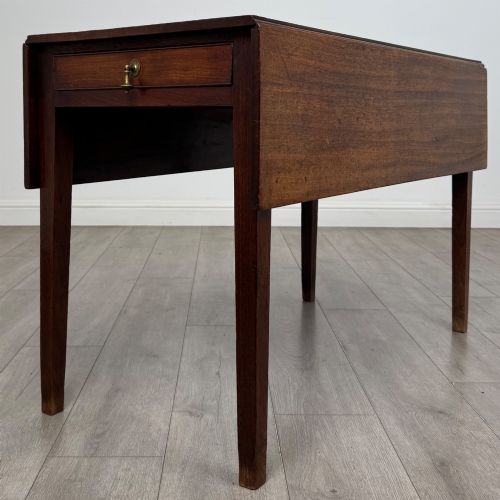
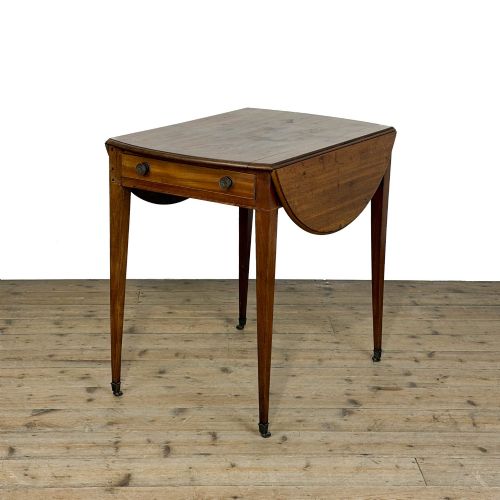
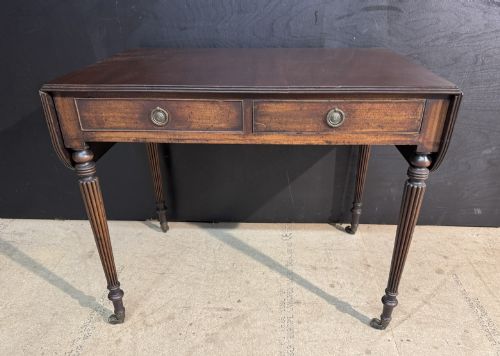
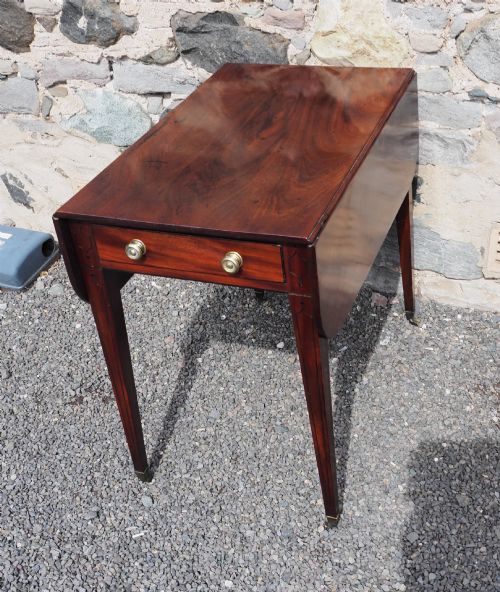
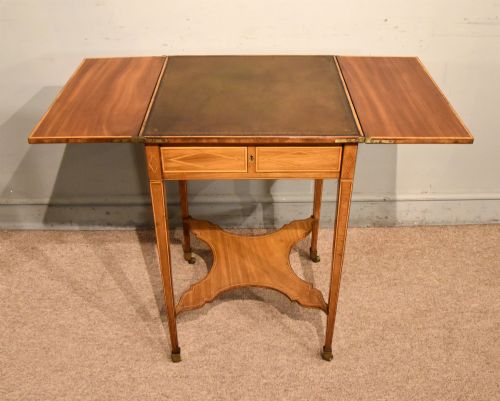
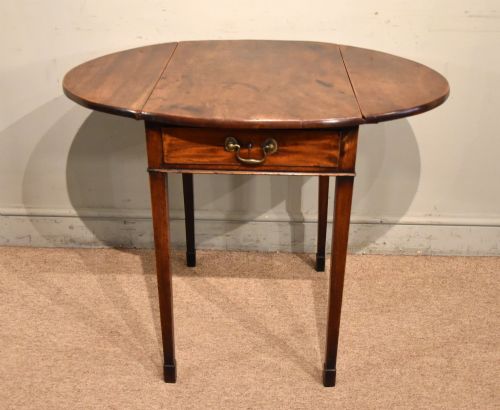
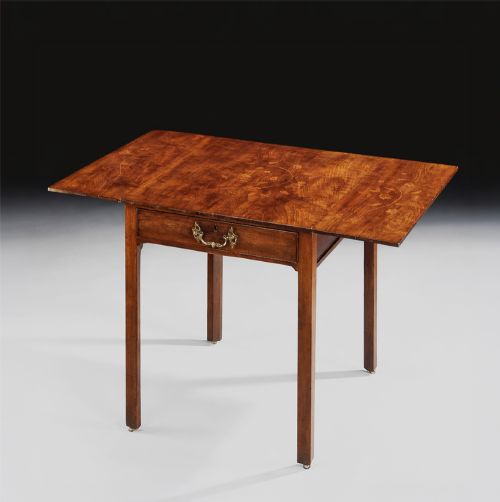
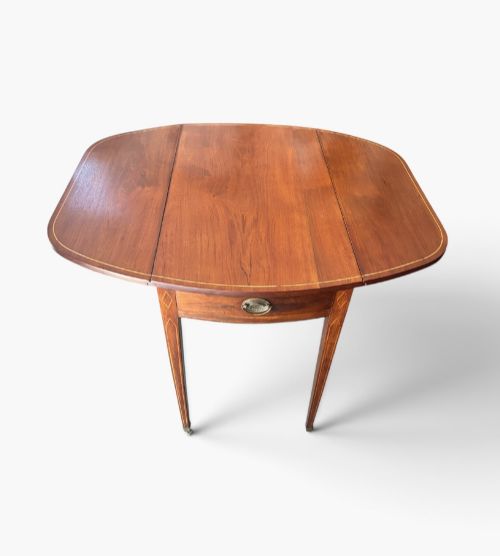
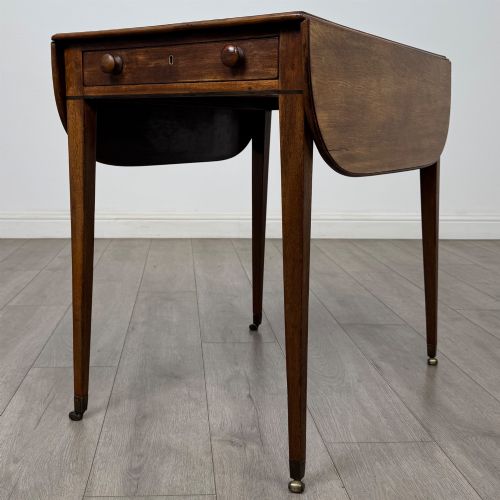
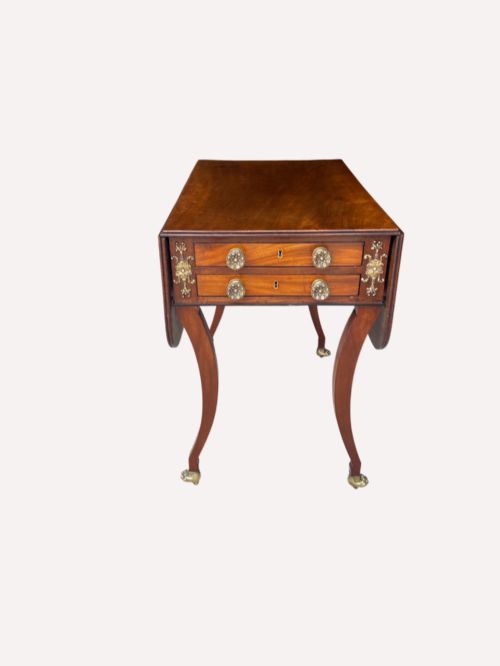
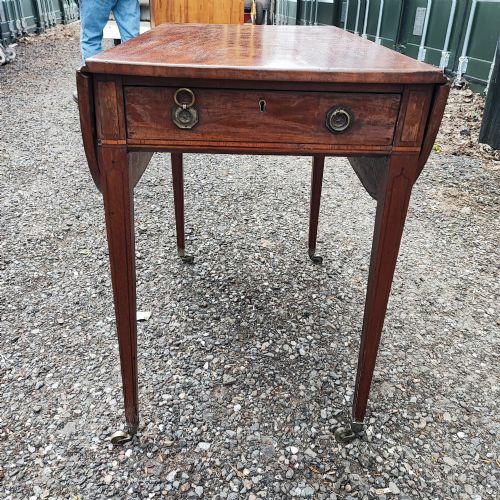
A mahogany pembroke side table is a versatile drop-leaf piece designed to stand against a wall or pull into the room when needed. These tables typically feature hinged flaps on either side supported by pivoting wooden brackets or swing legs.
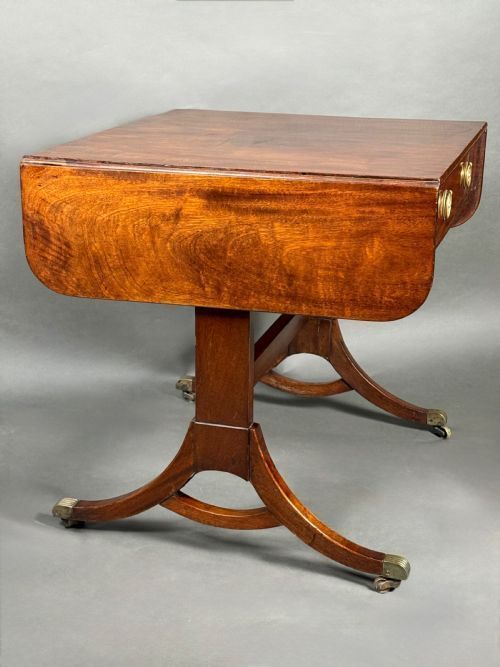
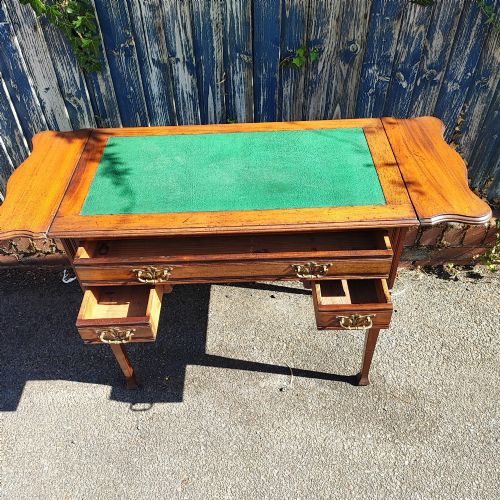
The pieces on this page span the Georgian, Regency, Victorian, and Edwardian periods, crossing into sofa tables, writing desks, and small occasional forms. You will frequently encounter examples from the late eighteenth and early nineteenth centuries featuring single or opposing end drawers.
How They Were Made
Cabinetmakers built these tables using solid mahogany or framing with flame mahogany veneers, often selecting figured timber for the tops and drawer fronts. Secondary woods provided structural stability inside the drawer boxes and framing.
Decoration relied on contrasting timbers such as satinwood, boxwood, and partridge wood for cross-banding and line inlay, accompanied by cast brass handles and occasionally brass drop ring pulls on the drawers.
Some work tables include fitted compartments inside the drawer for storing sewing threads and needles.
What Varies in Quality
Quality rests in the choice of timber and the precision of the cabinetwork, particularly in how neatly the drop leaves match the central top when extended. Superior examples display carefully figured flame mahogany and crisp, restrained stringing or cross-banding.
Underneath, the construction of the drawer linings, the smoothness of the Pembroke action brackets, and the retention of original brass hardware and working locks distinguish standard utility tables from finer regional or workshop productions.
Gillows·Edwards and Roberts
The Mahogany Pembroke Side Table Glossary
- Pembroke table
- A small rectangular table with hinged drop flaps on opposing sides, developed in the eighteenth century. It was originally used for breakfast, writing, or general occasional tasks.
- Cross-banding
- A border of veneer laid around the edge of a table top with the grain running perpendicular to the central panel. This technique frames the primary timber and adds visual depth.
- Flame mahogany
- Timber cut from the fork of the mahogany tree where branches meet the trunk, producing a rippling, flame-like pattern. It was reserved for prominent surfaces like table tops.
- Drop flap
- A hinged leaf attached to the main surface of a table to expand its top when required. These flaps drop down vertically when not in use.
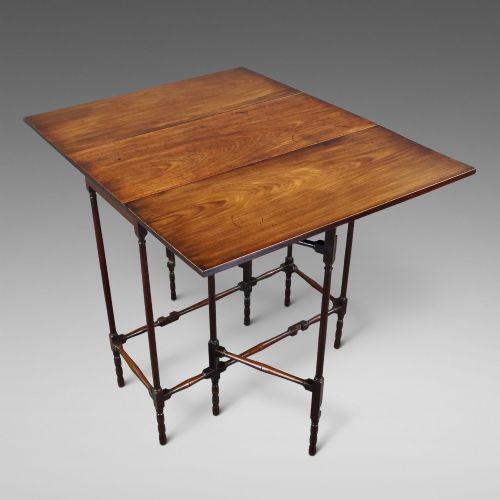
- Spider leg table
- A delicate form with very slender turned legs joined by thin stretchers, commonly found on small occasional and pembroke tables.
Mahogany Pembroke Side Table: Frequently Asked Questions
What is a pembroke table used for?
These tables served multiple functions in domestic interiors, from small dining surfaces and tea tables to writing desks and lamp stands. The folding leaves allowed them to be tucked against a wall when space was tight.
In daily use, the drawers held writing materials, sewing gear, or small household items, making them adaptable pieces for sitting rooms and bedrooms alike.
How do I date a mahogany pembroke table?
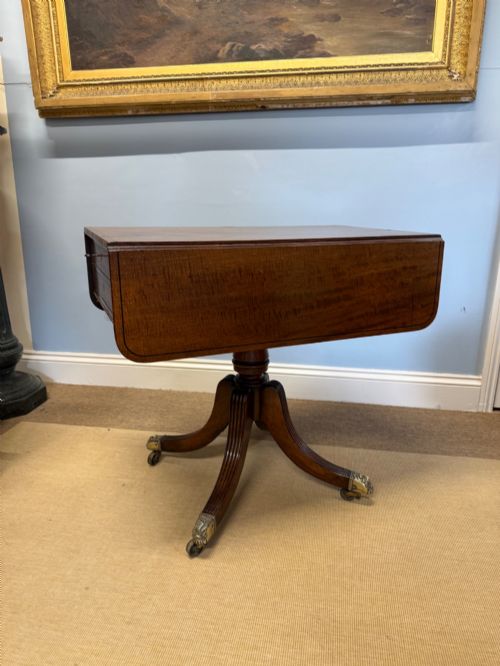
Dating relies on leg shapes, construction methods, and decorative details like inlay. Earlier Georgian examples often feature square tapered legs or spider legs, while Regency pieces tend to show reeded or turned legs with brass castors.
Examine the drawer construction and timber choices as well, since dovetailing and secondary woods shifted noticeably from the eighteenth century into the Victorian era.
Are drop leaves sturdy enough for daily use?
The drop leaves are supported by hinged wooden brackets or pivoting swing legs designed to bear reasonable weight. They provide stable surfaces for lamps, books, or writing.
Avoid placing excessive downward force on the outer corners of the extended flaps, as the hinge mechanisms and support brackets are built for normal household items rather than heavy loads.
How do I care for antique mahogany?
Keep the timber away from direct sunlight and heat sources to prevent the mahogany finish from drying out or fading. Gentle dusting with a dry or slightly damp cloth is usually sufficient for regular maintenance.
Applying a traditional beeswax polish periodically helps nourish the wood and maintain its soft sheen without building up heavy residue over time.