


Antique Extending Drop Leaf
An antique extending drop leaf provides a flexible dining surface that expands for guests and folds compactly away when space demands it.
Antique Extending Drop Leaf
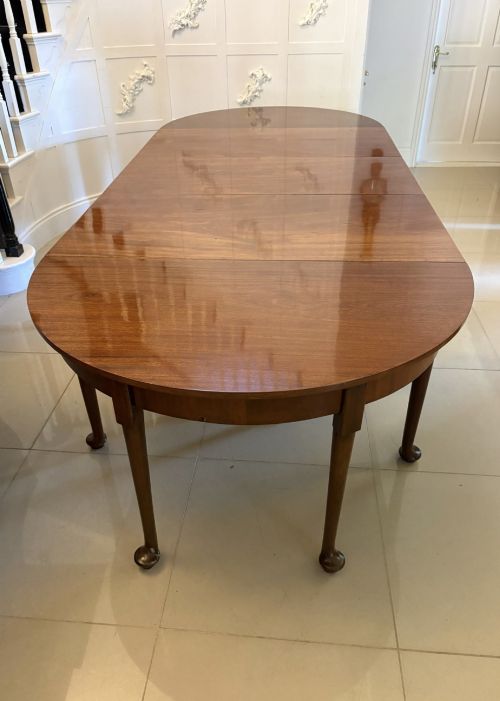
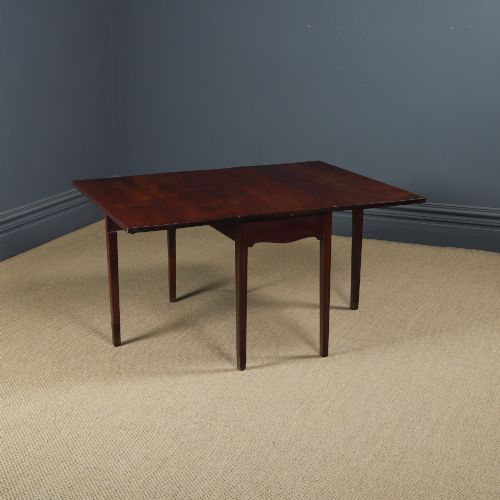
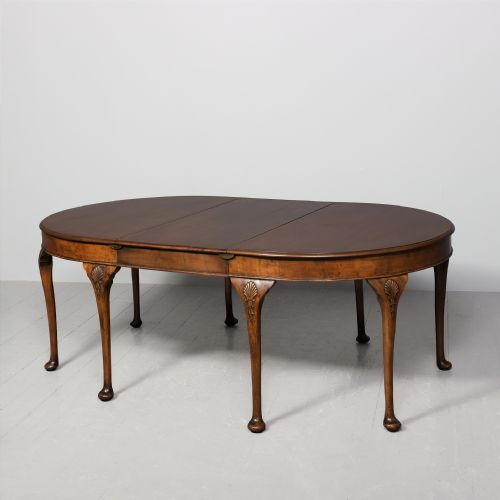
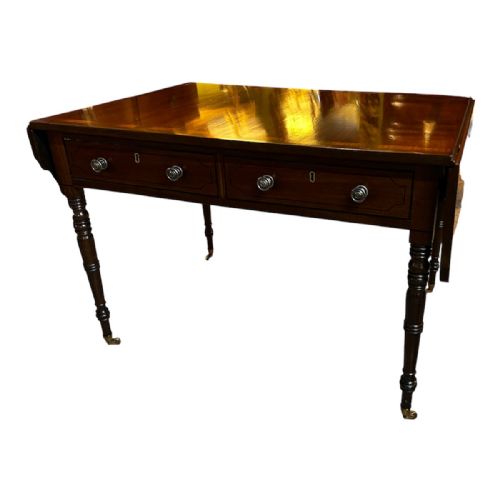
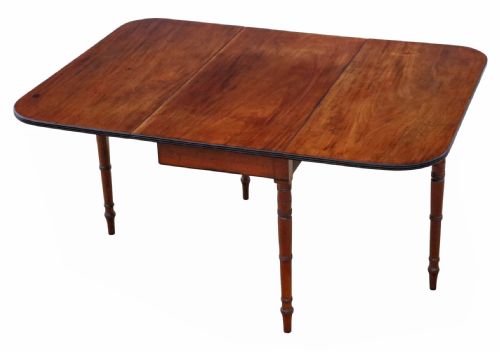
An antique extending drop leaf brings together centuries of clever table design, spanning from oak gateleg constructions of earlier eras to mahogany Pembroke, sofa, and D-end formats developed during the Georgian and Regency periods. These tables appear across multiple centuries, including Georgian, Regency, Victorian, and later revival styles up to the nineteen-thirties.
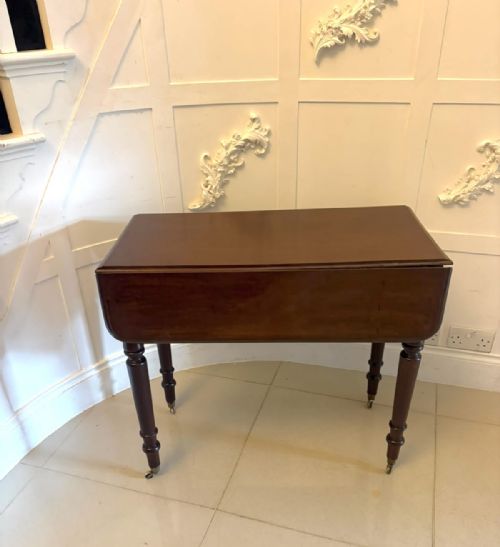
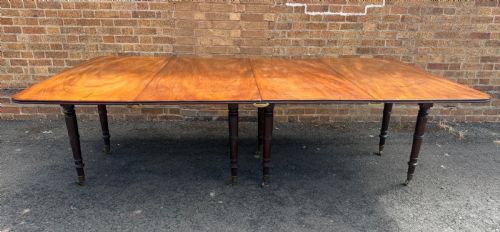
The most common formats met on this page are dining tables and smaller Pembroke or sofa tables utilising drop leaves alongside additional leaves, draw mechanisms, or folding gateleg frames to alter their footprint. Woods such as mahogany and oak dominate the selection, complemented by walnut, rosewood, and occasional painted pine.
Makers and workshops constructed these tables for versatile domestic use, ranging from large dining arrangements seating up to twelve people down to compact side and bedside tables. The survival of these pieces demonstrates the enduring practicality of folding flaps supported by swing legs or fly brackets.
Distinctions in craftsmanship
Quality rests in the integrity of the timber selection and the precision of the extending mechanism, where superior pieces maintain smooth operation across leaves and hinges without sagging under load. The weight and grain figure of the mahogany or oak dictate the visual presence of the finished table.
Proportion and stability separate standard utility pieces from finer examples designed by notable workshops. The joinery beneath the flaps and the alignment of the drop leaf joints reveal the level of care invested by the original maker.
The selection includes forms from seventeenth-century oak gatelegs to nineteenth-century Pembroke, sofa, and D-end dining tables.
Gillows
The Antique Extending Drop Leaf Glossary
- Drop leaf
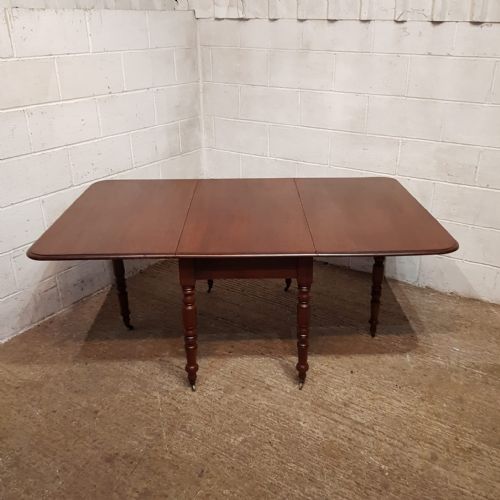
- A table featuring a fixed central section and hinged flaps that fold down when not in use. These flaps are supported by swing legs or brackets.
- Gateleg table
- A table design where hinged legs swing outward like a gate to support the drop leaves. This construction provides robust support for large dining surfaces.
- Sofa table
- A narrow table traditionally placed before a sofa, equipped with drop leaves at either end. Regency versions often feature pedestal bases and extending mechanisms.
- Pembroke table
- A small rectangular table with two drop leaves on opposing sides, often fitted with a single drawer. They served varied domestic functions in Georgian and Victorian interiors.
- D-end table
- A dining table whose ends form semi-circles, resembling the letter D. These sections detach or pull apart to insert additional leaves.
- Draw-leaf table
- A table with auxiliary leaves stored beneath the main top that pull out to extend the surface area.
Antique Extending Drop Leaf: Frequently Asked Questions
How do extending drop leaf tables work?
These tables utilise hinged flaps on the sides that lift to expand the surface area. Supporting legs swing out on pivots or wooden gates to hold the leaves steady.
Additional central leaves can often be inserted between D-ends or pulled from beneath the main top to increase seating capacity.
What periods do these tables come from?
The pieces span from the seventeenth century through the Georgian, Regency, and Victorian eras into the twentieth century. Earlier examples are typically constructed from solid oak in gateleg formats.
Later Victorian and Edwardian variations frequently employ mahogany and walnut with more refined dining mechanisms.
How do I seat more people at a drop leaf table?
Owners raise the drop leaves on either side to transform a narrow console or side table into a broader dining surface. Pulling apart D-end sections allows extra loose leaves to drop into the centre.
Gatelegs swing outward from the frame to provide firm support beneath the newly created space.
Where were Pembroke and sofa tables used?
Pembroke and sofa tables were designed as versatile, movable items for drawing rooms and parlours. Their drop leaves allowed them to sit compactly against a wall when floor space was required.
They functioned as writing surfaces, work tables, or occasional dining spots for small numbers of guests.