

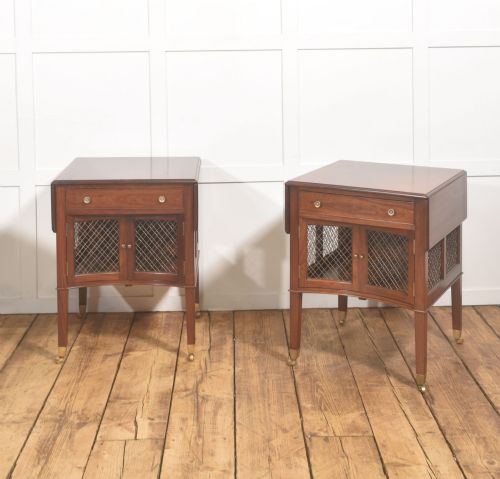
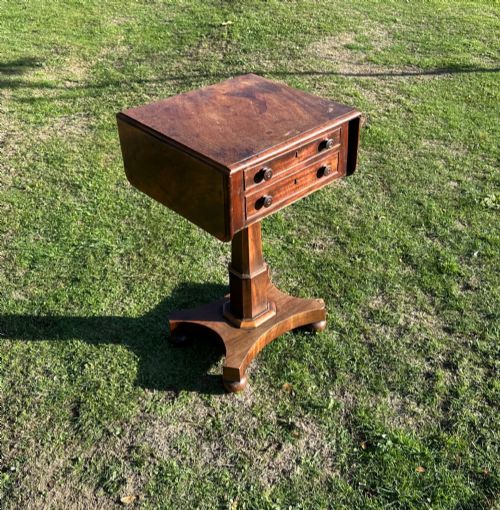
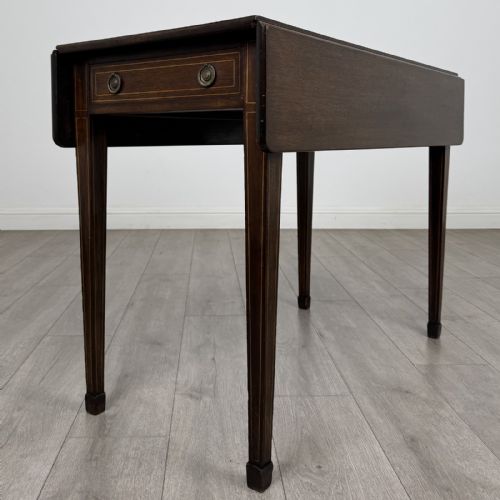
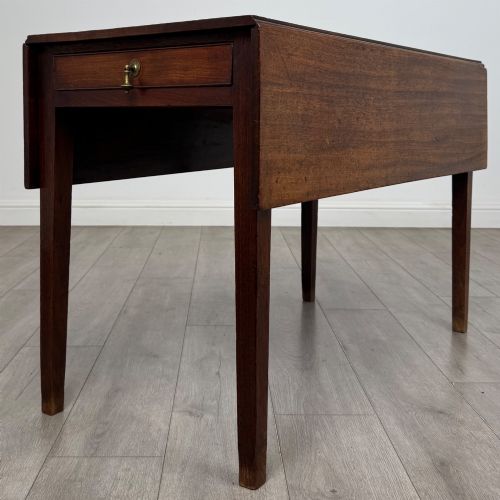
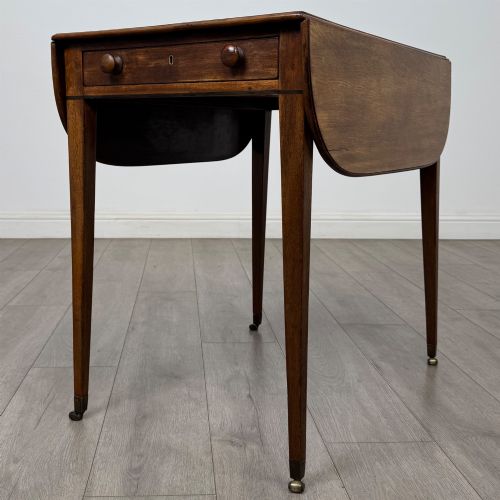
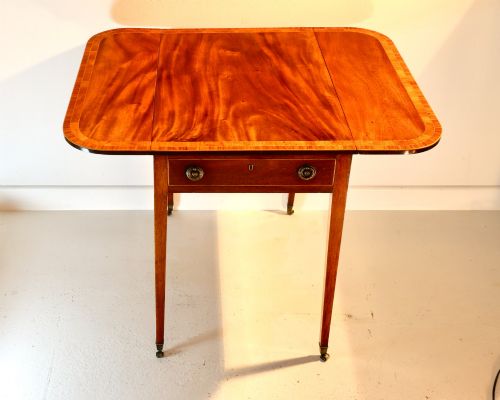
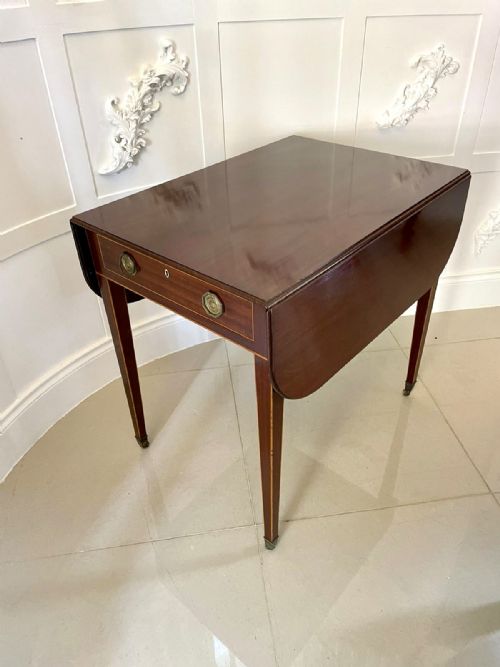
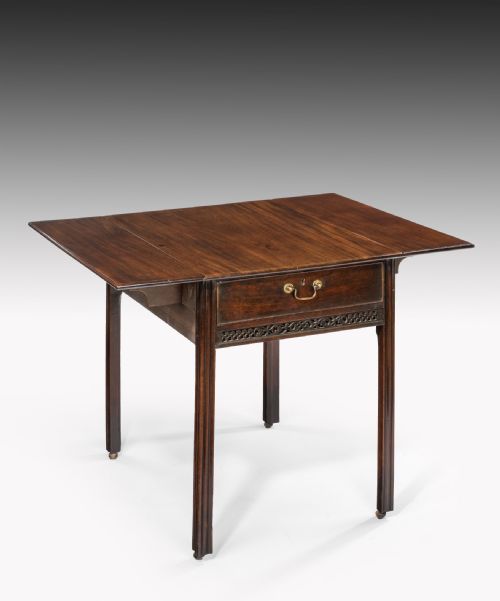

Mahogany Nightstand with Leaves
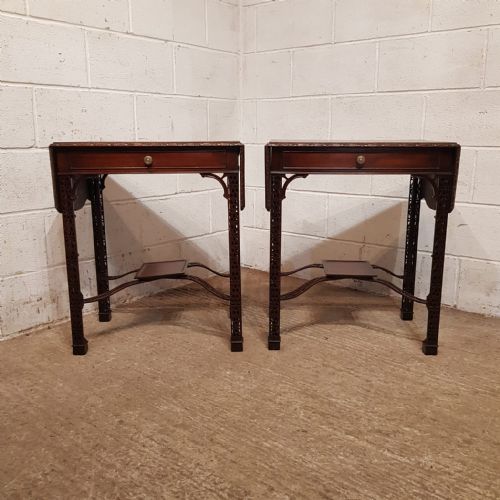
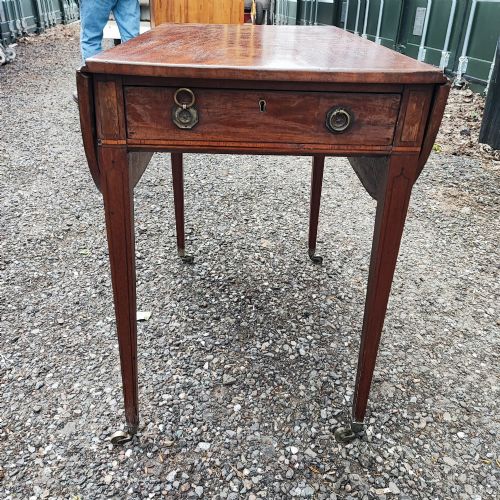
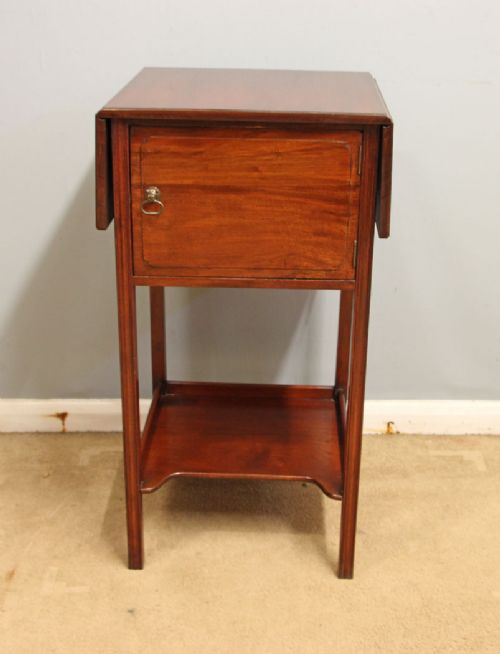
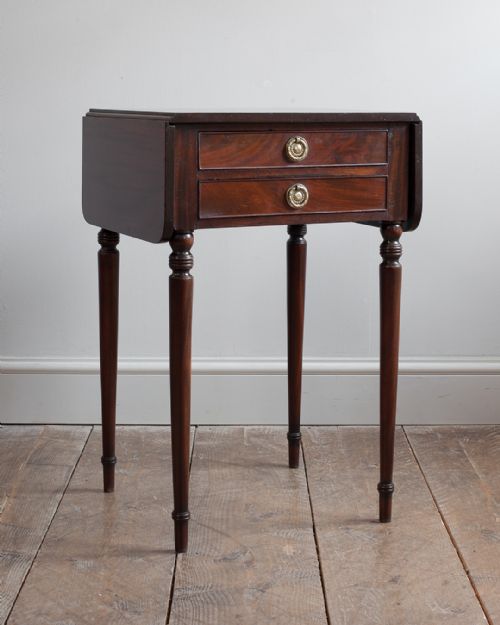
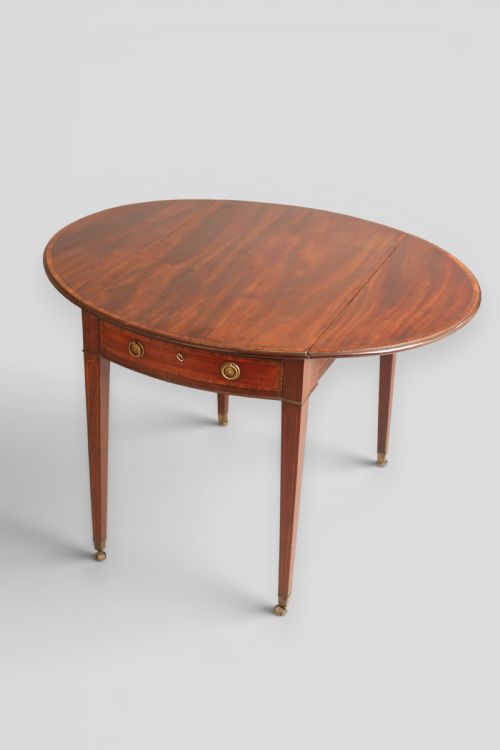
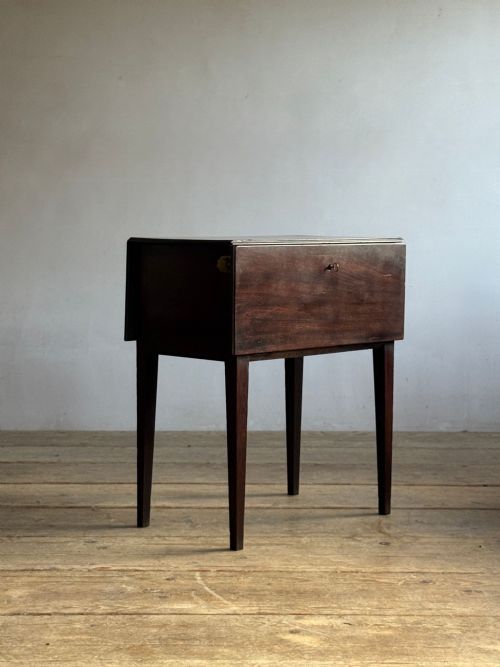
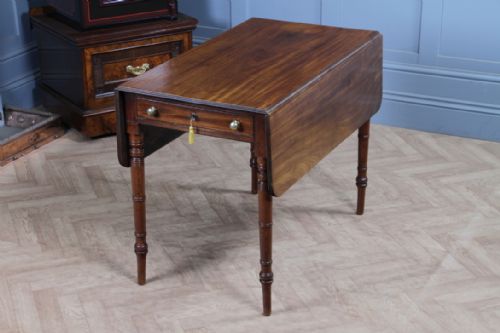
A mahogany nightstand with leaves is a compact bedroom or parlour piece with drop flaps, built to expand when needed and fold away to save floor space.

Mahogany Nightstand with Leaves
A mahogany nightstand with leaves encompasses compact bedside tables, work tables, and drop-leaf occasional pieces designed for flexible use in smaller rooms. The listings on this page span Georgian, Victorian, and Edwardian periods, bringing together classic forms with folding leaves.
Most examples function as bedside cabinets, lamp tables, or diminutive Pembroke tables fitted with drawers and hinged flaps. The timbers vary from standard mahogany to Cuban mahogany and satinwood inlay, maintaining a rich reddish-brown tone across the selection.
How they were made
Cabinetmakers constructed these tables using solid mahogany and Cuban mahogany, often selecting dense timber for stability in folding leaves and drop flaps. Brass hardware, such as drawer pulls and key escutcheons, provides functional contrast to the dark timber.
Joinery techniques focus on smooth action for drop leaves and sturdy construction for slender turned legs or pillar supports. Inlaid satinwood details appear on later Edwardian pieces, adding delicate linear contrast without altering the core structural frame.
Mahogany Nightstand with Leaves Retail Price Guide 2026
Typical asking prices for mahogany nightstand with leaves among the pieces listed under this phrase on Sellingantiques today, from the lower quarter to the upper quarter. They describe what is for sale here now, not the wider market.
Many of these miniature tables feature hidden brass castors so they could be quietly chased around a candlelit parlour without waking the cat.
What varies in quality
The degree of refinement in timber selection and timber figure separates standard workshop output from exceptional cabinet work. Grain matching across drop leaves and drawer fronts indicates greater care during the initial construction phase.
Subtlety in turned leg profiles and the precision of fitted drawer interiors also signal superior manufacture. Pieces exhibiting crisp satinwood inlay and well-balanced proportions demonstrate a higher level of artisan skill.
The Mahogany Nightstand with Leaves Glossary
- Pembroke table
- A small rectangular table featuring two hinged drop leaves on opposing sides. It usually incorporates one or two small drawers and stands on four legs.
- Cuban mahogany
- A dense, heavily figured timber exported from Cuba, prized for deep colour and stability. Cabinetmakers utilised it extensively during the eighteenth century.
- Drop leaf
- A hinged flap attached to the main top of a table that folds down when not in use. It is supported by hinged brackets or swinging legs.
- Bowfront
- A convex, curved front on a cabinet or table piece. This design softens room angles and was popular in later periods.
- Satinwood inlay
- A decorative technique using contrasting pale yellow satinwood veneer set into recesses in the primary mahogany surface. It creates geometric or floral borders.
Mahogany Nightstand with Leaves: Frequently Asked Questions
What is a pembroke table?
A pembroke table is a versatile small table featuring hinged side leaves that lift to create a larger surface. These pieces often include a functional drawer and were originally designed for light writing or breakfast use.
Over time, their compact footprint made them popular as lamp tables or bedside surfaces in smaller chambers.
How do I spot Cuban mahogany?
Cuban mahogany is typically heavier and possesses a darker, richer reddish-brown hue than standard Honduras varieties. The grain often displays deep chatoyancy, catching the light with a distinctive feathered depth.
Examining the underside of a drawer or the interior of a leaf often reveals the true density and weight of the timber.
Are drop leaves sturdy enough?
Drop leaves on period tables rely on hinged brackets, wooden swing legs, or pivoting arms for support. When properly adjusted, these mechanisms hold the flaps firm for daily items like lamps or books.
Users should check that the hinge pins and pivot joints remain secure to ensure the flaps stay level under moderate weight.
How should I care for mahogany?
Mahogany responds best to regular dusting with a soft, dry cloth to prevent surface grit accumulation. Periodic application of a traditional beeswax feed helps nourish the timber and maintain a soft lustre.
Keep these tables away from direct heat sources and strong sunlight to prevent the timber from drying out or fading unevenly.