
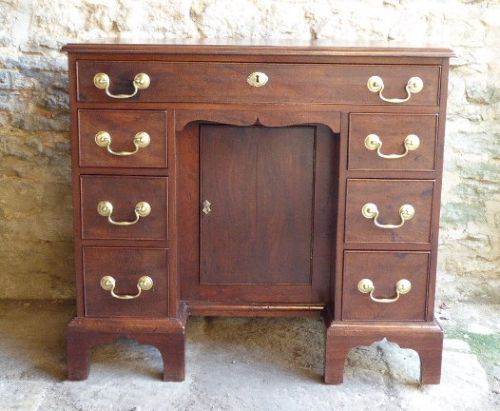
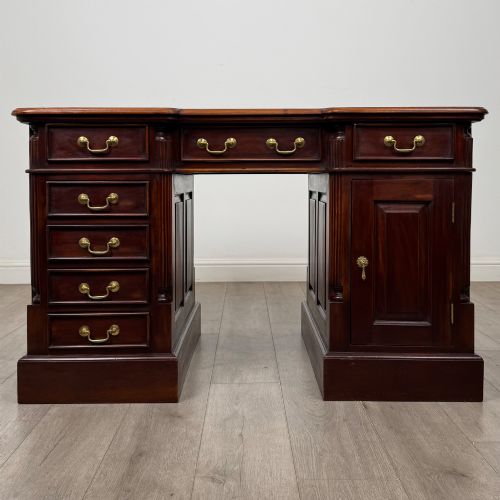
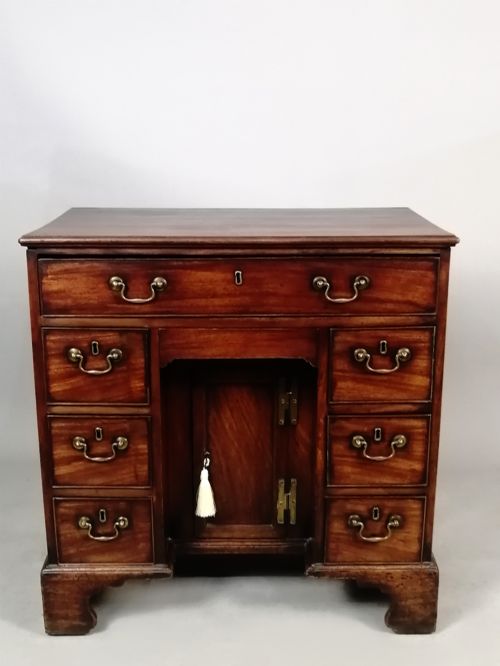
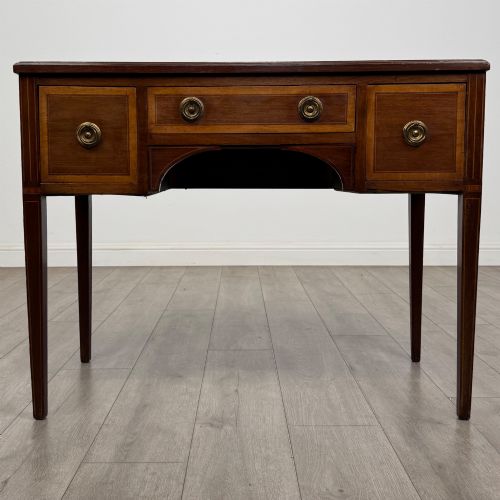
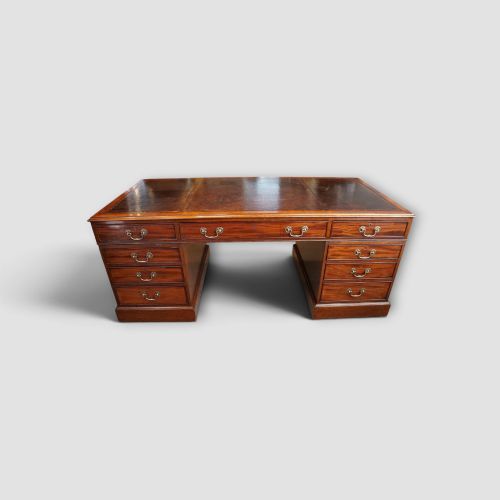


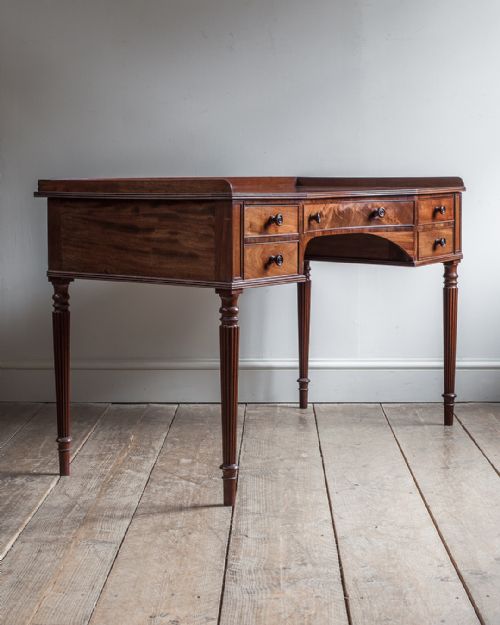
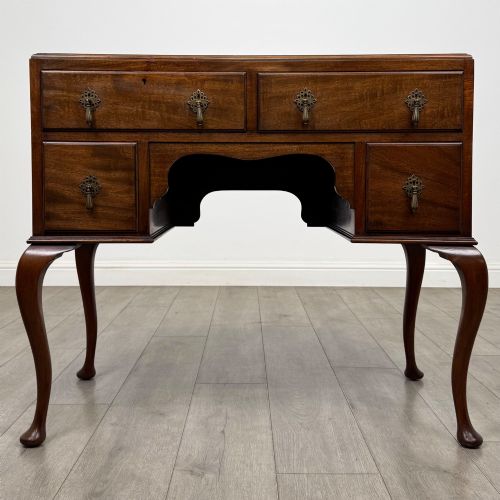
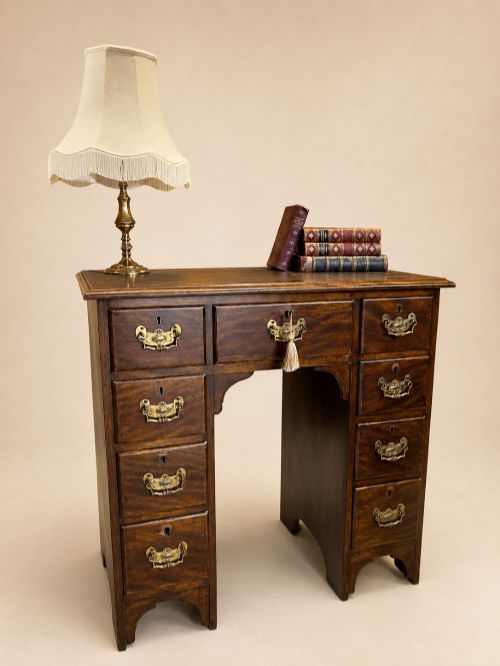

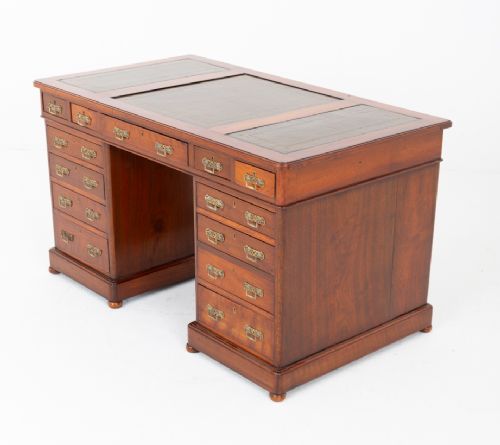
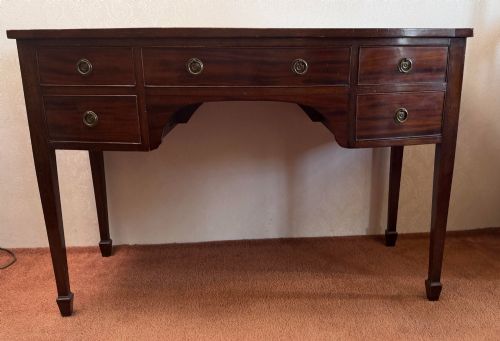
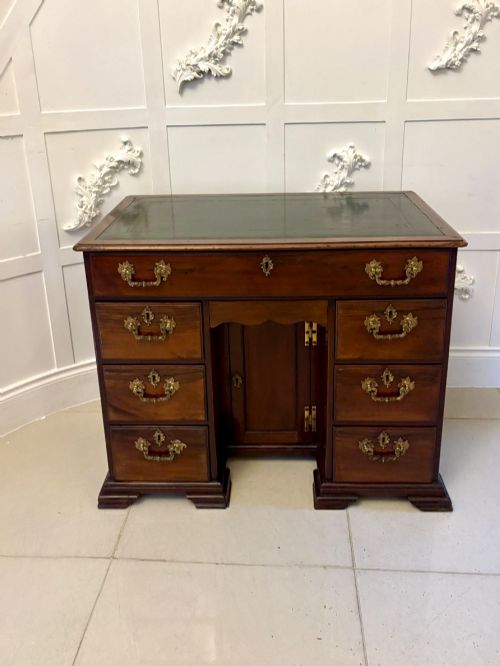
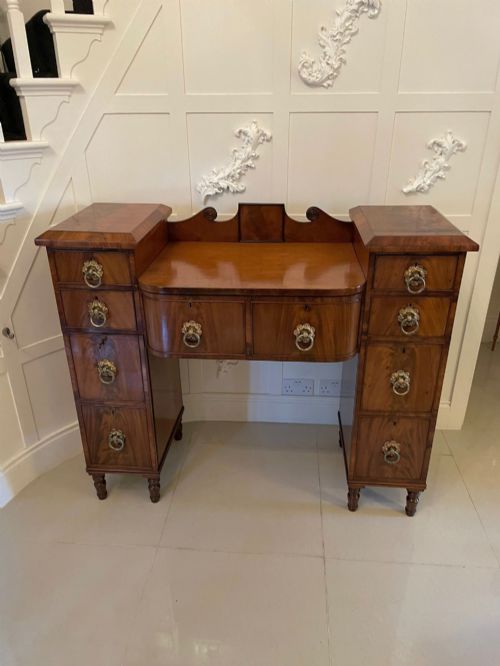
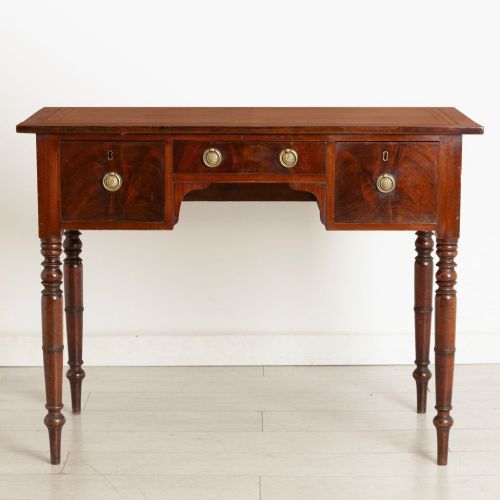
Mahogany Kneehole Writing Desk
A mahogany kneehole writing desk offers compact storage and a dedicated writing surface shaped by Georgian, Victorian, and Edwardian cabinetmakers.
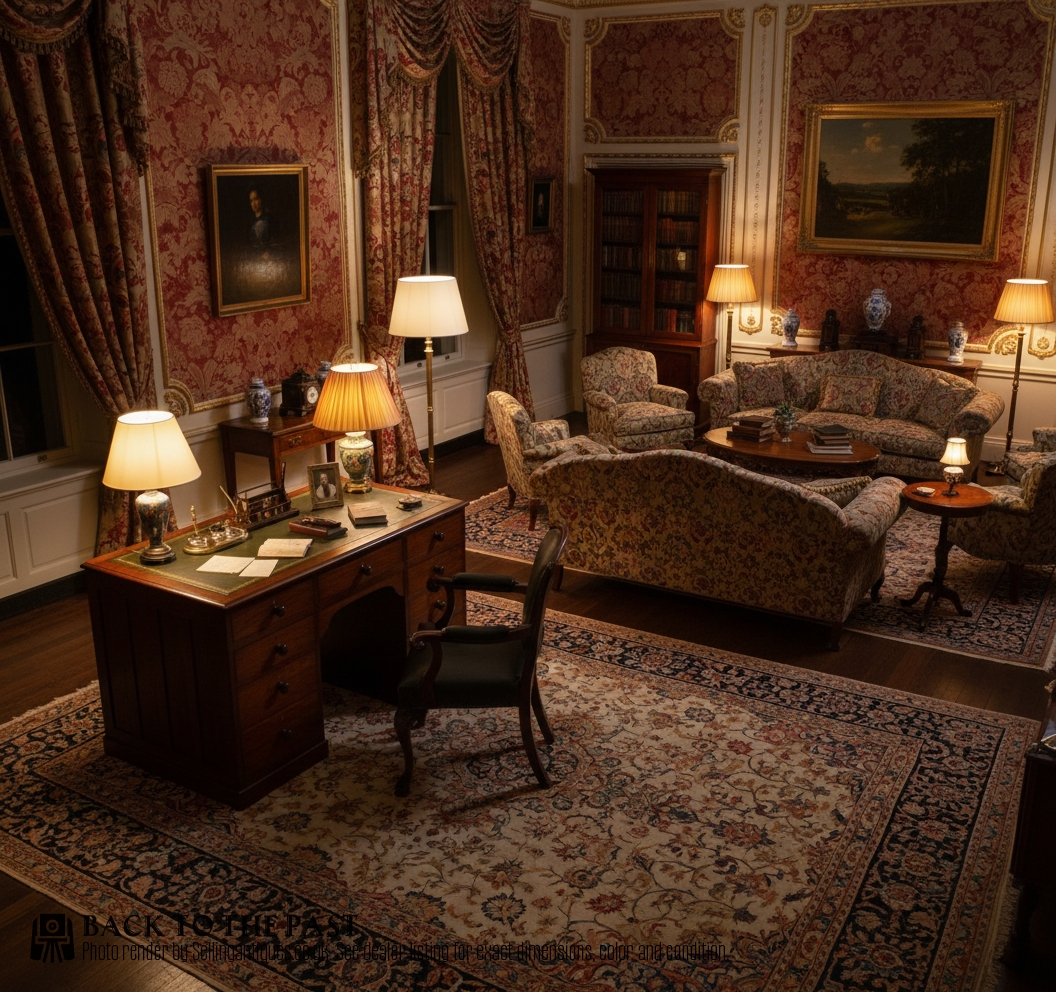
Mahogany Kneehole Writing Desk
A mahogany kneehole writing desk is a pedestal form featuring a recessed central recess beneath a drawer, flanked by banks of smaller drawers. These compact pieces serve as study tables or dressing furniture across domestic interiors.
The versions met most frequently on this page stem from the Georgian period through to the Edwardian era, spanning the eighteenth, nineteenth, and early twentieth centuries. Surviving examples reflect both formal cabinet work and lighter domestic writing tables.
Makers adapted the form through revival styles including Chippendale, Sheraton, and Regency designs, incorporating fitted stationery drawers, leather writing surfaces, and occasional inlaid satinwood details.
Materials and Construction
Cabinetmakers built these pieces using solid mahogany and flame mahogany veneer applied over secondary woods such as oak, supported by brass handles and leather writing inserts.
Construction relied on traditional joinery techniques, using dovetailed drawer boxes and panelled pedestals to ensure structural stability across multi-drawer layouts.
Materials recorded across the archive include solid mahogany, flame mahogany veneer, oak, walnut, brass, and leather.
Distinctions in Execution
Quality rests in the selection of timber figures, where matched flame mahogany veneer and carefully chosen solid mahogany framing elevate the visual depth of the piece.
Execution shows in the precision of the drawer linings, the integration of original brass hardware, and the survival of fitted interior compartments like sliding writing trays and stationery sections.
Trollope and Sons·Holland and Sons·Gillows·Betty Joel
The Mahogany Kneehole Writing Desk Glossary
- Kneehole
- A recessed space beneath the central drawer of a desk designed to accommodate the user's legs while seated.
- Pedestal desk
- A form comprising two supporting columns of drawers that hold up a single wide writing top.
- Writing slide
- A pull-out board located above the drawers that extends the surface area for writing.
- Flame mahogany
- A veneer cut from timber fork joints that produces a distinctive flickering flame pattern.
- Secretaire
- A desk fitted with a drop-front flap that conceals internal pigeonholes and small drawers.
Mahogany Kneehole Writing Desk: Frequently Asked Questions
What is a kneehole desk?
A kneehole desk is a freestanding or pedestal table with a central recessed space beneath the desktop for seating. Flanking banks of drawers provide enclosed storage on either side.
These pieces were designed for domestic studies, bedrooms, and libraries. They offer a compact footprint while maintaining practical surface and drawer space.
How do I date a mahogany desk?
Dating relies on construction methods, hardware styles, and timber preparation. Georgian examples often feature hand-cut dovetails and solid timber carcases, while Edwardian pieces frequently incorporate satinwood inlay and factory-standard fixings.
Design motifs also signal the period, moving from heavy Georgian proportions through Regency curves to lighter Edwardian revival forms.
Were these desks used as dressing tables?
Many variations of this form served dual purposes in period homes. Surviving examples frequently appear as dressing tables or gentleman's dressing chests equipped with fitted compartments.
Writing slides and internal drawers accommodated personal papers, toiletries, and correspondence alike. The central kneehole provided comfortable clearance for seated grooming or writing.
What wood was used?
Mahogany served as the primary timber for these desks, often selected as solid boards or figured veneer. Secondary woods like oak appear inside drawer construction and internal framing.
Accents of satinwood and brass hardware complement the rich reddish-brown tones of the primary mahogany surfaces.