
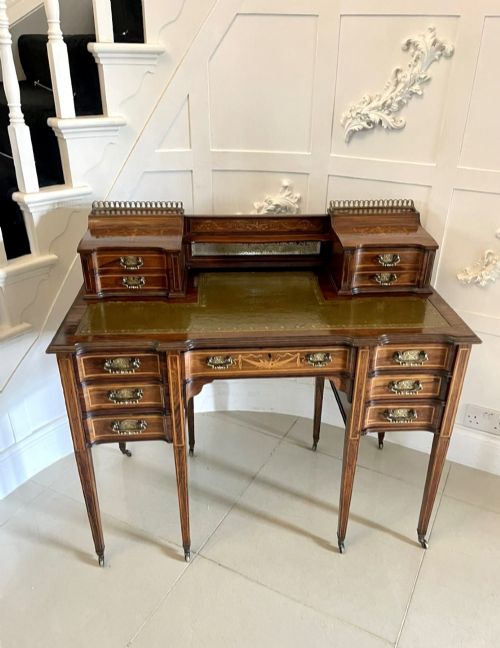

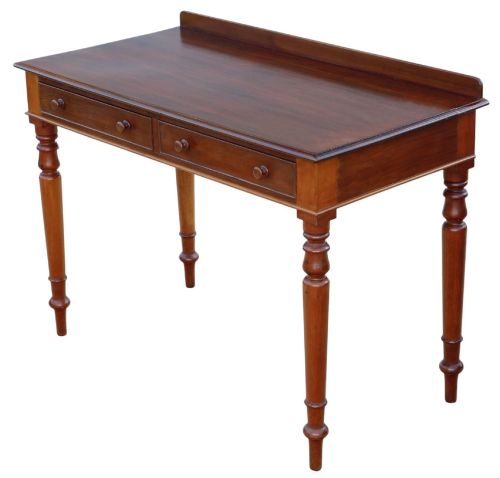
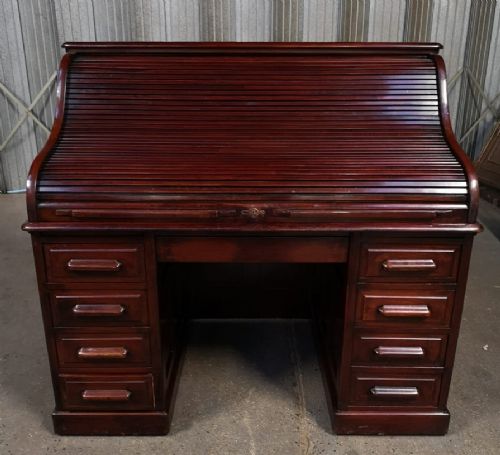
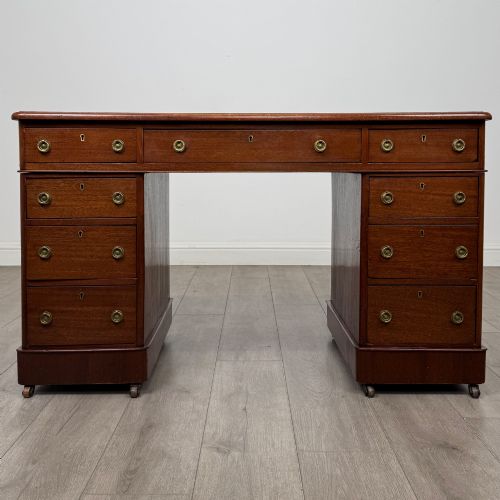


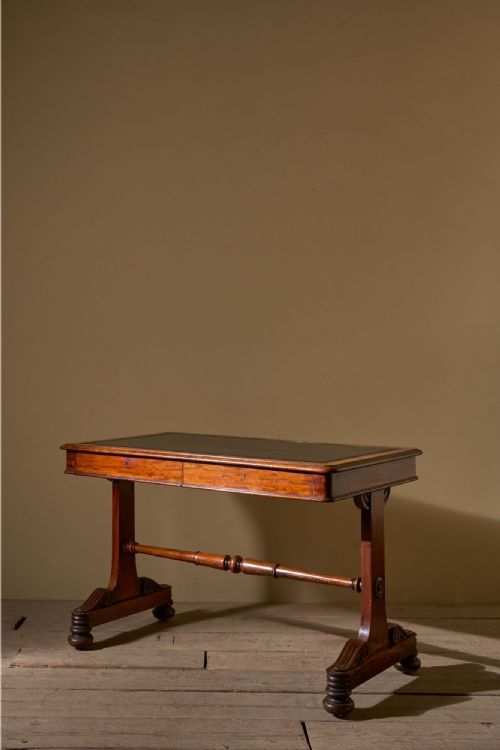
Victorian Mahogany Study Desk
A victorian mahogany study desk brings rich timber tones and practical workspace into a room, offering a durable foundation for daily writing.
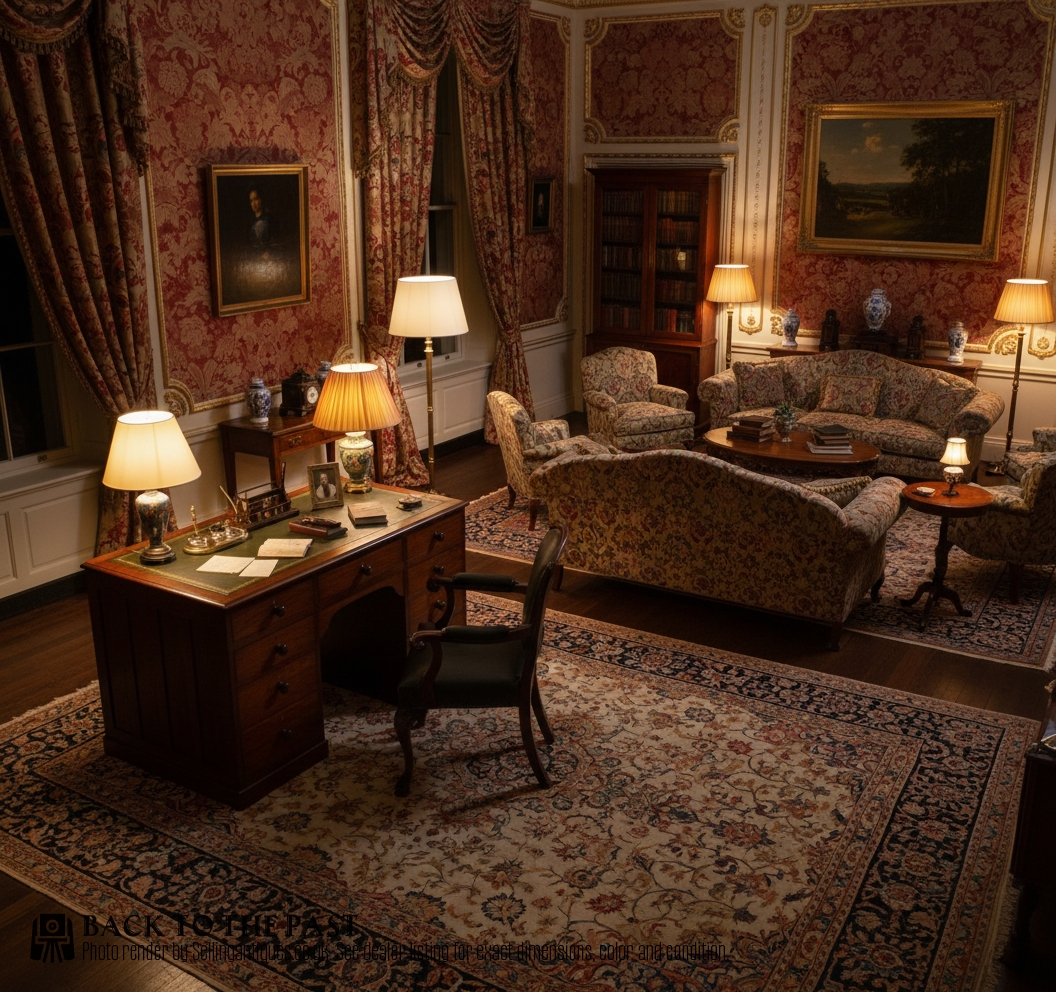
Victorian Mahogany Study Desk
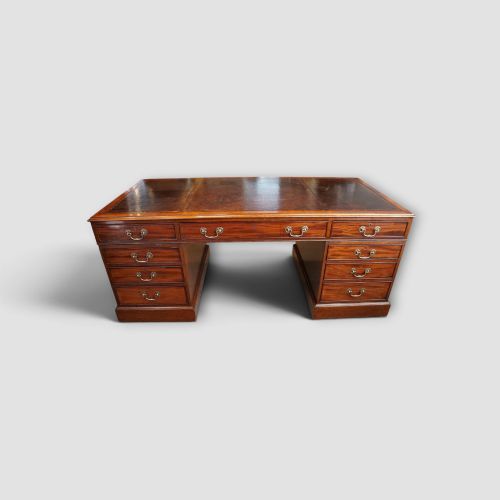
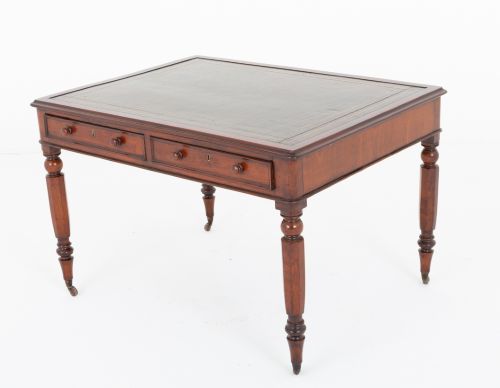
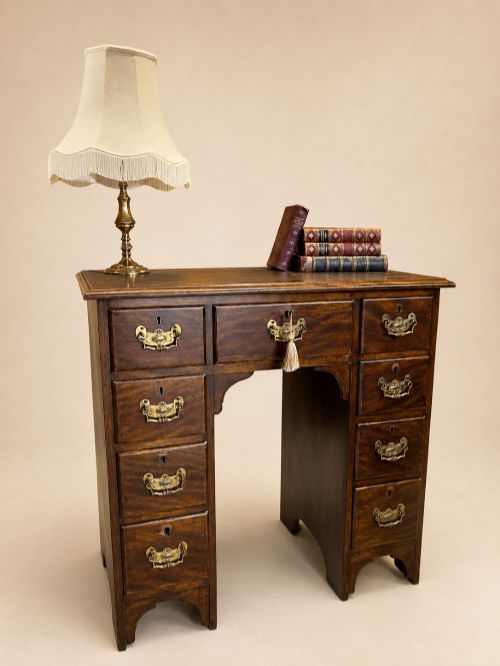
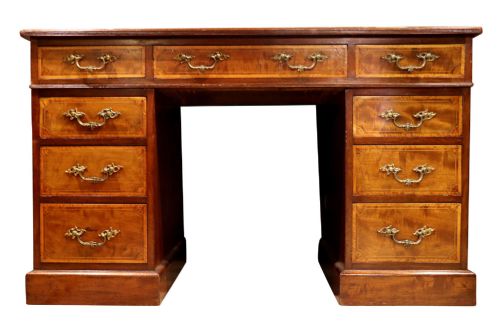
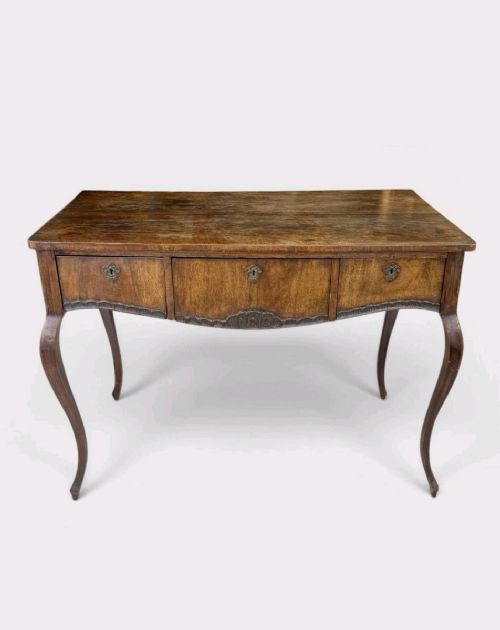
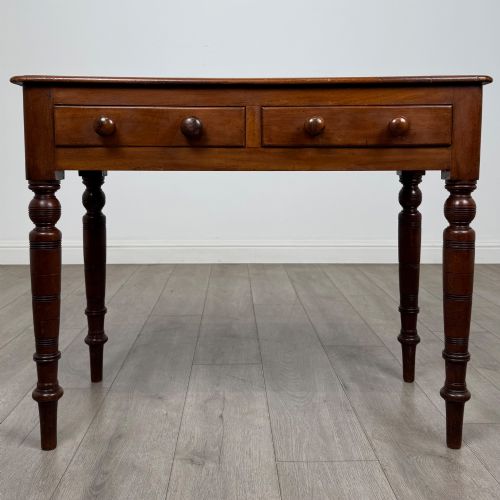
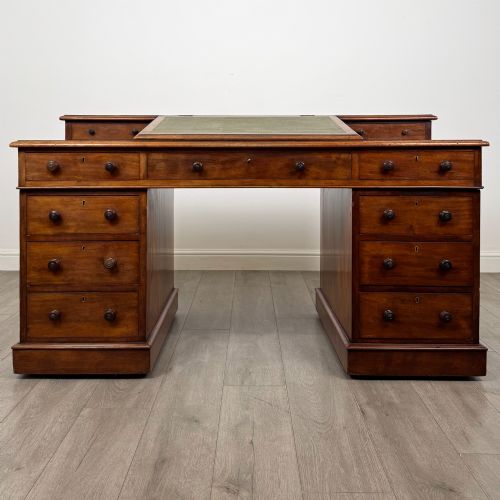
A victorian mahogany study desk appears across several distinct forms, including pedestal desks with banks of drawers, partners tables designed for dual use, and simpler writing tables. Buyers seeking a victorian mahogany study desk frequently encounter pedestal variants featuring kneeholes, alongside roll top and cylinder desk configurations.
The material palette relies heavily on mahogany, sometimes paired with satinwood or rosewood accents, complemented by leather writing surfaces and brass hardware. Dating spans the nineteenth century, encompassing early, mid and late Victorian periods, alongside revival styles such as Georgian and Louis XIV influences.
Materials and construction
Cabinet makers utilised solid mahogany and flame mahogany veneers over secondary timbers, constructing robust pedestal and writing table carcases designed to withstand heavy daily use. Brass fittings, including handles and castors, provide functional detail alongside inset leather skivers tooled in gilt.
Inlaid decoration incorporates contrasting timbers like satinwood, particularly evident in later revival pieces. Structural framing employs traditional joinery techniques, ensuring stability across large partners tables and pedestal forms.
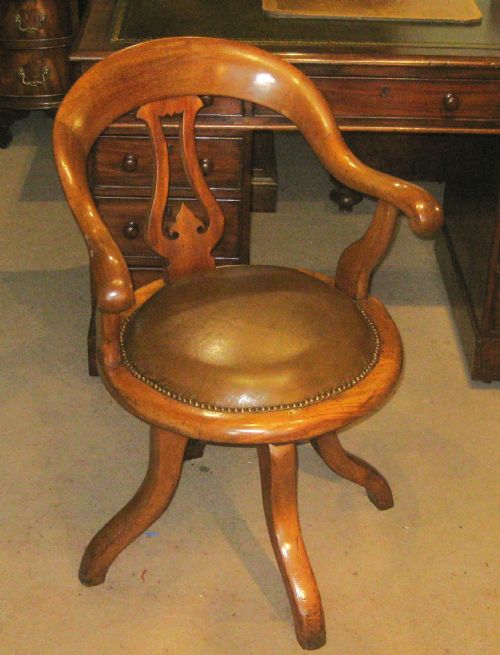
Rotating desk chairs let Victorian clerks swivel smoothly between ledgers without ever standing up.
Assessing the craftsmanship
Quality rests upon the selection of timber figures, such as rich flame mahogany veneers, and the crispness of inlaid details executed by workshops. Superior examples demonstrate precise drawer dovetailing, retained original brass hardware, and well-preserved leather writing surfaces.
Maker attribution elevates certain pieces, with documented workshop production showing finer carving and structural harmony than unsigned commercial output. The presence of freestanding finished backs also separates exceptional library and partners tables from standard wall-mounted designs.
Maple and Co·Heal and Son·Trollope and Sons·Edwards and Roberts·Johnstone and Jeanes·Charles Andrea Nosotti·Gillows·Hobbs and Co·Holland and Sons
The Victorian Mahogany Study Desk Glossary
- Pedestal desk
- A heavy writing desk consisting of two independent pedestals containing drawers, joined across the centre by a desktop and a recessed kneehole.
- Partners desk
- A large double-sided desk built to accommodate two people sitting opposite one another, featuring drawers and cupboards on both longitudinal faces.
- Skiver
- A panel of split sheepskin or goat leather inset into the top of a writing table, frequently decorated with gold tooling.
- Kneehole
- The central space beneath the writing surface of a desk, allowing the user to sit comfortably with their legs positioned underneath.
- Flame mahogany
- Timber cut from the fork of the mahogany tree to produce a distinctive, highly figured flame-like pattern across the veneer.
Victorian Mahogany Study Desk: Frequently Asked Questions
What is a partners desk?
A partners desk is a large, double-sided form designed so two people can work facing each other.
These pieces feature matching sets of drawers and cupboards on both sides, making them suitable for placement in the centre of a room rather than against a wall.
How do I care for leather tops?
Leather writing surfaces require gentle cleaning with a slightly damp cloth followed by neutral leather balms to prevent drying.
Avoiding harsh chemical cleaners preserves the gold tooling and the original patina of the leather skiver.
Are these desks freestanding?
Many pedestal and writing tables are finished on all four sides, allowing them to sit in the middle of a study.
Early and mid-nineteenth-century examples often have panelled or polished reverse sides specifically intended for open-room placement.
How do I identify a Victorian desk?
Victorian pieces show distinctive nineteenth-century construction methods, timber selections like mahogany, and characteristic hardware styles.
Revival influences and maker stamps help narrow down the production period within the nineteenth century.