

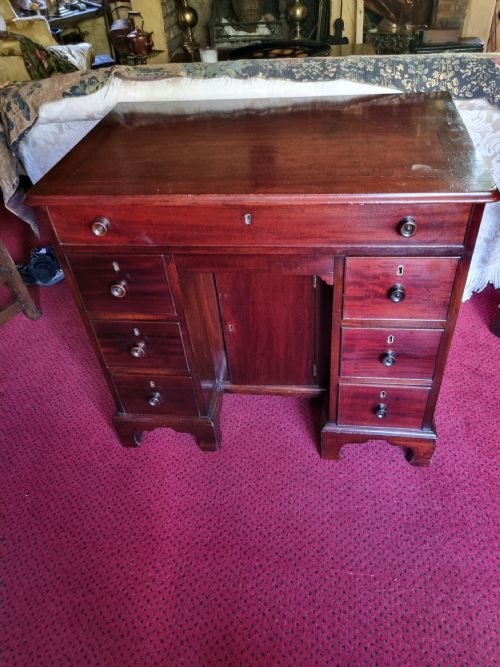


Rich Brown Mahogany Desk
A rich brown mahogany desk brings deep timber warmth and practical working space to a room, drawing on centuries of cabinet-making skill.
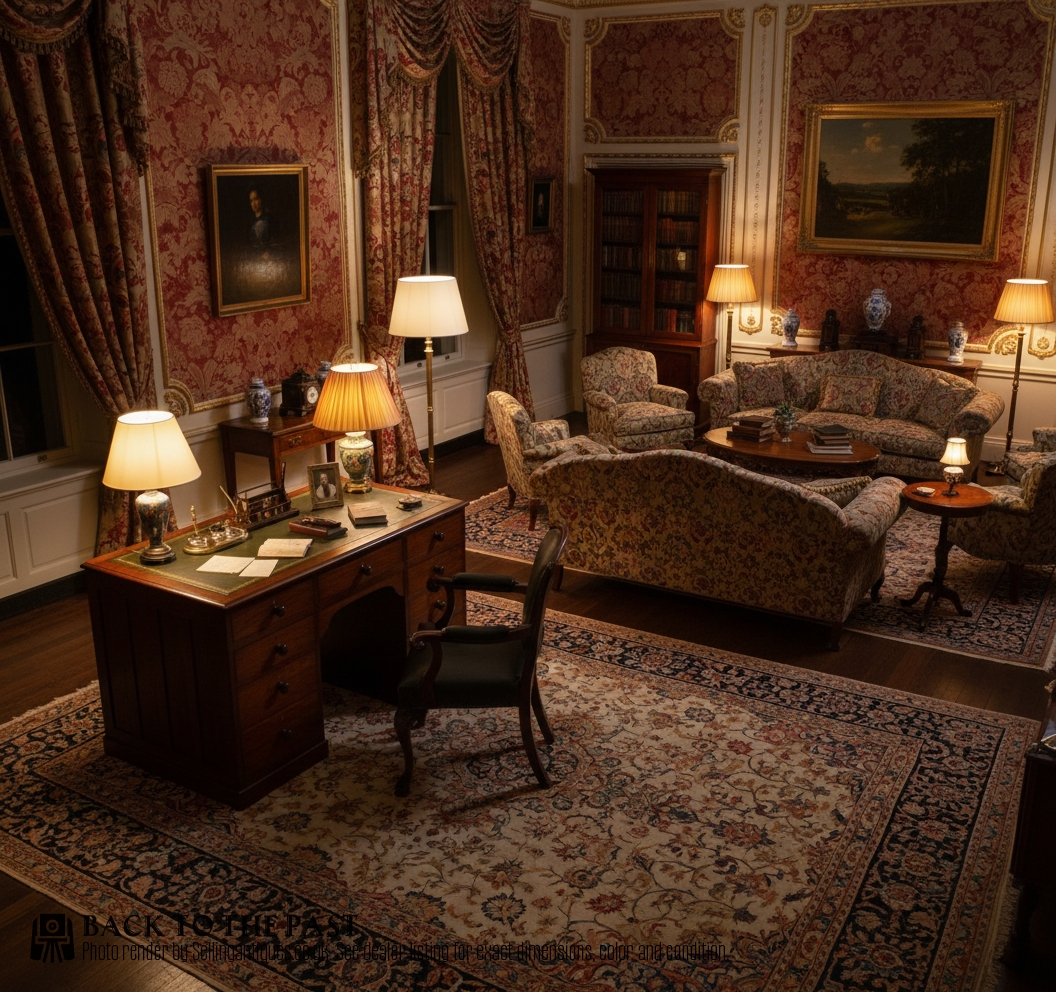
Rich Brown Mahogany Desk
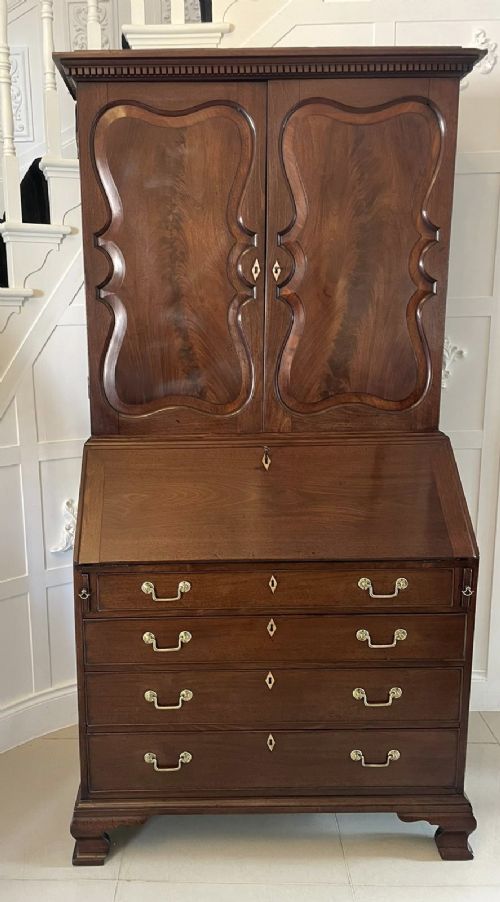
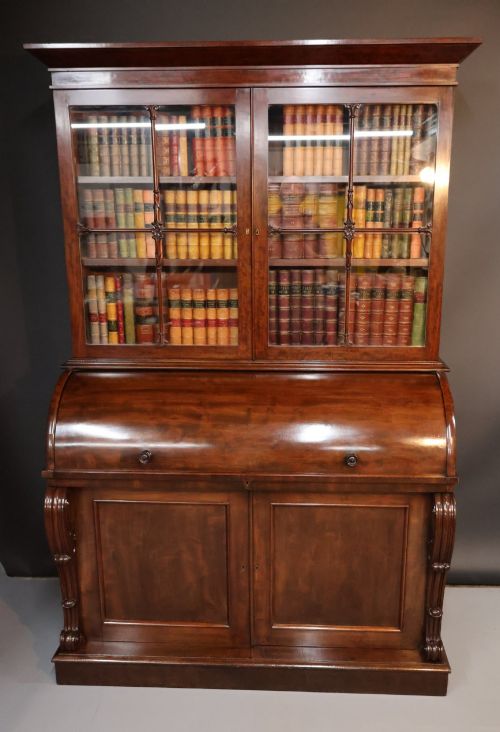
A rich brown mahogany desk encompasses a variety of writing furniture designed for domestic and professional use, spanning periods from the 18th century through to the Edwardian era. These pieces range from compact kneehole desks and side tables to large bureau bookcases and architectural library tables.
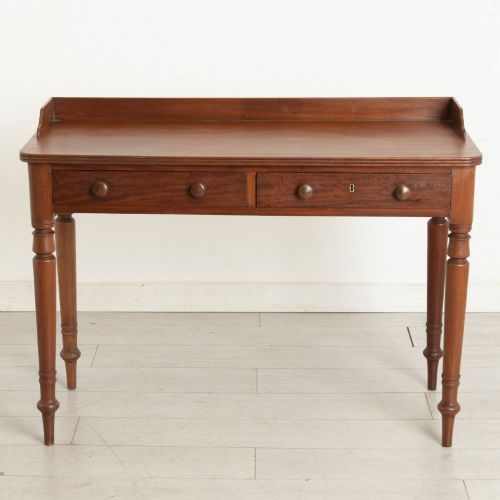
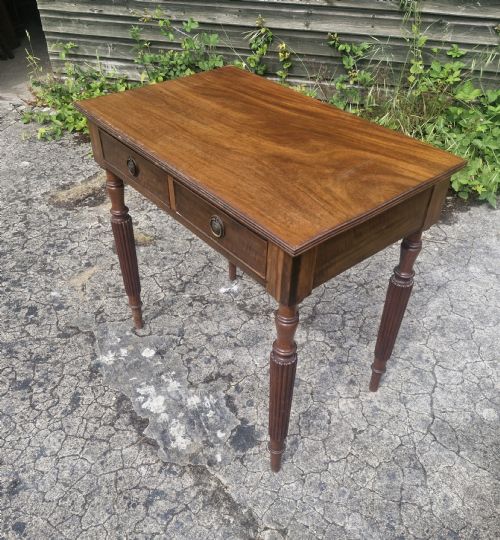
Buyers meeting this search phrase encounter numerous Victorian and Georgian examples alongside Regency, William IV, and Edwardian interpretations. The forms vary from simple three-drawer writing tables to elaborate cylinder desks, secretaire abattants, and Carlton House styles.
Origin and regional influences add further variety, with English pieces joined by Dutch marquetry, Italian pedestal desks, and Biedermeier secretaire chests. Solid mahogany and figured timbers dominate the selection, often complemented by secondary woods and specialist inlays.
How they were made
Cabinet-makers relied on solid mahogany and figured mahogany veneers applied to sound underlying structures, often enhancing the timber with fruitwood inlay or satinwood details. Brass handles, escutcheons, and occasional glass doors provided functional and decorative accents.
Construction techniques balanced structural strength with aesthetic refinement, utilising traditional joinery for drawers, pigeonholes, and fall-front writing compartments. Secondary woods supported the primary mahogany surfaces, whilst specialised pieces incorporated adjustable feet, cylinder mechanisms, or complex internal fittings.
Listings feature mahogany desks spanning the 18th, 19th, and early 20th centuries, alongside styles from George II to Edwardian.
What varies in quality
The choice of timber grain sets the visual hierarchy, with highly figured mahogany and deliberate marquetry patterns marking out superior examples from plain utility pieces. Timber selection governs the depth of the rich brown colour and the liveliness of the polished surface.
Proportion, architectural detail, and the sophistication of internal fittings dictate the standing of a desk. Well-executed bracket feet, crisp mouldings, original brassware, and integrated mechanisms for cylinder rolls or secretaire drawers reflect the skill of the original workshop.
Maple of London·Gillows·Currie and Co Calcutta·J Kingerley Manchester
The Rich Brown Mahogany Desk Glossary
- Secretaire
- A desk or cabinet featuring a pull-down writing flap that conceals drawers and pigeonholes. This form allows a tall chest or bookcase to function as a writing place.
- Kneehole desk
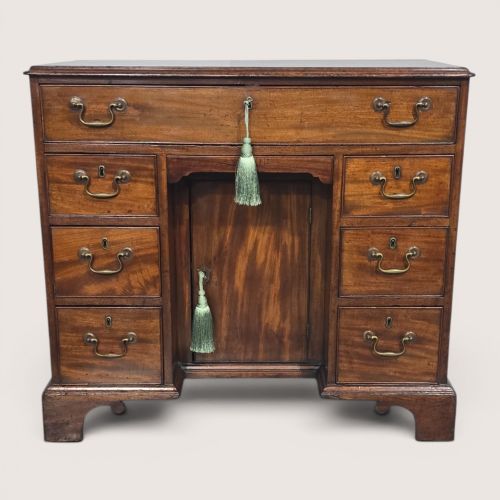
- A compact desk with a central recess for the user's legs, flanked by pedestals of small drawers. This proportion suits smaller studies and dressing rooms.
- Cylinder desk
- A writing table with a rolling curved shutter that conceals the writing surface and internal compartments. When closed, it presents a smooth cylindrical front.
- Marquetry
- Decorative inlay work using various coloured wood veneers to create pictorial or geometric patterns. It appears frequently on Dutch and Continental desks.
Rich Brown Mahogany Desk: Frequently Asked Questions
What is a bureau bookcase?
A bureau bookcase combines a lower writing section with a sloping flap and an upper cabinet for books. This dual-purpose form became popular in the 18th century.
Such pieces provide both display space for libraries and a concealed writing surface. The upper doors often feature timber framing or glass panels.
How do I date a mahogany desk?
Dating relies on architectural styles, construction methods, and hardware types characteristic of periods like the Georgian, Regency, and Victorian eras. Details such as leg shapes, drawer linings, and handles shift noticeably over time.
Comparing the primary mahogany timber and secondary woods helps confirm the period. Maker marks, where present, offer further chronological clarity.
Where were kneehole desks used?
Kneehole desks served as compact writing tables in domestic bedrooms, studies, and private libraries. Their smaller footprint suited intimate residential spaces.
Despite their modest size, they offered generous drawer storage flanking the central leg space. Gentlemen and ladies both utilised them for correspondence.
What makes a cylinder desk different?
A cylinder desk encloses the writing surface beneath a quarter-circle rolling wooden shutter. Pulling out the writing slide automatically retracts the cylinder.
This mechanism conceals stationery and unfinished letters instantly. It represents a more complex mechanical development than a simple flat-topped table.