



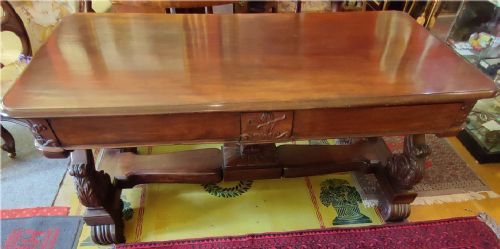
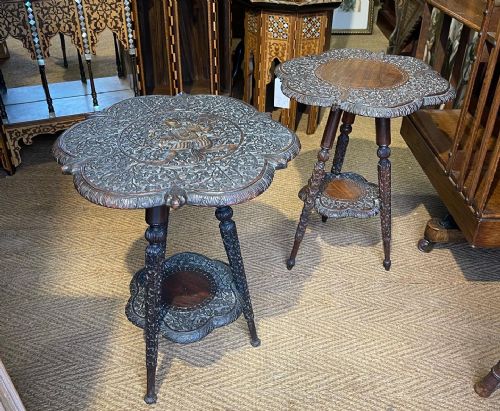

Anglo Indian Mahogany Table
An anglo indian mahogany table brings rich colonial craftsmanship and dense tropical timber directly into a room.
Anglo Indian Mahogany Table
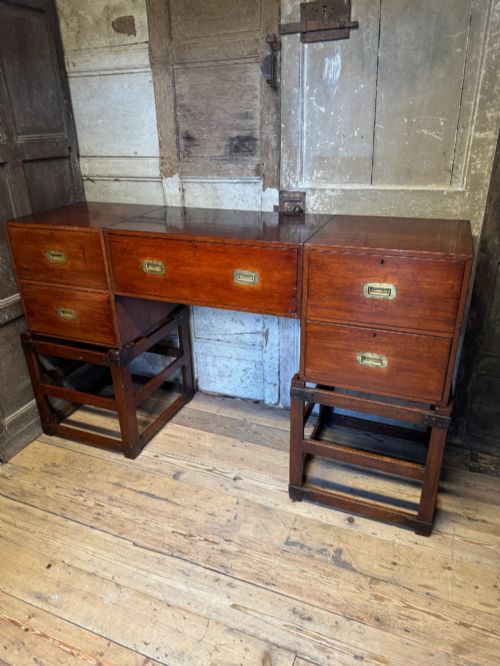
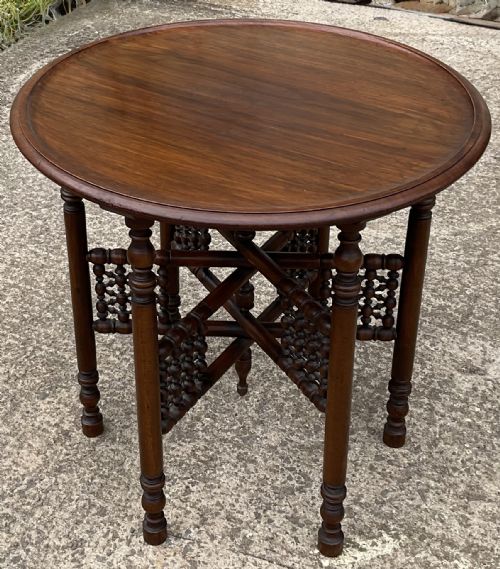
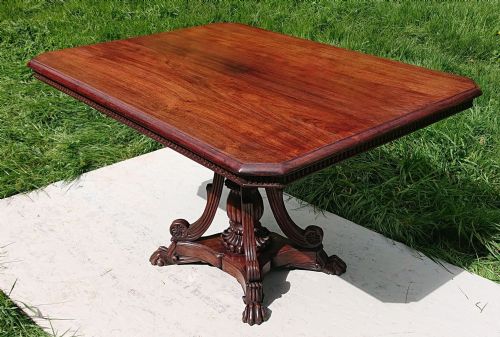
An anglo indian mahogany table represents the intersection of British furniture forms and Indian woodworking traditions, spanning the nineteenth century up to the nineteen-thirties. Buyers encounter varied formats here, ranging from occasional coffee tables and shield-shaped pieces to substantial pedestal desks, centre tables, and campaign furniture.
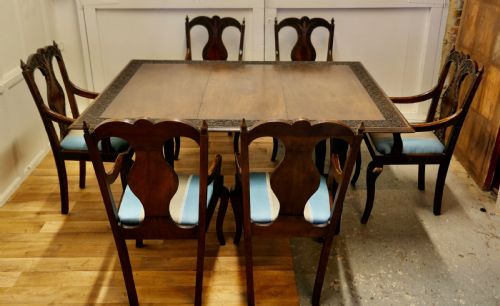
The nineteenth-century examples often display regional characteristics, while later twentieth-century items lean towards oriental styles or matched dining sets. These pieces serve both practical household functions and decorative roles as distinctive centrepieces within traditional or eclectic interiors.
How they were made
Carving and joinery define the construction of these tables, utilising dense timbers such as mahogany, padouk, teak, and coromandel. Artisans often incorporated brass details alongside ebonised hardwoods to accent the grain and structural lines.
Makers shaped the timber into diverse forms, from pedestal bases on desks to carved surfaces on coffee tables and campaign items designed for portability.
Materials recorded on this page include teak, brass, rosewood, mahogany, and coromandel.
What varies in quality
The refinement of the carving distinguishes finer examples from simpler production, particularly where deep relief work adorns the surfaces. Selection of timber also dictates standard, with dense woods like coromandel and figured mahogany commanding greater attention than standard hardwoods.
Proportion and structural integrity separate standard utility pieces from exceptional library and centre tables produced by established colonial firms.
Currie And Co
The Anglo Indian Mahogany Table Glossary
- Campaign table
- Portable furniture constructed with folding elements and brass mounts, originally designed for military officers on the move. These pieces combine practicality with robust timber construction.
- Padouk
- A heavy, durable tropical hardwood with a reddish-brown hue that deepens with age. It provides a stable surface for detailed carving and joinery.
- Coromandel
- A dense and valuable timber featuring dark brown or black grain patterns with contrasting lighter streaks. It appears frequently on high-status nineteenth-century surfaces.
- Centre table
- A freestanding table designed to be viewed from all sides rather than pushed against a wall. They often feature finished backs and elaborate pedestal bases.
- Ebonised hardwood
- Timber treated to resemble ebony, providing a deep black finish that contrasts with lighter brass fittings or inlaid materials.
Anglo Indian Mahogany Table: Frequently Asked Questions
How do I date an anglo indian table?
Dating relies on stylistic markers, timber choice, and construction methods associated with periods like the Regency and Victorian eras. Reference points include brass campaign mounts and carved oriental motifs.
Examining secondary woods and assembly techniques helps confirm whether a piece originates from the nineteenth century or the nineteen-thirties.
Where were these tables used?
These pieces served administrative, dining, and social functions within colonial households, libraries, and British residences. Campaign versions travelled with officials on military or civil duties.
Today, they function effectively as coffee tables, desks, or occasional side tables in contemporary rooms.
Are these tables solid mahogany?
Construction typically involves dense tropical hardwoods, with solid mahogany, padouk, and teak appearing across desks and centre tables. Artisans selected these timbers for their durability and resistance to humidity.
Secondary timbers and structural framing may vary depending on the specific workshop origin.
How do I care for tropical hardwood?
Maintenance requires avoiding direct sunlight and extreme humidity fluctuations to protect the dense timber and polished surfaces. Regular dusting with a soft cloth preserves the grain.
Wax polishes formulated for antique hardwoods help maintain the lustre without buildup.