


Mahogany Flame Veneer Cupboard
A mahogany flame veneer cupboard brings deep, figured timber and practical storage into a room, offering the kind of warmth that only older cabinet work provides.
Mahogany Flame Veneer Cupboard
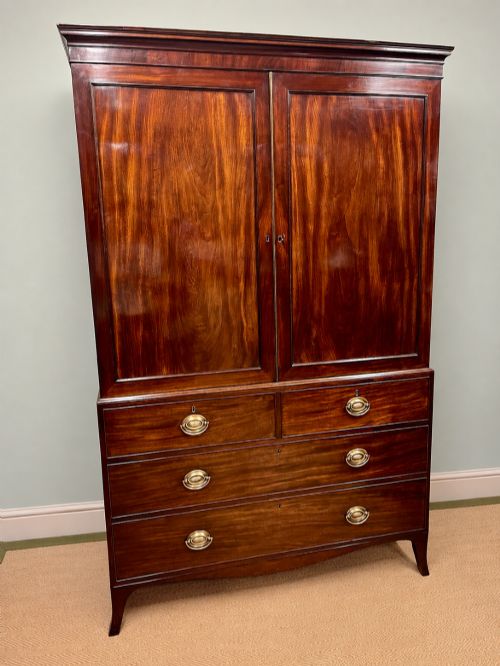
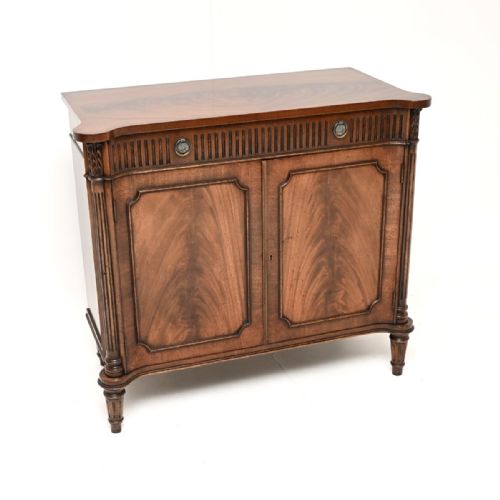
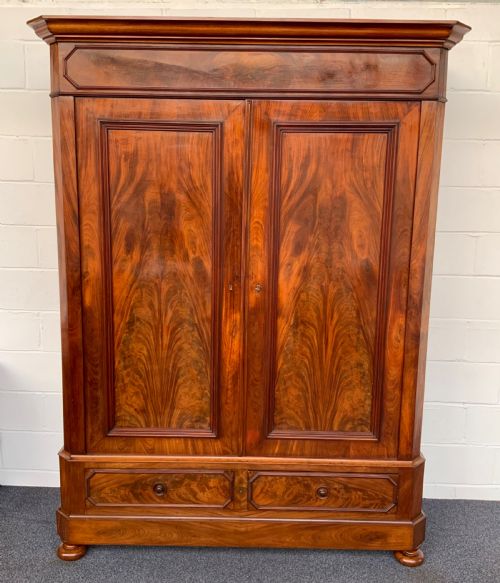
A mahogany flame veneer cupboard encompasses a range of storage furniture built primarily during the nineteenth century, including linen presses, chiffoniers, side cabinets, and armoires. These pieces span styles from Georgian and Regency to Victorian, Edwardian, and continental Biedermeier interpretations.
The version most commonly met on this page is the nineteenth-century linen press or chiffonier, featuring substantial timber carcases and the characteristic figured grain. Buyers searching this phrase look for functional furniture that doubles as a strong decorative focus through its timber work.
Origins vary from British workshops to French and Biedermeier centres, bringing different proportions and door configurations to the marketplace. Each piece demonstrates how cabinetmakers utilised figured timber to elevate utilitarian storage into focal points.
How they were made
Cabinetmakers constructed these carcases using solid mahogany as a foundation, applying carefully sliced flame mahogany veneer to prominent drawer fronts and door panels. This technique created symmetrical, swirling grain patterns that caught the light across large flat surfaces.
Brass hardware, glass panels, and occasional secondary timbers such as walnut appear alongside the primary mahogany structure to complete the fittings and glazing bars. Joinery relied on traditional framing and panel methods designed to accommodate the natural movement of large timber boards.
Listings span the nineteenth century, covering Georgian, Regency, Victorian, and Edwardian periods alongside continental Biedermeier and French armoires.
What varies in quality
Quality in these cupboards rests primarily on the selection and matching of the veneer figures across the doors and drawers. Finer examples display book-matched flame patterns that create balanced, symmetrical movement across the entire front elevation.
The crispness of the surrounding secondary mouldings and the substantial feel of the underlying carcase timber distinguish finer workshop production from simpler commercial pieces. Proportion, timber depth, and the restraint or elegance of the brass mounts ultimately set the better examples apart.
The Mahogany Flame Veneer Cupboard Glossary
- Flame mahogany veneer
- A thin slice of timber cut from the fork of the mahogany tree where the branch meets the trunk. This creates a distinct, flickering flame-like figure prized for decorative cabinet fronts.
- Linen press
- A tall storage piece traditionally used for flat textiles, featuring upper sliding trays enclosed by doors and lower drawers. They provide substantial vertical capacity in domestic interiors.
- Chiffonier
- A low sideboard or cabinet developed in the nineteenth century, typically featuring a shelf or back upstand above enclosed lower cupboards. They serve as compact storage units for living and dining spaces.
- Armoire
- A large freestanding wardrobe or cupboard originating in continental Europe. These pieces offer deep interior hanging or shelf space behind large single or double doors.
Mahogany Flame Veneer Cupboard: Frequently Asked Questions
What fits inside a linen press?
A linen press typically contains sliding wooden trays behind the upper doors, designed for folded textiles and garments. Deeper items or hanging storage are accommodated in the lower drawer section.
Buyers often adapt these upper tray compartments for modern shelving needs or keep them intact for traditional linen storage.
How do I care for flame veneer?
Flame veneer requires stable indoor humidity and protection from direct sunlight to prevent the timber from drying out or fading. Gentle dusting with a dry cloth keeps the polished surface clean.
Avoid placing these cupboards near direct heat sources which can cause the underlying veneer to lift from the carcase.
Are Biedermeier cabinets different?
Biedermeier pieces generally feature simpler, cleaner architectural lines with a strong emphasis on the natural grain of the timber rather than carved ornamentation. They originate from central Europe during the nineteenth century and offer a distinct alternative to British Victorian designs.
The proportions tend to be more restrained, allowing the figured mahogany surfaces to dominate the visual appearance.
Where did chiffoniers go?
Chiffoniers were designed as versatile utility furniture for nineteenth-century reception rooms, holding glassware, books, or dining accessories. Today they function well as side cabinets in hallways, living rooms, or dining spaces.
Their relatively compact footprint makes them practical for modern rooms requiring surface display space combined with closed storage.