
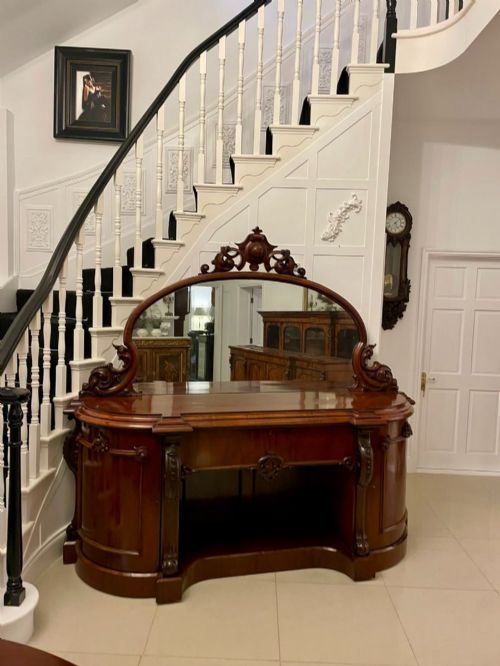
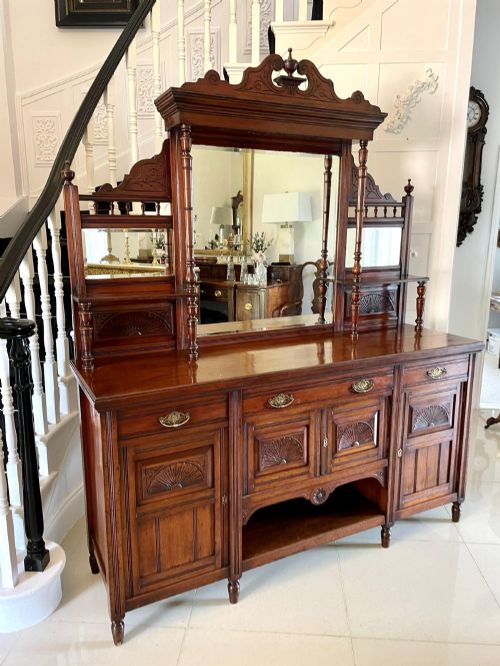
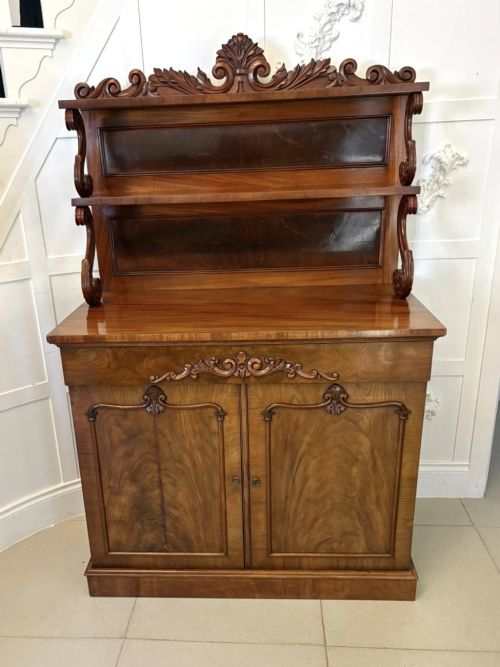
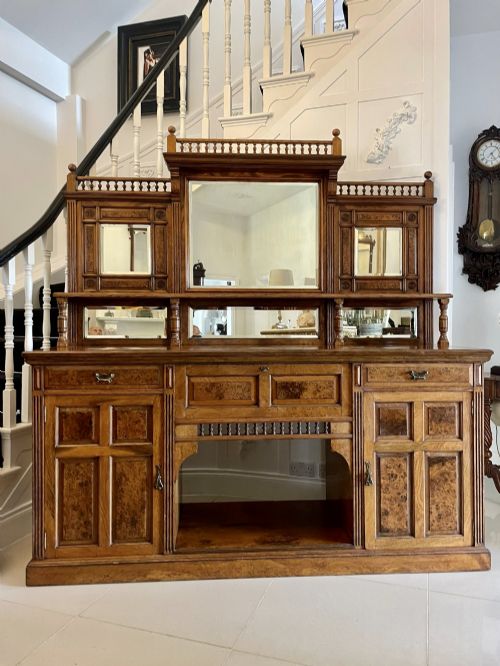

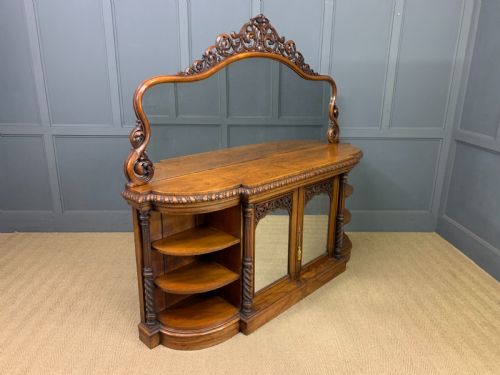

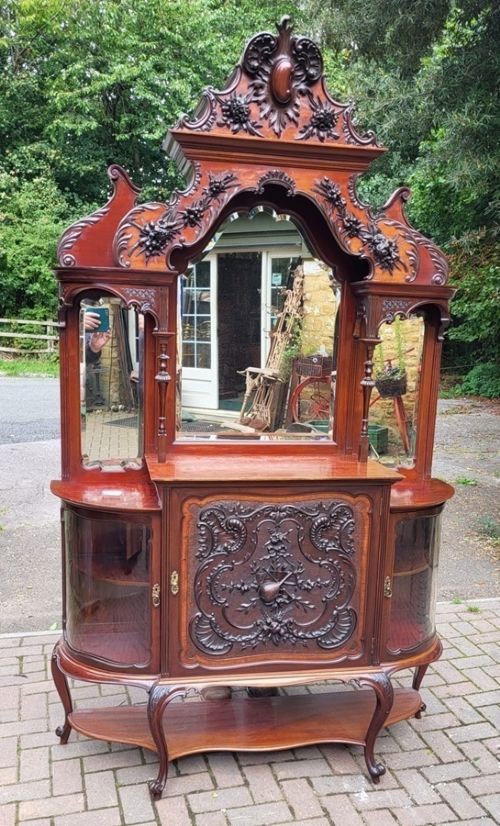


Victorian Carved Back Chiffonier
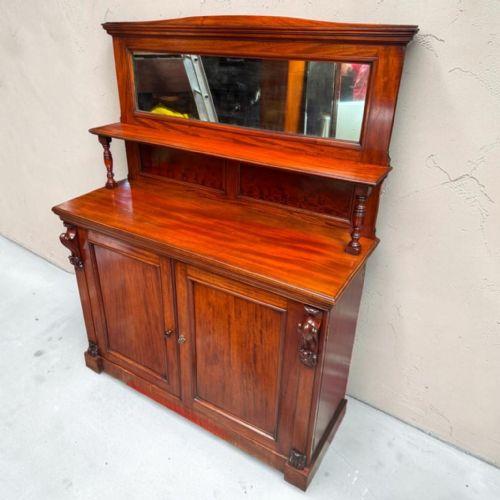
A victorian carved back chiffonier brings architectural presence and rich timber grain to a room, offering both display space and enclosed storage.
Victorian Carved Back Chiffonier
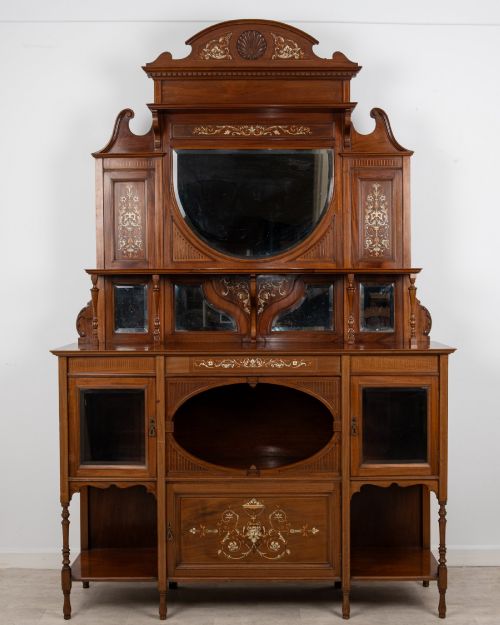
When you search for a victorian carved back chiffonier, you encounter low cabinet furniture designed for nineteenth-century reception rooms, combining a sideboard base with an upright wooden superstructure. These pieces function as decorative storage units, frequently incorporating mirrored backs and carved cresting above enclosed cupboards or drawers.
The examples available here lean heavily into Victorian and late Victorian production, spanning decades from the mid-nineteenth century through to Edwardian interpretations. You will frequently find variants described under related terms such as sideboards, credenzas and side cabinets, reflecting the flexible terminology used for nineteenth-century case furniture.
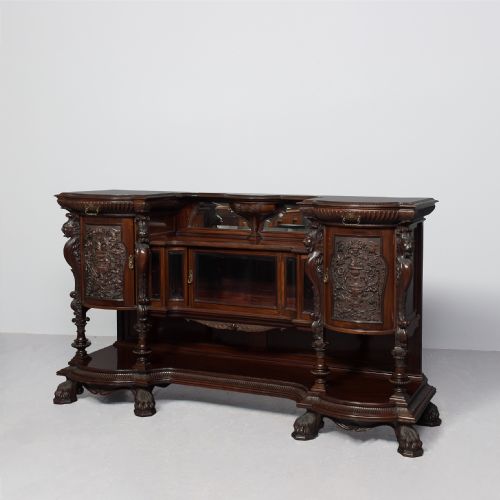
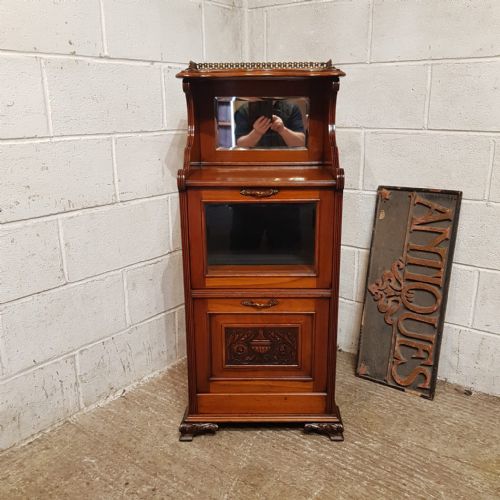
Most entries showcase timber construction with upright mirror panels, ranging from compact two-door cabinets to substantial breakfront pedestals. The forms incorporate carved detail around the mirror frame and base mouldings, establishing the characteristic silhouette associated with the Victorian parlour.
Materials and construction methods
Cabinet makers built these pieces using solid timbers and decorative veneers over secondary woods, selecting dense hardwoods like mahogany, walnut and pollard oak for their visual grain. Figured mahogany and burr walnut appear frequently, utilised on primary surfaces to create dramatic surface patterns across doors and drawer fronts.
The upright backs integrate bevelled or plain mirror glass secured within carved wooden frames, joined to the lower sideboard carcase through tenon joints or robust mechanical fixings. Carved elements are executed directly into the solid timber framing or applied as separate moulded sections around panels and plinths.
The recorded periods span from early Victorian and William IV examples through to late Victorian, Arts and Crafts and Edwardian items.
Assessing quality and execution
The standard of cabinet work is distinguished by the selection of timber figure, where highly figured burr walnut, flame mahogany or pollard oak indicate superior material cost. Fine examples display meticulous matching of wood grains across multiple doors and drawer fronts to create a cohesive visual pattern.
Carving depth and precision separate standard production from superior workshops, with finer pieces exhibiting crisp, undercut foliage and relief work rather than shallow machine moulding. The integration of the mirror back into the base carcase requires substantial structural timber to support the weight without flexing.
The Victorian Carved Back Chiffonier Glossary
- Chiffonier
- A low sideboard or cabinet featuring enclosed shelving below, often surmounted by a raised back with shelves or a mirror.
- Pollard oak
- Oak timber taken from trees that have been pollarded, producing a knotted, highly figured grain pattern prized for cabinet veneers.
- Breakfront
- A piece of furniture whose front projects forward in sections, typically with the central portion advancing ahead of the flanking cabinets.
- Credenza
- A grand sideboard or display cabinet originating in Italy, frequently utilised in nineteenth-century formal rooms for storing and serving dining ware.
- Burr walnut
- Timber harvested from the growth excrescences on walnut trees, yielding intricate swirling grain formations used for decorative veneering.
Victorian Carved Back Chiffonier: Frequently Asked Questions
What is a victorian carved back chiffonier used for?
These pieces served primarily in dining rooms and parlours for storing tableware, linens and documents while providing a surface for displaying decorative objects.
The raised back and mirror plate added a sense of depth and light to Victorian interiors, transforming a practical storage cabinet into a decorative focal point.
How do I date a victorian carved back chiffonier?
Dating relies on examining the timber species, construction methods and stylistic markers such as the presence of revival motifs or Arts and Crafts influences.
Mid-nineteenth century pieces often utilise solid flame mahogany with restrained classical carving, whereas later examples from the 1880s frequently introduce pollard oak, more elaborate mirror frames and eclectic revival styles.
Where should I place a chiffonier in my home?
A chiffonier suits dining rooms, living spaces or wide hallways where its low profile provides surface area without dominating the floor space.
The enclosed lower cupboards offer concealed storage for everyday items, while the upper surface and mirror reflect natural light and display ceramics or glassware.
Are these pieces made of solid wood?
Most pieces combine solid framing timbers with decorative veneers applied to carcase sides, drawer fronts and door panels to showcase intricate wood grains.
Secondary timbers like pine or oak were typically used for internal drawer linings and backboards, ensuring stability across the large structural frame.