





Carved Gallery Mahogany Cabinet
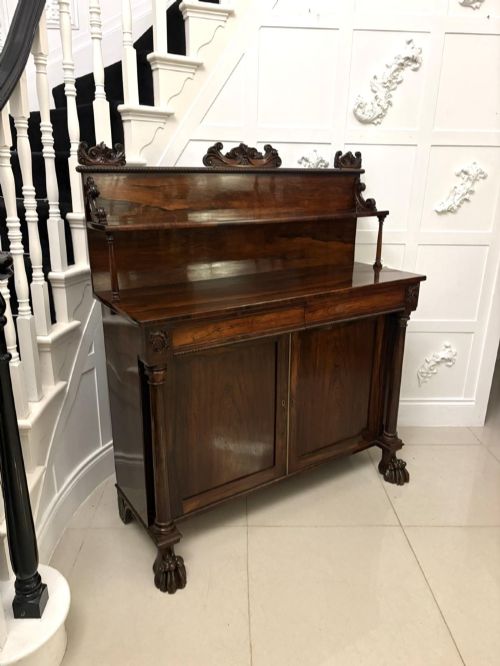
A carved gallery mahogany cabinet brings structural timber and raised plate rails together for practical storage across Georgian, Regency, and Victorian periods.
Carved Gallery Mahogany Cabinet
A carved gallery mahogany cabinet unites timber framing with an upper rail or surround designed to secure objects on top. These pieces appear across Georgian, Regency, and Victorian eras in varied forms.
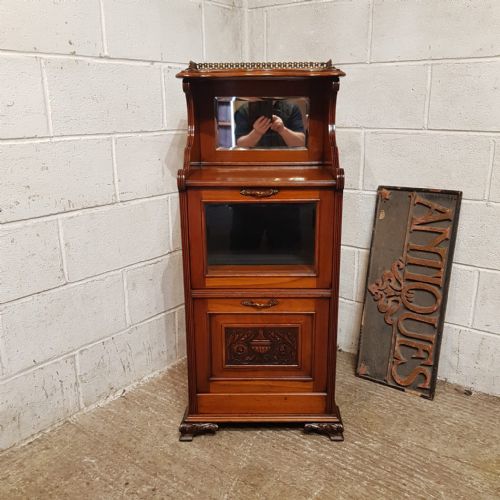
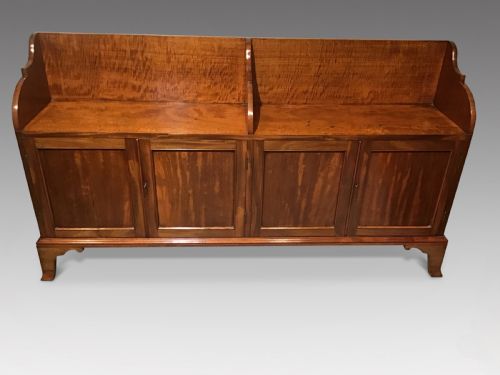
The selections available here range from compact bedside night tables and music cabinets to broader sideboards, chiffoniers, and narrow side cabinets. Most pieces date from the nineteenth century, including specific decades such as eighteen-fifty and eighteen-ninety.
Makers and workshops utilised mahogany and flame mahogany veneer, often pairing the primary timber with satinwood, brass, glass, fabric, or exotic hardwood. Certain examples display marquetry, fall fronts, and intricate carved details.
Distinctions in quality and execution
The refinement of the carving and the selection of the timber dictate the standing of a piece within its period. High-grade examples employ carefully matched flame mahogany veneers and crisp, deep relief work on the galleries and rails.
Structural integrity depends on the precision of the joinery within the carcase and the original condition of brass mounts, locks, and hinges. Stamped maker marks provide clear attribution to known workshops.
Proportion and balance distinguish finer forms, whether dealing with a diminutive bedside cupboard or a substantial pedestal sideboard. The integration of the upper gallery with the lower cabinet shows the maker's architectural intent.
Music cabinets ensure your sheet music stays safely contained behind a fall front, away from wandering hands.
Heals·Edwards & Roberts
The Carved Gallery Mahogany Cabinet Glossary
- Gallery
- A raised wooden or metal rail running along the top surface of a cabinet to prevent items from sliding off. This feature often incorporates pierced or carved openwork.
- Chiffonier
- A low sideboard or cabinet developed in the nineteenth century, typically featuring shelves or a small gallery superstructure above a closed cupboard base.
- Escritoire
- A writing cabinet featuring a fall-front or sloping lid that opens to reveal a fitted interior of small drawers and pigeonholes.
- Marquetry
- Decorative veneer work formed by fitting together small pieces of wood, shell, or ivory to create pictorial or geometric patterns on the surface.
- Barley Twist
- A carved spiral column resembling the shape of twisted barley sugar, frequently found on nineteenth-century supports and pilasters.
Carved Gallery Mahogany Cabinet: Frequently Asked Questions
What is a carved gallery mahogany cabinet?
A carved gallery mahogany cabinet is a storage piece featuring a raised timber rail on top, constructed primarily from mahogany during the eighteenth and nineteenth centuries.
These items encompass bedside cupboards, narrow side cabinets, and serving sideboards incorporating decorative relief carving.
How do I date a mahogany cabinet?
Dating relies on stylistic markers associated with Georgian, Regency, William IV, and Victorian periods. Construction methods and secondary timbers also offer clues to the decade of manufacture.
Specific design shifts, such as the introduction of art nouveau details or specific maker stamps, help narrow the timeline further.
Where were these cabinets used?
These cabinets served multiple domestic rooms, functioning as bedside night tables in bedrooms or as serving sideboards and chiffoniers in dining spaces.
Escritoires and music cabinets provided specialised storage for correspondence and sheet music in studies and drawing rooms.
How should I care for mahogany?
Maintain mahogany furniture by keeping it away from direct heat sources and sudden humidity changes to protect the timber and veneer.
Dust regularly with a soft, dry cloth and avoid harsh chemical polishes that can degrade the historic finish.