

Mahogany Etagere Shelf
Mahogany etagere shelf pieces are multi-tiered open display units used to hold books, music stands, and decorative objects in domestic rooms.
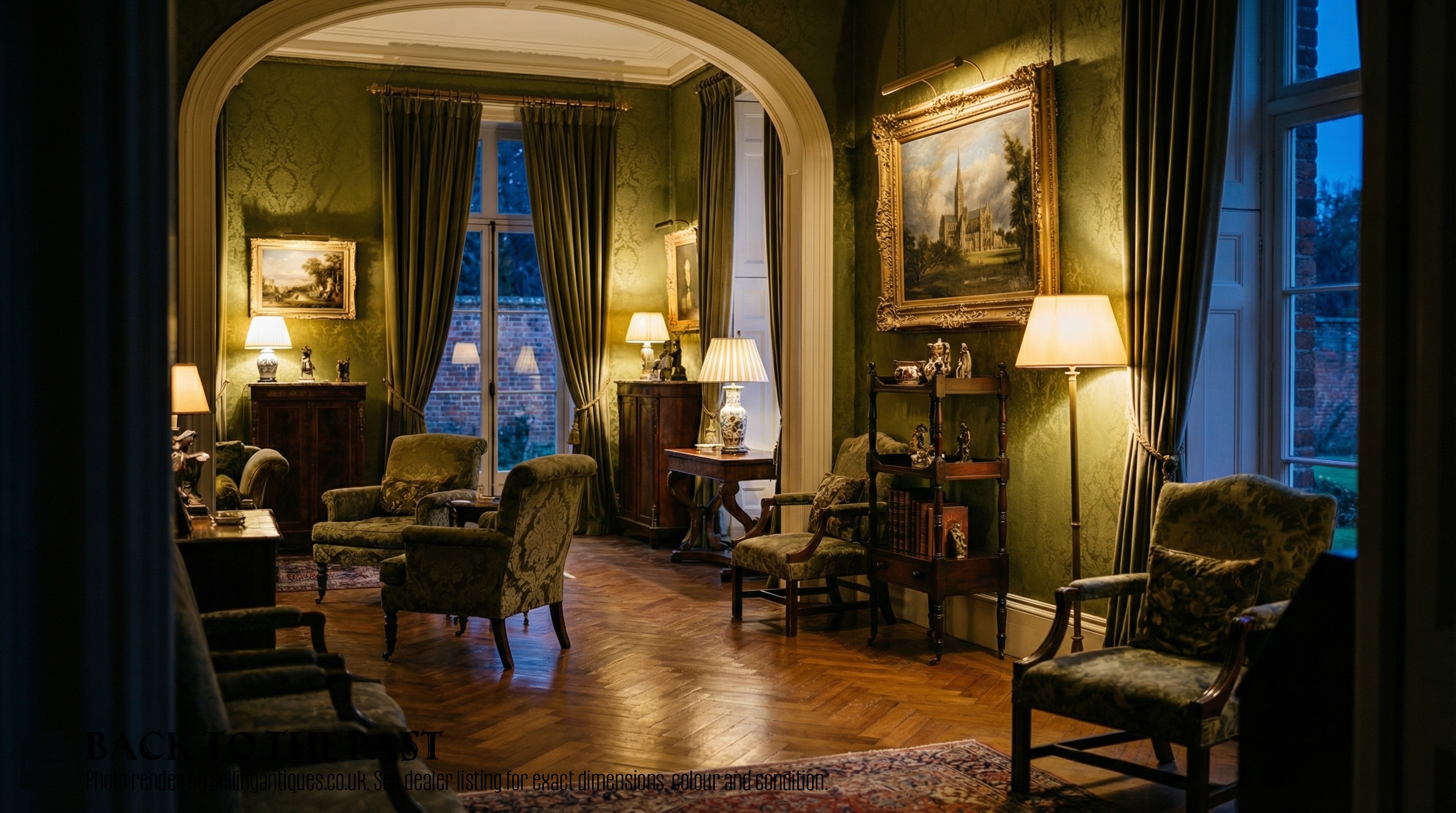
Mahogany Etagere Shelf
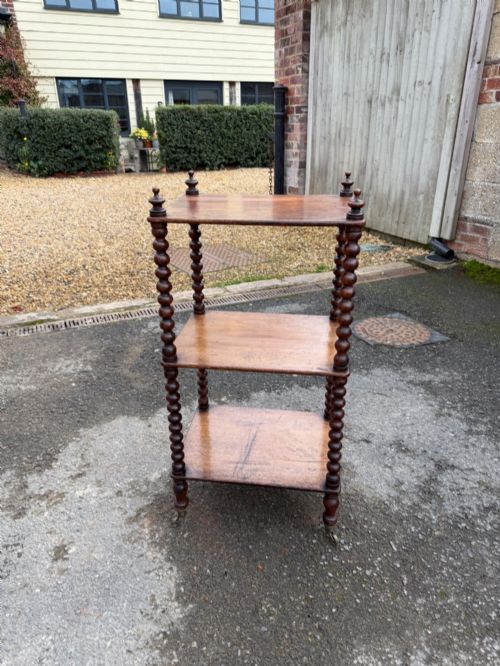
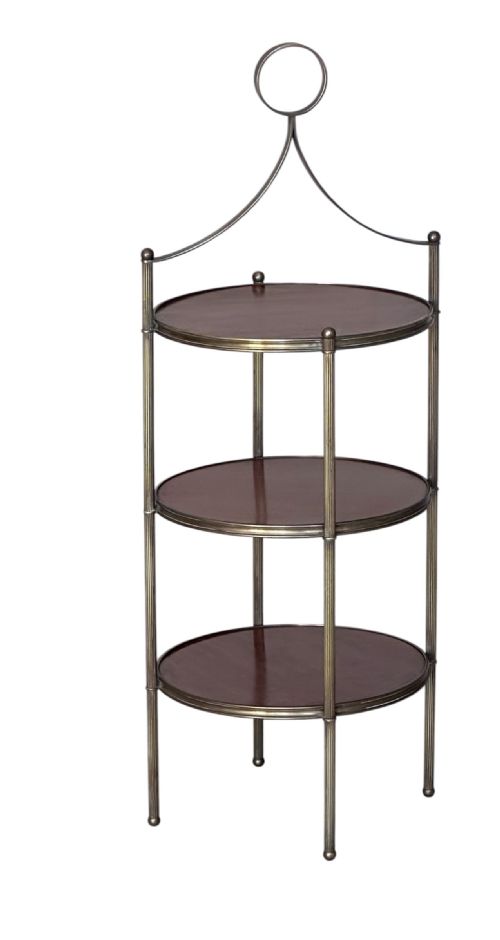
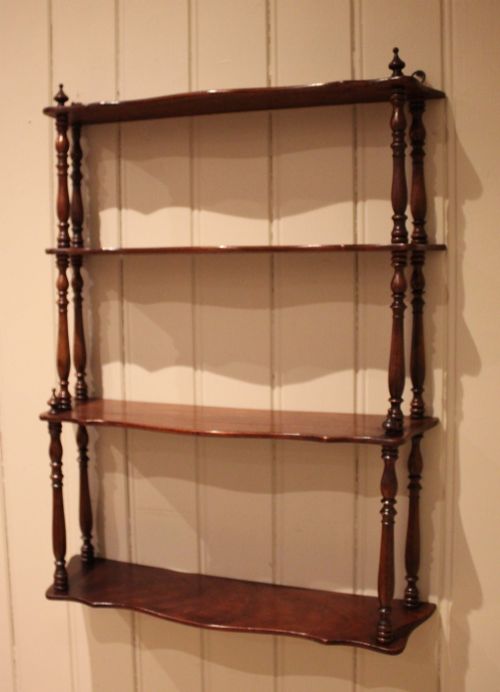
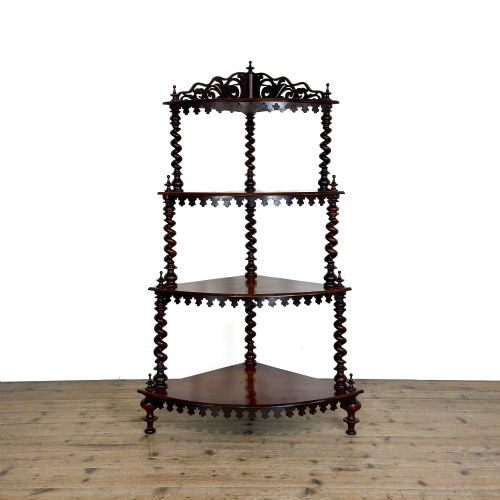
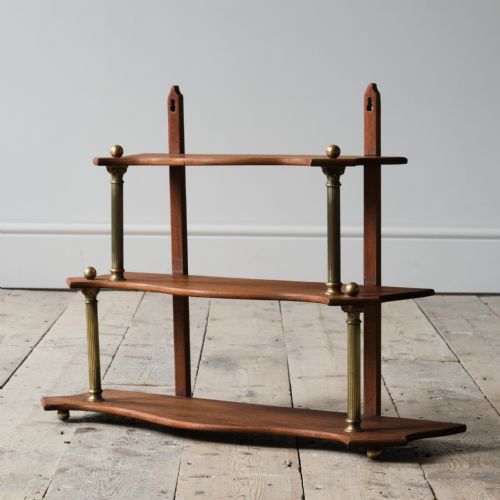
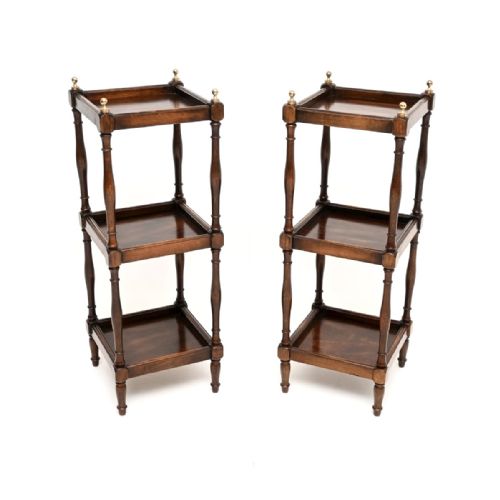
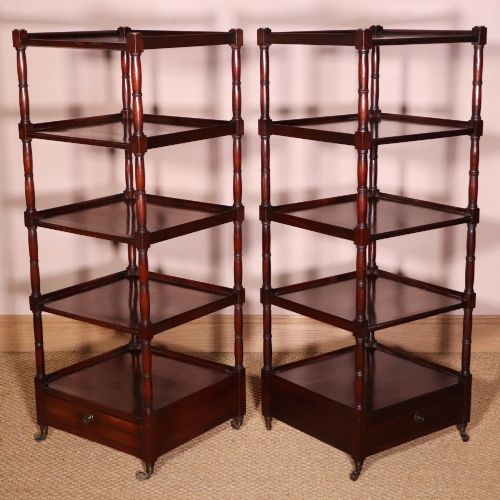
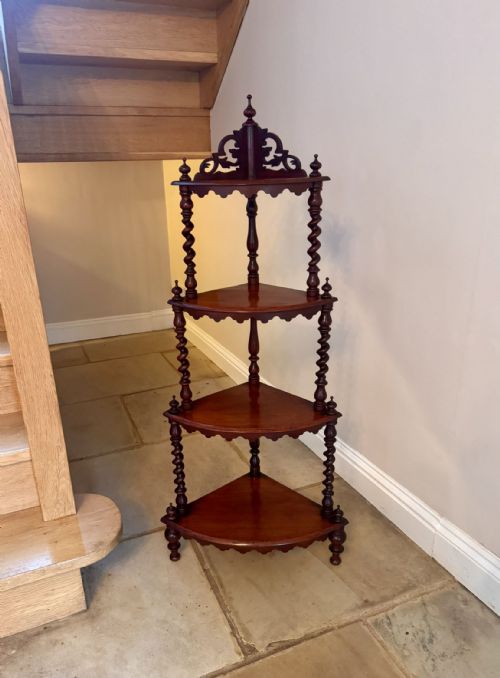
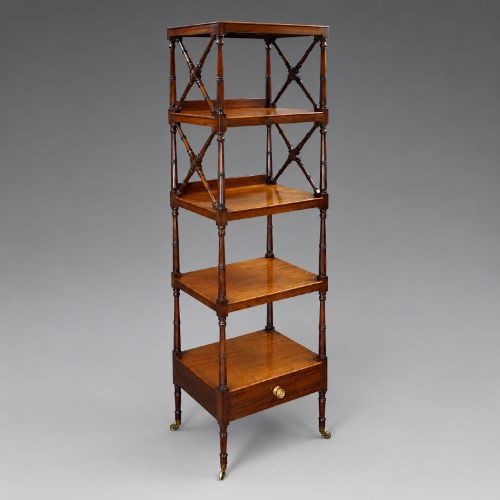
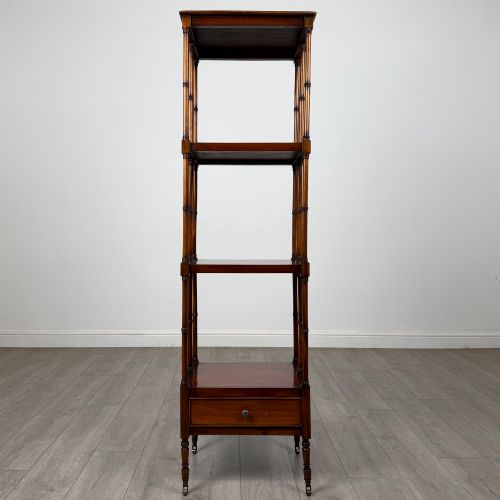
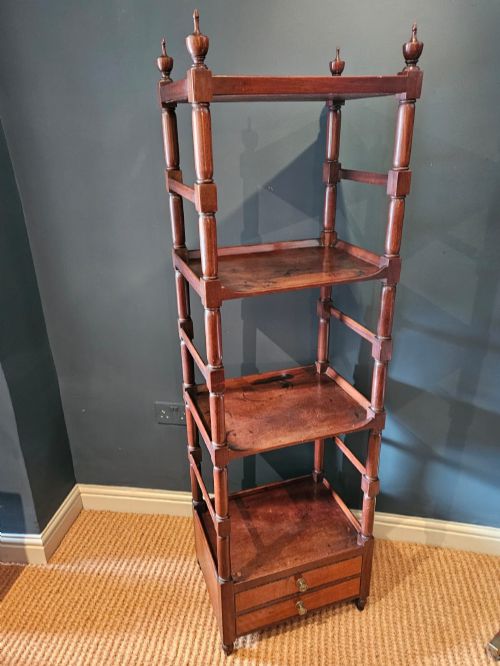
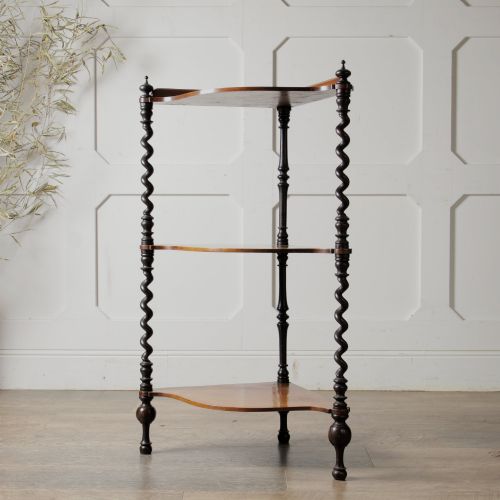
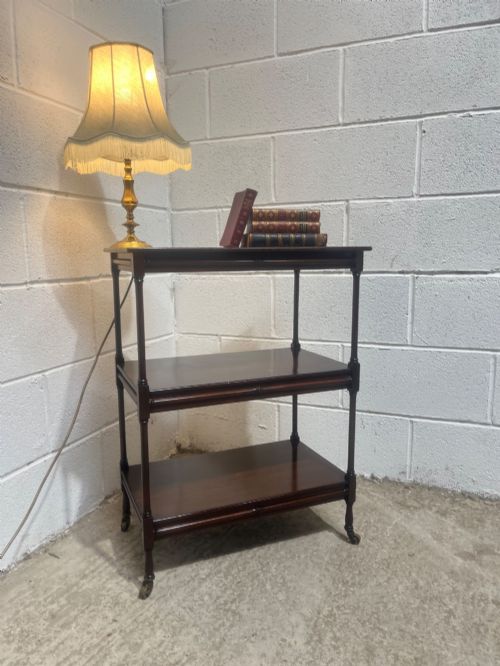
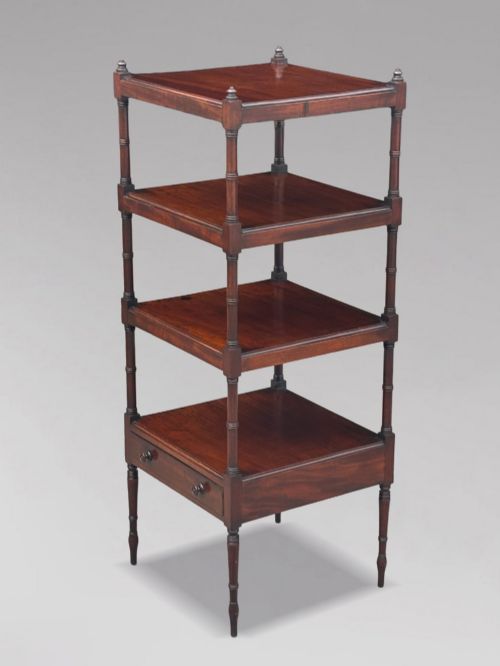
A mahogany etagere shelf, frequently catalogued historically as a whatnot, open bookcase, or tiered stand, is designed for vertical display and storage. Buyers searching for a mahogany etagere shelf typically encounter tiered freestanding structures with three or four levels, alongside corner variants and wall-hanging versions.
The pieces span various periods including the Georgian, Regency, William IV, and Victorian eras, extending into Edwardian and later twentieth-century iterations. Regional and stylistic influences such as French waterfall designs and campaign styles also appear within the selection.
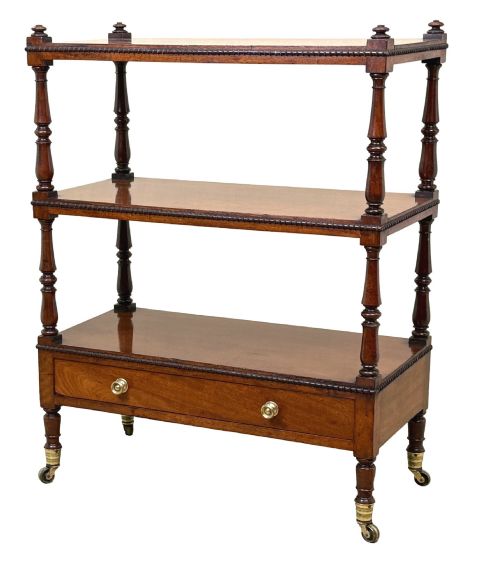
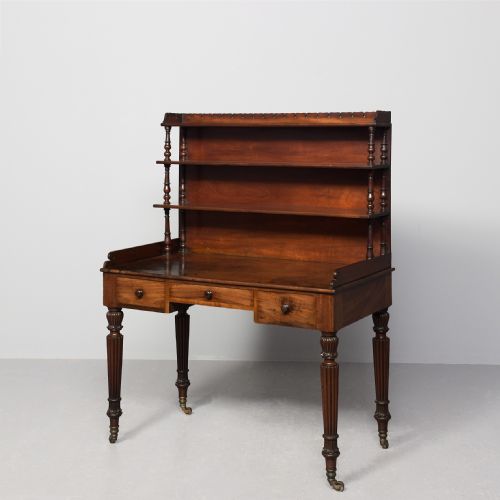
Forms range from music stands and slim buffets to corner display cabinets and simple hanging shelves. Most examples utilise stacked platforms supported by turned or barley twist uprights, occasionally incorporating lower drawers or mirrors.
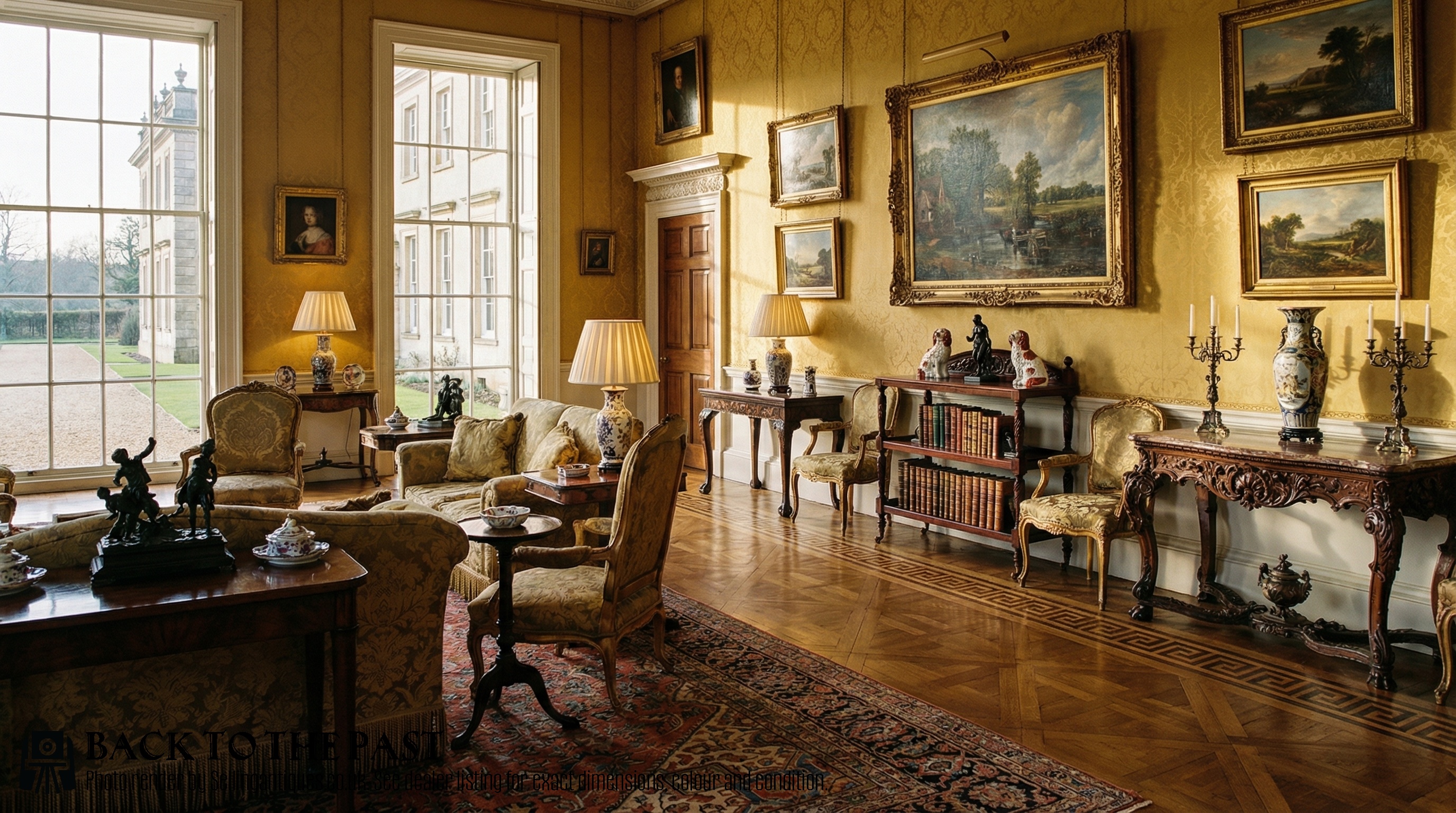
Materials and construction methods
Makers relied primarily on solid mahogany and mahogany veneers for the structural frame and shelves, often combining the timber with brass fittings, castors, or wirework galleries. Supplementary materials such as rosewood, walnut, gilt bronze, glass, cane, and mirror glass appear on specific pieces.
Joinery techniques reflect the period of origin, utilising turned upright supports, bobbin turnings, and barley twist columns to separate the tiers. Drawers integrated into lower sections feature traditional cabinet-making joints, while wall-hanging variants incorporate secure mounting brackets.
Mahogany Etagere Shelf Retail Price Guide 2026
Typical asking prices for mahogany etagere shelf among the pieces listed under this phrase on Sellingantiques today, from the lower quarter to the upper quarter. They describe what is for sale here now, not the wider market.
Materials paired with mahogany across these records include brass, rosewood, walnut, cane, and mirror glass.
Distinctions in construction and finish
Quality in a tiered shelving unit depends on the selection of timber grain, the crispness of turned supports, and the structural stability of the stacked tiers. Superior pieces exhibit balanced proportions, tight joinery at the shelf joints, and uncompromised structural integrity under weight.
Detailing such as fine brass mounts, gallery rails, fitted drawers, or marquetry inlay elevates specific examples above standard utility furniture. The handling of secondary woods and the preservation of the original polished surface further distinguish finer workshop output.
James Mein of Kelso·Gillows·Edwards & Roberts
The Mahogany Etagere Shelf Glossary
- Etagere
- A piece of furniture consisting of a set of open shelves for displaying small objects or ornaments. It usually stands free in a room.
- Barley twist
- A type of column or spindle carved in a spiral twist resembling a rope of barley. This decorative turning is common on Victorian supports.
- Campaign
- Portable furniture designed for easy dismantling and transport by military officers. These pieces typically feature flush brass handles and corner brackets.
Mahogany Etagere Shelf: Frequently Asked Questions
What is a whatnot shelf?
A whatnot is a multi-tiered shelving unit developed to display ornaments, books, and small domestic objects.
These pieces use stacked platforms held together by vertical posts, offering open storage in reception rooms and parlours.
How do I use an etagere?
An etagere functions primarily as an open display piece for collections, ceramics, books, or plants.
Because the shelves are accessible from multiple sides, placing the unit against a wall or in a corner suits different room layouts.
Are corner shelves period pieces?
Corner shelving units and corner whatnots date across the Georgian, Regency, and Victorian periods.
Cabinet-makers designed these items to utilise unused corner space in smaller rooms while maintaining vertical storage.
What timber was used?
Mahogany served as the primary hardwood for these tiered units throughout the eighteenth and nineteenth centuries.
Workshops frequently combined solid mahogany with veneers, supplemented by brass details, mirrors, and occasional rosewood or walnut accents.