

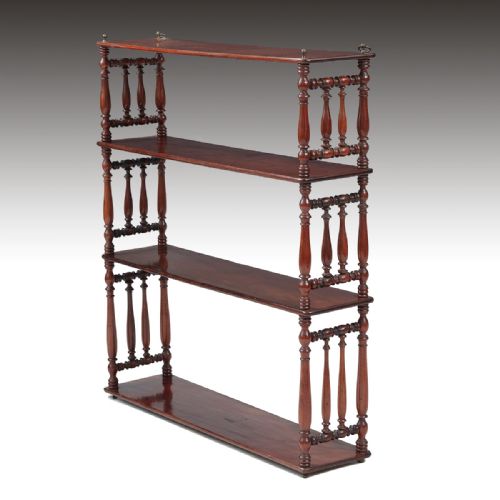
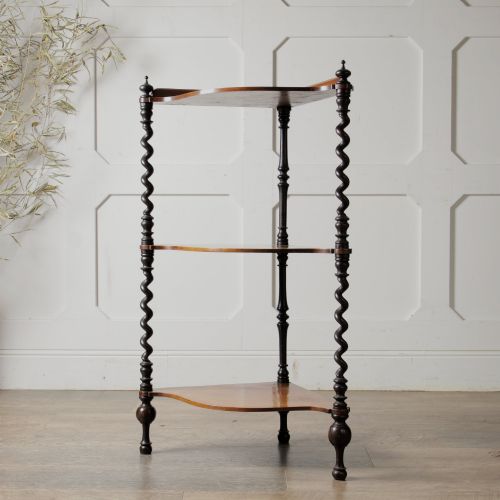
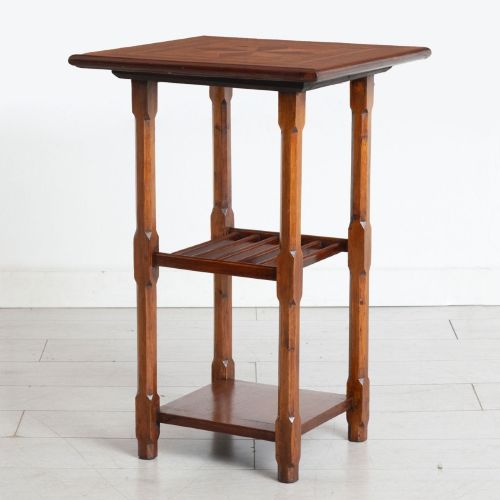
Vintage Tiered Shelf
A vintage tiered shelf offers stepped surfaces to display books and objects, bringing period craftsmanship and vertical utility to interior spaces.
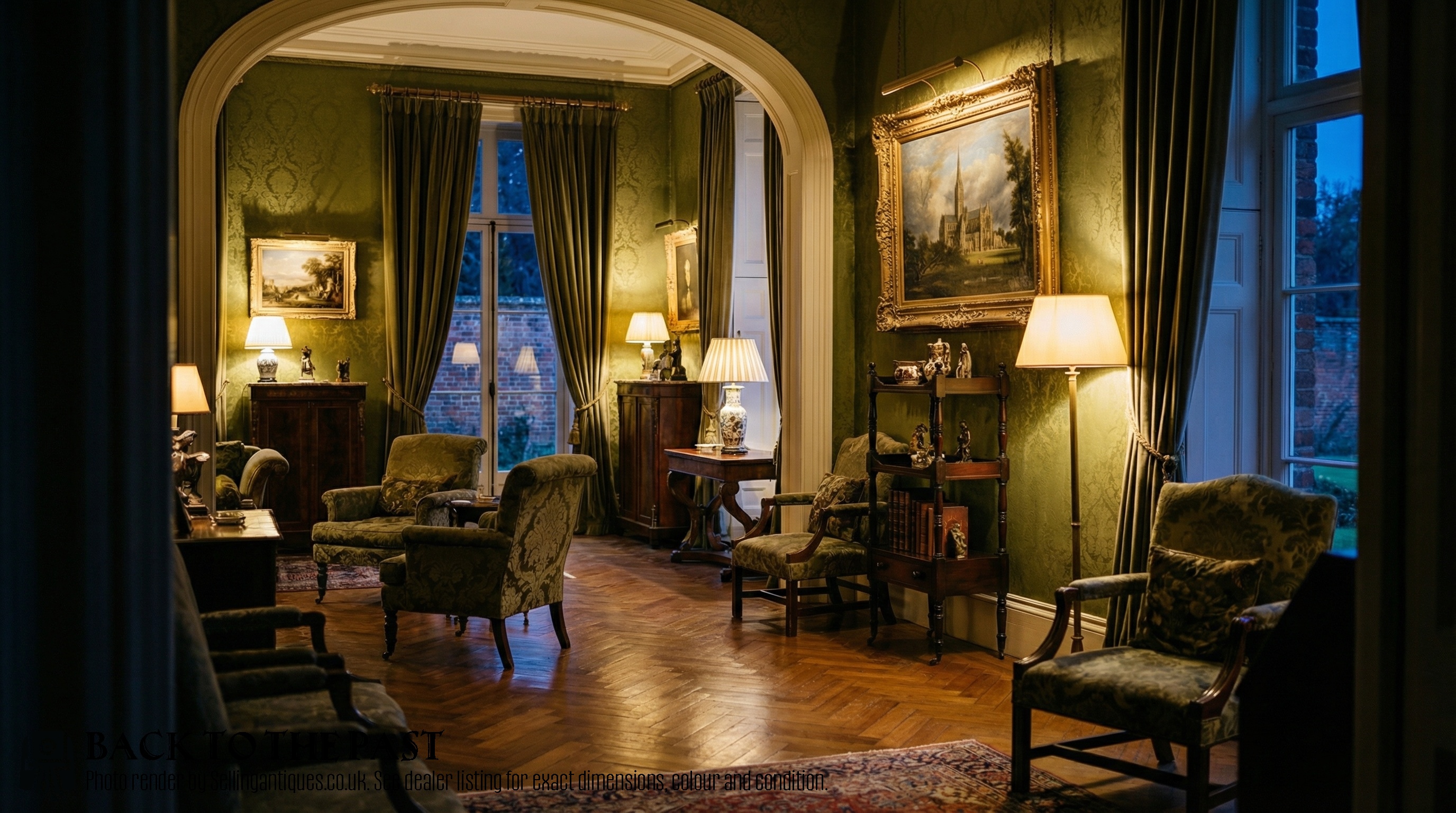
Vintage Tiered Shelf
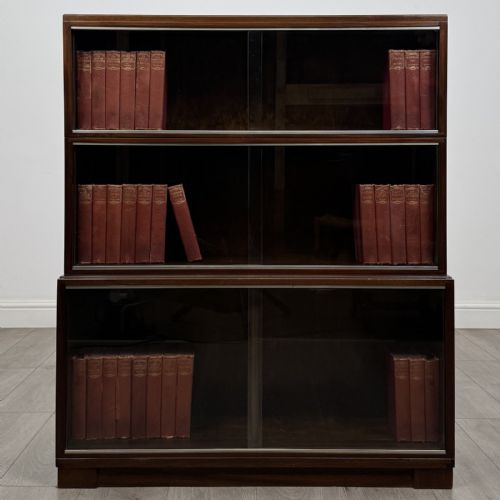
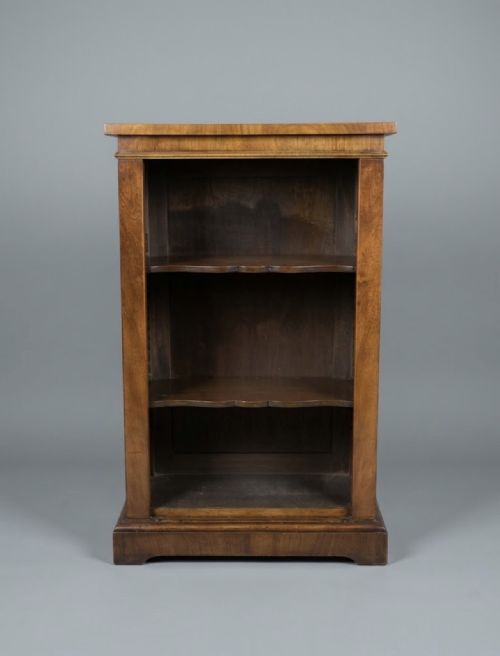
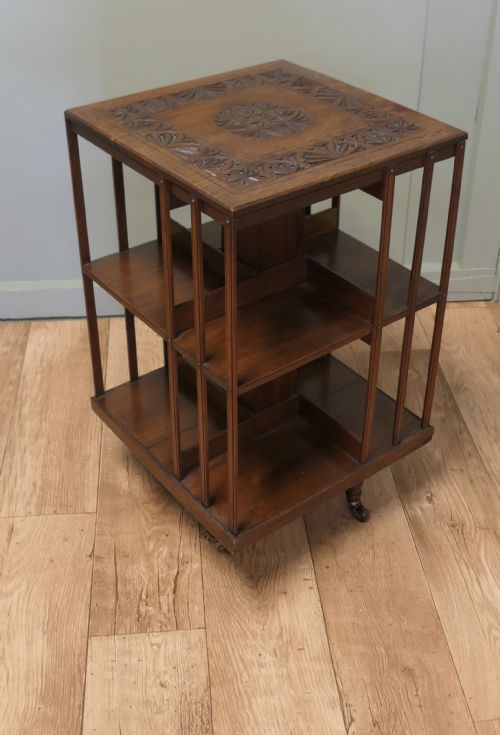
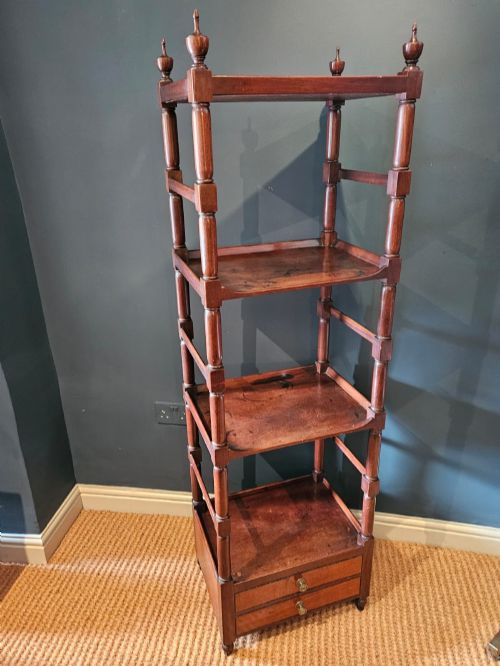
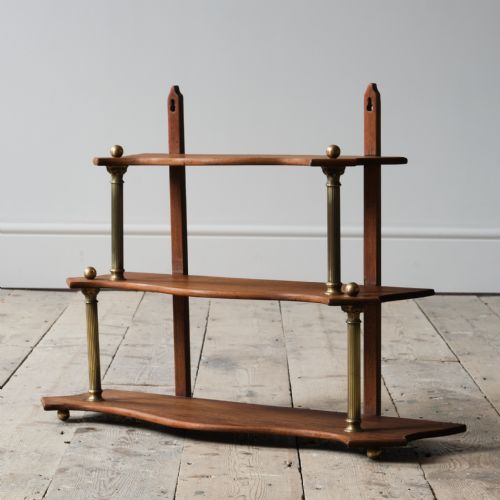
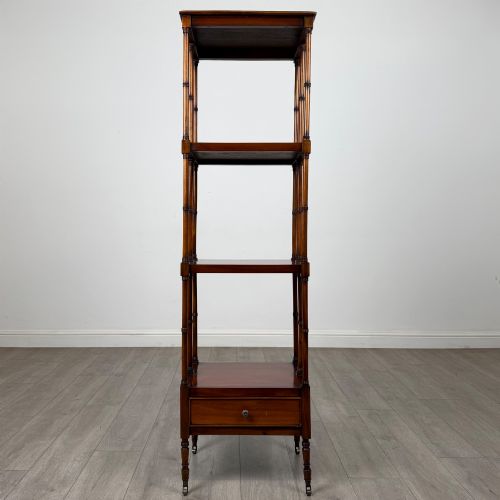
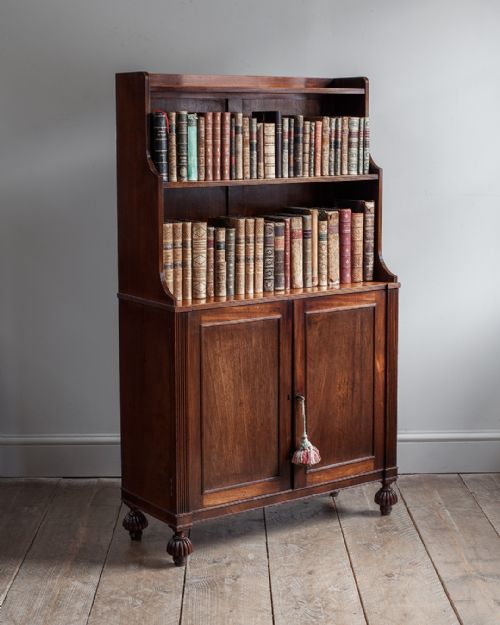
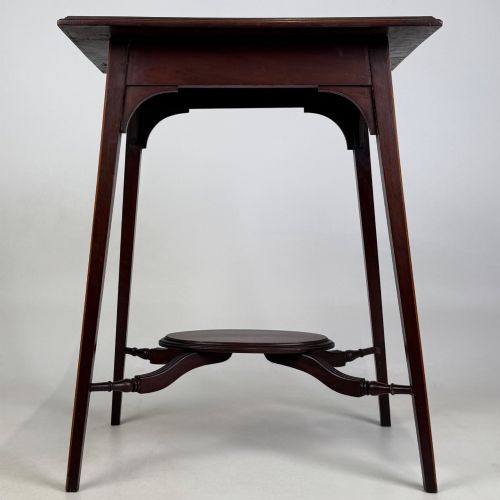
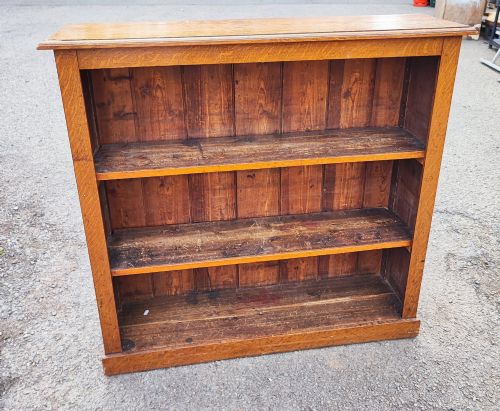
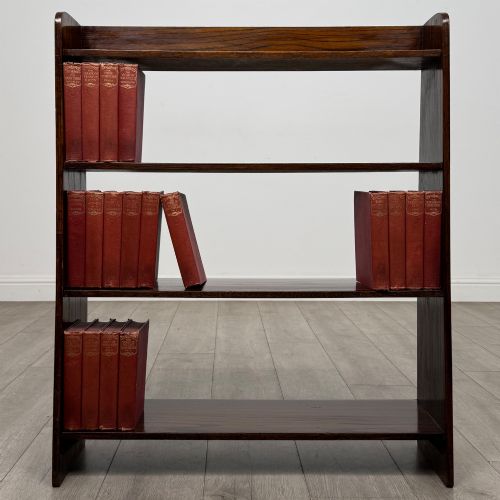
When searching for a vintage tiered shelf, buyers encounter multiple forms including whatnots, etageres, wall-hanging shelves, and waterfall bookcases. These pieces provide horizontal levels arranged vertically to hold books, ceramics, and ornaments in domestic rooms.
The selections span the nineteenth and twentieth centuries, encompassing Victorian, Edwardian, Regency, and Arts and Crafts styles. Mahogany, oak, walnut, and burr walnut dominate the construction, alongside occasional brass and cast iron details.
Freestanding whatnots and multi-tier bookcases appear alongside wall shelves and corner units. Buyers most frequently meet mahogany and oak examples from the Victorian and Edwardian eras on this page.
How they were made
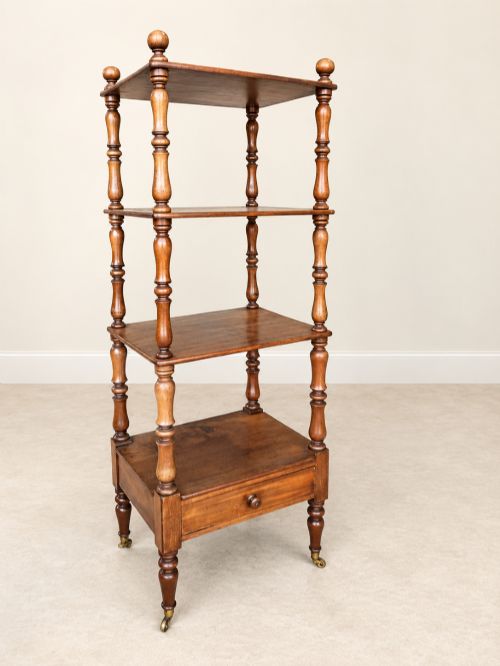
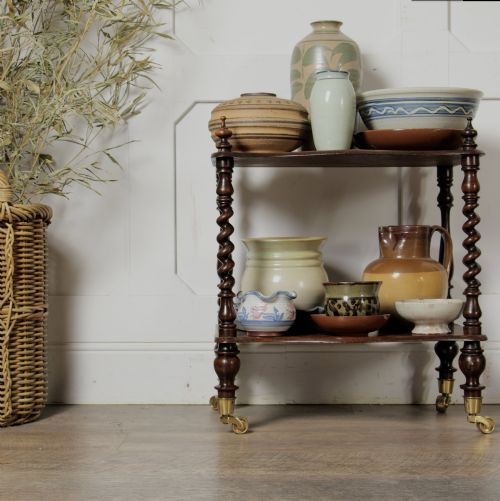
Cabinetmakers utilised solid timbers and veneers, selecting mahogany, walnut, and oak for their structural strength and grain patterns. Turned uprights, barley twist supports, and brass fittings provide the vertical framework holding each shelf in place.
Joinery techniques ranged from dovetailed joints to simple pegged construction, depending on the period and the workshop. Finishes included polished shellac and wax to protect the wood while highlighting the natural figuring of burr walnut and mahogany.
Bamboo and lacquer display shelves bring a touch of nineteenth-century botanical enthusiasm straight into the modern sitting room.
What varies in quality
Quality separates through the selection of timber figures, such as highly figured burr walnut or dense mahogany, and the crispness of turned details like barley twists. Finer execution shows in the precision of the shelf joints and the balance of proportion across multiple tiers.
Simpler pine or utilitarian oak shelves prioritise function over decorative embellishment, whereas pieces featuring parquetry inlay, brass galleries, or fine carved supports reflect higher workshop standards.
Heals
The Vintage Tiered Shelf Glossary
- Etagere
- A set of open shelves for displaying small objects or ornaments, originating in France. These pieces often incorporate turned legs or mirrors.
- Waterfall bookcase
- A set of graduated open shelves where each tier steps back from the one below. This creates a cascading silhouette popular in Regency and later revival periods.
- Barley twist
- A type of turned wooden support carved in a helical spiral resembling a twist of barley. It appears frequently on Victorian and Edwardian furniture legs and uprights.
- Burr walnut
- Timber taken from the warted growths on walnut trees, yielding intricate swirling grain patterns. Cabinetmakers used it as a decorative veneer on high-status surfaces.
Vintage Tiered Shelf: Frequently Asked Questions
What is a whatnot shelf?
A whatnot is an open piece of furniture featuring multiple stacked tiers designed to hold ornaments, books, and decorative objects. These freestanding stands were popular in nineteenth-century interiors for organising small collections.
They typically stand on slender legs or uprights, allowing items to be viewed from multiple angles. Their open design distinguishes them from enclosed cabinets and bookcases.
How do I style a tiered shelf?
Tiered shelves suit corners, alcoves, or open wall spaces where vertical display is needed without blocking light. Vary the height of objects placed on each level to maintain visual balance across the tiers.
Books work well on lower, sturdier shelves, while smaller ceramics and glassware sit comfortably on upper levels. Leaving some open space prevents the shelves from looking overcrowded.
Are waterfall bookcases sturdy?
Waterfall bookcases rely on stepped side panels that support each gradually receding shelf. Properly constructed examples distribute weight effectively down to the base.
Their stability depends on solid timber construction and secure wall or floor placement. Heavier items belong on the deepest bottom shelf.
How do I identify a Victorian whatnot?
Victorian whatnots often feature turned wooden uprights, barley twist supports, and dense timbers like mahogany or burr walnut. Their construction reflects mid- to late-nineteenth-century cabinetmaking methods.
Details such as carved brackets or inlaid surfaces help distinguish finer Victorian examples from later revival pieces. Examining the timber grain underneath and behind the shelves reveals the age of the wood.