




Mahogany Drink Chest
A mahogany drink chest holds wine, spirits or decanters securely while adding classic timber presence to a room.

Mahogany Drink Chest
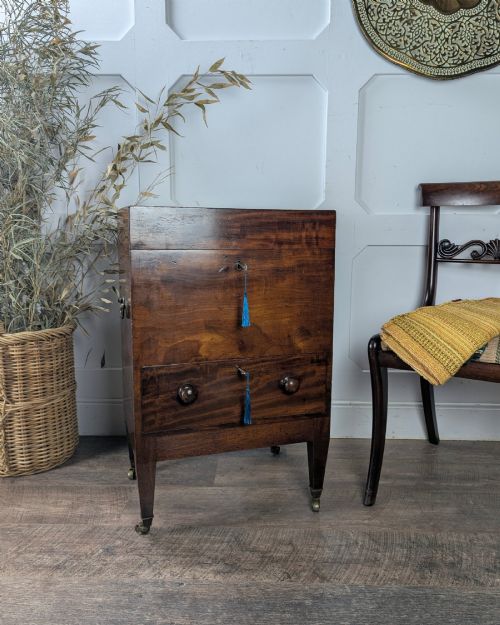
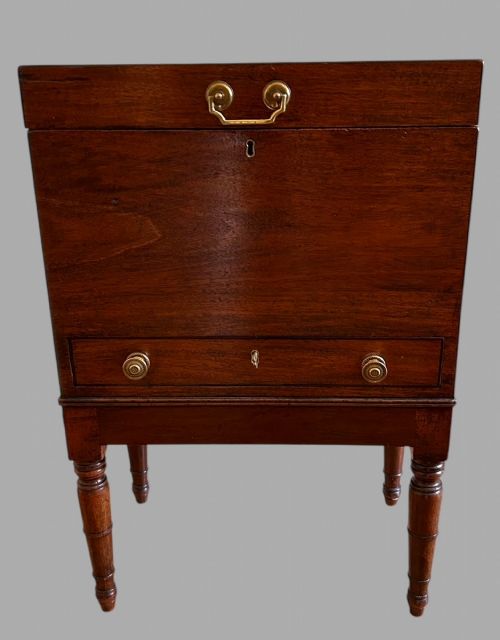
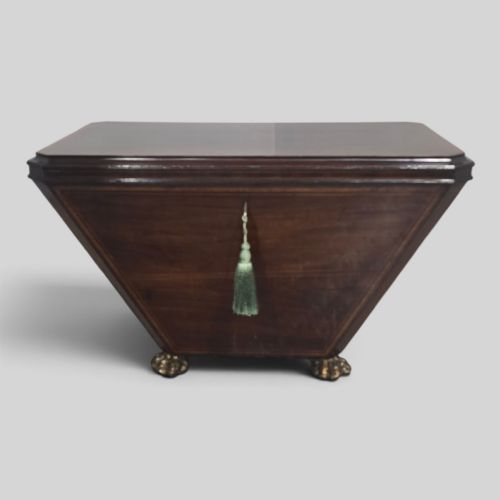
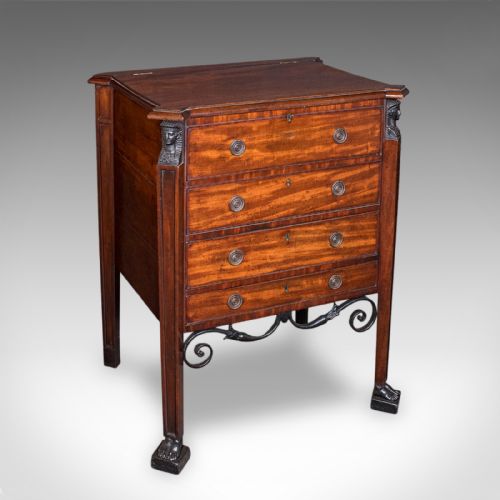
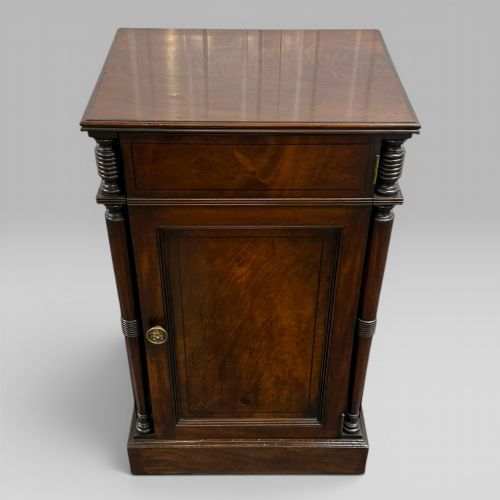
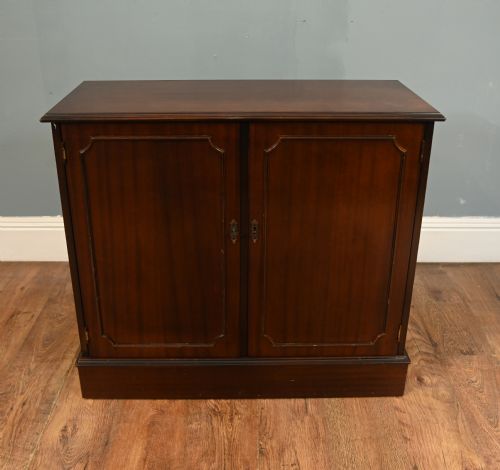
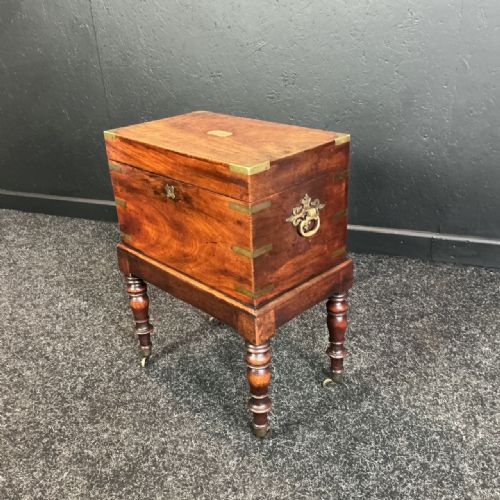
A mahogany drink chest covers a variety of forms designed to store bottles and glasses, appearing most frequently as cellarettes, wine coolers and drinks cabinets. These pieces date from the Georgian, Regency, Victorian and Edwardian periods, reflecting changing social habits around hosting and hospitality.
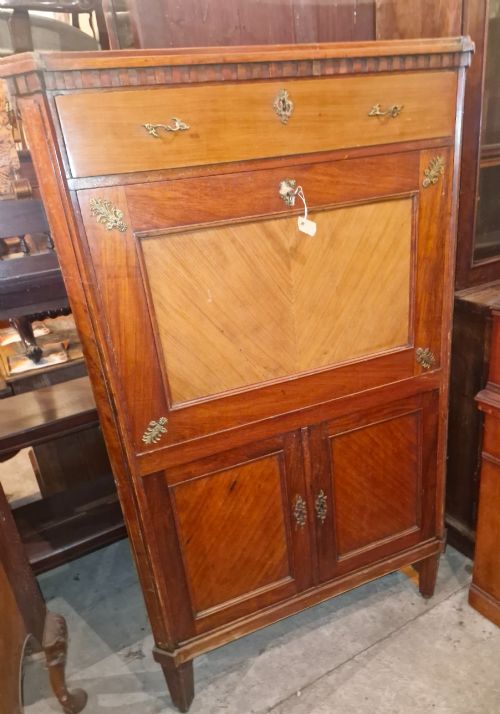
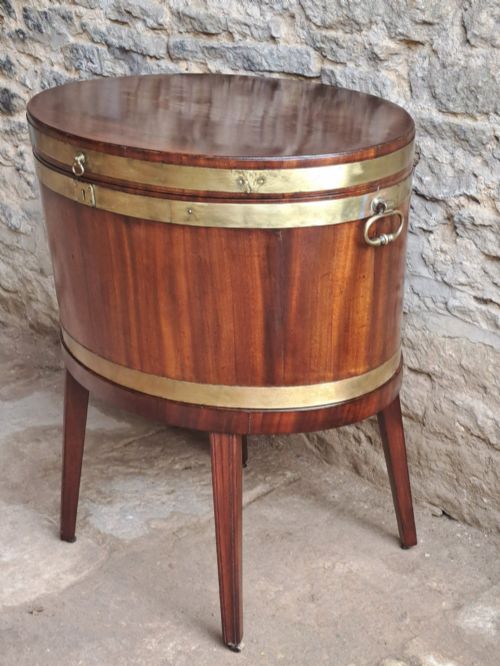
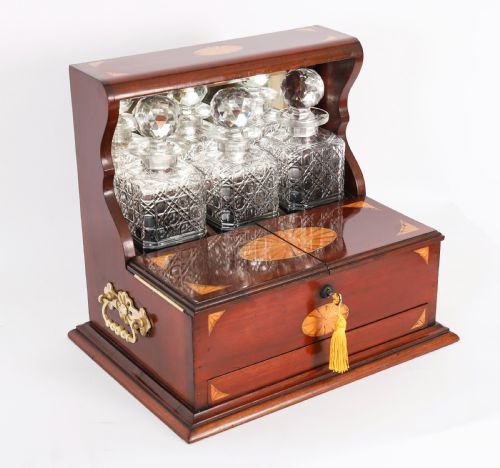
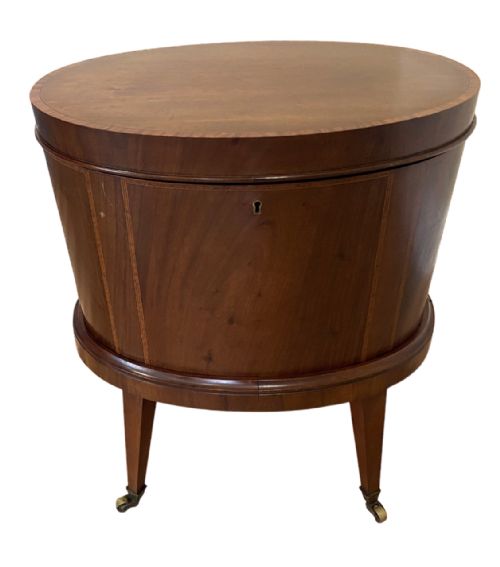
The objects on this page range from oval and serpentine wine coolers intended to rest on the floor to fitted tabletop decanter boxes and standing cocktail cabinets. The most common iteration met here is the cellarette or wine cooler, often framed by period details like brass banding or inlay.
Origins stretch across English workshops and cabinet makers, taking distinct shapes from George III proportions to later Edwardian iterations. Buyers encounter both dedicated cellar storage units and multifunctional chests incorporating games compendiums or mirror-fitted cocktail spaces.
Judging standard and execution
Quality rests in the precision of the cabinetmaking, visible in tight joinery, carefully selected timber grain and the crispness of inlaid details such as satinwood banding. Superior examples maintain original hardware, interior fitments and stable structural timber without extensive replacement.
The refinement of proportion and carving distinguishes finer workshop output from simpler utilitarian pieces. Details like well-turned feet, clean interior linings and patinated brass fittings elevate the standing of a particular chest.
Some nineteenth-century chests combined wine storage with games boards, allowing guests to transition seamlessly from drinking to gambling.
Edwards and Roberts·Gillows·Maples and Co
The Mahogany Drink Chest Glossary
- Cellarette
- A lockable container or chest designed to hold bottles of wine or spirits, typically kept in the dining room. These pieces often include internal wooden dividers to separate individual bottles.
- Tantalus
- A wooden stand holding decanters under a locking metal bar that prevents removal while allowing the contents to be seen. They emerged in the Victorian era as a secure way to store expensive spirits.
- Decanter box
- A portable wooden case lined with fabric and fitted to hold two or three glass decanters securely. These portable chests allowed hosts to transport beverages between rooms.
- Serpentine front
- A furniture profile featuring a gently curved front with a convex centre flanked by concave curves. This shaping required advanced woodworking skill and appeared on high-end Georgian pieces.
- Plate-warmer pedestal
- A tall cabinet or pedestal historically used to warm dining plates near a fire, sometimes adapted or associated with cellar storage furniture. They share heavy timber construction and brass fittings with standard coolers.
Mahogany Drink Chest: Frequently Asked Questions
What is a cellarette?
A cellarette is a specialised storage chest built to hold wine bottles and spirits safely within the dining room.
Inside, these pieces usually feature wooden dividers or metal-lined compartments designed to keep bottles upright and cool.
How do I date a mahogany chest?
Dating relies on observing construction methods, timber choice, hardware styles and overall proportions across periods like Georgian and Victorian.
Key indicators include the presence of hand-cut dovetails, secondary woods, specific inlay patterns and the style of brass handles or feet.
Where were these placed?
These chests typically sat in dining rooms, drawing rooms or libraries where hosts entertained guests.
Floor-standing wine coolers often rested beneath sideboards or in corners, while smaller decanter boxes sat directly on tabletops.
What is a tantalus?
A tantalus is a locking wooden frame that secures glass decanters so guests can view the contents without pouring them.
Popularized during the nineteenth century, it kept expensive spirits safe from unauthorized access by household staff.