
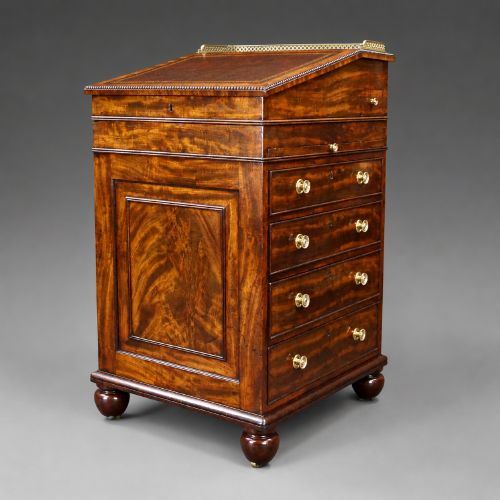
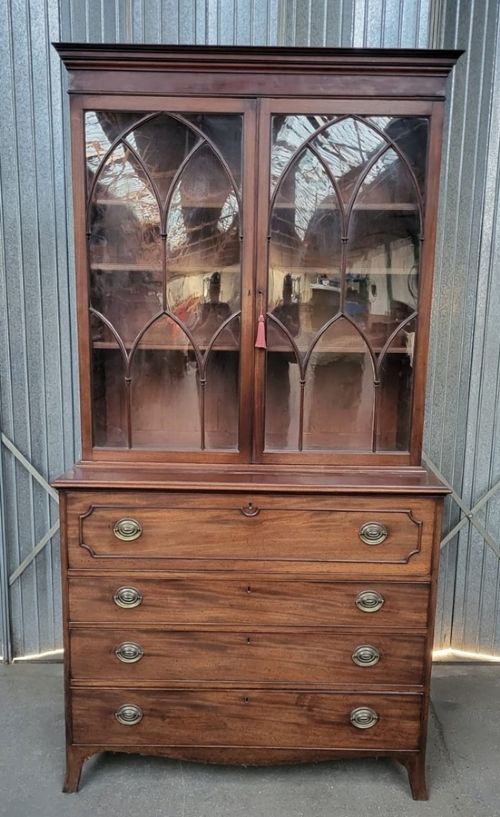
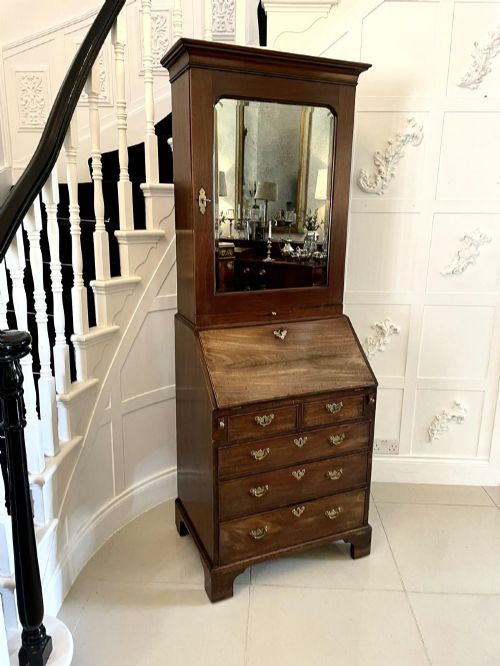
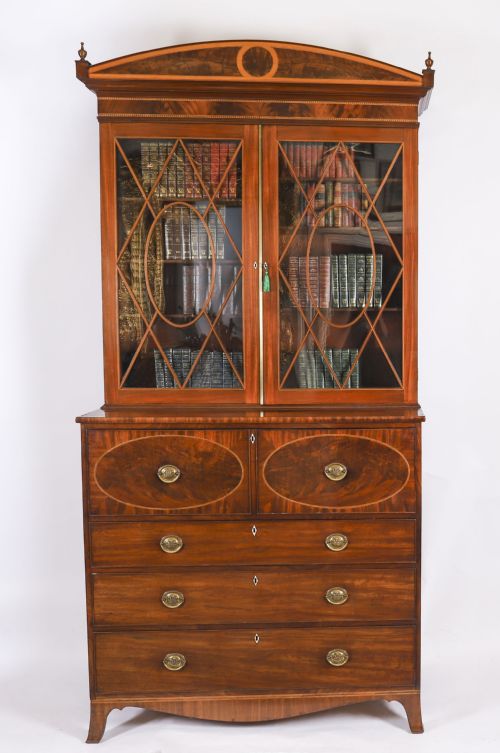

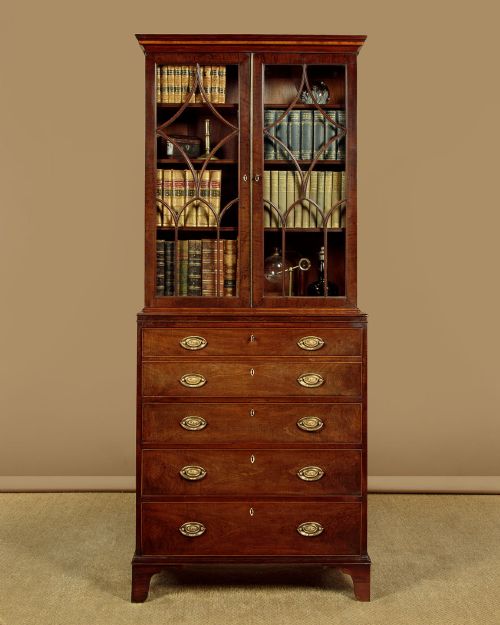
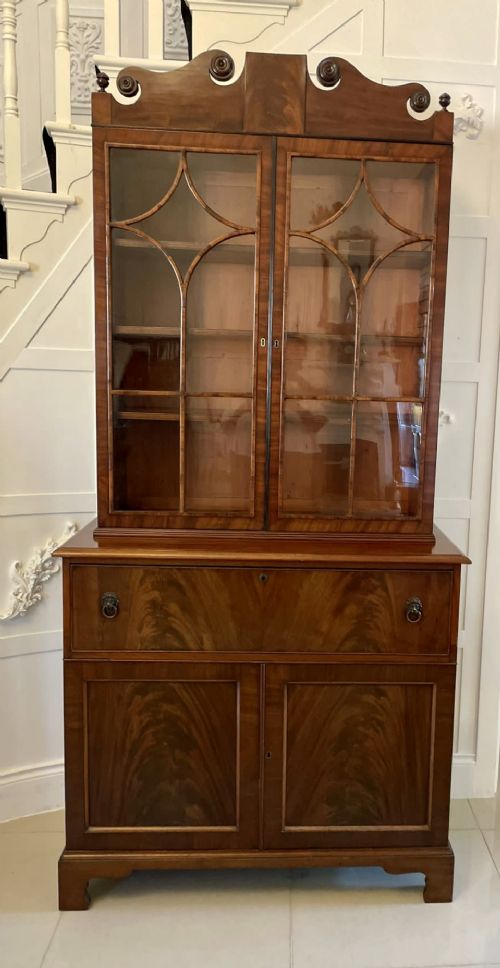
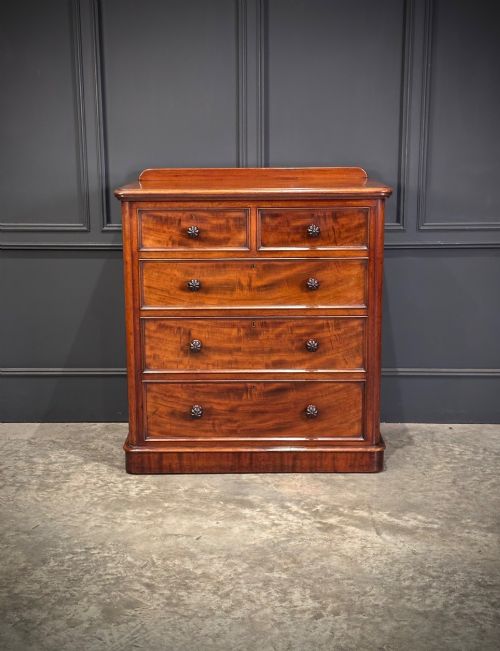
Mahogany Bureau Cabinet
A mahogany bureau cabinet combines a practical writing surface with concealed drawers and upper shelving, offering a handsome solution for organising correspondence.
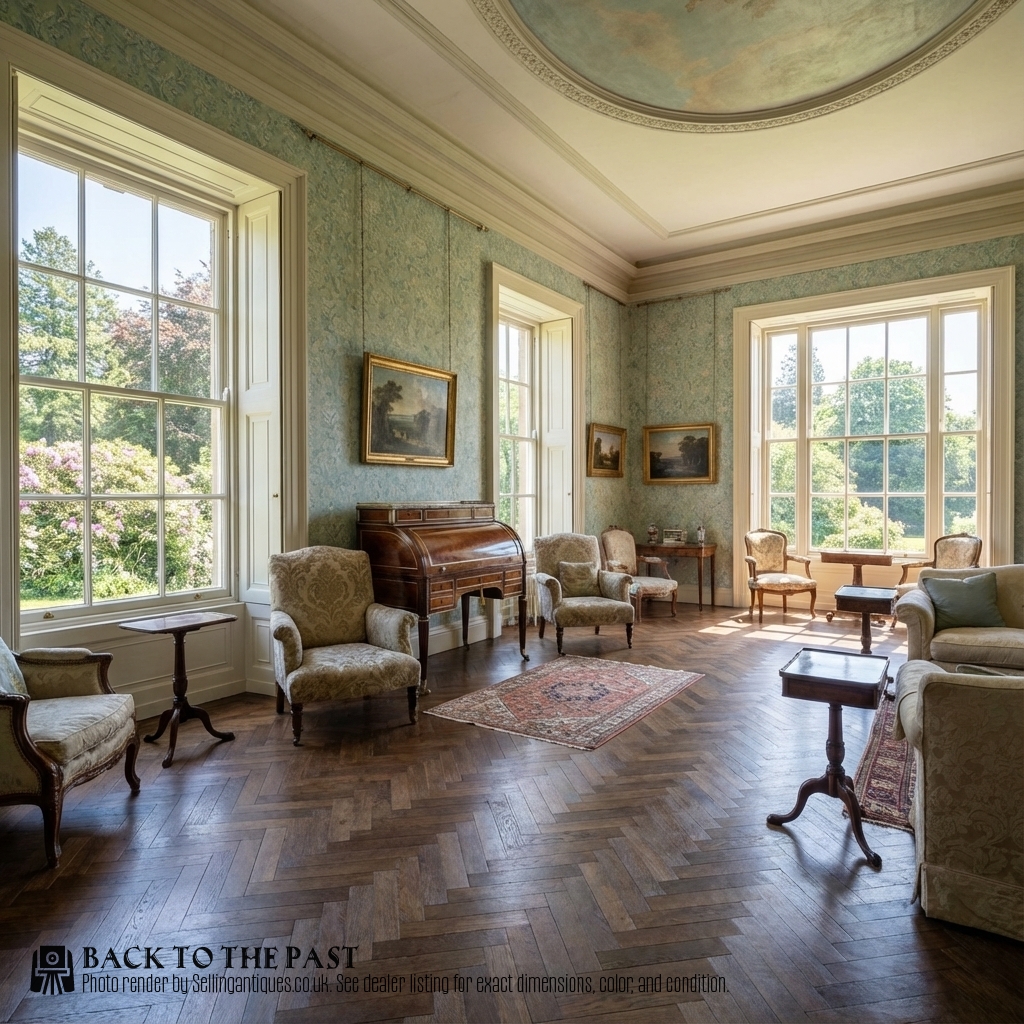
Mahogany Bureau Cabinet
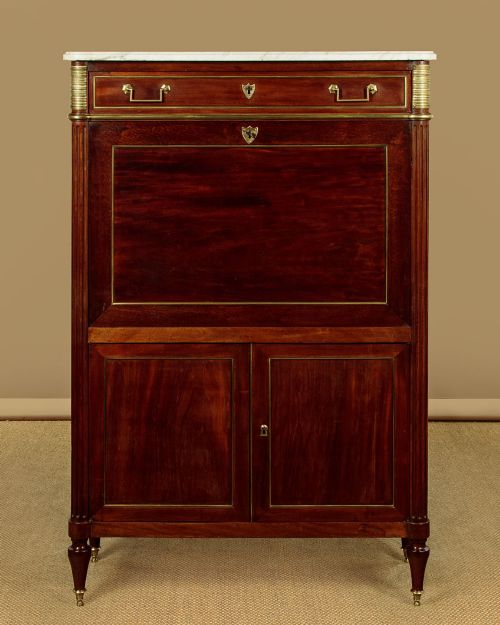
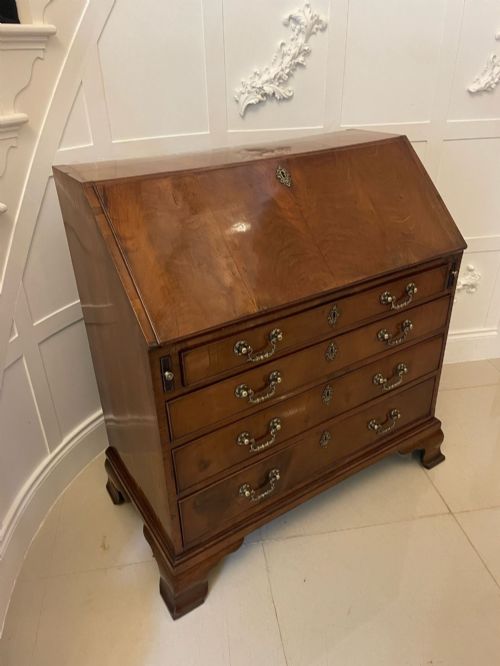
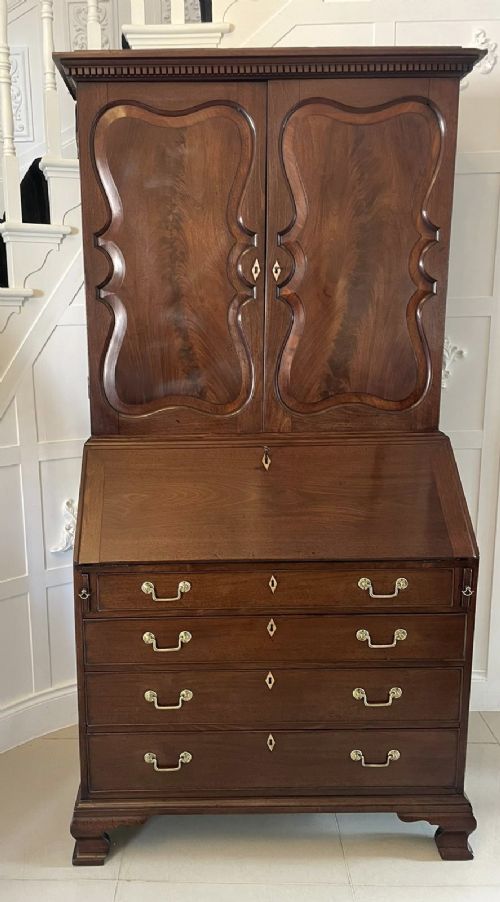
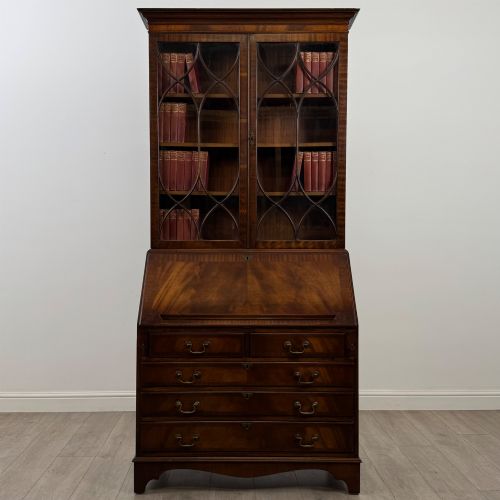
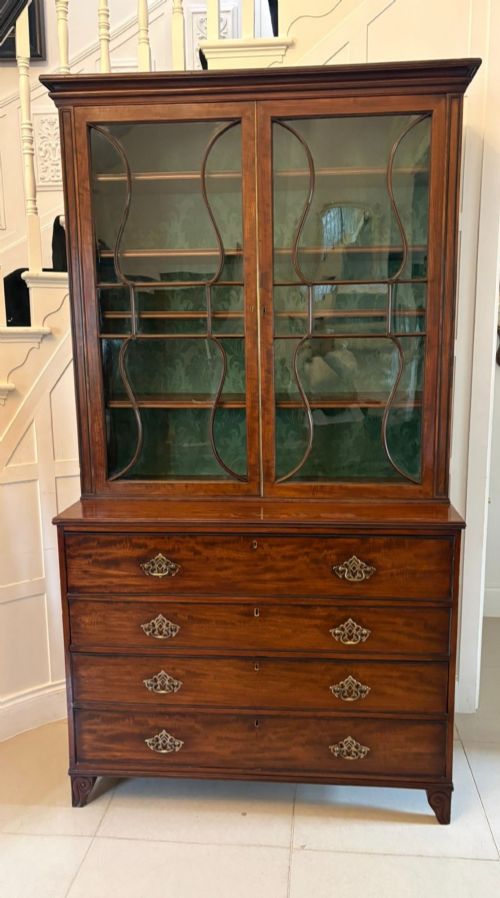
A mahogany bureau cabinet brings together a sloping or drop-front writing desk and an upper bookcase section, designed to serve as both a compact writing station and a display unit for volumes. These pieces appear frequently across Georgian, Regency, and Victorian periods, often taking the form of tall secretaire bookcases with glazed upper doors.
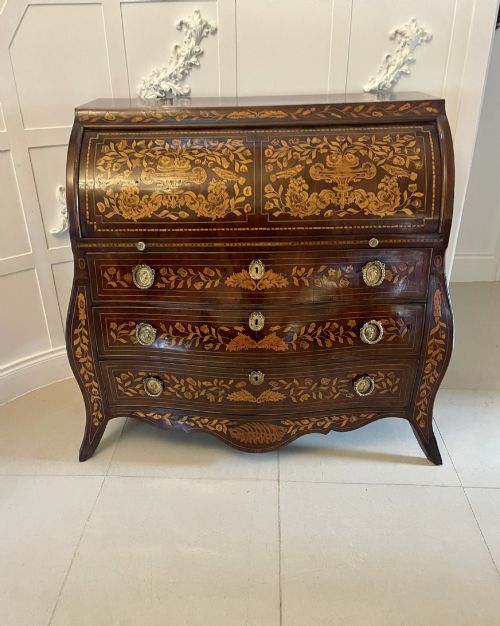
Buyers will encounter variations ranging from substantial 18th-century George II and George III models to later 19th-century William IV, Victorian, and Edwardian interpretations. Alongside standard bureau bookcases, the selections include cylinder desks, secretaire abattants, and specialised cabinet forms incorporating brass or floral marquetry inlay.
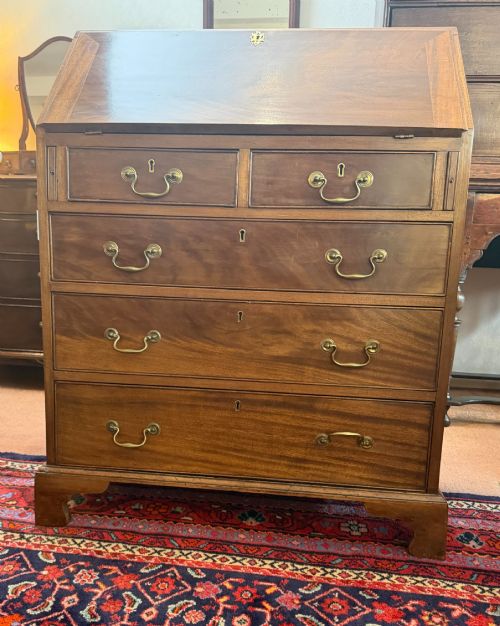
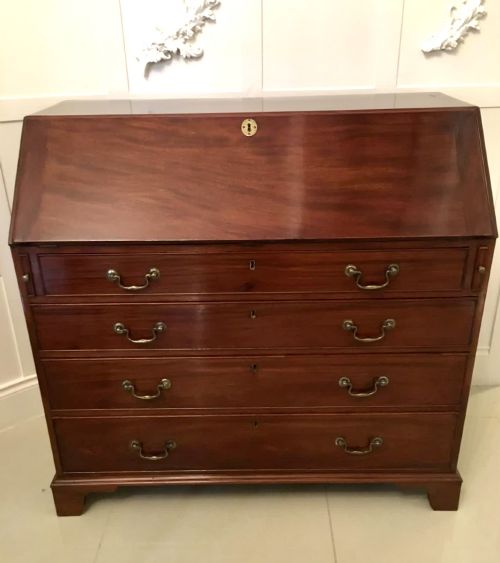
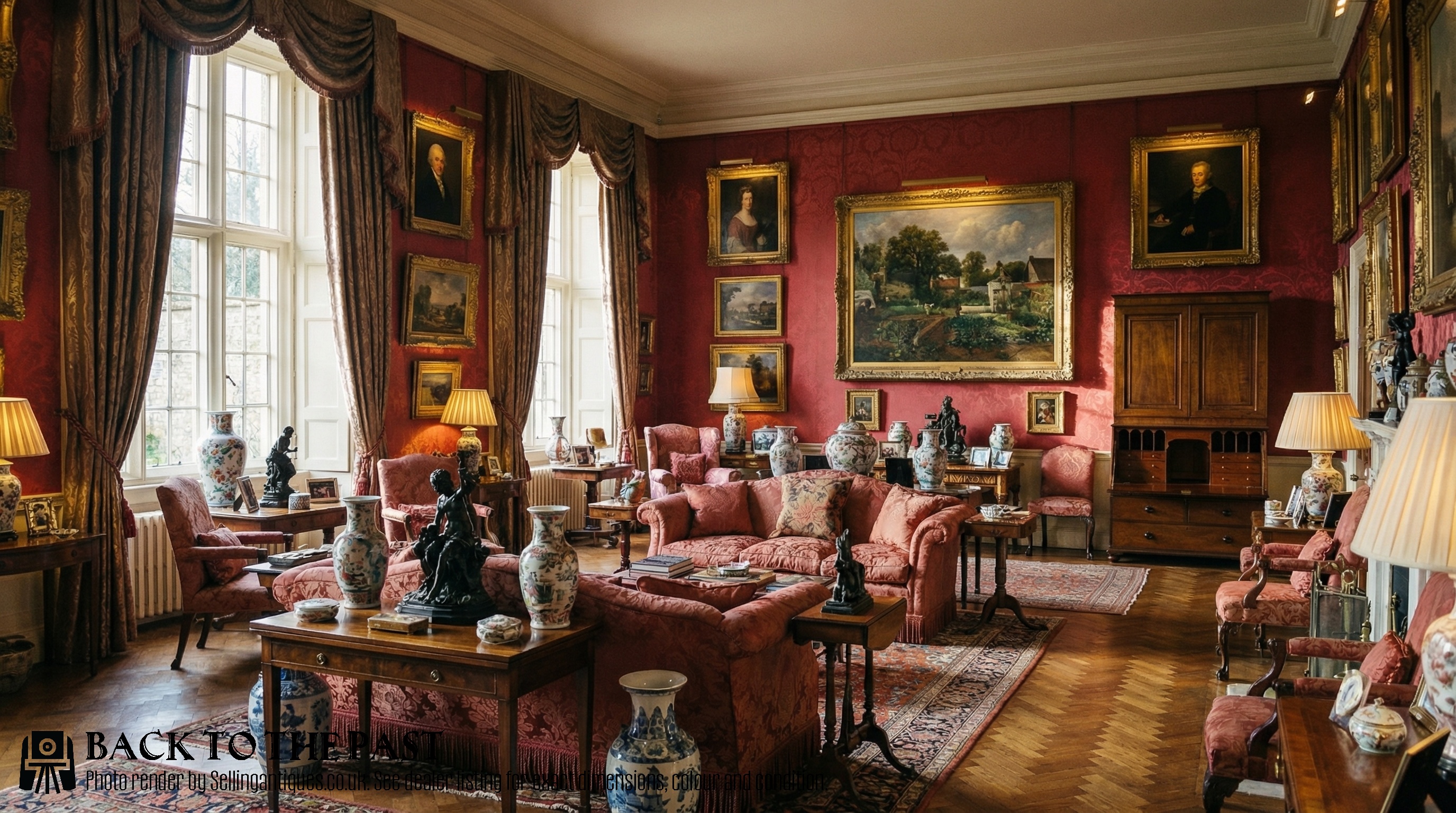
The lower section typically contains a fitted interior with small drawers and pigeonholes behind a fall-front writing surface, sitting above chest-style drawers or cabinet doors. This dual function made them essential furniture for studies and parlours, preserving private papers while displaying a gentleman's or lady's library.
How they were made
Cabinet makers utilised solid mahogany and figured mahogany veneers applied over secondary timbers such as oak, accentuating the natural grain patterns of the timber. Flame mahogany veneers were frequently selected for drawer fronts and fall-front writing panels to create striking visual movement.
Construction details incorporate glazed doors with wooden astragals for upper bookcases, alongside brass hardware for handles and key escutcheons. Interior compartments feature finely constructed pigeonholes and small drawers, occasionally complemented by leather writing inserts and delicate floral marquetry inlay.
Mahogany Bureau Cabinet Retail Price Guide 2026
Typical asking prices for mahogany bureau cabinet among the pieces listed under this phrase on Sellingantiques today, from the lower quarter to the upper quarter. They describe what is for sale here now, not the wider market.
Several examples include hidden compartments designed for stiling away private love letters and family secrets.
What varies in quality
The standard of a mahogany bureau cabinet rests on the selection and matching of the timber veneers, particularly where figured or flame mahogany covers the writing surfaces and drawer fronts. Superior examples display seamless grain continuity and meticulous handling of decorative inlay.
Internal complexity also separates standard pieces from finer work, seen in the intricacy of the fitted interior compartments, secret drawers, and the precision of the joinery. The architectural proportions of the upper glazed bookcase and the quality of the original brass hardware further define the maker's accomplishment.
Gillows·George Oakley·Library Bureau Ltd·Libertys
The Mahogany Bureau Cabinet Glossary
- Secretaire
- A piece of furniture incorporating a pull-down or drop-front writing drawer that conceals a fitted interior of small compartments.
- Astragal
- A narrow moulding used to divide panes of glass within the doors of upper bookcase sections.
- Marquetry
- Decorative patterns formed by the insertion of contrasting veneers into a primary wood surface, often featuring floral motifs.
- Escutcheon
- A protective plate surrounding a keyhole, frequently cast in brass on quality cabinetry.
- Cylinder
- A curved rolling front shutter that conceals a pull-out writing slide and interior pigeonholes.
Mahogany Bureau Cabinet: Frequently Asked Questions
How do I care for mahogany bureau cabinet surfaces?
Protect antique mahogany finishes by avoiding direct sunlight and maintaining stable room humidity to prevent veneer splitting. Clean timber surfaces using a soft cloth and gentle wax polish rather than modern silicone sprays.
Leather writing inserts require specific leather cream to prevent drying and cracking over time. Ensure interior mechanisms and drop-front hinges receive occasional light lubrication to maintain smooth operation.
Where were bureau cabinets typically placed in a historic home?
These cabinets served primarily in private studies, libraries, and principal bedchambers where correspondence and personal accounts were managed. Their dual storage and display capabilities made them suitable for rooms where books and writing materials needed to be kept close at hand.
In larger reception rooms, smaller variants functioned as elegant writing desks and display cabinets for visiting guests. The enclosed upper shelving protected valuable volumes from dust and soot generated by open fireplaces.
How can I distinguish an 18th-century piece from a 19th-century reproduction?
Eighteenth-century examples, such as those from the George II and George III periods, often exhibit hand-cut dovetailing in the interior drawers and secondary woods like oak or pine behind the mahogany exterior. The timber patination tends to show a deep, soft lustre developed over generations of handling.
Nineteenth-century and later Victorian or Edwardian pieces may display machine-sawn elements, different secondary framing timbers, and distinct veneering thicknesses. Examining the interior construction of the small drawers and the style of the brass hardware provides clear clues regarding the date of manufacture.