
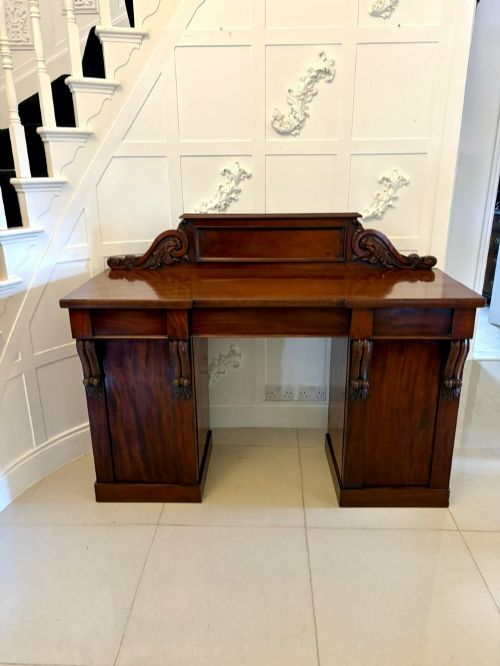
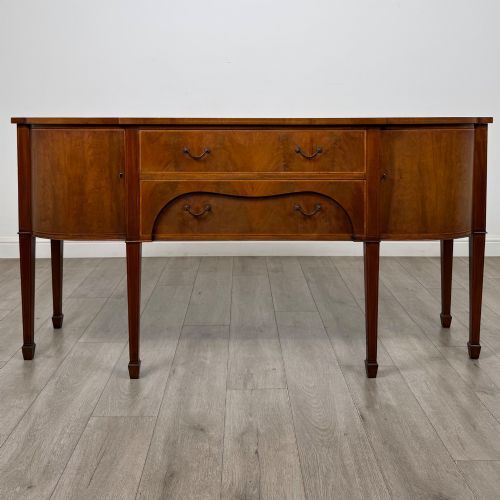
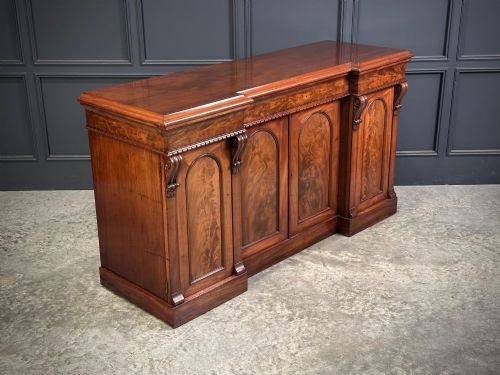
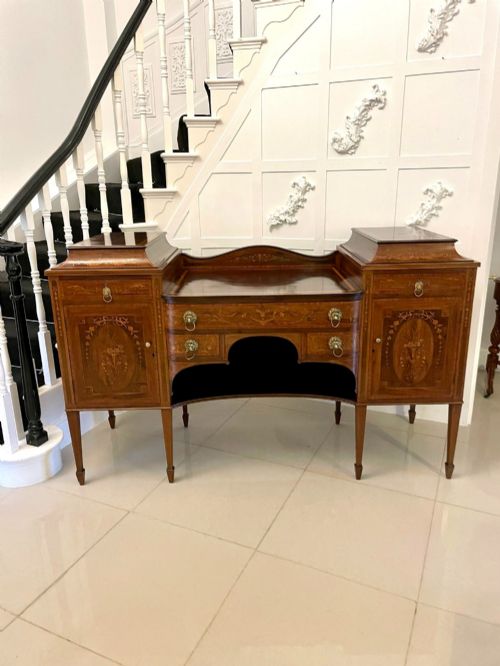
Mahogany Buffet Sideboard
When you search for a mahogany buffet sideboard, you are looking for a heavy dining room serving piece built to hold silver and linen.
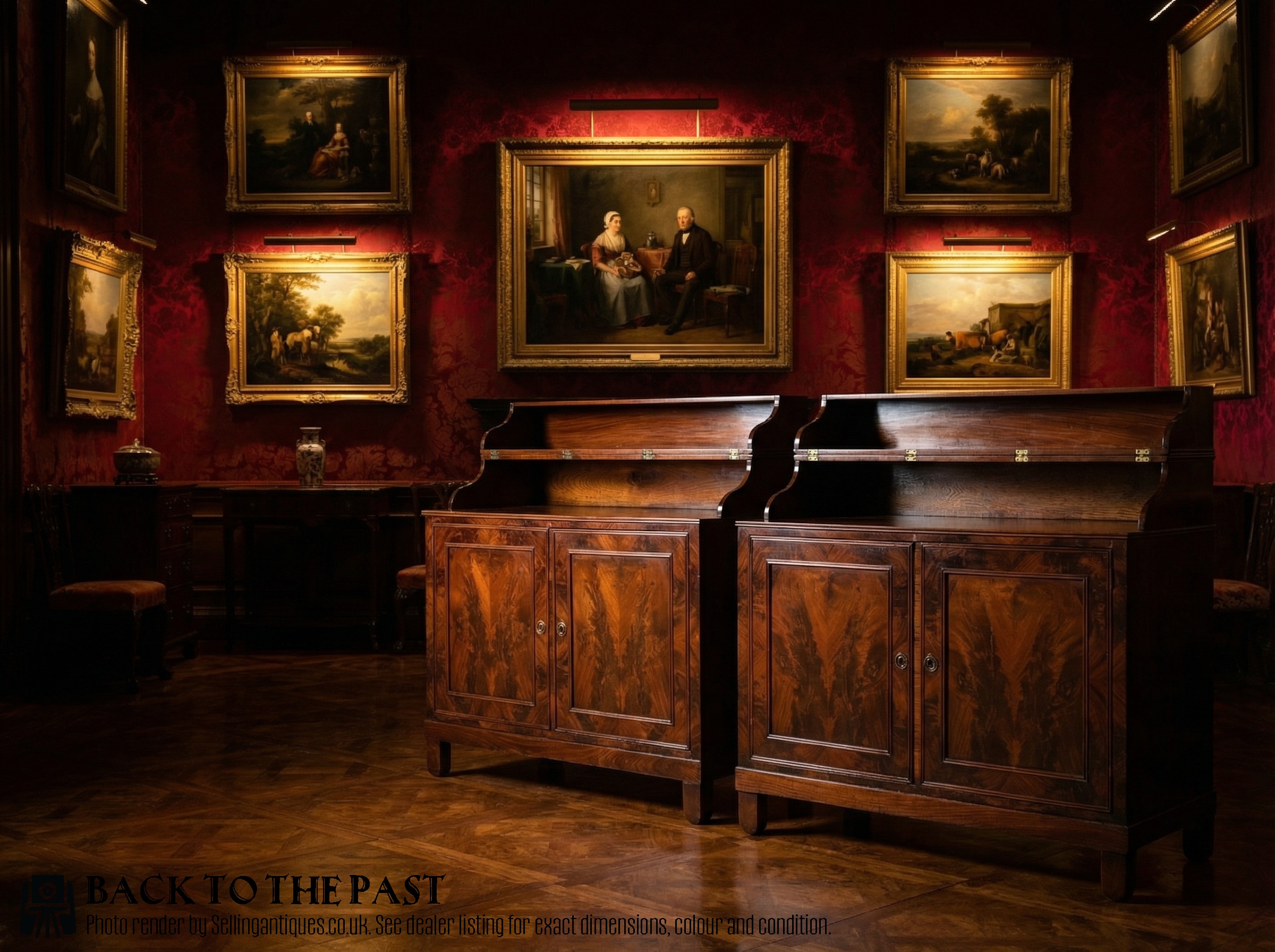
Mahogany Buffet Sideboard
A mahogany buffet sideboard is a dining room serving piece designed to hold silver, linen and serving dishes. These items combine the utility of a server with the presence of a formal cabinet.
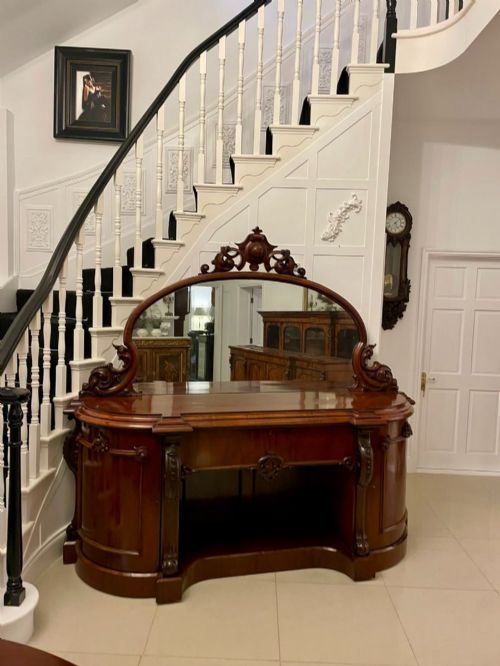
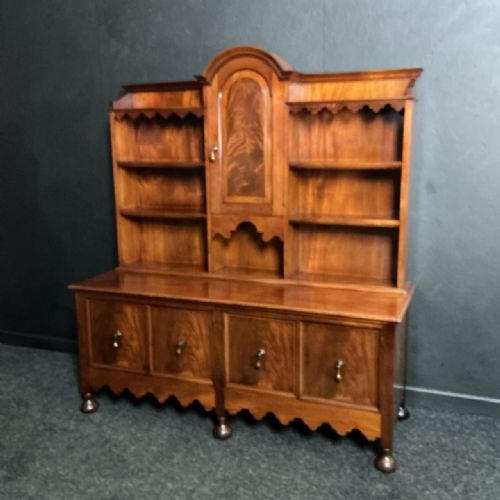
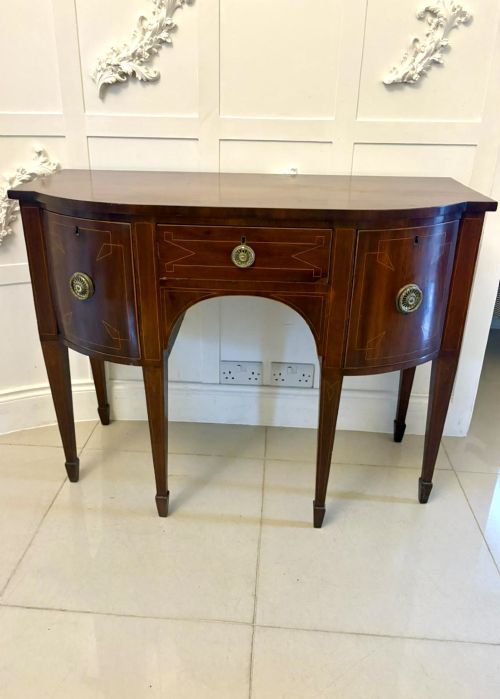
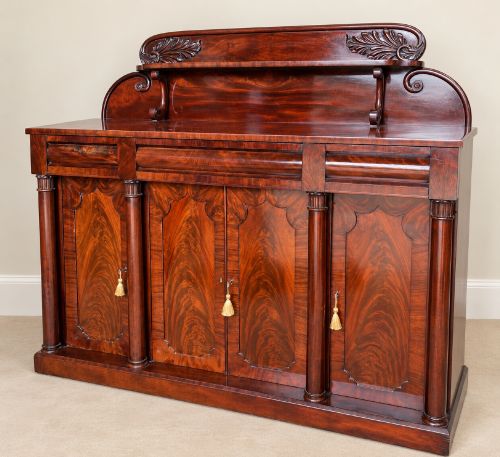
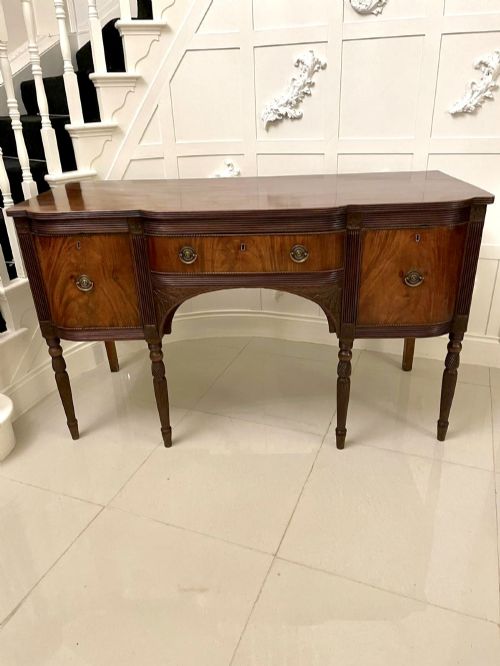
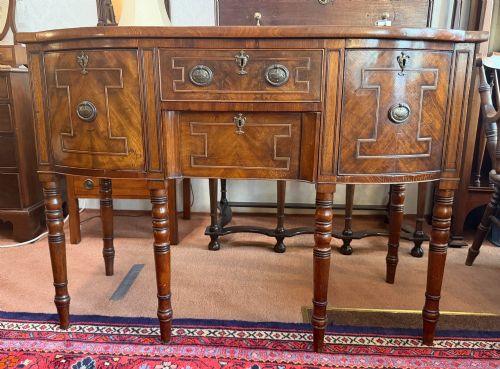
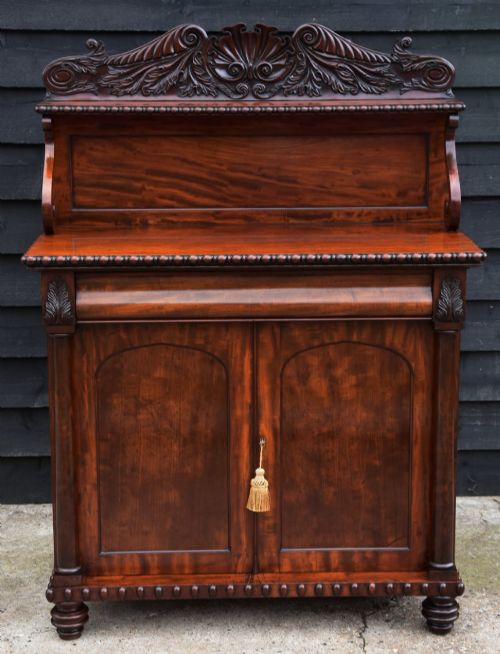
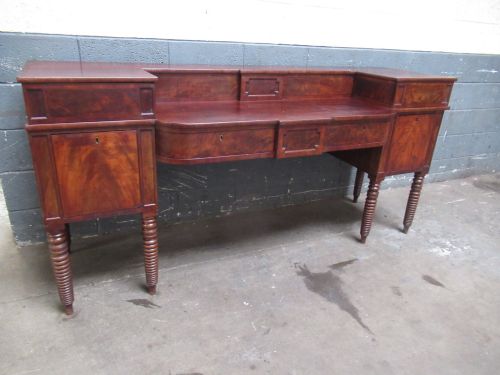
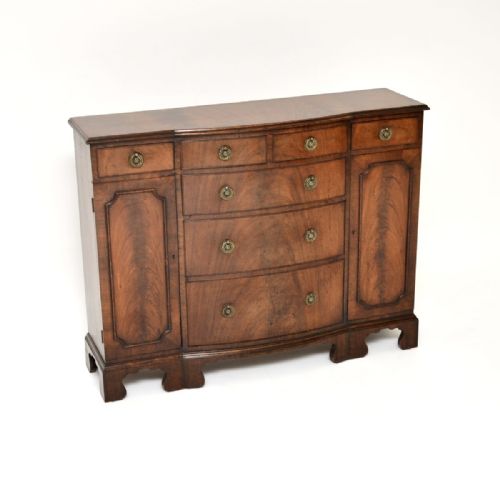
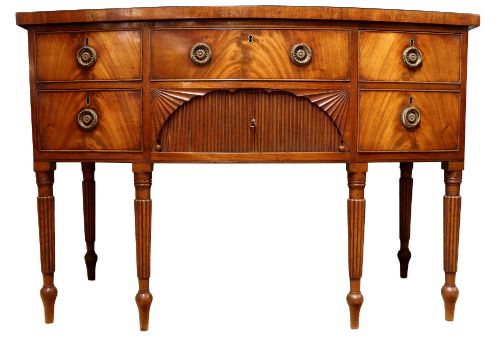
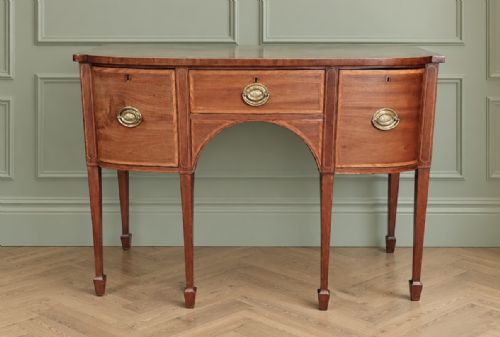
The pieces seen here span the Georgian, Regency and Victorian periods, alongside Edwardian revivals. They appear in serpentine, bow-front and breakfront configurations, alongside tiered open buffets.
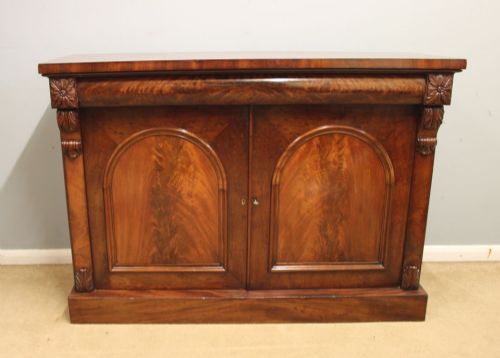
You are most likely to meet 19th-century Victorian examples featuring flame mahogany veneers, alongside George III and Regency period designs with straight or bow fronts.
Materials and technique
Cabinetmakers built these carcases primarily from solid mahogany and applied figured mahogany veneers to drawer fronts and doors to create dramatic grain patterns. Workshops utilised secondary timbers such as oak and pine for drawer linings and internal framing.
Decoration relied on contrasting timber inlays including boxwood and satinwood, alongside hand-carved mahogany details like lion paw feet and classical motifs. Polishing with traditional shellac finishes brought out the deep red and brown tones of the wood.
Mahogany Buffet Sideboard Retail Price Guide 2026
Typical asking prices for mahogany buffet sideboard among the pieces listed under this phrase on Sellingantiques today, from the lower quarter to the upper quarter. They describe what is for sale here now, not the wider market.
The inventory spans the 18th, 19th and early 20th centuries, covering Georgian, Regency, Victorian and Edwardian design periods.
Quality and construction
The distinction between ordinary and exceptional pieces rests on the choice of timber and the ambition of the form. Cabinets utilising highly figured flame mahogany veneers and complex serpentine or breakfront shapes sit at the top of the range.
Joinery standards define the better examples, visible in hand-cut dovetails on drawer boxes and matching grain lines across multiple doors. Refined hardware, such as original brass handles and fine inlay work, elevates a utilitarian serving piece into a work of cabinetmaking art.
Hewetsons London·Gillows·Oetzmann And Co
The Mahogany Buffet Sideboard Glossary
- Serpentine
- A front contour that curves outward in the centre and inward toward the ends. This sweeping shape required advanced woodworking skill to construct.
- Flame mahogany
- A veneer cut from the branch junction of the tree where the grain twists into a flame-like pattern. It was prized for its decorative impact on primary display surfaces.
- Chiffonier
- A low cabinet featuring shelves or a mirror back, frequently serving a similar function to a sideboard in the dining room or parlour. It provides enclosed storage beneath a display surface.
- Breakfront
- A piece of furniture where the central section projects forward from the flanking wings. This architectural layout creates depth and shadow across the front elevation.
Mahogany Buffet Sideboard: Frequently Asked Questions
What is a mahogany buffet sideboard?
A mahogany buffet sideboard is a substantial dining room serving table or cabinet used to store tableware and display food during meals. These pieces combine drawers and cupboards within a formal timber frame.
They evolved from simple serving tables into complex storage units featuring tiered shelves, marble tops or enclosed cupboards. Their design reflects the changing social dining habits of the Georgian and Victorian eras.
How do I spot a Georgian piece?
Georgian pieces display restrained classical proportions, often featuring straight or bow fronts with subtle boxwood stringing and brass drop handles. The timber tends to have a rich, warm patina developed over centuries.
Cabinet construction from this period relies on hand-sawn timbers and precise dovetailing without modern mechanical fasteners. Look for understated elegance rather than heavy Victorian carving.
Where should I place it?
These items require a dedicated wall space in a dining room, hallway or large living area where their depth and length can be appreciated. Because they are heavy serving pieces, positioning them away from direct heat sources protects the timber and veneer.
They function effectively as serving stations during meals or as display surfaces for lamps and ceramics. Ensure your room has adequate clearance for doors and drawers to open fully.
How do I care for the wood?
Maintain the finish by dusting with a soft, dry cloth and applying natural beeswax periodically to nourish the mahogany. Avoid placing wet items or hot dishes directly on the polished surface to prevent water rings and heat damage.
Keeping the furniture away from direct sunlight prevents the rich reddish-brown tones from fading unevenly. Gentle care preserves the historical patina of the timber.