
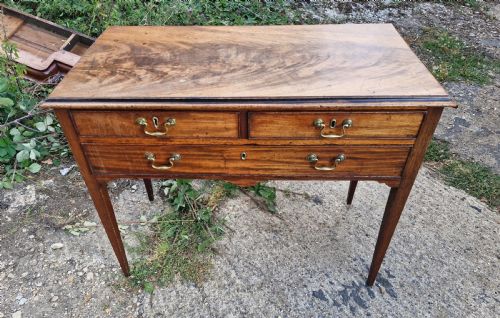
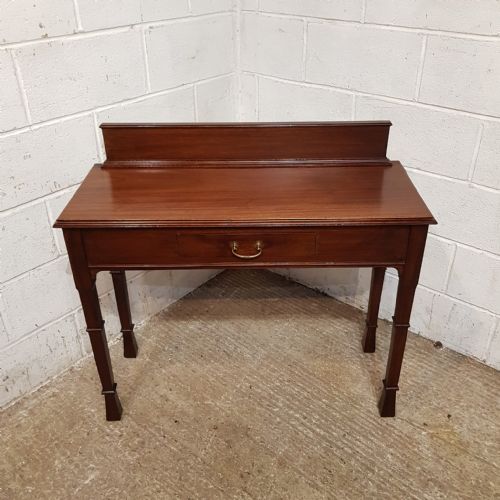
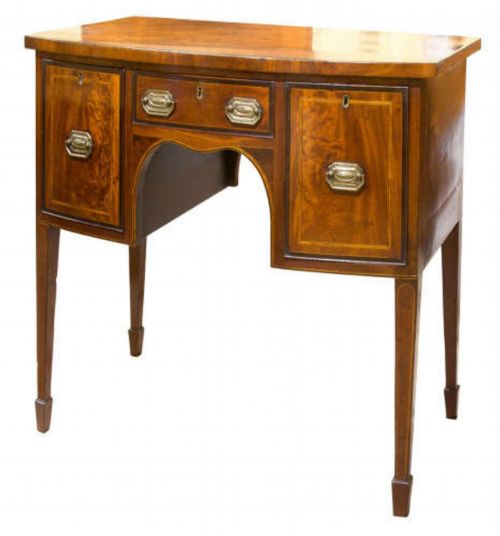
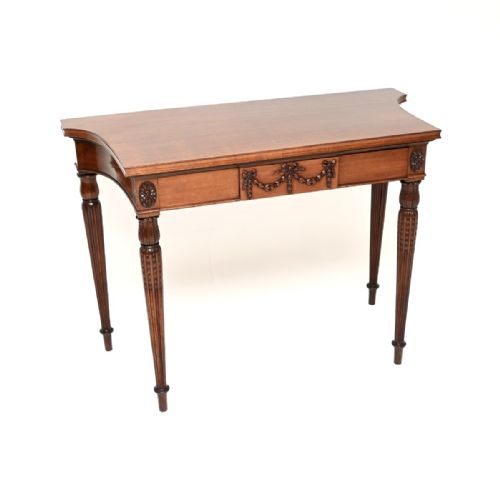
Mahogany Brown Server Table
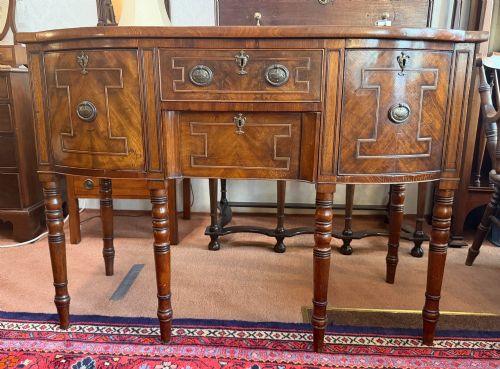
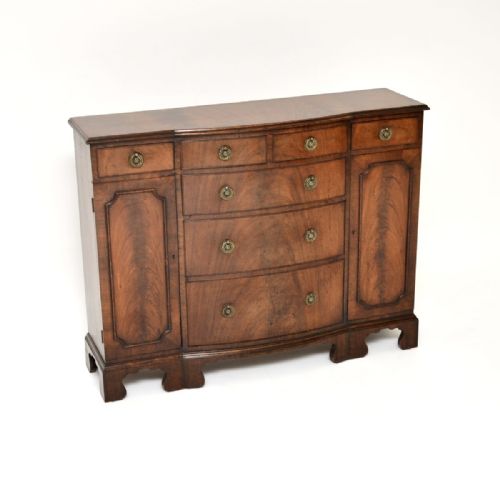
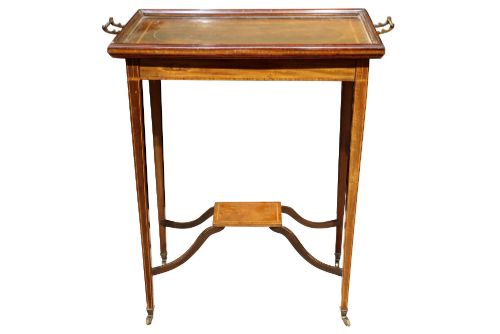
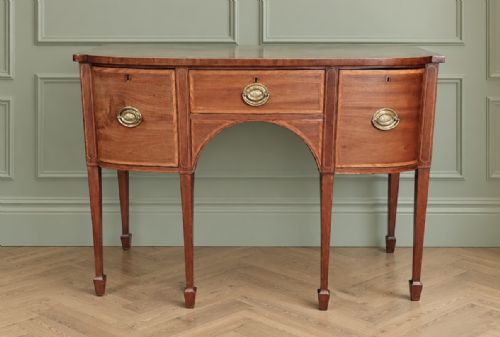
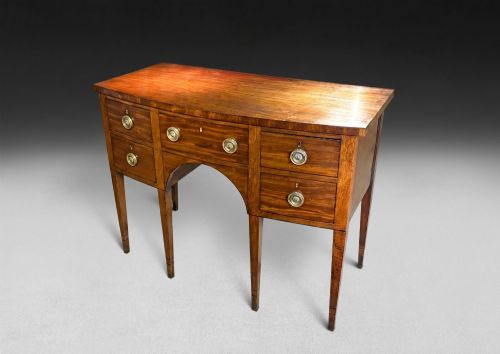
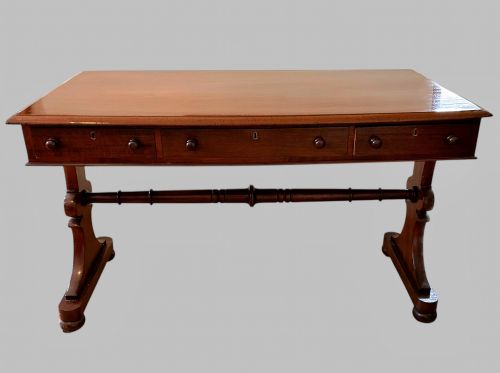
These mahogany brown server table pieces are timber server tables built for dining rooms and halls, offering practical surface space and storage.

Mahogany Brown Server Table
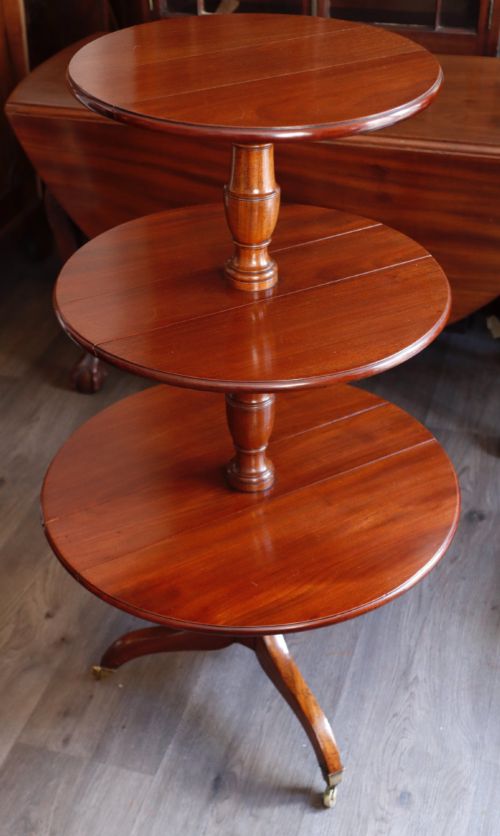
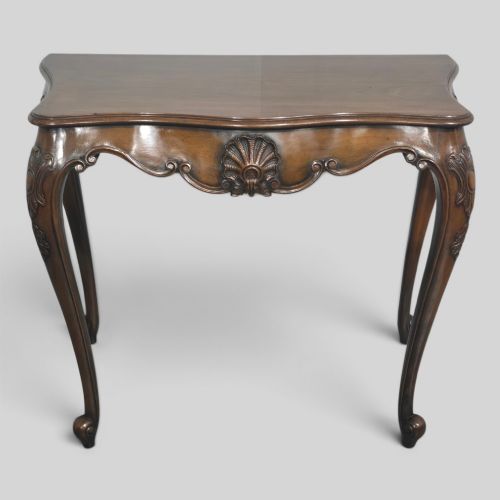
A mahogany brown server table encompasses sideboards, side tables, console tables, and buffets designed for serving food and storing dining utensils. Buyers searching for a mahogany brown server table find forms spanning the eighteenth, nineteenth, and early twentieth centuries, reflecting changing domestic habits in dining rooms and hallways.
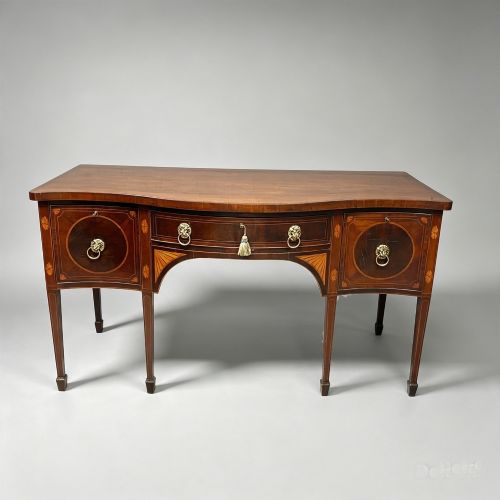
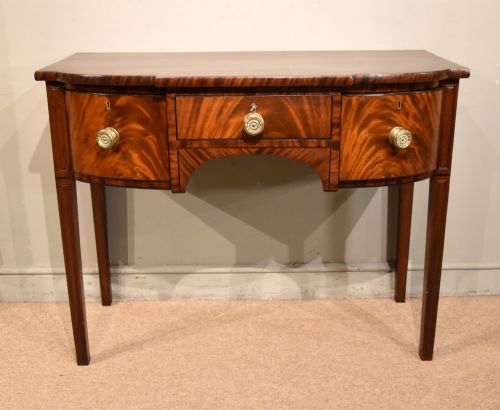
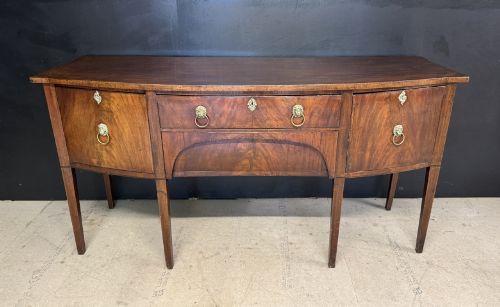
The pieces on this page emerge primarily from Georgian, Regency, Victorian, and Edwardian periods, alongside revival interpretations. Makers produced these items as bow-front, serpentine, breakfront, and demi-lune formats, utilising specific wood cuts to enhance the visual depth of the timber.
Origins range from formal Scottish stage-back designs to compact side tables with Gothic pierced brackets or military campaign brass detailing. Each variation serves the fundamental purpose of providing a sturdy timber surface for placement against a wall.
Judging Quality and Proportion
Quality rests in the selection of timber figures, where rich flame mahogany and crisp satinwood crossbanding elevate the visual presence of a piece. The integration of purpleheart banding or intricate boxwood inlay distinguishes finer cabinet work from simpler utilitarian examples.
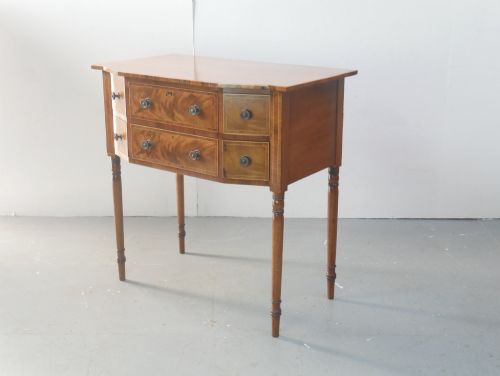
Proportion and execution of form dictate distinction, seen in the clean sweep of a serpentine front or the balanced proportions of a small George III bow-front. Structural integrity in drawers, brackets, and original brass fittings completes the measure of excellence.
Listings feature mahogany, oak, satinwood, and boxwood across Georgian, Regency, Victorian, and Edwardian periods.
M. D. Miller & Sons
The Mahogany Brown Server Table Glossary
- Bow-front
- A convex curved cabinet front popular in eighteenth and nineteenth-century case furniture. This shape softens the corners of a room while providing interior depth.
- Serpentine
- A furniture front characterised by a concave central section flanked by two convex curves. It demands high cabinet-making skill to execute cleanly in solid mahogany.
- Crossbanding
- A border of veneer laid with the grain running perpendicular to the central panel. It frames the primary mahogany surface with a contrasting ribbon of wood.
- Lowboy
- A small low dressing or side table typically featuring one or more rows of drawers. These tables rest on slender legs and date frequently to the Georgian period.
- Breakfront
- A large cabinet or sideboard whose central section projects forward from the flanking wings. This architectural arrangement creates depth and shadow on dining room walls.
Mahogany Brown Server Table: Frequently Asked Questions
What is a server table used for?
These tables provide a sturdy surface for presenting dishes, serving food, and placing objects in dining rooms and hallways. They also offer enclosed storage behind doors and drawers for dining accessories.
Historically, households relied on these pieces during large meals to keep service items close at hand without crowding the main dining table.
How do I date a mahogany server table?
Dating relies on examining the timber species, secondary woods, construction joints, and stylistic details such as brass hardware and inlay patterns. Georgian and Regency pieces show hand-cut joinery and specific leg forms, while Edwardian and later examples exhibit different manufacturing marks.
Comparing the proportions and decorative motifs against documented periods helps establish a reliable timeline of manufacture.
Where should I place a server table?
These tables suit dining rooms, hallways, and living spaces where a narrow profile against the wall is required. Their flat tops and storage compartments fit well in circulation areas or behind dining seating.
Avoid placing antique timber directly against heat sources or in strong sunlight to protect the mahogany polish and veneer.
What is flame mahogany?
Flame mahogany is a cut of wood taken from the fork of the tree where branches meet the main trunk. This specific grain orientation produces a distinctive, fiery pattern with intense three-dimensional depth.
Cabinet makers utilised this veneer on prominent drawer fronts and top panels to catch the light in formal rooms.