

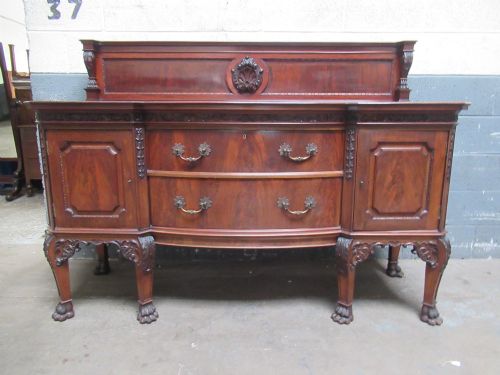
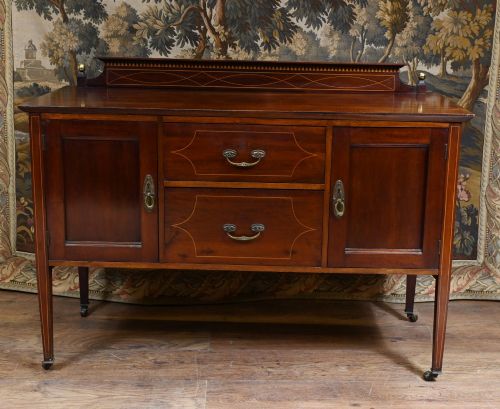


Vintage Mahogany Dresser Server
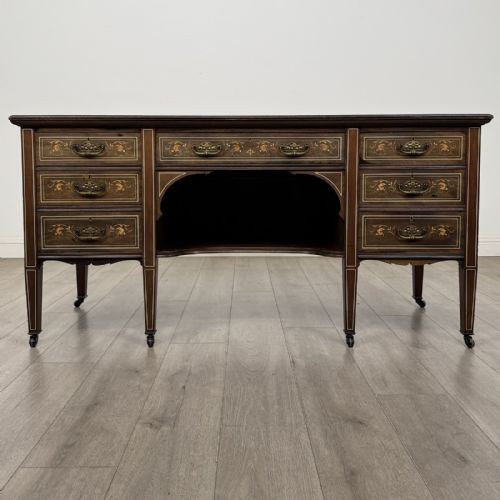
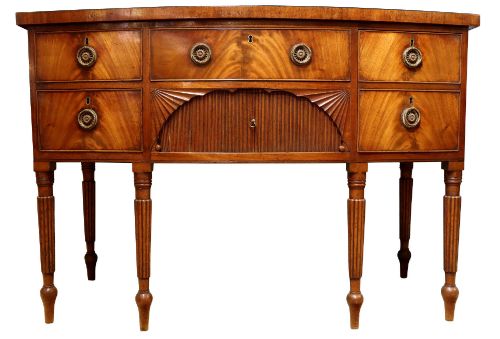
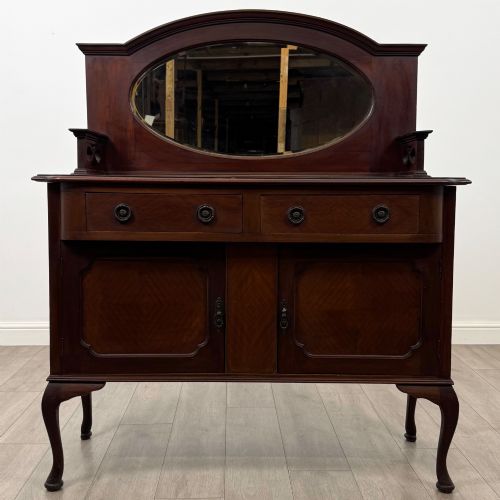
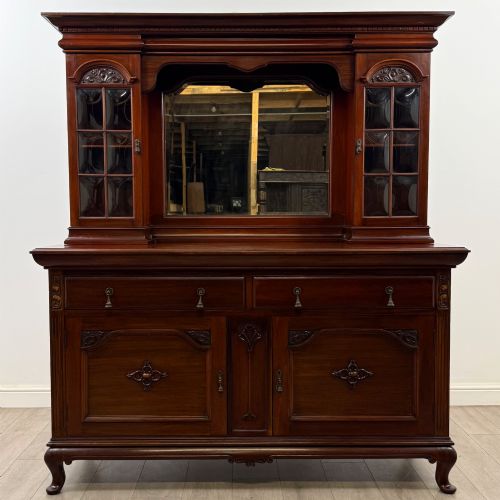
These vintage mahogany dresser server options are substantial timber pieces built for dining room storage and service.

Vintage Mahogany Dresser Server
When you search for a vintage mahogany dresser server, you encounter heavy dining room furniture designed for serving food and storing tableware. These pieces span several eras, appearing as sideboards, chiffoniers, and display cabinets.
The selections available here lean heavily towards Edwardian and Georgian designs, often featuring bow fronts or serpentine shapes. You will also find Victorian pedestal examples alongside Arts and Crafts variants.
Originating primarily from the nineteenth and early twentieth centuries, these items bring traditional British cabinet-making directly into modern dining spaces.
Materials and construction methods
Cabinet makers relied principally on solid mahogany and flame mahogany veneer, often enhanced by contrasting satinwood inlay to define the edges and panels. Structural integrity depended on dense timber selection combined with brass hardware for handles and fittings.
Many Edwardian and Victorian examples incorporate mirror glass into tall back structures, while glass doors appear on cabinet variants. Carved details and curved timber work, such as bow fronts, required skilled hand-shaping of the dense wood.
Vintage Mahogany Dresser Server Retail Price Guide 2026
Typical asking prices for vintage mahogany dresser server among the pieces listed under this phrase on Sellingantiques today, from the lower quarter to the upper quarter. They describe what is for sale here now, not the wider market.
The listings span multiple centuries, uniting Georgian proportions, Victorian mass, and Edwardian inlay work within one category of dining furniture.
Distinctions in quality
The grade of timber dictates the visual depth of the piece, where richly figured flame mahogany veneer marks a higher standard than plain boards. Subtle details like fine satinwood inlay and crisp hand-carving separate ordinary production from superior workshop output.
Internal construction, drawer dovetailing, and the preservation of original brass fittings and mirror glass influence the standing of each item. Maker attribution also plays a role when workshops applied their specific craftsmanship to the design.
Maple & Co
The Vintage Mahogany Dresser Server Glossary
- Bow front
- A convex curved cabinet front that projects outward in a smooth arc, frequently seen on Georgian and Regency sideboards. This shape required precise carpentry to bend or shape the timber correctly.
- Chiffonier
- A low sideboard or cabinet featuring shelves or enclosed storage, popular during the Regency and Victorian periods. It often served smaller dining rooms or drawing rooms for holding crockery and linens.
- Serpentine
- A front contour shaped with a convex centre flanked by concave curves, creating an undulating outline. This complex geometry demands expert hand-planing.
- Flame mahogany veneer
- A thin slice of wood cut from timber where the branch meets the trunk, producing a distinctive flickering flame pattern. Cabinet makers laid this over a stable secondary wood to create decorative surfaces.
- Satinwood inlay
- Contrasting light-coloured wood inserted into recesses within the darker mahogany to form geometric or floral patterns. This decorative technique highlights the borders of drawers and doors.
Vintage Mahogany Dresser Server: Frequently Asked Questions
What is a vintage mahogany dresser server used for?
These items serve as storage and display furniture in dining rooms, holding tableware, linens, and serving dishes.
Their flat top surfaces also function as a sideboard space for presenting food or drinks during meals.
How do I identify a Georgian sideboard?
Georgian pieces often display clean architectural lines, straight or bow fronts, and restrained use of inlay without heavy ornamentation.
They rely on the natural grain of the mahogany timber and proportion rather than elaborate carvings.
What distinguishes an Edwardian mirrorback sideboard?
Edwardian versions incorporate an integrated wooden frame holding a mirror above the main serving surface.
This design reflects light into the room and often includes small display shelves for ceramics.
How do I care for mahogany furniture?
Maintain the wood by keeping it away from direct heat sources and strong sunlight to prevent the timber from drying out.
Dust with a soft dry cloth and apply occasional appropriate wax polish to preserve the finish.