


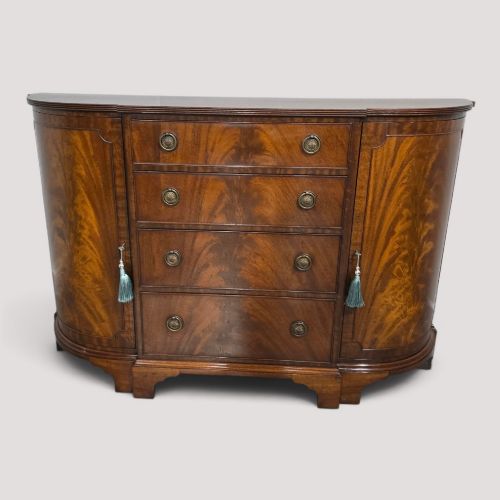
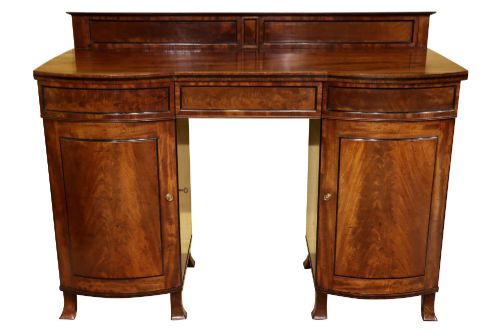
Antique Curved Sideboard
An antique curved sideboard brings sweeping lines and rich timbers into a room, uniting functional storage with sculptural presence.

Antique Curved Sideboard
An antique curved sideboard encompasses serpentine credenzas, bowfront cabinets, and demi-lune commodes designed to soften the corners of a room. These pieces range from substantial Regency dining room servers to decorative Victorian credenzas and streamlined Art Deco cabinets.
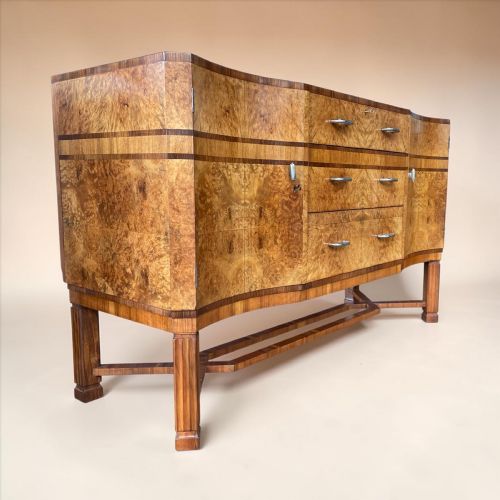
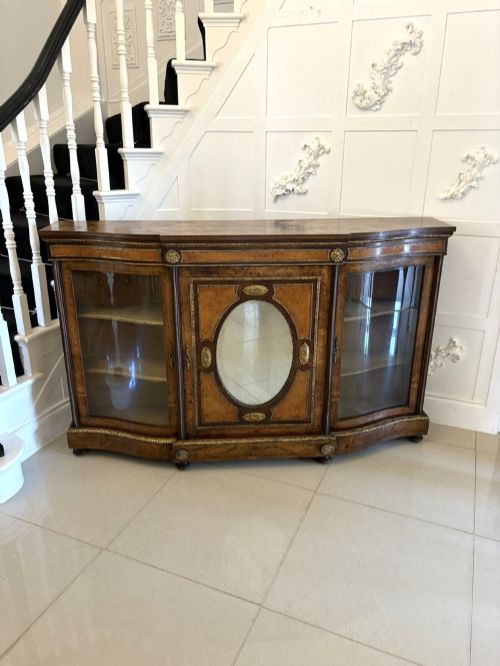
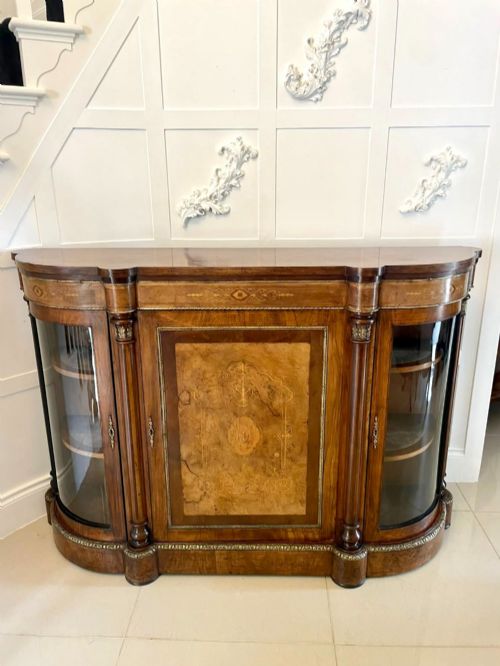
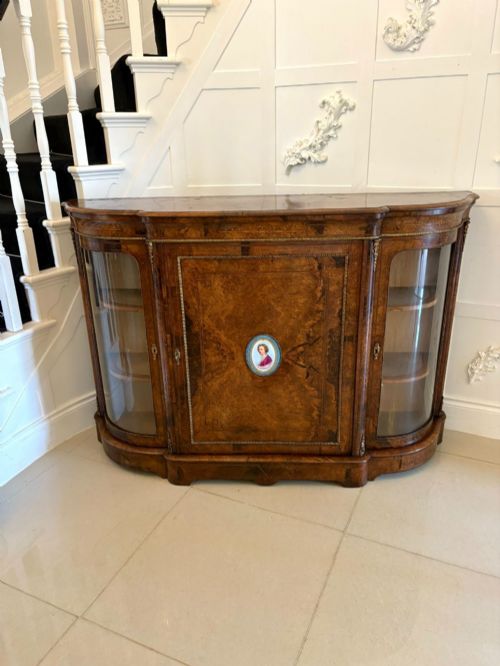
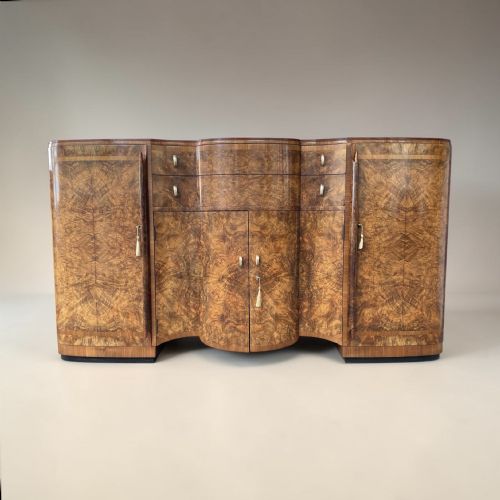
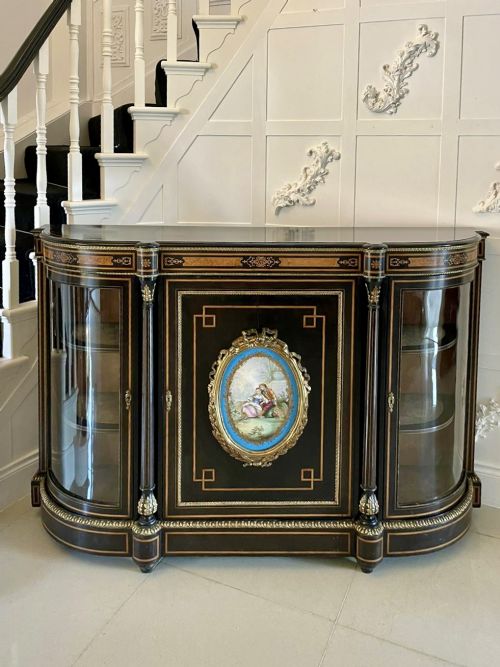
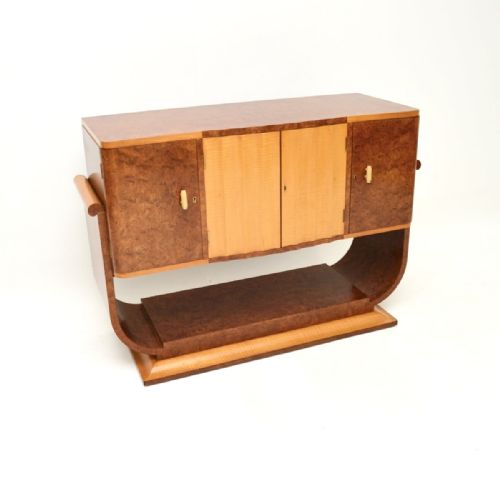
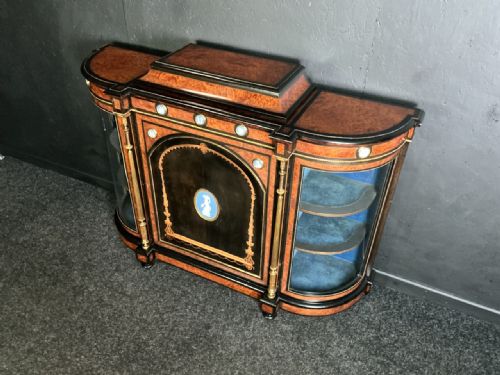
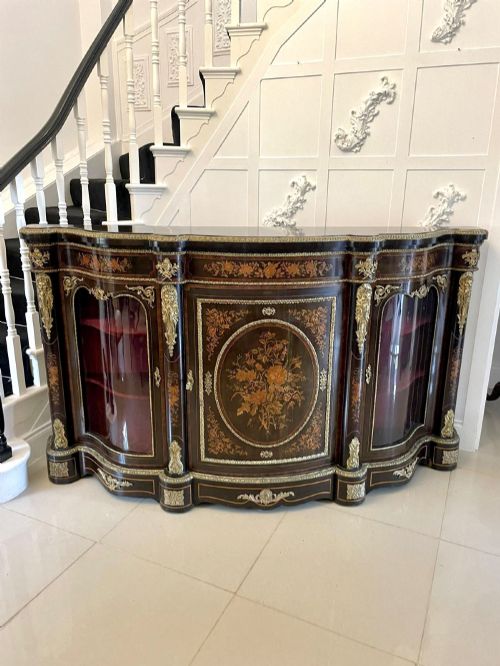
The Victorian examples frequently incorporate burr walnut, intricate floral marquetry, and gilt ormolu mounts, often taking the form of a credenza with curved glass doors. By contrast, the later Art Deco interpretations lean on contrasting veneers such as walnut and sycamore to emphasise their geometric curves.
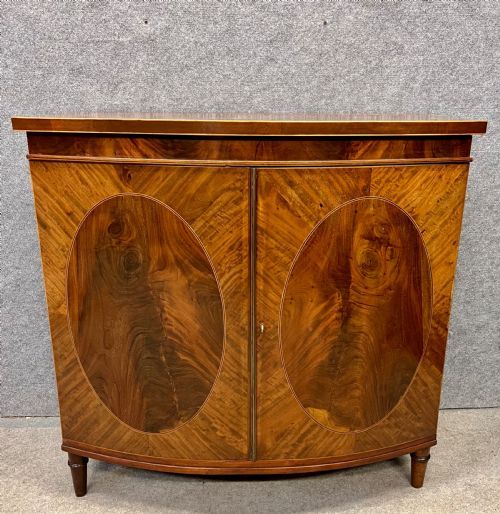
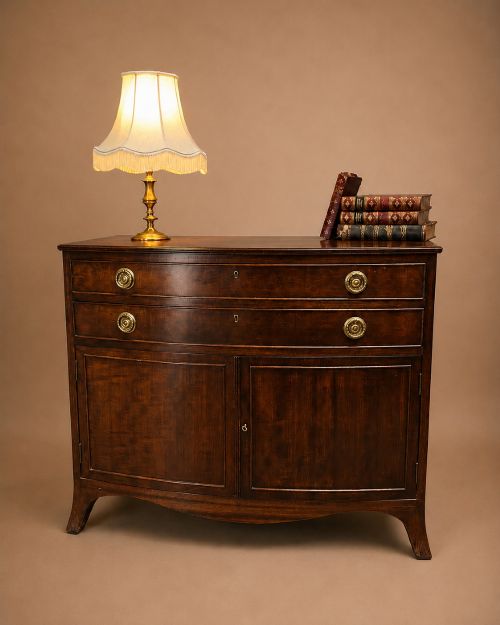
Regency and Edwardian variations in mahogany and satinwood offer more restrained bowfront profiles intended for formal dining spaces. Buyers encounter these forms across multiple periods spanning the nineteenth and twentieth centuries, each reflecting the prevailing taste for graceful, rounded cabinetry.
Materials and construction
Cabinetmakers constructed these curved frames using dense native timbers like mahogany and walnut as a carcase, overlaid with decorative veneers including burr walnut, amboyna, and kingwood. Bending timber or building up multi-layered laminates allowed makers to achieve the sweeping serpentine and bowfront contours.
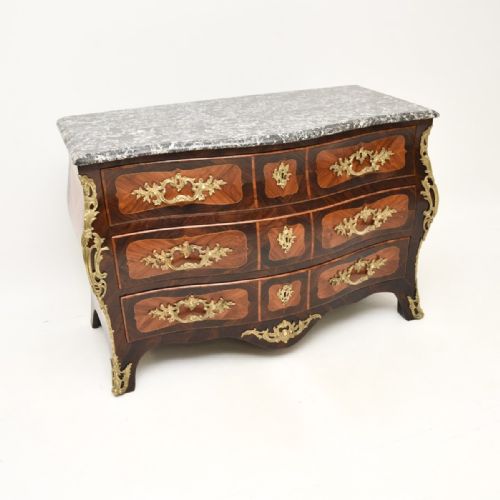
Surface enrichment relied heavily on marquetry inlays, brass ormolu mounts, and polished marble tops, particularly on French and Victorian pieces. Ebonised wood and contrasting stringing lines were frequently employed to define the edges of doors and drawers.
Materials recur across multiple periods, pairing burr walnut and mahogany with marble tops, brass mounts, and glazed compartments.
Distinctions in craftsmanship
The division between standard production and exhibition quality lies in the selection of veneers and the precision of the joinery along curved surfaces. Superior pieces display book-matched burr timbers that flow continuously across a serpentine front without interruption.
Hand-chiselled ormolu mounts, finely cut marquetry, and heavy polished marble slabs denote workshops operating at the highest level. Lesser examples rely on simpler mahogany constructions with minimal inlay and standard brassware rather than cast bronze mounts.
Maurice Adams·Jacques Bircklé·Hille·Maison Gagneau·James Hicks
The Antique Curved Sideboard Glossary
- Credenza
- A low cabinet, frequently featuring curved glass side doors and central cupboards, developed during the Victorian period. It serves primarily for display and storage in a drawing room.
- Ormolu
- Gilded bronze mounts cast in relief and applied to furniture corners and door panels. This decorative technique originates in French cabinetmaking and imparts rich metallic contrast against dark wood.
- Marquetry
- The art of forming decorative patterns using thin veneers of different coloured woods and organic materials. Craftsmen assemble these pictorial designs by hand before pressing them onto the furniture carcase.
- Serpentine
- A furniture front shaped with a convex centre flanked by concave curves, creating an undulating silhouette. This contour requires advanced woodworking skill to execute cleanly.
- Demi-lune
- A half-moon shape used for console tables, commodes, and sideboards designed to stand flush against a wall. This profile maximises floor space while retaining a curved front.
Antique Curved Sideboard: Frequently Asked Questions
What is the difference between a credenza and a sideboard?
Credenzas generally feature glazed display sections and lower profiles suited to formal reception rooms, often incorporating ornate ormolu and marquetry. Sideboards were traditionally engineered for dining rooms to store cutlery, linen, and serving dishes.
Over time, the terms began to overlap as cabinetmakers experimented with curved fronts and decorative timber veneers across both furniture categories.
How do I care for marble top sideboards?
Marble surfaces require prompt wiping of spills to prevent staining, particularly from acidic liquids such as wine or lemon juice. Use soft cloths and neutral cleaning solutions rather than abrasive scourers.
Polishing the stone occasionally with specialised marble wax helps preserve the sheen and protects the porous surface from everyday wear.
Can I use an antique curved sideboard in a modern interior?
The organic lines of a serpentine or bowfront cabinet contrast effectively against minimalist walls and plain architectural finishes. These pieces anchor contemporary living spaces by introducing warmth from burr walnut and mahogany.
Their curved profiles also soften straight corridors and square dining areas without dominating the surrounding floor space.
How do I distinguish Victorian from Art Deco curved cabinets?
Victorian versions lean towards heavy timber figures, elaborate marquetry flowers, and cast ormolu mounts reflecting historic revival styles. They often stand on plinth bases or short turned feet.
Art Deco examples, by contrast, favour clean geometric lines, contrasting veneers like sycamore and walnut, and streamlined surfaces devoid of excessive ornamentation.