
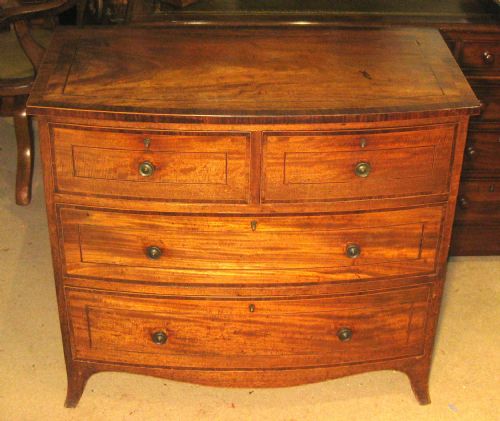
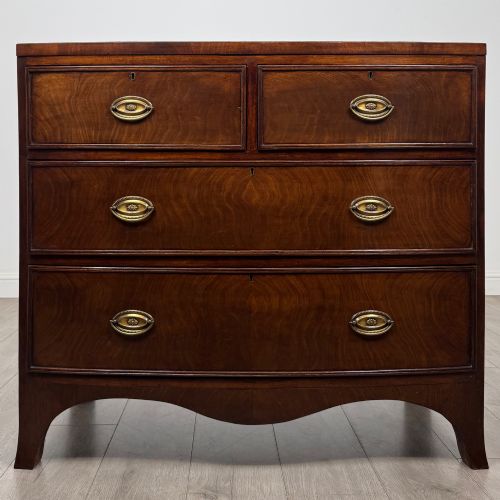
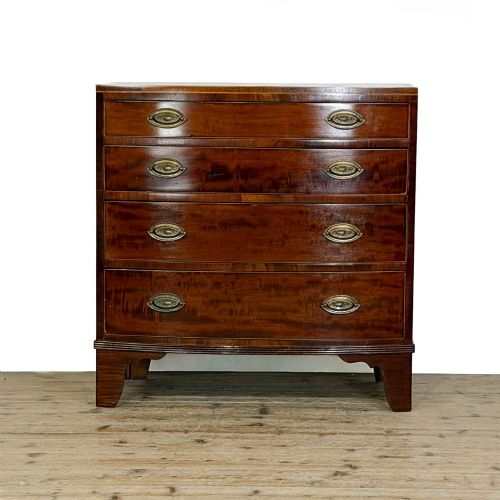
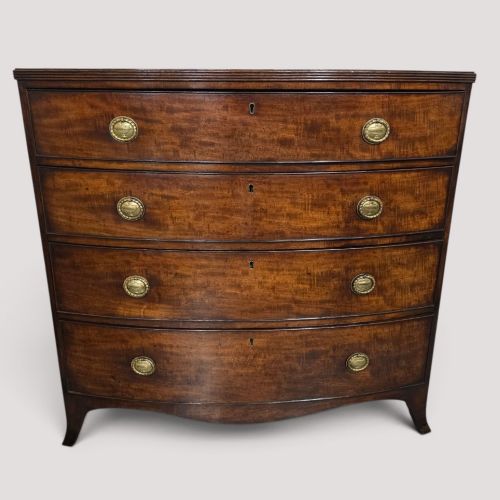
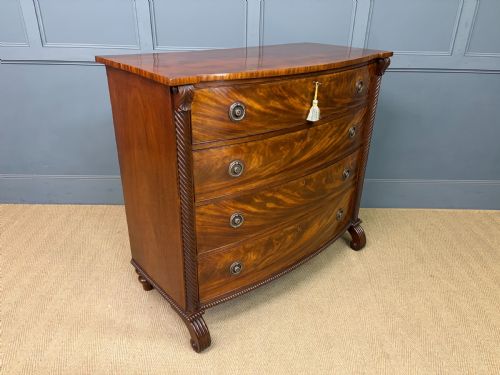
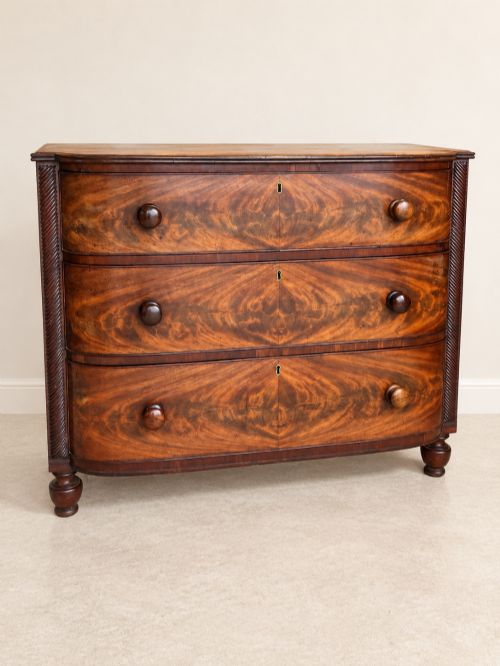
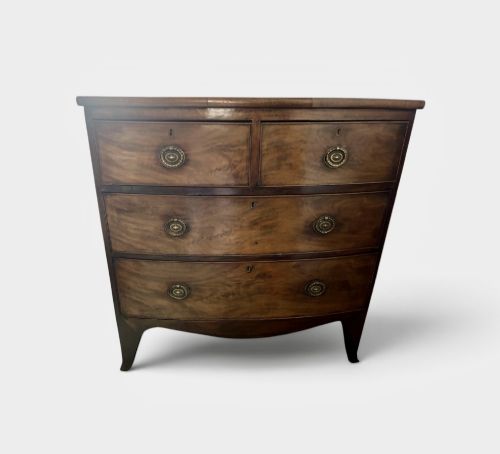
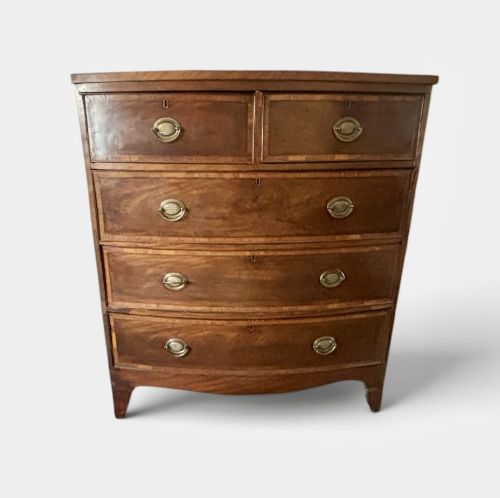
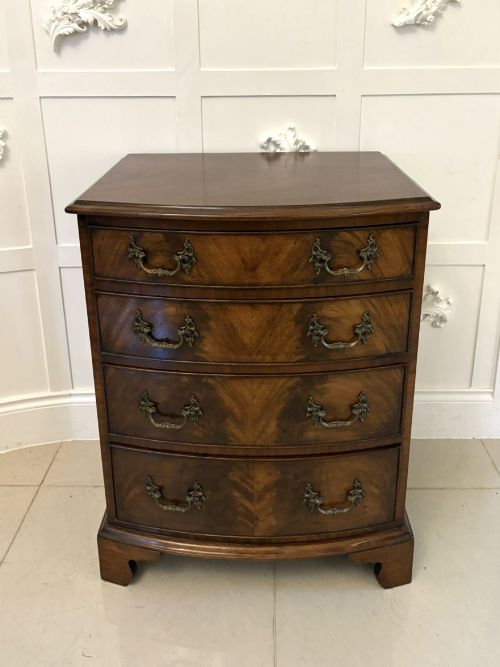
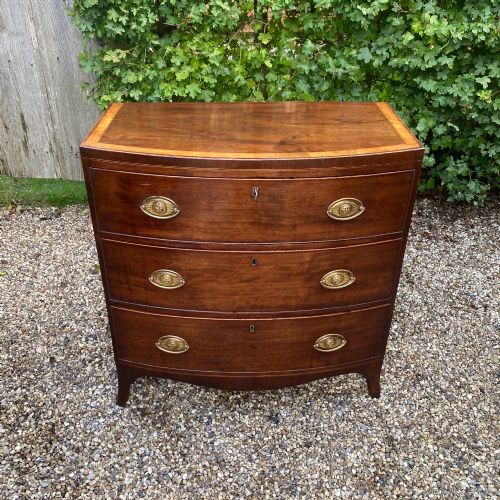
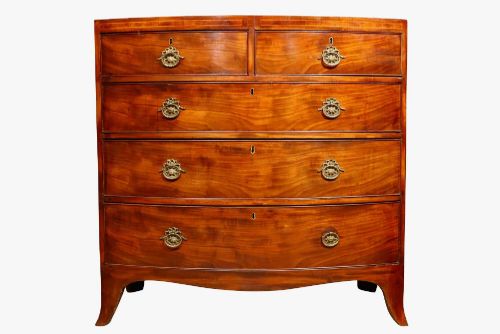
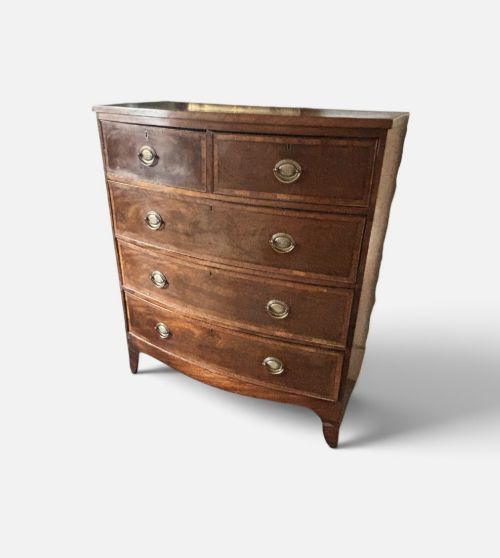
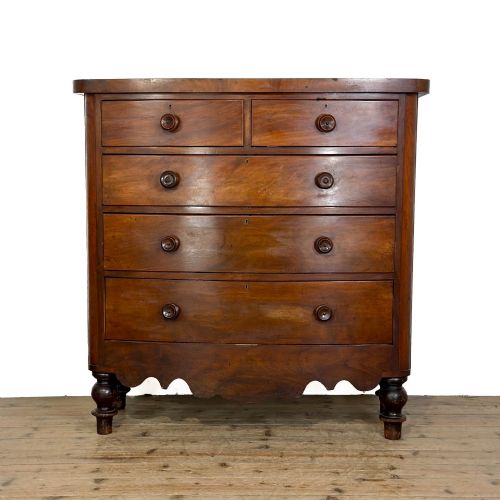
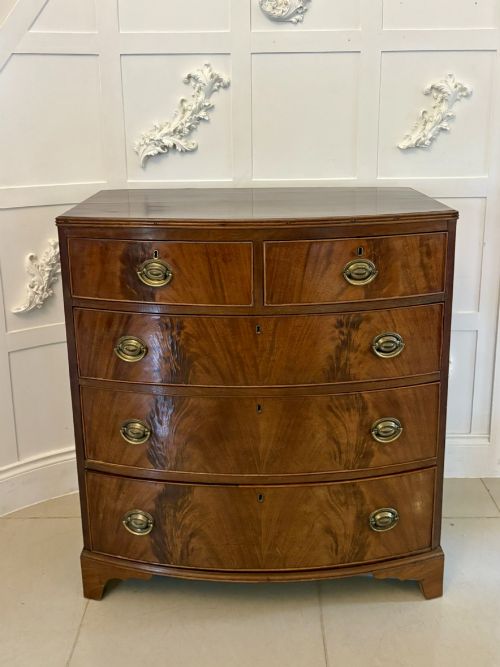
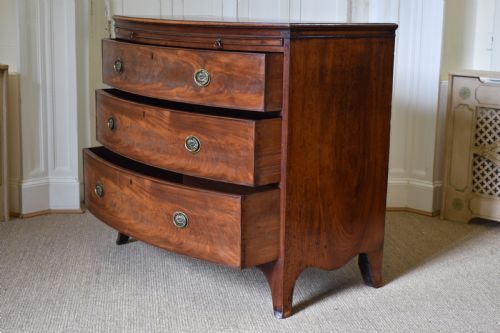
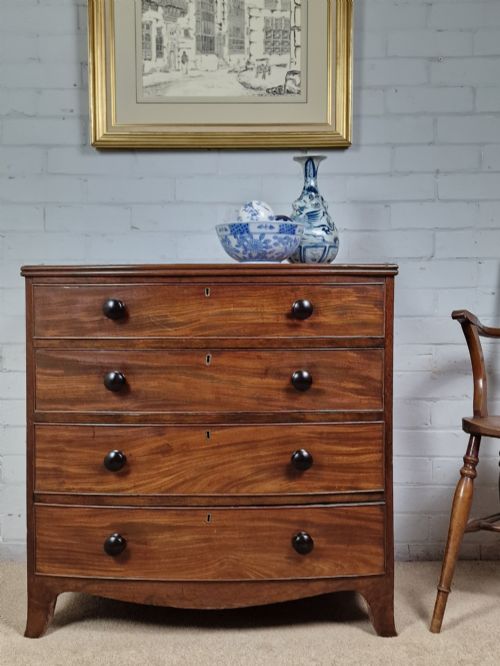
Mahogany Bow Front Commode
A mahogany bow front commode brings the curved grace of Georgian and Regency craftsmanship into a room.
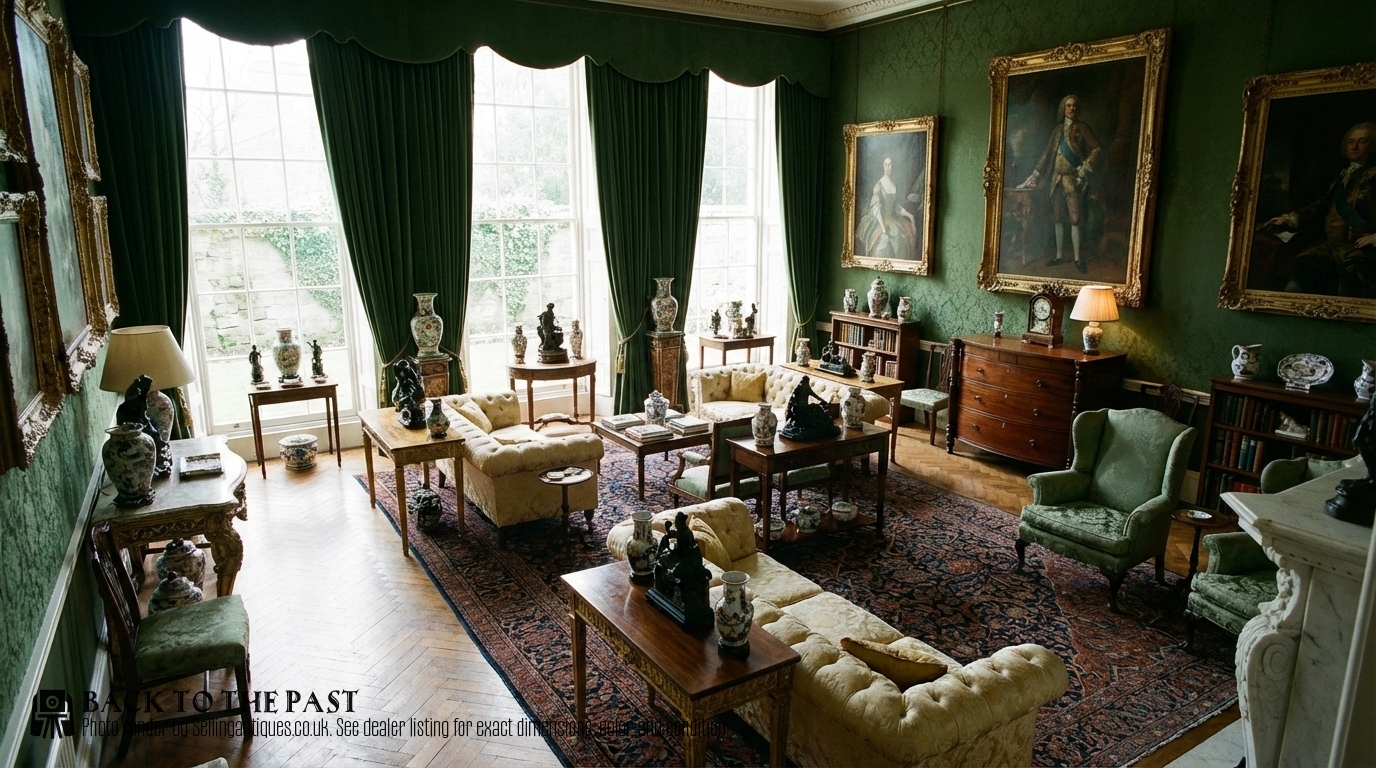
Mahogany Bow Front Commode
When you search for a mahogany bow front commode, you encounter a selection of pieces spanning the Georgian, Regency, and Victorian periods.
The objects take the form of chests of drawers, bedside cabinets, and sideboards, presenting a rounded facade that softens the corner of a room.
Examples range from grand Scottish and George III designs down to miniature furniture and compact bedside pieces.
Markers of distinction
Quality rests in the depth of the wood's patina, the crispness of the satinwood banding, and the precision with which the curved drawers align.
Superior examples display harmonious proportions and careful timber selection, whilst lesser pieces rely on simpler construction without secondary wood framing.
The archive includes bedside cabinets and miniature furniture alongside standard chests of drawers.
The Mahogany Bow Front Commode Glossary
- Bow front
- A convex, curved front facade typical of certain Georgian and Regency case furniture. This shape requires advanced woodworking skill to shape timber drawers accurately.
- Crossbanding
- A strip of veneer applied to the border of a drawer or top, grain running perpendicular to the centre panel. It creates a neat visual frame.
- Patina
- The surface sheen and colour developed by wood over centuries of handling and exposure to light. It is a key indicator of age and careful upkeep.
- Satinwood
- A pale, lustrous timber from the tropics used for contrasting inlay and banding on darker mahogany furniture. It provides a bright decorative accent.
Mahogany Bow Front Commode: Frequently Asked Questions
What is a mahogany bow front commode?
A mahogany bow front commode is a piece of antique case furniture featuring a curved, convex front and constructed primarily from mahogany. These items serve as bedside tables, small chests of drawers, or cabinet pieces.
The form gained popularity during the Georgian and Regency periods, prized for combining practical storage with elegant curved lines.
How do I date a bow front commode?
Dating relies on examining the secondary timbers like pine, the style of the brass handles, and construction methods. Georgian and Regency pieces show hand-cut dovetails and distinct proportions.
Later Victorian and Edwardian examples often display different internal framing and heavier overall builds compared to eighteenth-century work.
Where were these commodes used?
Historically, these items sat in bedrooms, dressing rooms, and formal parlours as bedside storage or small drawer chests. Their curved profiles allowed them to fit neatly against walls without sharp corner hazards.
Today, they transition easily into modern hallways, living rooms, and bedrooms as functional accent furniture.
How do I care for antique mahogany?
Maintain mahogany furniture by keeping it away from direct heat sources and strong sunlight, which can dry out the timber and fade the finish. Dust regularly with a soft, dry cloth.
Apply high-quality beeswax sparingly to nourish the wood and preserve the historic surface patina.